

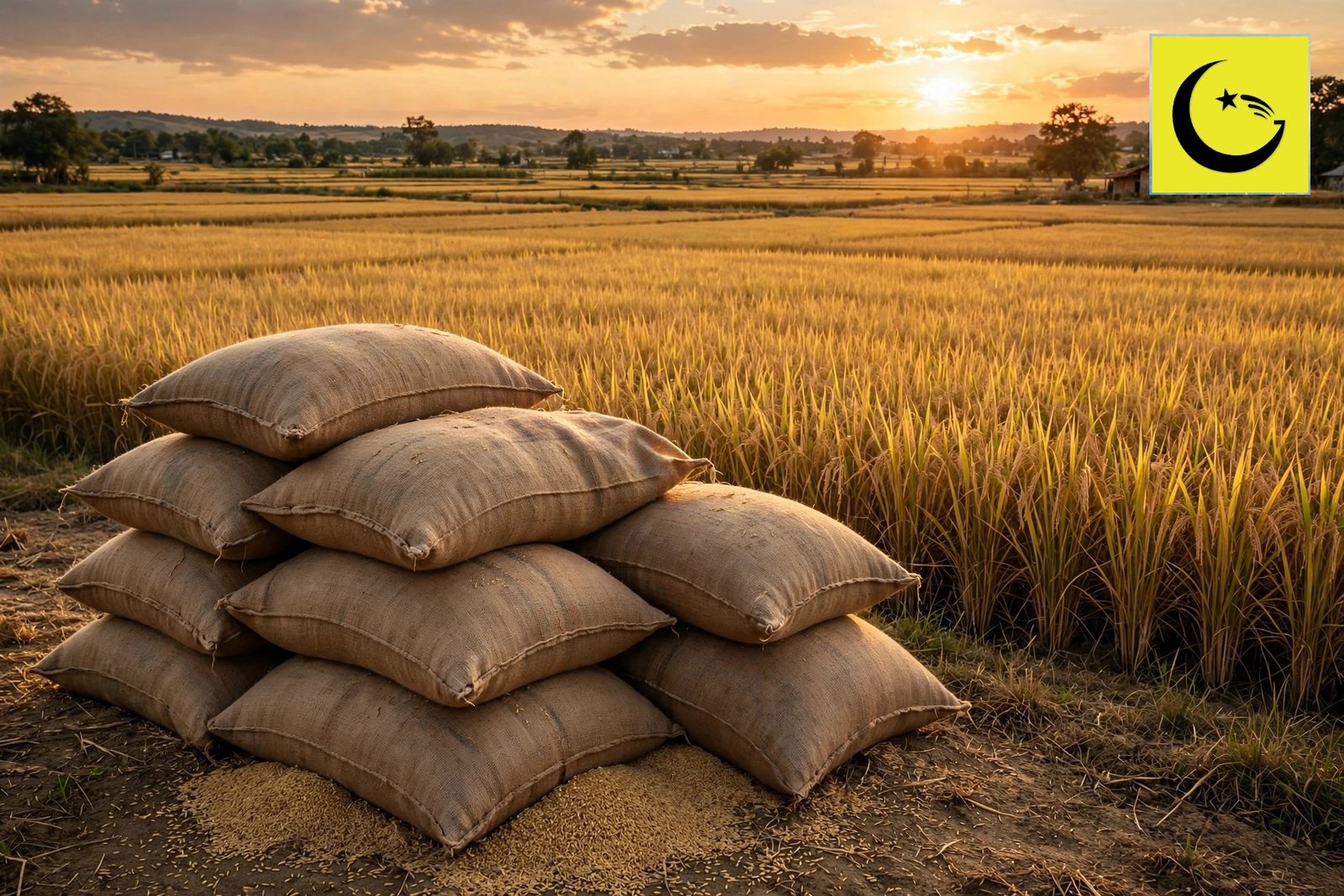
Pakistan’s rice exporters have received a significant year-end boost. The country’s rice exports to Malaysia are set to grow by an additional 70,000 metric tonnes for the October to December 2026 quarter, following high-level trade talks in Kuala Lumpur. The deal adds momentum to a sector already enjoying a strong rebound in the new fiscal year.
Rice Exports to Malaysia: The New Deal
Malaysia has agreed to import an additional 70,000 metric tonnes of Pakistani rice for the final quarter of 2026. The agreement followed talks held in Kuala Lumpur on 27 September 2026, where Pakistan’s Federal Secretary for National Food Security and Research Amer Ali Ahmed and Federal Secretary Commerce Jawad Paul met Malaysian authorities including BERNAS, Malaysia’s sole authorised rice importer, alongside agriculture and halal bodies. Pakistan’s High Commissioner to Malaysia, Syed Ahsan Raza Shah, was also part of the engagement.
The discussions went beyond volumes. Both sides covered halal certification standards, agricultural cooperation and food-security collaboration, signalling a deeper trade relationship rather than a one-off purchase. In Pakistani media the deal has been framed as direct support for farmers and export-led growth, with expectations of stronger foreign-exchange earnings in the closing months of the year.
Strong Numbers Behind the Deal
The Malaysia agreement lands on top of an already impressive start to FY27. According to Pakistan Bureau of Statistics data, rice exports in July and August 2026 totalled 657,663 metric tonnes, up 18 percent year on year, earning $394 million, up 23 percent. The standout performer was basmati: earnings of $165 million, up 53 percent, on shipments of 147,626 tonnes, up 44 percent. This is a genuine rebound after last fiscal year, when rice exports fell by roughly 32 percent.
The broader picture is encouraging. Pakistan ranks among the world’s top three to four rice exporters, and rice exports crossed $4 billion for the first time. The US Department of Agriculture forecasts Pakistan’s milled-rice exports at 5.0 million tonnes for the 2026/27 marketing year, recovering from flood-hit levels the previous year.
Why Malaysia Matters
Malaysia is one of the most important destinations for Pakistani rice, consistently ranking in the top five. In the first half of 2025 it bought $109 million worth of Pakistani rice, and Pakistan is Malaysia’s third-largest rice supplier with roughly an 18.5 percent share of the country’s rice imports, behind Vietnam and India. Pakistan’s trade development authority calls Malaysia the second-largest importing market for Pakistan’s IRRI rice varieties.
What makes the new deal notable is the uneven playing field. Pakistani rice faces a 40 percent tariff entering Malaysia, compared with 20 percent for competitors like India and Thailand. Winning additional volumes despite that structural disadvantage speaks to the competitiveness of Pakistani rice on quality and price.
What Comes Next
The exact commercial terms of the additional 70,000 tonnes, including varieties and pricing, have not been published, and it remains to be seen how the volumes split between government-to-government channels and private contracts through BERNAS. What is clear is the direction of travel: rising demand, a recovering harvest, and deepening trade ties with Southeast Asia.
For Pakistan’s rice belt, from the basmati fields of Punjab to the IRRI-growing areas of Sindh, deals like this translate into farm incomes and rural jobs. If the momentum of the first two months of FY27 holds, the sector could be on course for one of its strongest years on record.
Final Thoughts
An extra 70,000 tonnes to Malaysia may sound like a footnote in global commodity trade, but for Pakistan it means foreign exchange, farmer incomes, and proof that its rice can win shelf space even against tariff disadvantages. With basmati surging 53 percent and total rice exports to Malaysia climbing, the country’s rice story is firmly back on track. For more on Pakistan’s trade momentum, see our report on the September export surge.
Sources

Umar is an engineer by profession and a passionate writer by passion. He has a deep interest in sharing good news related to Pakistan and has been working hard to promote the positive image of his homeland. Umar has written numerous articles on various topics related to Pakistan, such as technology, sports, culture, and economy.