

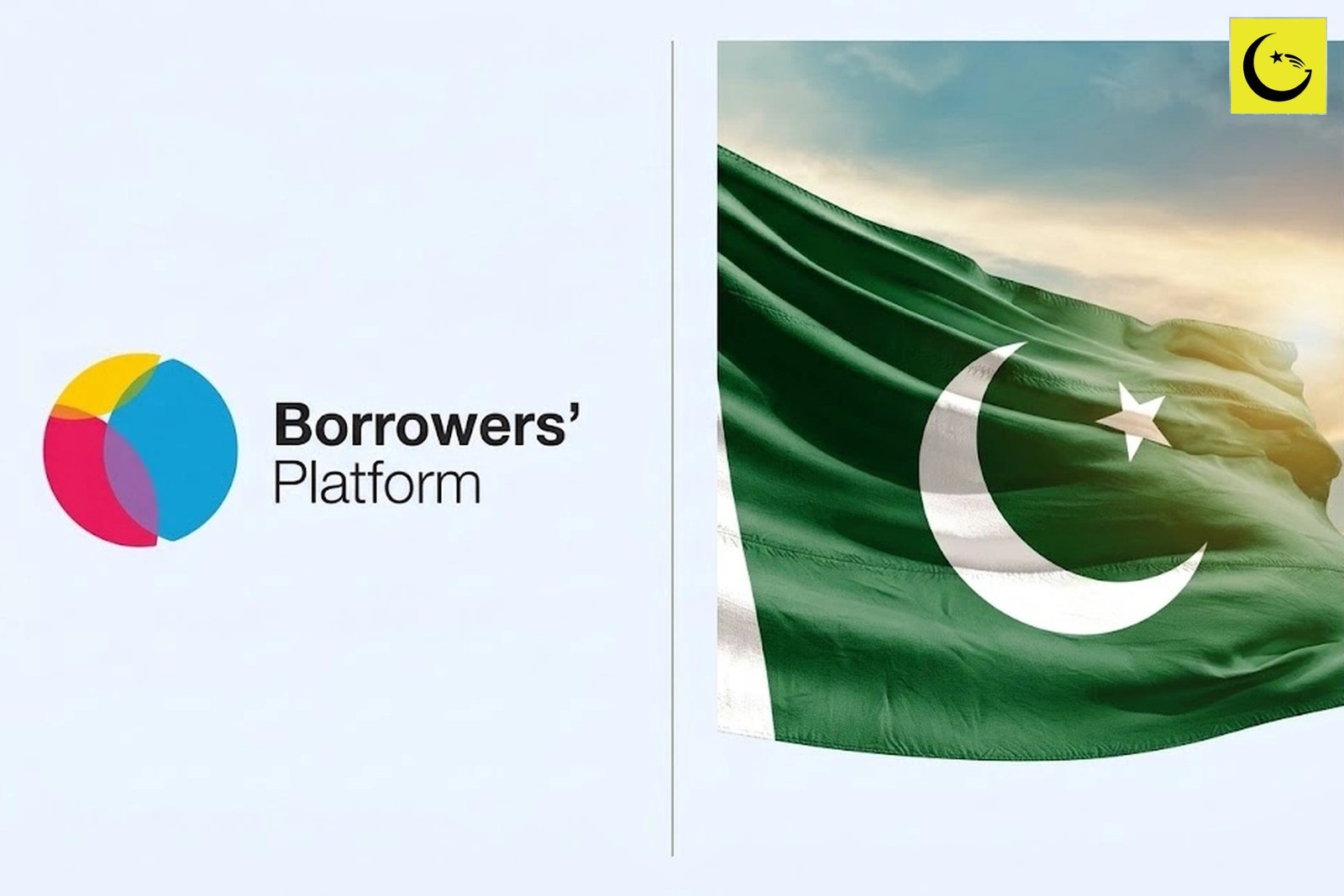
Pakistan has taken the chair of the Borrowers’ Platform Governing Council, a landmark moment that puts the Pakistan Borrowers Platform role at the center of global debt cooperation. On October 12, 2026, Federal Minister for Finance and Revenue Senator Muhammad Aurangzeb accepted the chairmanship on Pakistan’s behalf during the World Bank Group and IMF Annual Meetings in Bangkok, Thailand, becoming the first country chair of a forum that brings together more than 30 developing nations.
Photo: Bloom Pakistan
What the Borrowers’ Platform Actually Is
Think of the Borrowers’ Platform as a club where countries that borrow money get together to help each other manage debt wisely. For decades, the global conversation about debt has been dominated by lenders, the rich countries and institutions that hand out the loans. Borrowers had no dedicated forum of their own to share experiences, learn from each other’s mistakes, and speak with a stronger collective voice.
The platform fills that gap. It was proposed by the UN Secretary-General’s Expert Group on Debt in June 2025, endorsed in the Sevilla Commitment at the 4th International Conference on Financing for Development in July 2025, and backed again at UNCTAD16 in October 2025. Finance ministers and central bank governors formally launched it in Washington D.C. in April 2026, with UN Secretary-General Antonio Guterres in attendance, setting the stage for the Pakistan Borrowers Platform chairmanship that would follow months later. UNCTAD, the UN’s trade and development body, serves as its secretariat.
Importantly, the platform is not a debt-restructuring negotiation forum and not a crisis-management mechanism. It exists for mutual learning, technical cooperation, and capacity building, helping countries manage debt better before problems start.
How Pakistan Took the Chair in Bangkok
Pakistan did not arrive at this chairmanship by accident. It was vice-chair of the seven-country working group that designed the platform, alongside Egypt as chair and Colombia, Honduras, Maldives, Nepal, and Zambia as members. That working group drafted the platform’s objectives, governance, and participation rules over the past year.
At the first Governing Council meeting in Bangkok on October 12, the baton passed from Egypt to Pakistan, completing the Pakistan Borrowers Platform transition that the working group had prepared all year. Aurangzeb acknowledged Egypt’s leadership and the contributions of member countries and the UNCTAD secretariat in getting the platform operational. The council also adopted its governing modalities, elected the first country chair and troika, and approved the work plan for the 2026/27 annual cycle, the platform’s first full year of operation.
The meeting drew finance ministers and central bank governors from over 30 developing nations, a sign of how seriously borrowing countries are taking this new forum.
Pakistan Borrowers Platform Priorities for 2026-27
Under Pakistan’s chairmanship, the Pakistan Borrowers Platform work plan for 2026-27 will focus on three practical goals:
- Strengthening debt-management practices across member countries, so governments borrow smarter and track their obligations better.
- Sharing reform experiences, letting countries learn from Pakistan’s and each other’s economic reform journeys.
- Exploring innovative development-financing instruments, finding new ways to fund schools, hospitals, and infrastructure without piling on unsustainable debt.
Aurangzeb stressed that the platform would promote mutual learning and technical cooperation rather than act as a collective bargaining bloc, a principle the Pakistan Borrowers Platform chair will carry through the entire 2026-27 cycle. As he put it, the guiding principle is that debt should remain an instrument for development rather than a constraint on it.
“It’s about mutual learning, technical cooperation with each other. This is more about proactive engagement, how we avoid the pitfalls.”
Muhammad Aurangzeb, speaking to reporters in Bangkok (via The News)
Why This Chair Matters Right Now
The timing could hardly be more urgent. The developing world’s external debt burden reached $11.7 trillion in 2024, according to UNCTAD. That year, developing countries spent almost 10 percent of their government revenue just paying interest to foreign creditors, and the least developed countries paid nearly a quarter of their revenue.
The human cost is staggering: 46 countries, home to 3.4 billion people, now spend more on debt payments than on health or education. A UN Development Programme report published days before the Bangkok meeting warned that the median developing country now spends about 9.5 percent of revenue on interest payments alone, the highest share since 2001.
Guterres has described the situation as a “perfect storm” of wars, trade and climate pressures, inadequate financing, and crushing debt-service burdens. Against that backdrop, the Pakistan Borrowers Platform chairmanship gives borrowing nations a credible, organized voice, and gives Pakistan a platform to shape the rules of global finance rather than just follow them.
This recognition also reflects Pakistan’s own economic turnaround story. A country that has stabilized its reserves, as seen when Pakistan’s $3bn Eurobond drew $6bn in orders as reserves hit a record $21.4bn, and earned a place among the world’s top five digital services exporters recognized by the World Bank, now gets to share those reform lessons with peers facing similar challenges.
A Bigger Stage: G-24 and Sixty Engagements
The Borrowers’ Platform chair is not Pakistan’s only new responsibility in Bangkok. The Pakistan Borrowers Platform role sits alongside another major win: Aurangzeb is also representing Pakistan as First Vice-Chair of the G-24, the influential group of developing nations in the IMF and World Bank system, and Pakistan is the group’s incoming chair. At the G-24 finance ministers’ meeting, he acknowledged Nigeria’s leadership and reaffirmed Pakistan’s commitment to advancing developing economies’ collective agenda.
Overall, the finance minister is leading Pakistan’s delegation through more than 60 high-level engagements during the October 12-18 annual meetings, covering international financial institutions, fellow finance ministers, global investors, commercial banks, credit rating agencies, and think tanks. He also participated in the 17th V20 Ministerial Dialogue on climate finance and the Coalition of Finance Ministers for Climate Action.
From surging IT exports crossing $1.53 billion to record remittance inflows, Pakistan’s economy has been collecting wins all year. Now, with the Pakistan Borrowers Platform gavel in its hand and the G-24 chairmanship on the horizon, the country is converting economic recovery into genuine global influence, exactly the kind of good news that deserves the front page.
Sources
- Press Information Department (PID), PR No. 135: Finance Minister Assumes Chairmanship of Borrowers’ Platform
- The News: Pakistan to chair global borrowers group facing ‘perfect storm’
- UNCTAD: The Borrowers’ Platform (official background and timeline)
- Mettis Global: Pakistan takes chairmanship of borrowers’ platform at World Bank-IMF meetings
- Mettis Global: Pakistan calls for global financial reforms (G-24 incoming chair)

Umar is an engineer by profession and a passionate writer by passion. He has a deep interest in sharing good news related to Pakistan and has been working hard to promote the positive image of his homeland. Umar has written numerous articles on various topics related to Pakistan, such as technology, sports, culture, and economy.