

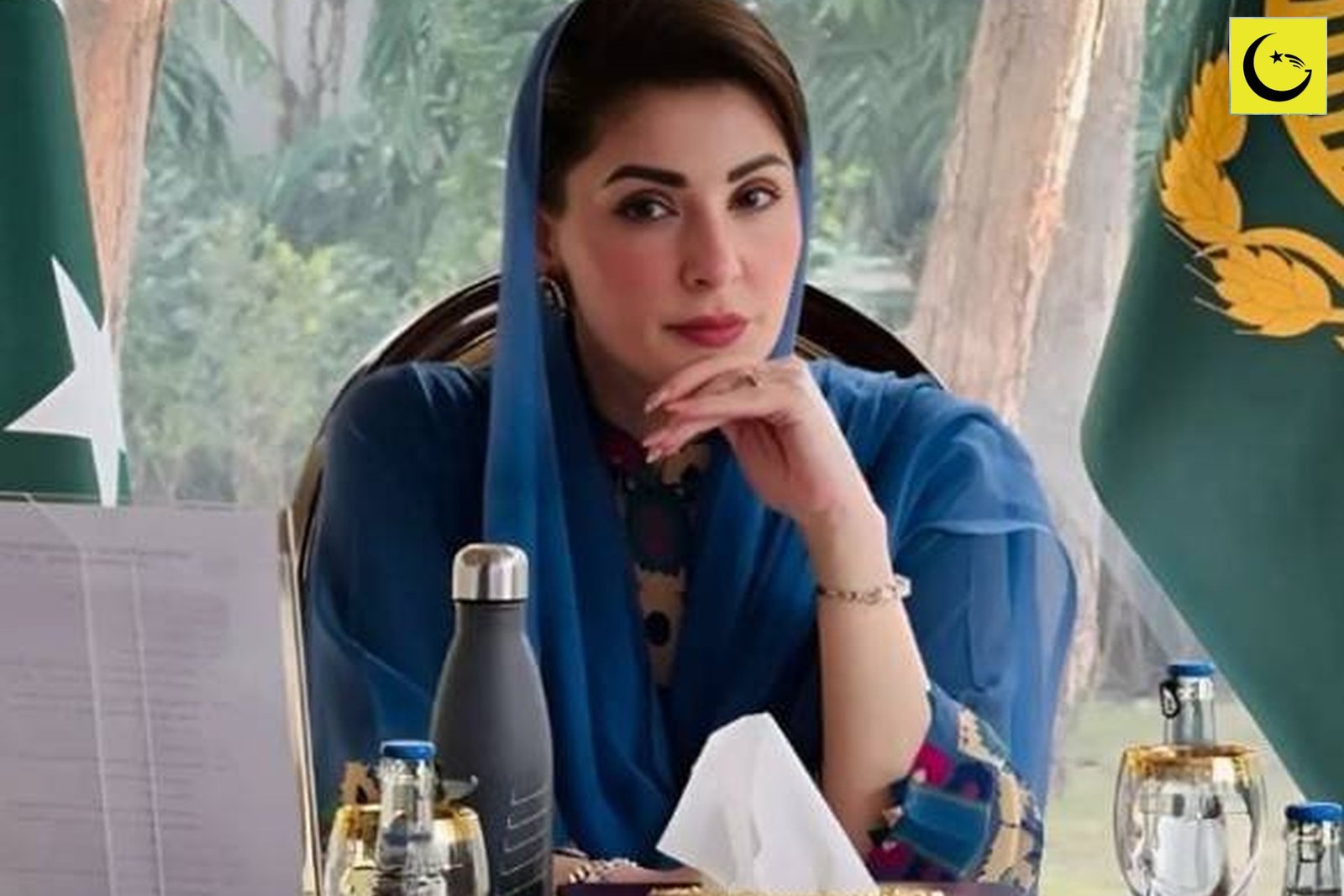
The Punjab child labour rescue drive has identified and removed more than 70,000 children from forced labour across the province, Chief Minister Maryam Nawaz Sharif told the head of the International Labour Organization in Lahore, in what officials describe as the province’s largest single push against child exploitation. Of the rescued children, 3,644 have already been enrolled in schools, giving them a way back into classrooms instead of workplaces.
The Punjab child labour rescue figures were shared during a meeting on October 8 between the chief minister and ILO Director-General Gilbert F. Houngbo, who led a delegation to Lahore to discuss labour rights, worker welfare and the enforcement of labour laws. The meeting put Punjab’s reforms on an international stage, with the ILO chief praising several of the province’s welfare initiatives and congratulating Maryam Nawaz on receiving the UN-Habitat Scroll of Honour Award, which Good News Pakistan has previously covered.
Photo: Abb Takk News
The Numbers Behind the Punjab Child Labour Rescue Drive
According to the chief minister, more than 70,000 cases of forced child labour have been identified in Punjab, and government interventions have freed the children involved. Presenting the Punjab child labour rescue results directly to the ILO chief also signals that the province welcomes international scrutiny of its labour standards.
The scale matters. Child labour remains one of Pakistan’s toughest challenges: an estimated 8.6 million children aged between 5 and 17 are engaged in child labour nationwide, and around 25.1 million children aged 5 to 16 are out of school, according to figures shared at an ILO media briefing in Islamabad earlier this year. Against that backdrop, a single provincial operation reaching tens of thousands of children is a significant step.
- 70,000+ children identified and removed from forced labour in Punjab
- 3,644 rescued children enrolled back in schools
- 4.9 million workers with minimum wage compliance ensured over three years
- 752 FIRs registered against employers violating wage regulations
- 42,858 workplace safety inspections carried out, with 22,547 advisory notices issued
A Lahore Meeting With the ILO Chief
The October 8 meeting covered a wide agenda, including minimum wages, ration cards, social security, workers’ housing, labour colonies and the protection of workers’ rights. Briefed on the Punjab child labour rescue results, Houngbo welcomed the provincial government’s measures, particularly the provision of ration cards to workers and the allocation of apartments to industrial labourers, and acknowledged what he described as a substantial increase in workers’ welfare grants.
Maryam Nawaz told the delegation that the Punjab government wanted the ILO’s support in aligning provincial policies and supply chains with international labour standards. The request signals that the province is not treating the rescue numbers as a one-off announcement but as the start of a longer, standards-based reform process.
Rehabilitation Centres, Helplines and a 15-Member Committee
Rescue is only the first stage, and the provincial government has moved to support the children afterwards. Alongside the helplines and rehabilitation centres announced at the ILO meeting, a 15-member steering committee on forced child labour has been notified, chaired by Senior Provincial Minister Maryam Aurangzeb with former MNA Mohsin Shahnawaz Ranjha as co-chairman.
The committee is tasked with mapping every sector of the province, identifying industries and workshops where children are employed, and building a central data bank linked to AI and GIS, aiming at what the HRNW News Agency described as “a zero-tolerance policy against forced child labor.”
The committee also includes the provincial ministers for school education, industry and trade, social welfare and Baitul Mal, and skills development, along with departmental secretaries, the PITB chairman and a senior police official. Its mandate covers awareness campaigns for parents, teachers and society, plus regular performance reviews meant to keep the Punjab child labour rescue effort on track.
The Punjab Labour Code 2026 and Wider Worker Reforms
The Punjab child labour rescue effort sits inside a broader reform package. The Punjab Labour Code 2026 has been enforced after approval by the provincial cabinet, with the stated goals of strengthening workers’ rights, formal registration of workers and better enforcement of minimum wage laws.
Other measures announced at the meeting include the Labour Information Management System (LIMS), which monitors minimum wage compliance, helps combat child labour and tracks occupational safety and health standards, and is now linked with Rescue 1122 for faster coordination in industrial accidents. The Labour Department’s helpline 1314 is operating round the clock for workers’ complaints and safety concerns.
On the welfare side, around 1.2 million industrial workers have benefited from the Maryam Nawaz Ration Card, with assistance worth Rs3.7 billion provided so far. Occupational health and safety centres are being established in Lahore, Faisalabad, Multan, Gujranwala, Rawalpindi and Rahim Yar Khan, and Pakistan’s first Occupational Safety and Health laboratory is planned for Lahore this year. To encourage more women to join factories and offices, 577 day-care centres are being set up under the Directorate General of Labour Welfare.
What Comes Next for the Punjab Child Labour Rescue Effort
The real test of the Punjab child labour rescue campaign will be what happens after the headlines: whether the tens of thousands of children identified stay out of work, stay in school, and receive the support their families need. The combination of rescue operations, school enrolment, rehabilitation centres, helplines and a data-driven steering committee gives the programme a stronger foundation than enforcement alone.
Education access will be central to that. Programmes bringing schooling to out-of-school children, such as the school-on-wheels project and the Teleschool initiative, show how flexible learning models can reach children the formal system misses. Turning the first 3,644 enrolments into many thousands more would show that rescue and long-term reintegration are advancing together, and that Punjab’s most vulnerable children are finally getting the childhood they deserve.
For now, the message from Lahore is clear: the province has counted the children it found in forced labour, started bringing them home to classrooms, and asked the world’s labour body to hold it to international standards as it continues.
Sources
- Abb Takk News: Maryam Nawaz apprises ILO chief of Punjab’s labour reforms
- Ghanamma: Punjab claims 70,000 children removed from forced labour
- State of Children in Pakistan: Child Labour Crisis Grips Pakistan

Umar is an engineer by profession and a passionate writer by passion. He has a deep interest in sharing good news related to Pakistan and has been working hard to promote the positive image of his homeland. Umar has written numerous articles on various topics related to Pakistan, such as technology, sports, culture, and economy.