

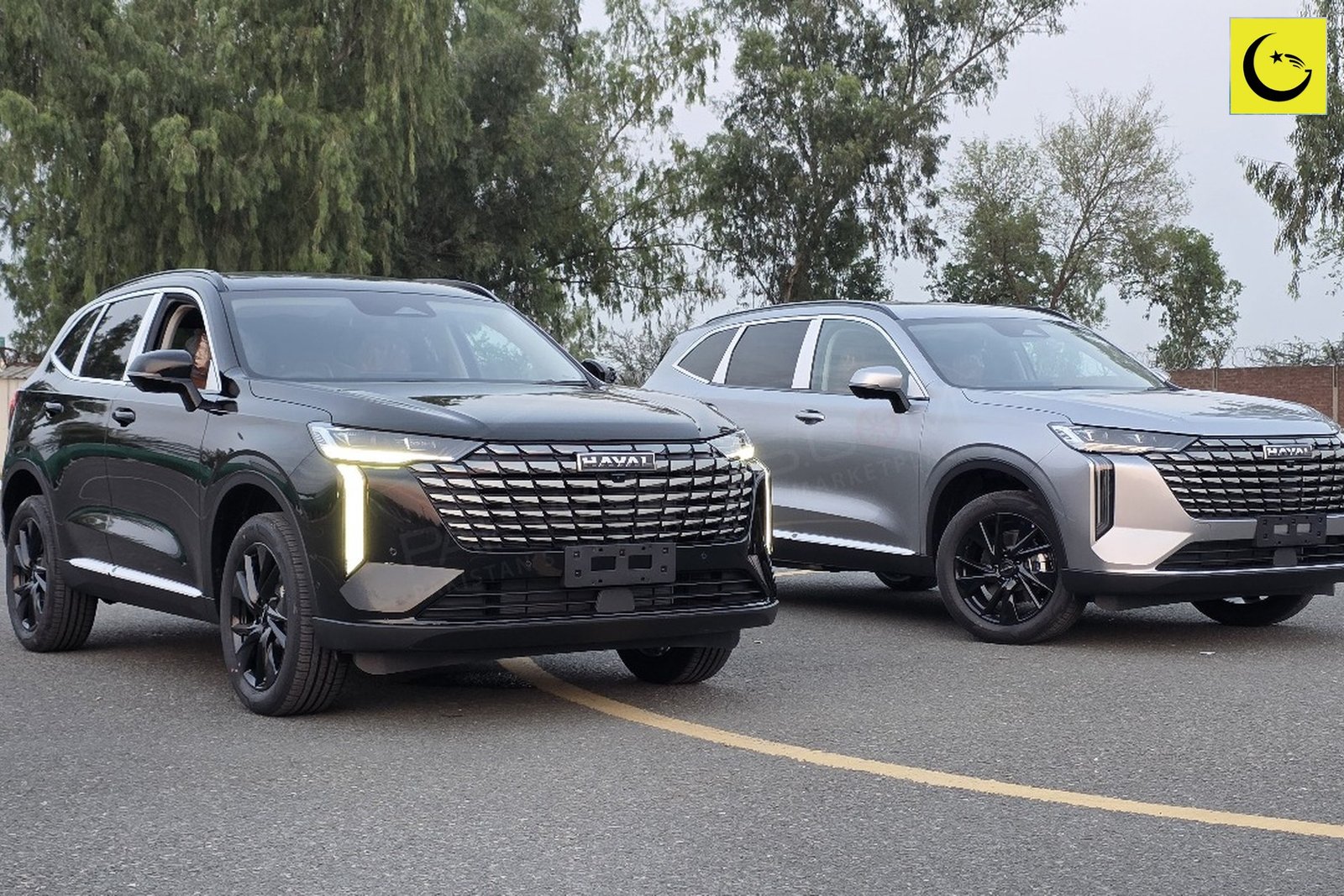
Pakistan car sales roared back in the first quarter of fiscal year 2026-27, with passenger car sales jumping 43 percent year on year and production rising 32 percent, according to data released by the Pakistan Automotive Manufacturers Association (PAMA). The July to September quarter delivered the strongest start to a fiscal year the local auto industry has seen in years, even though September itself cooled and uncertainty over the new auto policy kept buyers and manufacturers cautious.
The headline Pakistan car sales numbers tell a story of recovery. Passenger car sales reached 41,872 units in the quarter, up from 29,318 units in the same period last year. Production climbed to 47,614 units from 36,114 units. The growth was broad, touching nearly every segment of the market, from family hatchbacks to tractors and motorcycles.
Pakistan Car Sales: The Q1 FY27 Numbers
PAMA’s own write-up for September 2026 summed up the quarter in plain terms, noting that passenger cars registered robust year on year growth of 32 percent in production and 43 percent in sales. The wider Pakistan car sales picture was just as encouraging. Total automobile sales across all segments rose 19 percent year on year to about 50,500 units in the quarter, according to Arif Habib Limited.
- Passenger cars: sales up 43 percent to 41,872 units; production up 32 percent to 47,614 units
- Trucks and buses: sales up 46 percent to 2,727 units; production up 54 percent
- Farm tractors: sales up 38 percent to 4,109 units, even as production fell 15 percent
- Two and three-wheelers: sales and production both up 28 percent, with cumulative sales of 553,994 units
- LCVs, jeeps and pickups: the one soft spot, with sales down 34 percent in the quarter
Two-wheeler sales set a monthly record in September alone, with 202,502 motorcycles and rickshaws sold, up 27 percent from a year earlier. Honda led that segment with 167,100 units.
What Drove the Recovery
PAMA Director General Raziur Rahman said the July to September figures point to a resurgence of customer interest in member companies’ products, helped by easing inflation and an improving macroeconomic environment.
“July-September figures point to a resurgence of customer interest in member companies’ products.”
PAMA Director General Raziur Rahman, as reported by The News
The Pakistan car sales quarter built on a strong July, when passenger car sales had already surged 141 percent year on year. August added another solid month, with sales up 36 percent from a year earlier. By September, the momentum was cooling month to month, but the cumulative position was already strong enough to deliver the best quarterly result in years.
The Pakistan car sales rebound fits a wider pattern of economic momentum in Pakistan. Investor confidence has been rebuilding, with the stock market drawing record numbers of new investors, and the country’s IT exports continuing to grow. A healthier economy means more families can consider a new car, and more businesses can invest in commercial vehicles.
September Cooled, but the Quarter Still Shone
For Pakistan car sales, September itself was the weak month of the quarter. Passenger car sales fell 9.8 percent year on year to 10,939 units, and dropped 20.3 percent from August’s 13,717 units. It was the second consecutive monthly decline after July’s 17,216 units. Production, by contrast, kept rising, up 24.7 percent year on year to 17,040 units in September.
Both PAMA and analysts at Topline Research link the September softness to uncertainty over the coming auto policy, particularly delayed clarity on the sales tax treatment of hybrid and plug-in hybrid vehicles. That uncertainty restricted invoicing by some companies and made buyers hold off on purchases.
PAMA described “perceptible hesitation” among market players, with the lack of policy clarity dominating sentiment. There was some reassurance at an October 7 Senate committee meeting, where Haroon Akhtar Khan, adviser to the prime minister on industries and production, assured members that the policy will be approved within two weeks. PAMA said it now expects a fair taxation regime in that time frame, and warned that a tariff structure unattractive to long-term investors would send the wrong signal to the industry.
The policy vacuum also had a side effect on imports. PAMA flagged a surge in imports of completely built units, apparently brought forward in anticipation of the policy, alongside a steep rise in used car imports, with 2,276 units arriving in September alone. The association warned that both trends add pressure on the balance of payments.
Winners and Losers Among Carmakers
September’s Pakistan car sales results were sharply divided by maker. Indus Motor Company was the only assembler to record growth in the month, with sales up 31 percent year on year and 3 percent month on month to 4,142 units. Its Corolla, Yaris and Corolla Cross lineup rose 34 percent to 3,563 units, while Fortuner and IMV sales climbed 16 percent to 579 units.
Honda Atlas Cars recorded sales of 2,128 units, down 8 percent year on year and 19 percent month on month. Pak Suzuki Motor Company fell further, down 46 percent year on year and 36 percent month on month to 4,862 units. Its best-selling Alto dropped 29 percent to 3,354 units, while Cultus sales fell 68 percent to 138 units. Hyundai Nishat Motors declined 25 percent year on year but rose 19 percent month on month to 884 units.
The larger-engine segment held up better than the small-car market. Cars of 1,300cc and above recorded 6,947 units in September, up 11.6 percent from a year earlier. Sales of cars below 1,000cc fell 29.9 percent to 3,812 units. In the electric segment, Dewan’s Honri-Ve recorded 42 units, up from 30 a year earlier.
One bright spot was the tractor market, where the Punjab Green Tractor Scheme announcement helped drive production up 72 percent and sales up 73 percent month on month in September. Millat’s Massey Ferguson accounted for 1,252 of the month’s 1,815 tractor sales, with Al-Ghazi’s Fiat tractors at 563.
What Comes Next for Pakistan Car Sales
For Pakistan car sales, the outlook for the rest of FY27 depends heavily on how quickly the auto policy is settled. Topline Research expects positive momentum to continue, with double-digit growth supported by new variants and the entry of new brands. If the policy delivers the fair taxation regime PAMA is asking for, the hesitation that held back September could lift quickly.
The quarter’s numbers show Pakistan car sales have real demand underneath them. Families are buying again, businesses are refreshing commercial fleets, and farmers are investing in tractors. Pakistan’s broader digital and services progress, which has put the country among the world’s top digital services providers, points to the same underlying story: an economy finding its footing and consumers regaining confidence.
September was a reminder that confidence still needs certainty. But the first quarter of FY27 was a genuine turnaround for Pakistan car sales, and the industry heads into the rest of the fiscal year with its strongest base in years.
Photo: PakWheels Blog
Sources
- Ghanamma: Car sales jump 43% in first quarter of FY27 despite uncertainty over auto policy
- TechJuice: Auto Sales Extend Decline, Drop 9.8% in September
- PKRevenue: Pakistan Auto Sales Rise 19% in 1QFY27
- PAMA: Write-up for September 2026 Production and Sales Figures

Umar is an engineer by profession and a passionate writer by passion. He has a deep interest in sharing good news related to Pakistan and has been working hard to promote the positive image of his homeland. Umar has written numerous articles on various topics related to Pakistan, such as technology, sports, culture, and economy.