

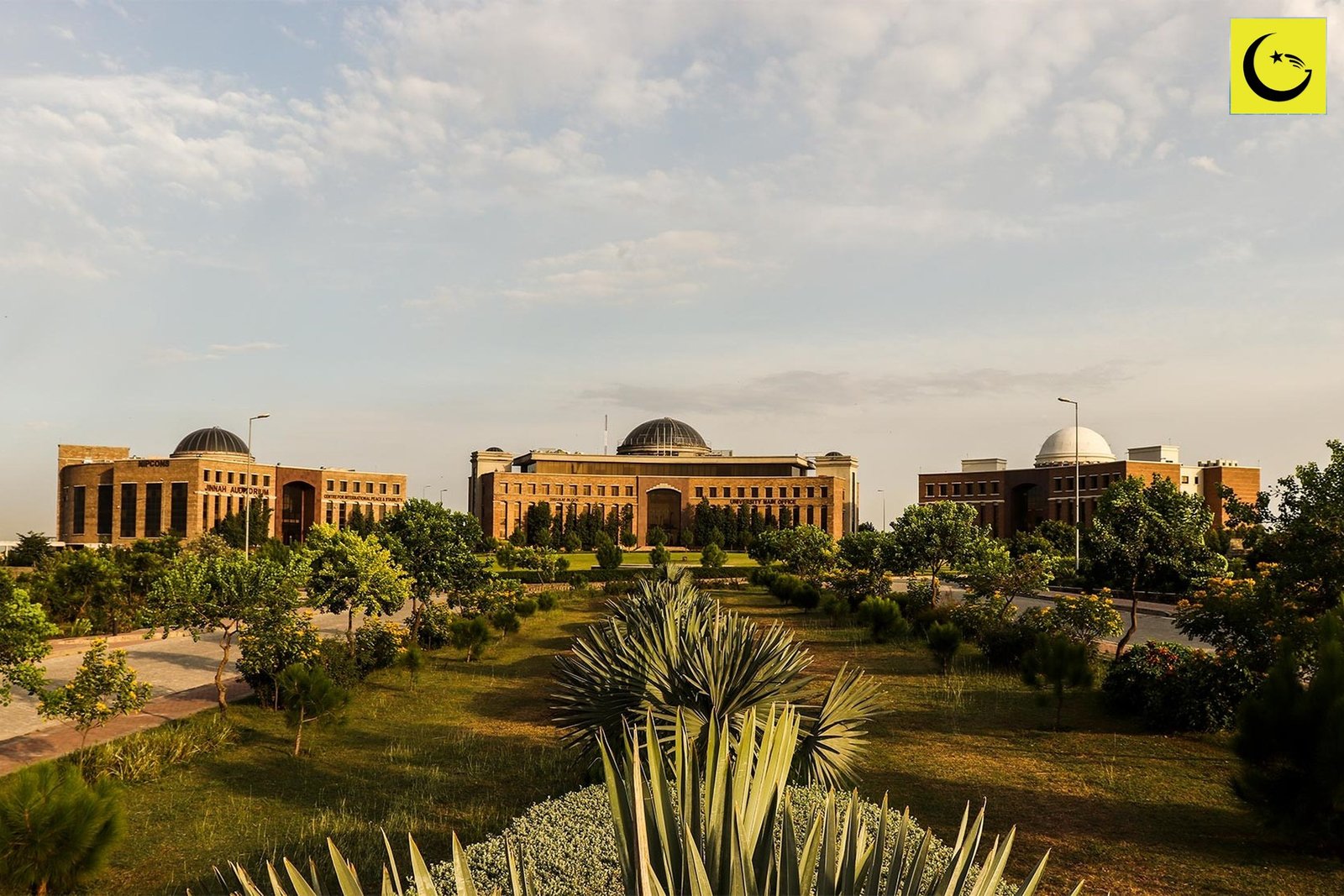
The ChipXPRT seed investment has given Pakistan’s young semiconductor industry one of its most encouraging moments yet. ChipXPRT (Private) Limited, a chip-design spin-off from NUST’s School of Electrical Engineering and Computer Science (SEECS), has secured PKR 50 million in seed funding from Matracon Pakistan Private Limited, in a deal signed at the National Science and Technology Park (NSTP) at NUST on October 14, 2026.
Most startup headlines in Pakistan belong to fintech, e-commerce and food delivery. This one is different. It is about deep technology: the design of the tiny, complex integrated circuits that sit at the heart of nearly every modern device, from phones and laptops to cars and industrial machines. When a Pakistani investor puts serious money into a university spin-off building that kind of technology, it signals that the country’s deep-tech pipeline is starting to attract local capital.
Photo: NUST
What ChipXPRT Actually Builds
ChipXPRT is a fabless semiconductor design company. The word “fabless” matters. It means the company designs chips but does not manufacture them, which is the realistic entry point into the global semiconductor industry. A full-scale chip factory, called a foundry, costs billions of dollars. Chip design, by contrast, runs on engineering talent, and Pakistan has that talent in abundance.
The company’s work focuses on secure hardware architectures, RISC-V-based processors and intellectual property (IP) for embedded systems. In plain terms, RISC-V is an open blueprint for building processors that anyone can use and adapt, which makes it a favourite of startups and universities worldwide. ChipXPRT’s products include a Quantum-Safe Boot CPU, a processor validated on the 65nm TSMC process that is designed to keep devices secure even against future quantum computers, along with hardware security modules and ultra-low-power AI accelerators.
The distinction between services and products matters here. Pakistan has a large IT services industry, but services mean writing software for someone else. Chip design means creating original, high-value technology. A single successful chip design can be manufactured millions of times and licensed globally, generating revenue for years. It is the kind of knowledge work that moves a country up the value chain, and the ChipXPRT seed investment will help the company turn these designs into commercial products.
Inside the ChipXPRT Seed Investment Deal
The signing ceremony was held at the National Science and Technology Park at NUST, a fitting venue for a deal that sits at the intersection of academia and industry. The ceremony was attended by the Principal and representatives from NUST SEECS, along with Senator Abdul Qadir, a member of the Senate. Their presence sent a clear message: this is not just a private transaction between a startup and an investor, but an institutional milestone for NUST’s commercialisation efforts.
According to the National Science and Technology Park, the ChipXPRT seed investment will be allocated 70 percent to engineering development and 30 percent to operational expenses. The funding will help ChipXPRT set up a fully operational office with state-of-the-art infrastructure, support business acquisition and strengthen its core team, with key milestones targeted over the next 6 to 12 months.
“Thank you Matracon for this investment and believe in us. It will help us expand our team.”
Dr Abid Rafique, Chief Operating Officer, ChipXPRT
Matracon Pakistan’s decision to lead the ChipXPRT seed investment is notable for another reason. Local venture money in Pakistan tends to chase fast-moving consumer plays with quick payback cycles. A PKR 50 million commitment to a semiconductor startup is patient capital, the kind that accepts longer development timelines in exchange for bigger, more defensible returns.
Why the ChipXPRT Seed Investment Matters for Pakistan
University spin-offs like ChipXPRT are how research turns into revenue. Instead of expertise that stays inside a lab, the chip-design knowledge built inside NUST SEECS is being packaged into a commercial company. The ChipXPRT seed investment is a textbook example of that model working in practice. When that transition works, everybody wins: the university proves its research has real-world value, investors get access to genuinely rare technical talent, and the country keeps its brightest engineers working on world-class problems instead of watching them leave.
There is a talent-retention angle here too. Pakistan trains thousands of electrical and computer engineers every year, many of whom end up working abroad because the local industry cannot absorb them at the frontier. Companies like ChipXPRT give that talent a reason to stay, offering work as challenging as anything in Silicon Valley, Taiwan or Shenzhen. The company is already hiring ASIC and RTL design engineers, design verification engineers and physical design engineers at its NSTP office in Islamabad.
The ChipXPRT seed investment also fits a wider pattern of momentum in Pakistan’s technology sector. Recent coverage has tracked Pakistan’s IT exports, the country’s standing among the world’s top digital services exporters, and new research centres such as the human-centred AI lab at Punjab University. ChipXPRT adds a hardware dimension to a story that has so far been mostly about software.
Pakistan’s Growing Semiconductor Push
The timing of the ChipXPRT seed investment is not accidental. Pakistan is quietly building a national strategy around semiconductors. The government’s INSPIRE initiative, the National Semiconductor Human Resource Development Program, is investing about Rs 4.8 billion to train 7,200 semiconductor professionals over five years. A draft National Semiconductor Plan proposes IC design clusters, a National Semiconductor Fund and incentives to attract investment into the sector.
NUST itself has form in this space. Its researchers successfully designed and tested NTiny-E, described as Pakistan’s first truly indigenously designed microprocessor, with the chip fabricated at TSMC on an industry-standard 65nm process node. That project proved Pakistani engineers can design chips to international industrial standards.
ChipXPRT has already shown it can deliver beyond Pakistan’s borders. The company led an intensive chip design training programme in Saudi Arabia under Vision 2030, led by Dr Abid Rafique, and in May 2025 celebrated the graduation of 33 Saudi engineers from its eight-month Zero to ASIC Train-2-Recruit programme, with four system-on-chip designs sent to TSMC for tape-out. It has also exhibited at the Future of Semiconductors Forum as part of the National Semiconductor Hub.
What Comes Next for ChipXPRT
None of this happens overnight. Chip design cycles are long, verification is painstaking and the global market is brutally competitive. But every deep-tech ecosystem in the world started with a first few funded spin-offs that proved the model, and the ChipXPRT seed investment gives the company the room to grow its team, win business and hit its milestones over the coming year.
For Pakistan, the lesson of the ChipXPRT seed investment is straightforward. When universities, investors and engineers pull in the same direction, a country can start building technology the world wants to buy, rather than only services the world wants to outsource. That is a story worth watching.
Sources
- NUST SEECS: ChipXPRT secures PKR 50 million seed investment from Matracon Pakistan
- Verified Pakistan: ChipXPRT NUST secures PKR 50M seed investment from Matracon
- ChipXPRT: About the company, its RISC-V processors and secure hardware work

Umar is an engineer by profession and a passionate writer by passion. He has a deep interest in sharing good news related to Pakistan and has been working hard to promote the positive image of his homeland. Umar has written numerous articles on various topics related to Pakistan, such as technology, sports, culture, and economy.