

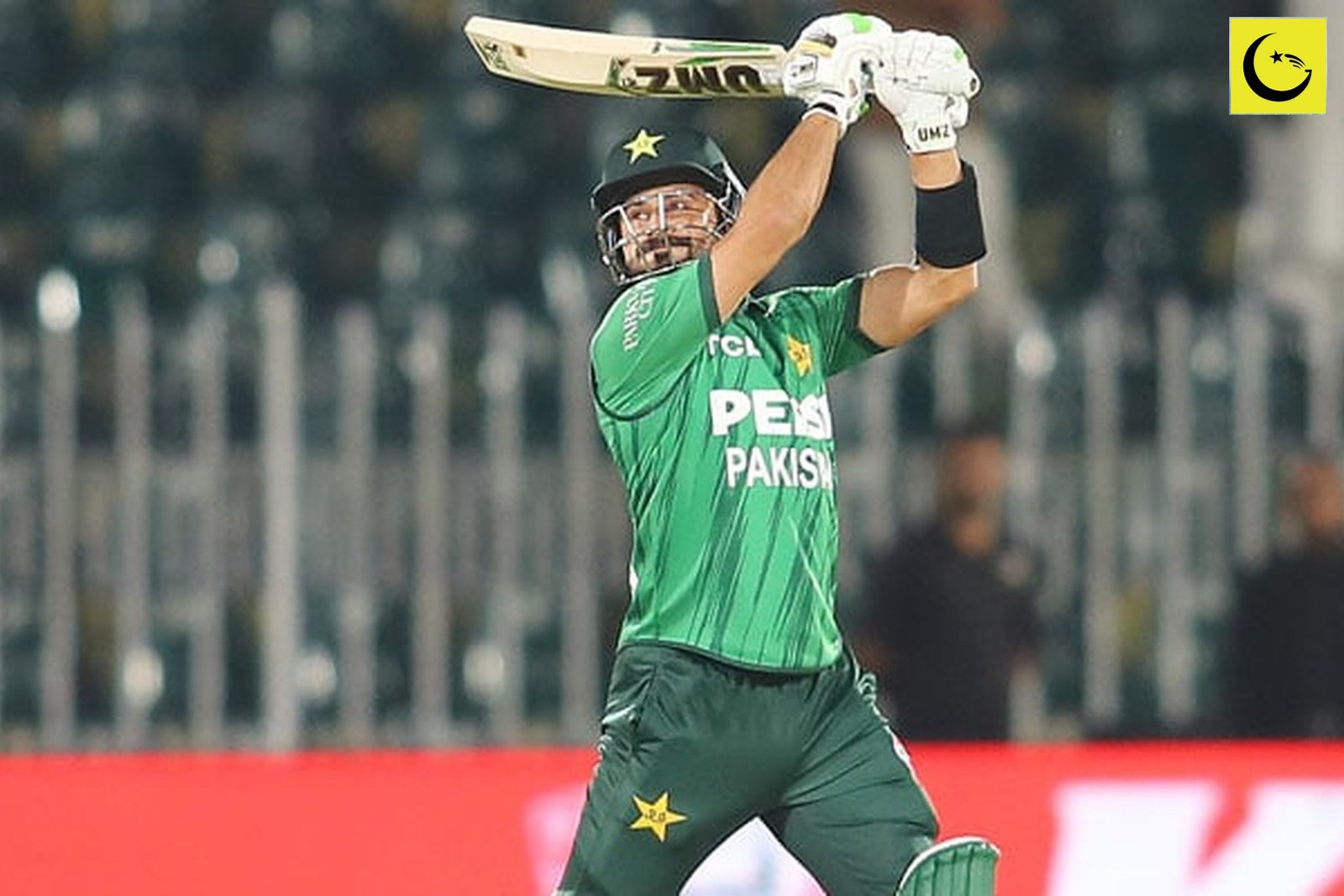
Pakistan sealed the Pakistan Sri Lanka T20I series 2-1 at Rawalpindi Cricket Stadium, wrapping up the trophy with a game to spare before Sri Lanka hit back in the finale. Captain Sahibzada Farhan led from the front with a record 238 runs across the three matches, including three consecutive half centuries, and was named Player of the Series.
The Pakistan Sri Lanka T20I series, played on October 9, 11 and 13, gave Pakistan two very different kinds of wins, a nervy four wicket chase and an 82 run rout, before a reminder in the final match that defending a total still needs work. For a side under a new full time T20I captain, it was a winning start at home.
Photo: Geo Super
Pakistan Sri Lanka T20I Series: Match by Match
All three matches were played at the same venue, Rawalpindi Cricket Stadium, which kept the contest simple: one ground, one set of conditions, and a trophy decided by who adapted fastest. Pakistan adapted first.
- First T20I, October 9: Sri Lanka 182 for 8, Pakistan 187 for 6 (18.5 overs). Pakistan won by four wickets.
- Second T20I, October 11: Pakistan 215 for 3, Sri Lanka 133 for 7. Pakistan won by 82 runs.
- Third T20I, October 13: Pakistan 168 for 8, Sri Lanka 172 for 2 (17.1 overs). Sri Lanka won by eight wickets.
The 2-0 lead after the second match meant the series was already decided before the final game, and Sri Lanka’s win in the last match was a consolation rather than a comeback. A match by match account of the series confirms the scores and the split between the match result and the series result.
First T20I: Farhan’s 89 Sets Up the Chase
Sri Lanka batted first in the opener and posted 182 for 8, a total that asked questions of Pakistan’s chase. Farhan answered them with 89 from 53 balls, an innings with 10 fours and four sixes that earned him the Player of the Match award.
Maaz Sadaqat supported his captain with a maiden T20I half century, and Pakistan reached the target with six wickets down and seven balls to spare. It was the kind of composed chase that set the tone for the rest of the Pakistan Sri Lanka T20I series, and it gave Farhan a winning start in his first home assignment as Pakistan’s full time T20I captain.
Second T20I: Sadaqat Stars in the 82 Run Rout
If the first match was about composure, the second was about power. Pakistan piled up 215 for 3, their highest men’s T20I total on home soil and their second highest overall, according to the International Cricket Council.
Sadaqat top scored with 96 from 51 balls, narrowly missing a century, while Farhan added 73. Sri Lanka never got going in reply, closing on 133 for 7 as Muhammad Imran took three wickets for 11 runs. Sadaqat was named Player of the Match, and the win sealed the Pakistan Sri Lanka T20I series with a game to spare.
The win also showed the depth in this Pakistan side. The captain was not the only batter firing, and the bowling attack defended a big total without fuss. Before the series began, our preview looked at the squads and what to watch, and the second match delivered on the promise of an attacking batting line up.
Third T20I: Sri Lanka Hit Back as Mendis Shines
Sri Lanka won the toss in the finale of the Pakistan Sri Lanka T20I series and chose to field. Pakistan reached 168 for 8, with Farhan again holding the innings together with 76 from 47 balls and Arafat Minhas adding an unbeaten 34. Dasun Shanaka led Sri Lanka’s bowling with three wickets for 21 runs.
The chase belonged to Sri Lanka captain Kusal Mendis. He finished unbeaten on 87, sharing a 98 run unbroken third wicket stand with Kamindu Mendis, who made 40 not out, after Sineth Jayawardena had scored 38. Sri Lanka won by eight wickets with 17 balls to spare, and Mendis took the Player of the Match award.
Dew made batting easier as the evening wore on, and Pakistan could not find the breakthroughs to defend their total. The defeat did not change the Pakistan Sri Lanka T20I series result, but it gave the team something honest to work on before the next assignment.
Farhan’s Record 238 Runs and What Comes Next
Farhan’s scores of 89, 73 and 76 in the Pakistan Sri Lanka T20I series add up to 238 runs, the most by any batter in a bilateral three match men’s T20I series between two Full Member nations. He passed India’s Abhishek Sharma, who scored 229 against Afghanistan earlier in 2026. New Zealand’s Colin Munro (223), Australia’s David Warner (217) and Afghanistan’s Hazratullah Zazai (204) round out the top five.
Farhan finished the series with an average of 79.33 and a strike rate of 165.27, and collected the Player of the Series award. After the final match, he said the team had gone in with the same plan that worked in the first two games:
“The way we set a superb target in the first two matches, today also we had the same plan but it’s cricket, anything can happen.”
The result matters beyond one trophy. Pakistan won a home series under a new captain, young players such as Sadaqat and Imran made match winning contributions, and Farhan had already led Pakistan to a silver medal in the Asian Games cricket final before this series. The team now moves on to an ODI tri-series with England and Sri Lanka, starting October 18 in Rawalpindi, with the final scheduled for October 31 at Gaddafi Stadium in Lahore.
For now, though, the headline is simple: Pakistan won the Pakistan Sri Lanka T20I series, and their captain wrote his name into the record books while doing it.
Sources
- Mukhbir: Pakistan Win Sri Lanka T20I Series 2-1 in 2026
- The Daily Jagran: Sahibzada Farhan Breaks Abhishek Sharma’s Record Despite Pakistan’s Defeat Against Sri Lanka
- ICC: Farhan breaks Abhishek’s record as Sri Lanka clinch T20I
- Geo Super: Sahibzada Farhan breaks Abhishek Sharma’s all-time T20I record
- The News: Kusal Mendis powers SL to emphatic win
- Cricbuzz: PAK vs SL, 3rd T20I scorecard and commentary

Umar is an engineer by profession and a passionate writer by passion. He has a deep interest in sharing good news related to Pakistan and has been working hard to promote the positive image of his homeland. Umar has written numerous articles on various topics related to Pakistan, such as technology, sports, culture, and economy.