

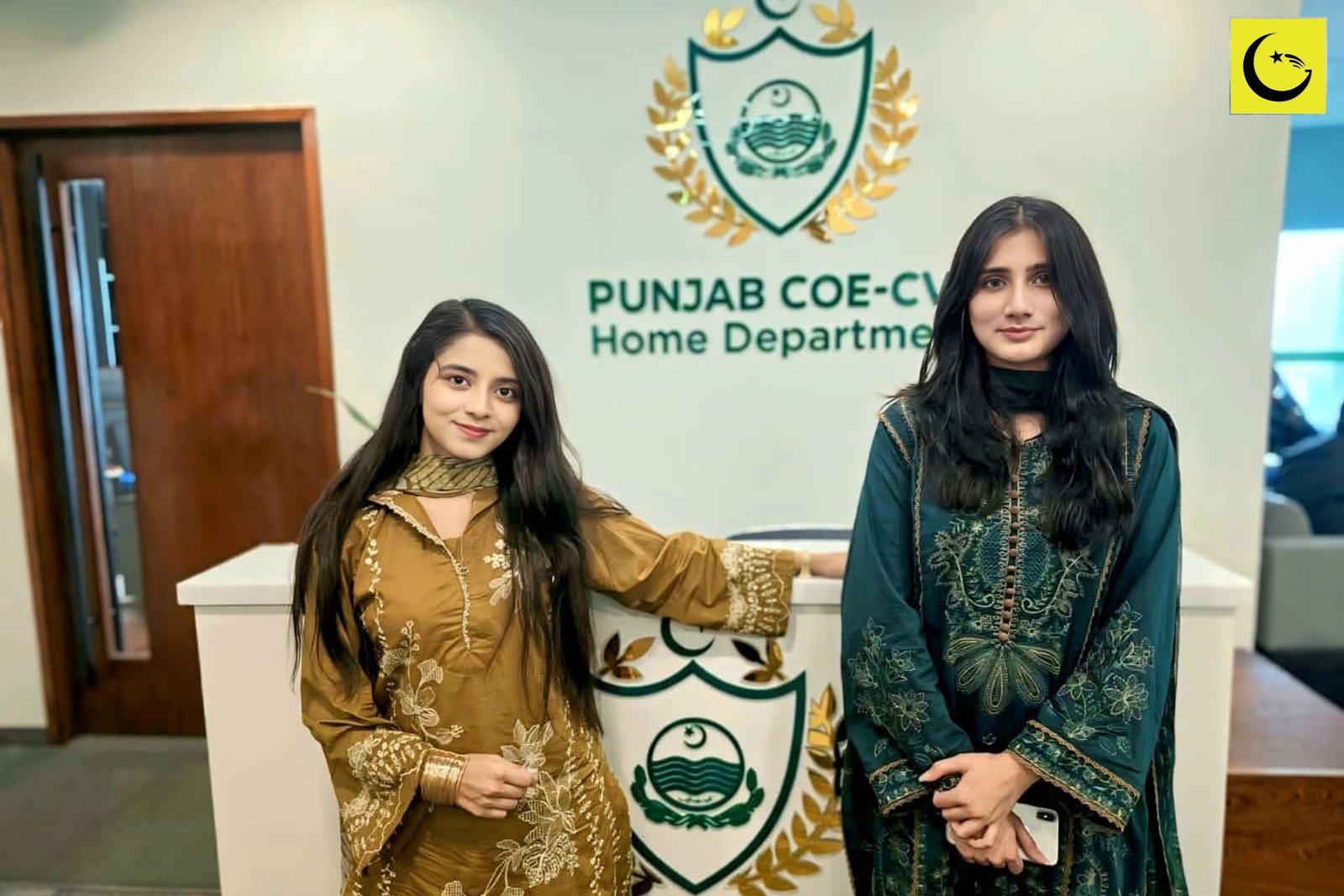
Two life sciences students from the University of Management and Technology (UMT) in Lahore have turned a classroom idea into a Rs1 million prize, after their UMT DNA testing proposal took first place in a Punjab government-sponsored Youth Innovation Competition.
Fatima Azhar and Ariha Akbar, students in UMT’s Department of Life Sciences, beat 154 entries from 51 universities across Punjab with a proposed method aimed at making DNA testing more affordable while keeping its quality high. Their win has already moved beyond the competition stage: the Punjab government has decided to pursue the idea, and the two students will be attached to the Punjab Forensic Science Authority (PFSA) to help develop and implement their research.
The result is a reminder that some of Pakistan’s most practical innovations are coming from university classrooms, where students are working on problems that affect courts, hospitals, and ordinary families.
How the UMT DNA Testing Idea Won
The Youth Innovation Competition drew 154 innovative projects from 51 universities across Punjab, putting the UMT team up against a wide field of student researchers. The UMT DNA testing entry stood out because it addressed a plain and pressing problem: DNA testing is powerful, but its cost puts it out of reach in many situations.
The students presented their proposed method at a meeting chaired by Provincial Minister Khawaja Salman Rafique. Following that presentation, a decision was taken to pursue the initiative at the government level, an important step toward turning student research into practical use.
According to UMT, the UMT DNA testing method seeks to reduce the cost of DNA testing while improving its quality. If that goal holds up in practice, the service could become more accessible, and it could support further research and innovation in related fields. The published reports do not give a technical breakdown of the method or a specific new price, so the next phase will show how the idea performs outside the competition setting.
Why Cheaper DNA Testing Matters in Punjab
DNA testing sits at the heart of modern forensic work. In Punjab, the PFSA’s DNA and Serology department examines biological evidence from crime scenes, builds DNA profiles from samples such as blood, saliva, and swabs, and compares those profiles with reference samples to identify suspects or clear the innocent. The agency also maintains a DNA database that lets investigators match crime scene samples against stored profiles.
The promise of the UMT DNA testing method is straightforward. If the cost of testing falls while quality holds, more cases can be tested, more evidence can be processed, and access widens beyond the cases that currently get priority. If the UMT DNA testing method delivers on that promise in PFSA laboratories, the gain will be measured in cases processed, not just in prizes won. For families waiting on answers in criminal or civil cases, that difference is real.
Cheaper testing could also help beyond forensics. DNA analysis is used in medical research, in identifying missing persons, and in settling questions of kinship. A method developed in a Pakistani university, shaped for local needs and budgets, has a better chance of reaching the people who need it most than an imported solution priced for other markets.
What Happens Next for the Winning Team
The most important part of the story may be what comes after the prize. The two students will be attached to the PFSA to further develop and implement their research, working alongside the people who run forensic DNA testing every day. That kind of placement gives the UMT DNA testing team something competitions alone cannot: access to real laboratories, real casework standards, and experienced scientists who can test whether the method survives contact with practice.
The government’s decision to pursue the initiative at its own level also matters. Student competitions in Pakistan often end with a trophy and a photograph. This time, the winning entry has a path into an institution that can actually use it.
A Win for Student Research in Pakistan
UMT President Ibrahim Hasan Murad congratulated the students, describing their first-place finish as a matter of pride for the university and recognition of their hard work, research capabilities, and commitment to innovation.
“Their achievement reflected their research capabilities, hard work and commitment to innovation.”
Murad also reaffirmed UMT’s commitment to strengthening student research and supporting innovative projects that can move beyond academic work into practical applications. The message fits a wider pattern on Pakistani campuses, where student researchers are increasingly turning their work toward problems with clear public value. Hareem Naeem’s world-topping IGCSE result showed what Pakistani students can achieve in the classroom, and this UMT win shows what they can build when they aim at a real-world problem.
The same spirit is visible in university spin-offs. ChipXPRT, a NUST spin-off, recently secured seed funding to build chip design capacity in Pakistan. The UMT DNA testing project belongs to the same story: young researchers in Pakistan are no longer waiting to be handed opportunities, they are creating them.
For students watching from other universities, the lesson is encouraging. A good idea, presented clearly, can win funding, government attention, and a route into a working institution. For Pakistan, the lesson is just as clear: investing in student research pays, and the UMT DNA testing story shows why. The next breakthrough may already be sitting in a university lab, waiting for a competition, a mentor, and a chance. Students exploring their own next steps can also look at British Council scholarships open to Pakistanis, which support study and research in the UK.
Sources
- University of Management and Technology (UMT), “UMT Students Win Rs1 Million for Developing Affordable, High-Quality DNA Testing Method”
- Academia Magazine, “UMT Students Win Rs1 Million for DNA Testing Idea”
- Punjab Forensic Science Agency, DNA and Serology department
Photo: UMT

Umar is an engineer by profession and a passionate writer by passion. He has a deep interest in sharing good news related to Pakistan and has been working hard to promote the positive image of his homeland. Umar has written numerous articles on various topics related to Pakistan, such as technology, sports, culture, and economy.