

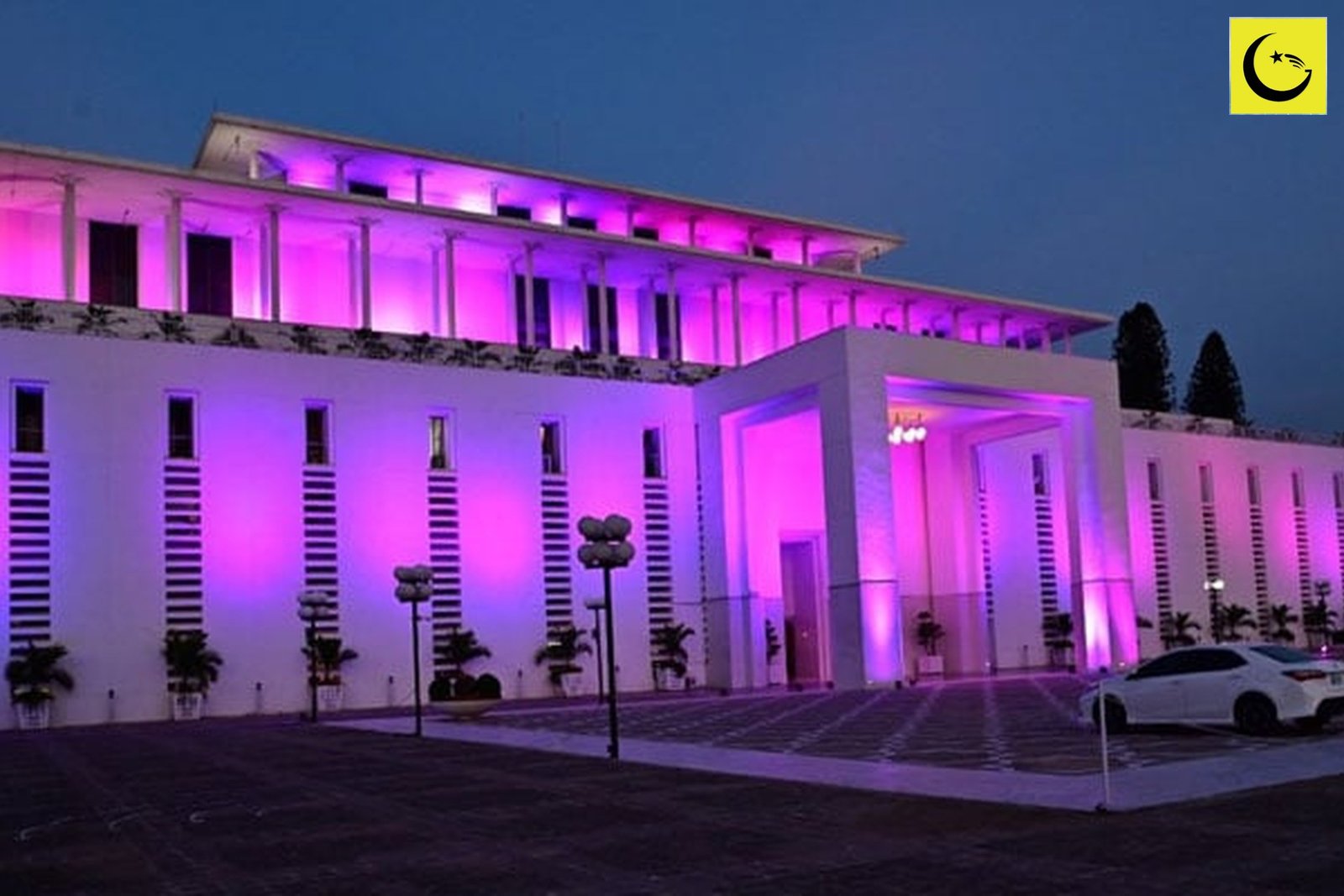
Islamabad gave its most recognisable skyline a powerful new meaning this week, as Pinktober Pakistan 2026 saw the capital’s key government buildings illuminated in pink on the evenings of October 19 and 20 to mark the annual breast cancer awareness campaign. The President’s Secretariat at Aiwan-e-Sadr, the Prime Minister’s Secretariat, the Supreme Court of Pakistan, Parliament House and the Cabinet Secretariat all glowed pink from 7:00 pm to 11:00 pm on both nights, turning the seat of government into a public reminder that awareness and early diagnosis can save lives.
The illumination was carried out on the directions of First Lady Bibi Asifa Bhutto Zardari, according to reports published by The News and Sabah News. Both outlets said the initiative was aimed at raising public awareness about breast cancer, highlighting the importance of early detection and encouraging women to seek timely medical consultation instead of delaying a check-up. For two evenings of Pinktober Pakistan 2026, buildings that usually symbolise state business carried a health message that commuters, families and visitors across the capital could not miss.
Photo: X / PPPKP_Official via The News
Why Pinktober Pakistan 2026 Matters So Much
The scale of the disease explains why campaigners return to this message every October. Pinktober Pakistan 2026 arrives in a country where, of the 185,000 new cancer cases reported annually, breast cancer accounts for nearly 25 per cent of the total, according to data shared by the Pakistan Medical Association and cited by The News in its recent editorial on the campaign. Experts say early detection can result in a cure rate as high as 98 per cent, yet thousands of women in Pakistan are still diagnosed each year only after the disease has reached an advanced stage.
That gap between what is possible and what actually happens is the heart of the campaign. Hospitals, charities and community organisations have spent years teaching women about symptoms and urging them to seek medical advice, but awareness alone is not enough when screening is hard to reach. A shortage of mammography facilities, particularly in rural areas, means many women must travel long distances for a scan and then make repeated journeys for treatment. Taboos around women’s health, and households where women put their own needs behind everyone else’s, add further delay. Pink illumination on the country’s most official buildings is designed to start the conversation in public, so that it can continue at home.
Early Detection Is the Message Behind the Lights
Health campaigners behind Pinktober Pakistan 2026 stress a simple, practical sequence: know what is normal, notice any change, and consult a doctor promptly. A new lump, a change in size or shape, skin dimpling or a nipple change should never be ignored or waited out. Regular breast self-examination, clinical examination and mammogram screening where advised can catch the disease at a stage when treatment is far more effective and far less punishing for patients and families.
Much of that groundwork in Pakistan has been built by Pink Ribbon, which named the October campaign PINKtober and has marked it since 2004. The organisation says its community work focuses on prevention, early detection and better access to treatment, including teaching breast self-examination techniques in schools, colleges and universities and providing free clinical breast examinations and mammograms to women who could not otherwise afford them. Its message for October is consistent with the one lit up in Islamabad this week: finding breast cancer early changes outcomes.
Sport is carrying the same Pinktober Pakistan 2026 message this month. As Good News Pakistan reported separately, the Pakistan cricket team will wear pink jerseys for a dedicated Breast Cancer Awareness Day fixture later in October, with awareness activity planned around the match and free mammogram screenings for female fans (see Pakistan to wear pink jerseys for breast cancer awareness). Between the stadium and the capital’s official buildings, the campaign is reaching audiences who might never attend a health seminar.
Awareness That Has to Lead Somewhere
The wider test for Pinktober Pakistan 2026 is whether a striking two-night display translates into year-round action: more screening facilities beyond the major cities, subsidised or free diagnostic tests for women who cannot afford them, and primary healthcare workers who can spot symptoms early and direct patients to the right facility without delay. Those priorities echo other recent health coverage on this site, from UNICEF-supplied medicine reaching children in Khyber Pakhtunkhwa to the national mental health policy for 2026 to 2035, where the common thread is turning good intentions into services people can actually use.
For now, the image from Constitution Avenue is a hopeful one. When Aiwan-e-Sadr and Parliament House turn pink together, they tell every woman watching that her health is a matter of national importance, and they tell every family that supporting an early check-up is an act of care, not a cause for hesitation. If even a fraction of the people who saw the lights this week book a screening, ask a question or encourage a mother, sister or daughter to do so, Pinktober Pakistan 2026 will have done exactly what it set out to do.
Sources
- The News: Key govt buildings illuminated pink
- Sabah News: Key Government Buildings to Be Illuminated Pink on 19 and 20 October for Pinktober
- The News: Beyond Pinktober

Umar is an engineer by profession and a passionate writer by passion. He has a deep interest in sharing good news related to Pakistan and has been working hard to promote the positive image of his homeland. Umar has written numerous articles on various topics related to Pakistan, such as technology, sports, culture, and economy.