

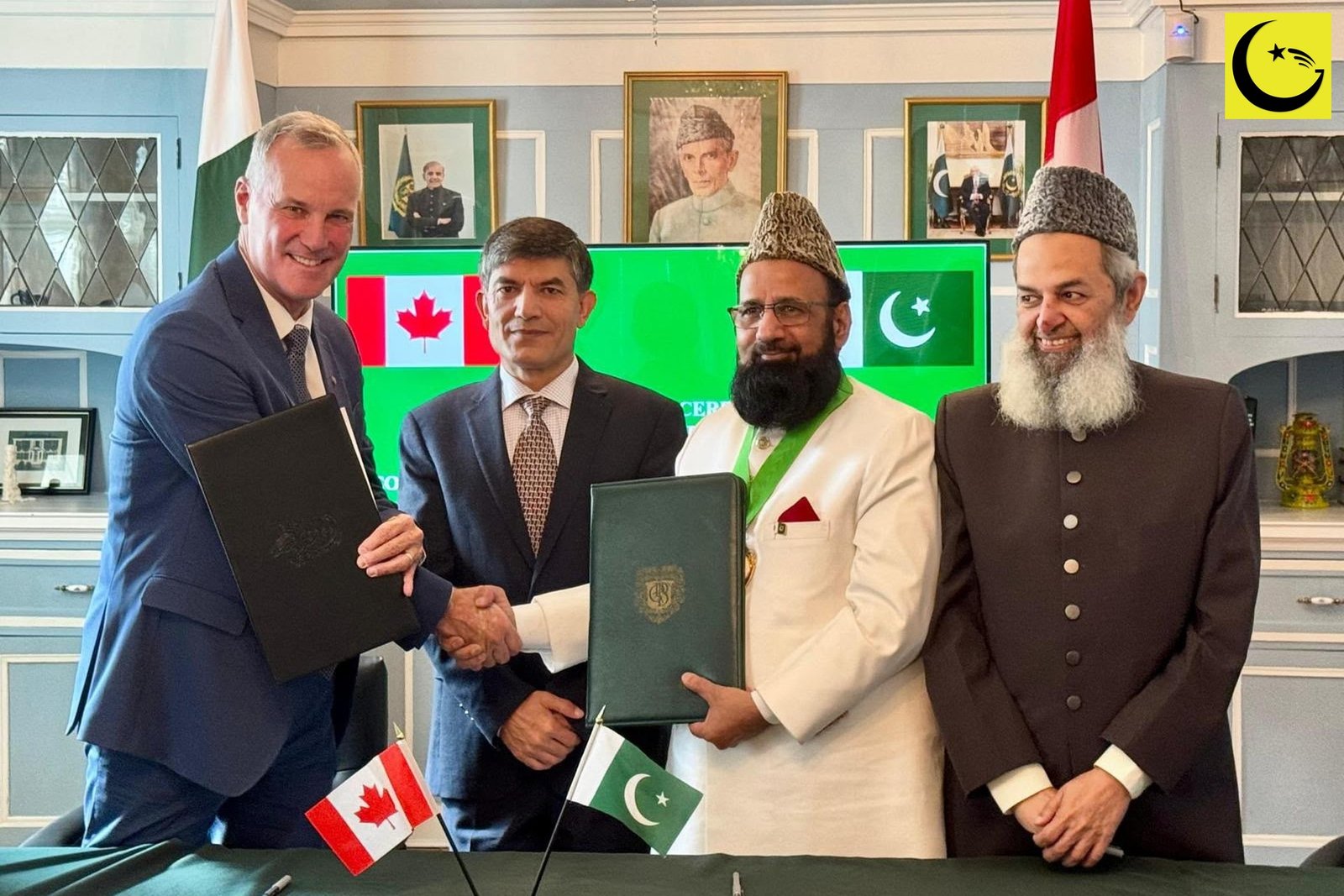
The Pakistan Canada Medical Education MoU 2026 was signed in Ottawa on October 22, 2026, giving Pakistan and Canada a formal framework to work together on postgraduate medical education and specialist training. The College of Physicians and Surgeons Pakistan (CPSP) and the Royal College of Physicians and Surgeons of Canada (RCPSC) signed the memorandum of understanding at a ceremony hosted by the High Commission for Pakistan in Ottawa, in a step both sides described as a way to raise the quality of medical education and specialist training.
The CPSP delegation was led by its President, Prof. Dr. Khalid Masood Gondal, while the RCPSC side was headed by its Chief Executive Officer, Dr. Christopher Watling. Photographs from the ceremony show the two leaders shaking hands and holding the signed folders in front of the flags of Pakistan and Canada, with the High Commission hosting the engagement in the Canadian capital. Representatives of both organisations said they were confident the agreement would strengthen institutional ties between the medical communities of the two countries, and the Pakistan Canada Medical Education MoU 2026 was the centrepiece of the CPSP visit to the Canadian capital.
Pakistan Canada Medical Education MoU 2026: What the Agreement Covers
The agreement provides a framework for collaboration in postgraduate medical education, clinical training, capacity building, faculty development and the exchange of best practices in fields of mutual interest. In practical terms, that puts the focus on how specialists are trained and assessed, how clinical teachers are developed, and how two established colleges can learn from each other rather than working in isolation. The partnership is expected to facilitate greater academic engagement and professional cooperation between the two institutions, according to the reports of the signing published by DNA News Agency and Islamabad Post.
The signing also fits a wider pattern of Pakistan building structured links on medical training with partners abroad. GoodNews.com.pk has previously reported on China and Pakistan signing medical education MoUs and launching an association chapter, another example of Pakistani institutions formalising cooperation on how doctors are educated. The Canada agreement adds a North American partner with a long established system of specialist certification to that network.
Two Colleges Built to Set Specialist Standards
Both signatories are central to specialist training in their home countries. CPSP describes itself as the premier postgraduate medical institution of Pakistan. It was established in 1962 through an act of parliament, with a charter focused on promoting specialist medical practice through postgraduate medical education, training and research, and its qualifications are recognised worldwide across 73 fellowship and 22 membership programmes. A direct link between CPSP and a counterpart college therefore reaches the heart of how Pakistan produces its specialists.
The RCPSC plays a comparable role in Canada. Established in 1929 by a special act of parliament, it is the national body that oversees the medical education of specialists in Canada, setting standards for specialty education and certification. That symmetry helps explain why the Pakistan Canada Medical Education MoU 2026 is framed around standards, training quality and faculty development, rather than around a single exchange visit or a one off course. Each side brings experience of running national systems for postgraduate training, assessment and continuing professional development.
Earlier Talks in January Pointed to This Deal
The Ottawa signing did not come out of nowhere. Dental News Pakistan reported that in January 2026, Pakistan’s High Commissioner to Canada, Muhammad Saleem, met Craig Ceppetelli, then Executive Director and Chief Operating Officer of the RCPSC, at the college’s offices in Ottawa. Those discussions covered opportunities for professional training and capacity building, with particular attention to postgraduate medical education, accreditation and specialist training, and they explored possible institutional links between the RCPSC and CPSP.
The same report noted that CPSP has been pursuing international partnerships in postgraduate medical education, and that its 2026 bulletin described discussions with Canadian counterparts on possible cooperation that included exchanging examiners and assessment expertise, exploring resident and fellowship training pathways, and collaborating on simulation programmes. None of those items is confirmed as part of the signed framework, and the public announcements of the MoU do not list specific first activities. They do, however, show the kind of practical cooperation that a framework of this type is designed to make possible, and they trace the groundwork that led to the Pakistan Canada Medical Education MoU 2026, as The Diplomatic Insight also reported in its coverage of the signing.
Why Stronger Specialist Training Matters at Home
Postgraduate training is where a doctor becomes a specialist, so improvements in curricula, assessment and faculty development flow through to hospitals and patients over time. Pakistan has been giving health policy and training renewed attention at home as well, including work GoodNews.com.pk covered in Pakistan’s National Mental Health Policy 2026 to 2035 and in the Saaf Sehatmand Pakistan initiative on healthier schools and communities. International partnerships sit alongside those domestic efforts: they give Pakistani educators a structured way to compare training methods, assessment approaches and clinical learning environments with an established overseas system.
For trainees and faculty in Pakistan, the value of the Pakistan Canada Medical Education MoU 2026 will depend on what follows the ceremony. The public reports do not announce trainee numbers, exchange quotas, funding, start dates or named programmes, and it would be wrong to present any of those as agreed. What is agreed, and documented, is the framework itself: postgraduate medical education, clinical training, capacity building, faculty development and the exchange of best practices, backed by the leadership of both colleges.
That makes the signing a starting point worth recording. Two national colleges responsible for specialist standards have committed, in writing and in public, to closer academic engagement and professional cooperation. If the follow up work matches the intent expressed in Ottawa, the Pakistan Canada Medical Education MoU 2026 could become a useful channel for knowledge, expertise and professional experience to move between the medical communities of Pakistan and Canada in the years ahead.
Sources
- DNA News Agency, Pakistan, Canada Medical Institutions sign MoU, October 22, 2026
- Islamabad Post, Pakistan, Canada Medical Institutions sign MoU, October 2026
- The Diplomatic Insight, Pakistan, Canada Sign MoU to Strengthen Cooperation in Postgraduate Medical Education, October 2026
- Dental News Pakistan, CPSP, Canadian Royal College sign MoU on postgraduate medical training, October 23, 2026
- Photo: The Diplomatic Insight

Umar is an engineer by profession and a passionate writer by passion. He has a deep interest in sharing good news related to Pakistan and has been working hard to promote the positive image of his homeland. Umar has written numerous articles on various topics related to Pakistan, such as technology, sports, culture, and economy.