

Pakistan remittances reached $7.29 billion in July and August 2026, the first two months of the new fiscal year, and for once the number is big enough to change the whole story of the country’s external accounts: the money sent home by overseas Pakistanis was larger than Pakistan’s entire trade deficit for the same period. The combined deficit on goods and services trade stood at $6.75 billion, which means the inflows covered about 108 percent of everything the country overspent on trade, according to figures from the State Bank of Pakistan and the Finance Division’s Monthly Economic Update, reported this week.
The two-month total is up 14.7 percent from the $6.35 billion received in July and August last year. August alone brought in $3.66 billion, a rise of 16.5 percent year on year and slightly ahead of July’s $3.63 billion. It is the continuation of a remarkable run: remittance inflows have now stayed above $3.4 billion in eleven of the last thirteen months, building on the record $41.6 billion that arrived during the 2025-26 fiscal year.
How Pakistan Remittances Covered the Trade Gap
The headline deserves a careful explanation, because three different deficits are often mixed together. The first is the goods trade deficit: Pakistan imported $11.6 billion worth of goods in July and August, up 11.4 percent, while goods exports brought in $5.44 billion, up 4.0 percent, leaving a goods-only gap of about $6.2 billion. Adding services trade, where Pakistan also spends more than it earns, takes the combined goods and services deficit to $6.75 billion. That is the figure the $7.29 billion in remittances more than covered.
The third measure is the current account deficit, the broadest gauge of the country’s external position, and here the effect of the inflows is just as clear. The current account deficit for the two months narrowed to $543 million, down 36.3 percent from $853 million a year earlier. August on its own recorded a deficit of only $98 million, the smallest monthly shortfall since April. Analysts reviewing the State Bank’s balance of payments data credit the improvement almost entirely to remittances, since the underlying trade gap actually widened on higher import demand and energy costs.
Where the Money Came From
Saudi Arabia remained the largest source, sending $873 million in August alone, up 19 percent year on year, and $1.79 billion across the two months. The United Arab Emirates followed with $750 million in August and $1.49 billion over the period, while the United Kingdom sent $564 million in August and $1.12 billion in total. The United States contributed $309 million in August, the European Union $496 million, and other Gulf countries $327 million, with every major corridor recording double-digit growth or close to it.
Not all of this money comes from traditional wage work abroad. A growing share is earned by Pakistanis who never leave home, including the online professionals covered in our report on how much Pakistan’s freelancers are earning, whose foreign income arrives through the same banking channels and adds to the same monthly totals.
Reserves, Exports and the Road Ahead
The inflows are also showing up in the country’s safety buffer. The State Bank’s gross foreign exchange reserves stood at $18.48 billion at the end of August, more than 18 percent higher than a year earlier, a build-up we have been tracking in our coverage of Pakistan’s foreign exchange reserves. Reserves matter because they pay for imports and debt servicing when other income falls short.
There is honest context to keep alongside the celebration. Exports are growing far more slowly than imports, and goods exports rose just 4.0 percent in the two months, which is why new export channels matter so much, from food shipments to the technology earnings detailed in our report on Pakistan’s IT exports. A trade gap covered by money sent home is far healthier than one covered by borrowing, but the long-term goal remains earning more abroad rather than relying on family transfers.
For now, the momentum is with the senders. Topline Research projects that Pakistan remittances could reach $43.7 billion by the end of this fiscal year, broadly in line with the State Bank’s own outlook of around $44 billion, which would set another annual record. Behind every one of those dollars is a worker in Riyadh, Dubai, London or New York sending part of a pay cheque home, and together, in July and August, they quietly paid Pakistan’s entire trade bill.
Sources
- The News, Workers’ remittances rises to $3.66bn in August (State Bank of Pakistan data)
- Mettis Global, Current account posts $98m deficit in August
- TechJuice, Pakistan’s Remittances Rise 17% to $3.66 Billion in August 2026
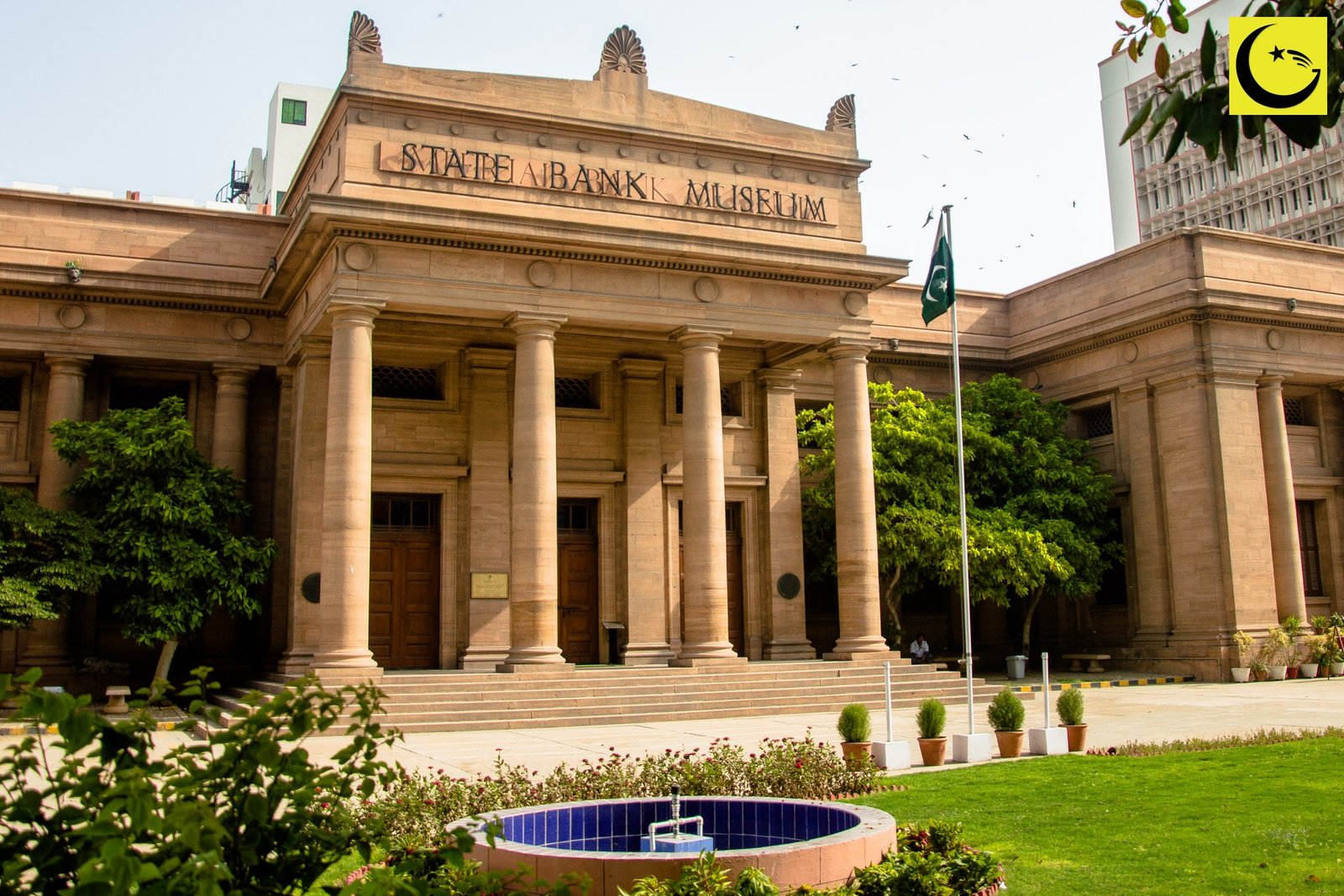
- Featured photo: The old State Bank of Pakistan building in Karachi, now the State Bank Museum. Photo: Asim Iftikhar Nagi, via Wikimedia Commons (CC BY-SA 4.0)

Umar is an engineer by profession and a passionate writer by passion. He has a deep interest in sharing good news related to Pakistan and has been working hard to promote the positive image of his homeland. Umar has written numerous articles on various topics related to Pakistan, such as technology, sports, culture, and economy.