

Pakistan has asked Qatar to support the early signing of the Pakistan GCC free trade agreement, telling a joint trade task force in Doha that Islamabad has already completed its side of the process and wants the deal with the six Gulf states concluded without further delay. The request was the centrepiece of talks aimed at winning better market access for Pakistani goods and fresh Qatari investment for Pakistani farms and factories.
Commerce Minister Jam Kamal Khan co-chaired the second meeting of the Pakistan-Qatar Joint Task Force on Trade and Investment in Doha on Saturday, October 24, alongside Qatar’s Minister of State for Foreign Trade Affairs, Dr Ahmad bin Mohammed Al-Sayed. The meeting, held on the sidelines of the 9th World Investment Forum hosted by Qatar, reviewed progress since the task force first met in April 2026 and examined ways to remove the obstacles that still slow trade between the two countries.
Pakistan told the meeting it had completed its domestic approval process for the agreement and forwarded the approved text to the GCC Secretariat on December 31, 2025. With its own formalities finished, Islamabad asked Doha to help expedite the remaining steps on the Gulf side, so the signing can happen at the earliest opportunity.
What the Pakistan GCC free trade agreement means for exporters
The Gulf Cooperation Council groups Saudi Arabia, the United Arab Emirates, Qatar, Kuwait, Oman and Bahrain, a combined market of well over 50 million people with some of the highest incomes in the world. A free trade agreement would cut or remove customs duties on Pakistani goods entering those markets, giving exporters of rice, meat, textiles, sports goods, surgical instruments and technology services a price advantage they do not enjoy today. More orders from the Gulf would mean more work in the mills, farms, workshops and software houses of Pakistan.
The deal has been years in the making. Pakistan and the GCC first discussed free trade under a framework agreement in 2004, the talks later stalled, and momentum returned in 2021. Negotiations were concluded in a final round held in Riyadh from September 26 to 28, 2023, when a preliminary agreement was initialled. It was the first free trade agreement the GCC had concluded with any country since 2009. Business groups have long backed the Pakistan GCC free trade agreement because the Gulf is already home to millions of Pakistani workers, whose earnings form a large share of the remittances Pakistan receives from abroad.
Meat, rice and investment on the Doha agenda
Food exports featured prominently. Pakistan raised Qatar’s restrictions on imports of bone-in meat and asked for an early resolution, noting that a technical dossier covering animal health and food safety requirements has already been shared with the Qatari authorities. A decision in Pakistan’s favour would reopen a valuable market for meat exporters and for the livestock farmers who supply them.
Rice was next on the table. Pakistan highlighted a proposed government to government arrangement under which the Trading Corporation of Pakistan would supply Pakistani rice to Hassad Food, Qatar’s leading food security company. The proposal has been sent to the Federal Cabinet for approval, and if it goes through it would give Pakistani rice growers a large and stable buyer in the Gulf.
On investment, Pakistan invited Qatari capital into modern agriculture, grain storage and cold chain facilities, new energy and electric vehicles, information technology and digital infrastructure, and maritime and shipping cooperation. Islamabad also presented the concept of a dedicated investment fund and pressed for the early start of 11 technical working groups covering logistics, aviation, advanced manufacturing, mining and minerals, agriculture, tourism, financial technology, healthcare, education, industrial development, information technology and startups. Each group is a channel for projects that create jobs inside Pakistan.
The task force is designed to turn discussion into named projects. Pakistan has shared its nominees for the working groups and asked Qatar to nominate its own members, so that each group can start matching Qatari investors with ready opportunities in Pakistan. Alongside the task force, Jam Kamal Khan held a separate meeting with the head of the World Investment Forum, the global gathering on whose sidelines the Doha session took place, underlining that Pakistan is pitching its case to Gulf investors on every available platform this week.
A growing partnership and a wider trade push
The partnership already carries real weight. Trade between Pakistan and Qatar reached 3.25 billion dollars in 2025, according to figures shared by Qatar’s Ministry of Commerce and Industry, with Qatar supplying liquefied natural gas that helps power Pakistani homes and factories and Pakistan sending agricultural produce in return. At the close of the Doha meeting the two ministers signed the minutes of the first task force session, and Pakistan will host the third meeting.
The Doha talks also fit a wider pattern of Pakistani trade diplomacy. This month, Pakistan and Canada concluded the third round of investment treaty talks in Islamabad, while Pakistan and the Maldives have set a 200 million dollar trade target backed by 20 new agreements. Each track serves the same goal: more markets for Pakistani products, more investment into Pakistani industry, and more secure jobs for the people behind them.
For exporters watching from Karachi, Lahore and Sialkot, the next milestone is a signing date. If Qatar’s support helps the remaining formalities move quickly, one of Pakistan’s longest running trade negotiations could finally turn into lower duties, bigger orders and fuller order books.
What happens next is procedural but important. The GCC member states complete their own internal steps, the agreement is signed, and implementation then phases in the duty cuts that exporters will actually feel at the port. By volunteering to host the third task force meeting, Pakistan keeps the conversation on its own calendar and the pressure friendly but constant. For a deal first discussed more than two decades ago, that steady follow through may be what finally carries it over the line.
Sources
- Press Information Department, Government of Pakistan: Pakistan, Qatar discuss expanding trade and investment cooperation at second Joint Task Force meeting in Doha (PR No. 392, October 25, 2026)
- Business Recorder: Pakistan seeks early signing of GCC free trade agreement in talks with Qatar (October 2026)
- Qatar News Agency: Second meeting of Qatar-Pakistan Joint Working Group on Trade and Investment convenes (October 26, 2026)
- Ministry of Commerce and Industry, Qatar: Qatar-Pakistan Working Group explores ways to strengthen trade and investment cooperation (April 16, 2026)
- Press Information Department: Pakistan and Gulf Cooperation Council finalise Free Trade Agreement (September 29, 2023)
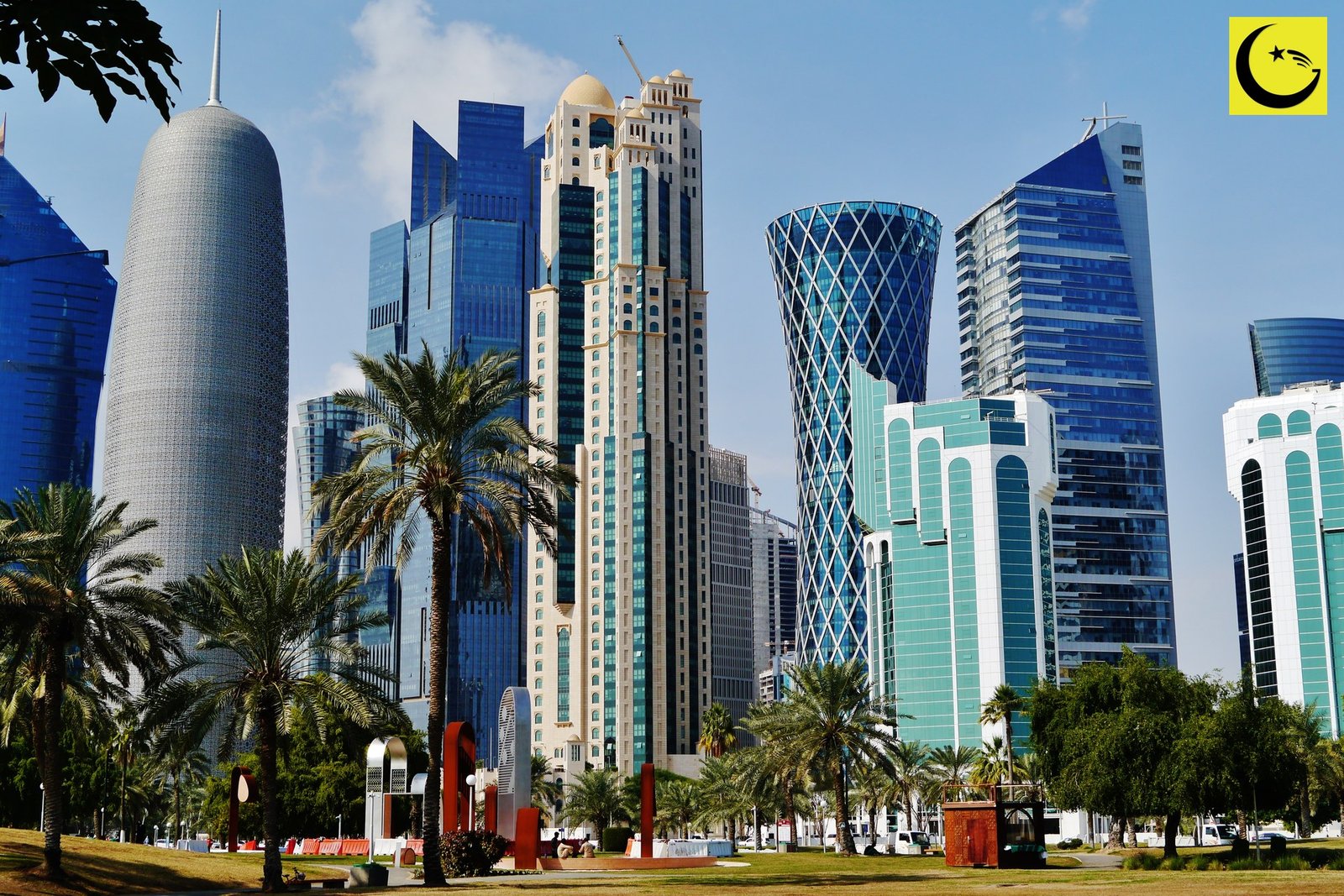
- Featured photo: Doha skyline, Doha, Qatar, photograph via Wikimedia Commons

Umar is an engineer by profession and a passionate writer by passion. He has a deep interest in sharing good news related to Pakistan and has been working hard to promote the positive image of his homeland. Umar has written numerous articles on various topics related to Pakistan, such as technology, sports, culture, and economy.