

Pakistan policy uncertainty fell sharply in September 2026, dropping by almost a quarter in a single month, after the State Bank of Pakistan kept its policy rate unchanged, foreign exchange reserves climbed to $26.8 billion and exports grew 7 percent. The latest monthly indices from the Lahore School of Economics point to a calmer and more predictable policy environment for businesses, exporters and investors.
The Economic Policy Uncertainty Index fell 24.21 percent month on month to 162.46 in September. The Trade Policy Uncertainty Index dropped 22.1 percent to 192.89, while the Investment Policy Uncertainty Index eased 6.45 percent to 145. The indices are compiled by Dr Azam Chaudhry, Professor and Dean of the Faculty of Economics at the Lahore School of Economics and Pakistan’s WTO Chair, together with research fellow Dr Gul Andaman, and were published in the school’s October newsletter.
Together, the three gauges measure Pakistan policy uncertainty from different angles: the overall economy, trade rules, and the climate for investment. They work like a thermometer for policy nerves. In the Lahore School’s research programme the indices are scaled against a baseline of 100, so readings well above that level signal an unsettled period. September’s scores are still above the baseline, which means uncertainty has eased rather than disappeared. The distinction matters, because the same researchers have shown that a typical spike in uncertainty can wipe about 10 percent off monthly goods exports, roughly $230 million, as exporters cut order sizes and postpone buying machinery.
What pushed Pakistan policy uncertainty down
The biggest single factor was stability at the central bank. The State Bank’s Monetary Policy Committee kept the policy rate unchanged at 11.5 percent in September, sparing borrowers and businesses another shift in the cost of money. At the same time, Pakistan’s total liquid foreign exchange reserves reached $26.8 billion, the highest level since 2021, with the State Bank’s own reserves at about $21.4 billion, enough to cover roughly three months of imports. A stronger reserve cushion makes a sudden currency crisis far less likely, and that feeds directly into calmer policy expectations.
Two more supports came from revenue and trade. The Federal Board of Revenue met its revenue target for the first quarter of fiscal year 2026-27, even though income tax collections came in below target. On the trade side, goods exports rose 7 percent year on year during July and August to $5.46 billion, according to Pakistan Bureau of Statistics figures, and the trade deficit narrowed in August. Tariff rationalisation also stayed on track, including reductions in duties on imported mobile phones. Services exporters played their part too: Pakistan’s freelancers earned $550 million in the first quarter of the fiscal year, a record showing how digital exports keep adding dollars to the economy.
Investors are getting steadier signals
Investment policy uncertainty fell by a smaller margin, but the direction was the same. The Lahore School report credits progress on the privatisation of power distribution companies, a long delayed reform, and Pakistan’s record $3 billion Eurobond issuance, which showed global investors were willing to lend to the country again. Strong corporate results have added to the steadier mood on the ground: Pakistan Refinery’s profit jumped 13.7 times in the first quarter, a sign that big industrial firms are earning again.
Why does a falling uncertainty score matter beyond the economics classroom? When rules stop changing every few weeks, an exporter in Faisalabad or Sialkot can quote a price for a shipment three months ahead without fearing a new tax order will erase the margin. A factory owner can order machinery. A foreign buyer can sign a longer contract. Lower Pakistan policy uncertainty, sustained over several months, is the kind of quiet progress that turns into export orders and jobs.
Plenty of uncertainty remains
The report is honest about the risks that remain. Inflation rose to 11.1 percent, and talks with the International Monetary Fund remained stalled over fuel subsidies, gas sector receivables and circular debt. Fuel prices are still adjusted daily and the petroleum levy remains high, which keeps household and transport costs hard to predict. Brent crude oil above $100 a barrel and continued disruption to shipping through the Strait of Hormuz threaten trade routes, while the Auto Industry Development and Export Policy 2026-31 is still unfinished. The stock market also had a nervous month, falling about 4 percent in September even as the policy gauges improved.
The months ahead will show whether September was a turning point or a pause. If reserves keep building, exports hold their growth and the unfinished reforms are completed, the indices could ease further. The stakes are high: the World Bank says Pakistan’s incomes could triple by 2050 with faster reforms, and steady, predictable policy is the foundation that kind of future is built on. For now, September delivered something Pakistan’s economy has rarely enjoyed in recent years: a month in which the policy weather clearly improved.
Sources
- The News, Pakistan’s economic, trade, investment policy uncertainty eases in Sept, 26 October 2026
- Ministry of Finance, Monthly Economic Update and Outlook, September 2026
- Planning Commission, Monthly Development Update, September 2026
- Lahore School of Economics, Innovation and Technology Center, research on policy uncertainty and exports
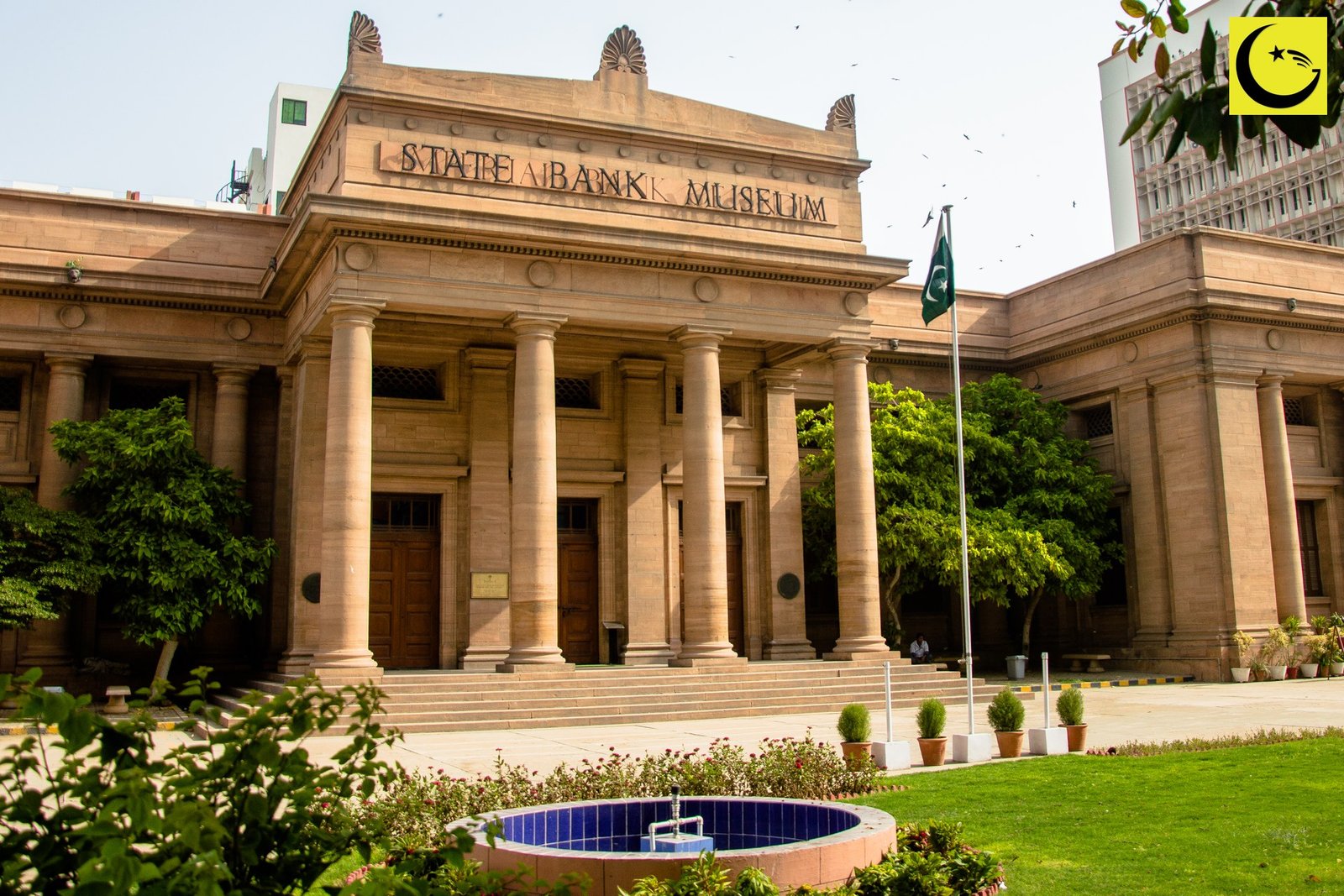
- Featured photo: The historic State Bank of Pakistan building in Karachi, now the SBP Museum. Photo by Asim Iftikhar Nagi, via Wikimedia Commons, CC BY-SA 4.0

Umar is an engineer by profession and a passionate writer by passion. He has a deep interest in sharing good news related to Pakistan and has been working hard to promote the positive image of his homeland. Umar has written numerous articles on various topics related to Pakistan, such as technology, sports, culture, and economy.