

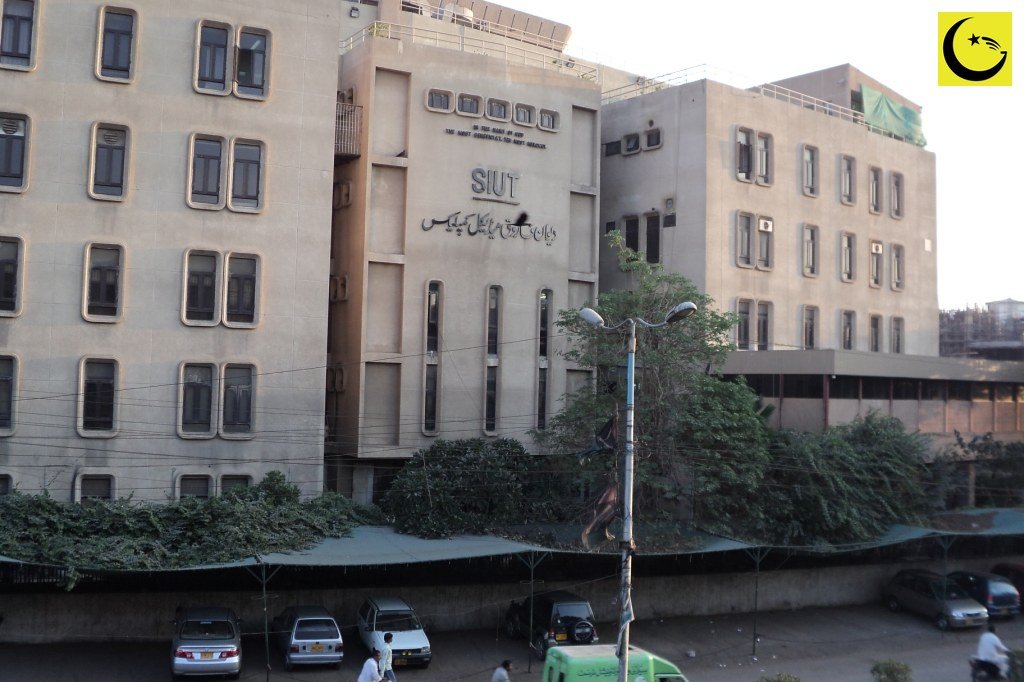
In Karachi, one hospital has treated more than 35 million patients without sending a single one of them a bill. The Sindh Institute of Urology and Transplantation, known across Pakistan simply as SIUT, is built on a simple promise: SIUT free treatment is available to every patient who walks through its doors, rich or poor, with no charge for consultation, dialysis, surgery, transplantation, medicines or lifelong follow-up care. What began as an eight-bed ward inside a government hospital is now described by the World Health Organization and medical journals as the largest centre of its kind in South Asia, and it stands as one of Pakistan’s most respected institutions.
From eight beds in a burns ward to an institute
The story starts with Dr. Syed Adibul Hasan Rizvi, who graduated from Dow Medical College in Karachi in 1968 and then trained in urology in the United Kingdom. Working within Britain’s National Health Service showed him that modern treatment could be organised as a public service rather than a purchasable commodity, and he returned home determined to try the same idea in Pakistan. In 1970, at the government-run Civil Hospital Karachi, he was allotted an eight-bed unit in the hospital’s Burns Ward. The Ramon Magsaysay Award Foundation’s profile of Rizvi records that the hospital at the time had no instruments for treating kidney patients, not even an operating table, yet the small ward grew year by year as he added urology surgery, dialysis treatment, ultrasound and laboratory facilities.
In 1985, Rizvi performed the first kidney transplant operations at Civil Hospital, laying the foundation of what would become Pakistan’s largest transplant programme. In 1991, an Act of the Sindh Assembly granted the unit the status of an autonomous institute, and the Sindh Institute of Urology and Transplantation was formally born. The Government of Sindh gave land for new premises in 1993, and the Dewan family funded the construction of the Dewan Farooq Medical Complex, named after a generous philanthropist. A SIUT Trust was created in 2005 as a charitable trust to support patients at the end stage of renal disease. In 2009, the Higher Education Commission granted SIUT independent degree-awarding status, recognising its growing role in training doctors, nurses and technicians.
How the SIUT free treatment model works
The philosophy is stated plainly in Rizvi’s own words, displayed on SIUT’s website: “We cannot let people die just because they cannot afford to live.” There is no means test and no screening of patients by income. Anyone, regardless of caste, creed, colour or financial capacity, can come to SIUT and receive treatment as a right. Everything the patient needs is provided free, including dialysis, operations, transplant surgery, immunosuppressive medicines that recipients must take for life, and follow-up care for both recipients and donors.
The money comes from what SIUT calls a community-government partnership. Published analyses of the model record that the community, through donations, zakat and philanthropic giving, contributes roughly 60 to 70 percent of the resources, with the government providing the rest. Karachi’s business families and individual donors have funded entire buildings, from the Dewan Farooq Medical Complex to the 14-storey Suleman Dawood Transplant Centre, opened in 2011, which expanded SIUT’s transplant work to include liver transplantation alongside kidney transplantation. Because treatment carries no price, the institute argues, patients are treated with dignity rather than as customers or charity cases.
The scale of care today
The numbers behind SIUT free treatment are difficult to match anywhere in the region. SIUT states that it has treated more than 35 million patients to date. Its own website describes a network of 10 hospitals and 6 satellite centres across Sindh with a combined capacity of more than 1,600 beds. The haemodialysis unit performs an average of about 1,600 dialysis sessions every day, and SIUT recorded more than 501,000 dialysis sessions in 2024 alone. Between ten and twelve kidney transplants are performed every week, and by late 2023 the institute had passed 6,900 transplants performed in total, each one followed by lifelong free medication and monitoring. Its laboratories work at industrial scale: SIUT’s own reporting recorded more than 6.3 million laboratory tests in a single year, 2012, and the service has only grown since.
Although kidney care remains its heart, SIUT is far more than a dialysis centre. Its services cover urology, nephrology, kidney and liver transplantation, oncology with PET-CT scanning and robotic surgery, gastroenterology and hepatology, paediatric nephrology and urology through a dedicated children’s hospital, lithotripsy for kidney stones, radiology and emergency care. In 2003, doctors at SIUT performed Pakistan’s first liver transplant. Patients travel to Karachi from every province of Pakistan and from neighbouring countries, and the majority of them, SIUT notes, come from underprivileged backgrounds.
Transplantation, ethics and the law
SIUT’s transplant history also shaped Pakistan’s laws. The institute built an integrated dialysis and transplant programme in the 1980s at a time when a commercial market in kidneys was growing in the country. Rizvi and his colleagues campaigned for years for legislation to stop the buying and selling of organs, and SIUT pioneered deceased-donor transplantation in Pakistan, carrying out the country’s first cadaveric organ transplant in 1995. The campaign culminated in the Transplantation of Human Organs and Tissues Act 2010, which banned the commercial trade in organs and created a regulated system based on donation. A peer-reviewed account of the reform records that in 2009 SIUT performed 544 of the 871 transplants carried out in Pakistan, about 62 percent, and described SIUT at that time as the centre performing the highest number of living-donor kidney transplants in a single year anywhere in the world. The institute also founded a Centre for Bioethics, reflecting its view that free treatment and ethical transplantation must go together.
Beyond Karachi: Sukkur and the next expansion
Because dialysis patients must travel for treatment two or three times a week, SIUT decided to take care to the patients instead. Its best-known chapter outside Karachi is the SIUT Chablani Medical Centre in Sukkur, inaugurated in February 2012 as a dialysis and day-care centre serving upper Sindh, southern Punjab and Balochistan. It was upgraded to a full hospital in 2014, gained a new operation theatre complex in 2019, and performed its first kidney transplant in Sukkur in April 2019. Satellite dialysis units operate in several Karachi neighbourhoods, and a primary healthcare centre has been established at Kathore, on the city’s outskirts.
The newest chapter is still taking shape. In 2024 SIUT acquired the Regent Plaza hotel building on Karachi’s Shahrah-e-Faisal for about Rs14.5 billion, reported by Dawn, and is converting it into the SIUT Trust Hospital, a major expansion of its capacity in the city where the eight-bed ward first opened more than five decades ago.
The founder and worldwide recognition
Rizvi’s honours reflect the institute’s standing. In 1998 he received the Ramon Magsaysay Award for Government Service, often called Asia’s Nobel Prize; the Foundation’s citation recognised his “transcending the limits of a public service hospital to make kidney dialysis, renal transplants, and other life-saving medical services available free to thousands of Pakistani citizens.” He went on to receive the Hamdan Award for Volunteers in Humanitarian Medical Services in 2004, the World Health Organization’s Shousha Prize in 2008, and Pakistan’s highest civilian award, the Nishan-i-Imtiaz, in 2018. In 2024 the American Urological Association’s Urology Care Foundation named him its Humanitarian Recognition Award recipient, describing how he turned an eight-bed ward into South Asia’s largest public healthcare institution.
SIUT also trains the specialists Pakistan needs, awarding its own degrees since 2009, part of a wider strengthening of medical education that includes efforts such as Pakistan’s new postgraduate medical education cooperation with Canada. In the World Ranking series, SIUT takes its place among the Pakistani achievements that have earned global recognition, from Abdus Salam, Pakistan’s first Nobel laureate, to the country’s universities climbing the QS world rankings.
More than five decades after it opened, the institute still runs on the same rule it began with: no patient is turned away, and no patient pays. For millions of Pakistanis with kidney failure and other complex diseases, SIUT free treatment is not a slogan but the reason they are alive, and for the wider world it remains a working proof that first-class medicine can be organised as a public good.
Sources
- SIUT: Our History
- SIUT official website: impact figures and mission
- SIUT: Haemodialysis service figures
- SIUT: Our Hospitals and network
- Ramon Magsaysay Award Foundation: Syed Adibul Hasan Rizvi, 1998
- Evolution of Pediatric Urology at SIUT, PMC
- Pakistan Abolishes Kidney Market and Ushers in a New Era of Transplantation, PMC
- WHO EMRO: Dr. A. T. Shousha Foundation documentation on Dr. Rizvi and SIUT
- Urology Care Foundation: 2024 Humanitarian Recognition Award
- Sindh Institute of Urology and Transplantation, Wikipedia
- Photo: SIUT Karachi building, by Yasir Masood, via Wikimedia Commons

Umar is an engineer by profession and a passionate writer by passion. He has a deep interest in sharing good news related to Pakistan and has been working hard to promote the positive image of his homeland. Umar has written numerous articles on various topics related to Pakistan, such as technology, sports, culture, and economy.