

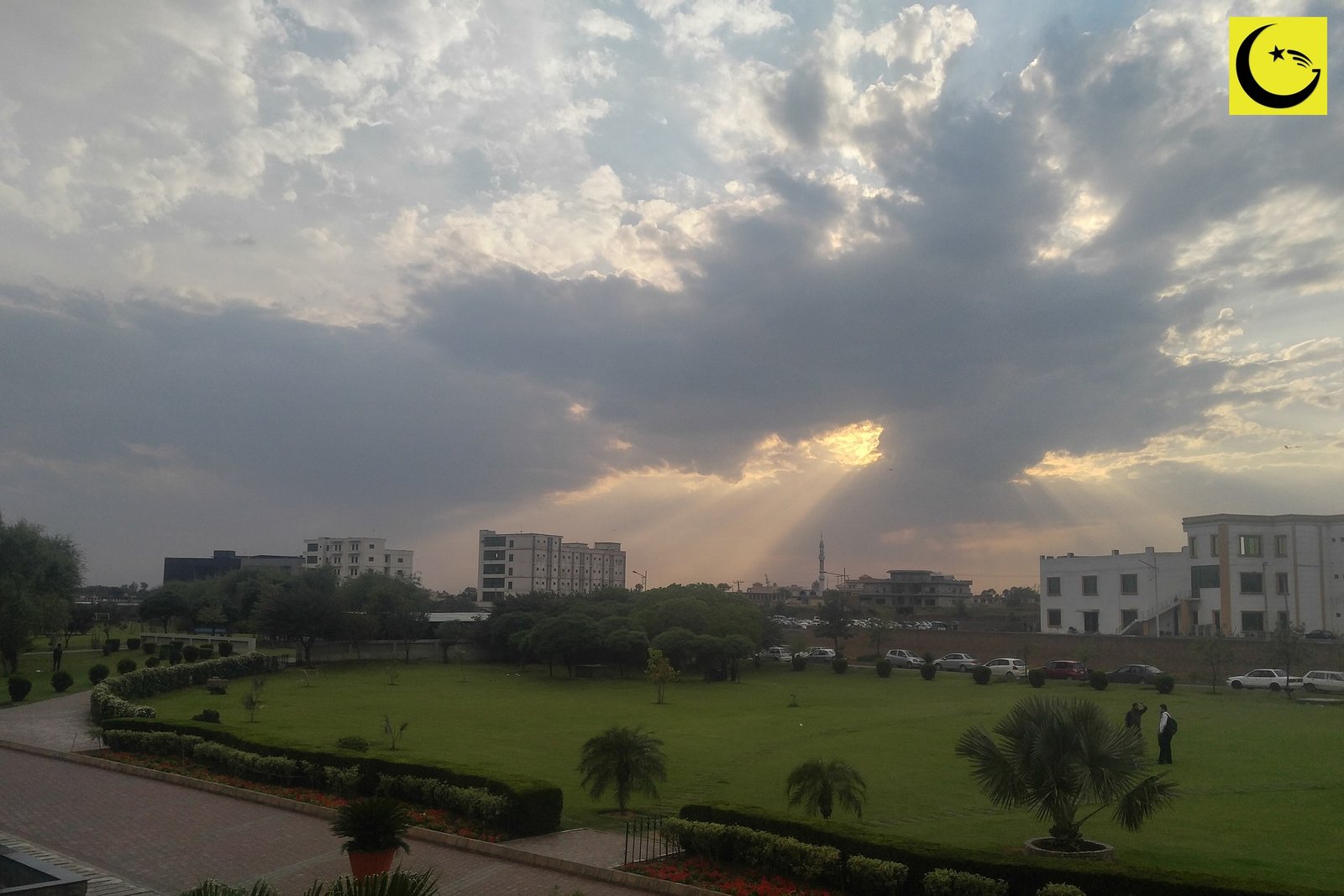
COMSATS University Islamabad has been placed joint 77th in the world in the Times Higher Education Interdisciplinary Science Rankings 2026, the highest position achieved by any university in Pakistan. The COMSATS interdisciplinary science ranking result caps a steady climb for the Islamabad based institution, which stood 80th in the first edition of the table a year earlier, and it comes from a ranking that this year assessed 911 institutions across 94 countries and territories.
What the COMSATS interdisciplinary science ranking measures
Interdisciplinary science is research that refuses to stay inside one subject. It brings together two or more scientific disciplines, or combines a scientific field with areas such as the social sciences, education, psychology, law, economics or medicine, so that problems too large for a single department can be tackled whole. A team working on clean water, for example, might join hydrologists with chemists, public health specialists and economists in a single project, and it is exactly that kind of joined up work that this ranking sets out to find and reward.
Times Higher Education created the Interdisciplinary Science Rankings, in association with Schmidt Science Fellows, to improve scientific excellence and collaboration and to help universities benchmark research that crosses departmental lines. The ranking is young: the 2026 edition, published on 20 November 2025, is only the second, and it grew by more than 20 percent on the first edition, rising from 749 institutions to 911. For 2026, THE also broadened its definition of interdisciplinary science, so that projects pairing scientific disciplines with non-STEM fields now count alongside work that mixes the sciences themselves.
THE’s analysts are open about why such a table is needed. The structures of academic life still work against this kind of research: funding streams, department structures and evaluation systems are organised around single disciplines, which makes broader collaboration harder to start and harder to reward. The institutions gaining ground in the table tend to be those with formal policies for integrating science with the social sciences, joint appointments across departments and research centres built from the start to work across fields.
How the ranking is compiled: inputs, process and outputs
The table is built from 11 performance indicators grouped into three pillars that follow the life cycle of a research project. The inputs pillar, worth 19 percent of the score, looks at the money behind interdisciplinary work: the share of a university’s science research income devoted to interdisciplinary research carries 8 percent, and industry funding per science staff member carries 11 percent.
The process pillar, worth 16 percent, examines whether a university is genuinely set up to support this work. It scores measures of success, physical facilities, administrative support and promotion and tenure policies at 4 percent each, and it is evidence based: universities earn credit for specific, publicly accessible evidence that their systems help interdisciplinary researchers build careers.
The outputs pillar dominates the table at 65 percent. It counts the number of interdisciplinary publications, normalised by staff numbers, at 10 percent, and the proportion of a university’s publications that are interdisciplinary at 5 percent. A utility measure, worth 5 percent, looks at how far a publication’s citations travel outside its own discipline. Research quality, measured through the 75th percentile of field weighted citation impact, carries 20 percent, and the largest single component is reputation, at 25 percent, drawn from a survey of active researchers asked to name the institutions they consider best for supporting interdisciplinary science. THE publishes precise overall scores only for the top 200 institutions; beyond that point, scores are banded.
At the head of the 2026 table, the Massachusetts Institute of Technology took first place for the second consecutive year, ahead of Stanford University and the California Institute of Technology. United States institutions hold 18 of the top 50 places and 24 of the top 100, while India is the most represented country overall, with 88 institutions in the ranking. It is into this company that COMSATS has carried Pakistan’s flag.
From a 1998 institute to a national university system
COMSATS University Islamabad began in 1998 as the COMSATS Institute of Information Technology, known as CIIT, a project of the Commission on Science and Technology for Sustainable Development in the South. That commission, also called COMSATS, is an intergovernmental organisation of 27 member states across Asia, Africa and Latin America, created to put science and technology to work for development in the global South. The institute opened its first campus in Islamabad in April 1998, with its principal campus at Chak Shahzad, and it was founded under the leadership of Dr Syed Muhammad Junaid Zaidi, who became its founder rector.
In August 2000 the federal government granted CIIT degree awarding status through its charter, and in April 2018 it was upgraded to a fully fledged federally chartered university under the COMSATS University Islamabad Act 2018. Growth in between was physical as much as academic: campus after campus opened across the country, in Lahore, Abbottabad, Wah, Attock, Sahiwal and Vehari, together with a virtual campus, giving the university eight learning locations in all.
The scale that growth produced is the foundation of results like this one. The university’s own current figures put enrolment at more than 39,100 students, taught by some 1,935 faculty members across more than 116 degree programmes running from bachelor’s degrees to the PhD. It counts 28,324 research publications in internationally recognised journals, 118 patents, more than 300 funded research projects and 114,417 alumni. That breadth matters for this ranking: a university teaching engineering, computer science, mathematics, health sciences, business and the humanities under one charter holds the raw material for cross-disciplinary teams on its own campuses. The interdisciplinary result is not its only recent first place at home, either: COMSATS also leads Pakistan in the U.S. News Best Global Universities ranking for 2026-27, where it stands 410th in the world.
Six Pakistani universities in the world top 200
Beyond the COMSATS interdisciplinary science ranking headline, the wider table carries good news for the whole sector. THE counts six Pakistani institutions inside the world top 200, the same number as Japan. The University of Lahore placed 114th, second in Pakistan and the country’s highest placed private sector university. The University of Veterinary and Animal Sciences in Lahore placed 155th, Quaid-i-Azam University placed 174th, and the University of Management and Technology in Lahore placed 184th, recording the strongest inputs and process scores among Pakistan’s private universities.
More Pakistani names appear further down the table. Mehran University of Engineering and Technology sits in the 201 to 250 band, the Islamia University of Bahawalpur in the 251 to 300 band, and Government College Women University Faisalabad in the 401 to 500 band. It is a spread that reaches well beyond the capital and the largest cities, and it suggests a research culture that is broadening at the same time as its leader is climbing.
What the result says about Pakistani research
Rankings of this kind reward systems, not slogans. A university cannot buy a joint 77th place in a table where a quarter of the score comes from the judgement of active researchers worldwide and a fifth from the citation impact of its interdisciplinary publications. It has to fund work across departments, build facilities that teams can share, promote the people who do that work and publish research that scientists in other fields actually use. COMSATS, founded as an information technology institute, has spent 27 years widening into a comprehensive research university, and the 2026 table reads like a measurement of that widening.
The result also fits a wider pattern of Pakistani institutions and students being measured, and measuring up, on world stages, from Pakistani students topping ACCA professional exams to the country being named Tech Destination of the Year at GITEX Global. For students choosing where to study and for researchers choosing partners, a top 100 finish in a global table is a signal that travels far beyond one campus. The task now is to hold the ground. The ranking grows more competitive with every edition, the universities just behind COMSATS in this table will be aiming at its place in the next one, and the COMSATS interdisciplinary science ranking story of 2026 has set the marker they all have to chase.
Sources
- Times Higher Education: Interdisciplinary Science Rankings 2026
- Times Higher Education: Interdisciplinary Science Rankings 2026, results announced
- COMSATS University Islamabad: rankings and reputation
- COMSATS University Islamabad: history
- COMSATS University Islamabad: official homepage (student, faculty, publication and patent figures)
- COMSATS University Islamabad: U.S. News Best Global Universities 2026-27
- Photo: COMSATS University Islamabad campus, by Nasir1194, via Wikimedia Commons (CC BY-SA 4.0)

Umar is an engineer by profession and a passionate writer by passion. He has a deep interest in sharing good news related to Pakistan and has been working hard to promote the positive image of his homeland. Umar has written numerous articles on various topics related to Pakistan, such as technology, sports, culture, and economy.