

Pakistan will set up a $10 million clean-air startup fund to back young companies working on cleaner air, Federal Minister for Climate Change Dr Musadik Malik announced on Wednesday at the Pakistan National Clean Air Conference 2026. The clean-air startup fund will be financed from the government’s own limited resources, the minister said, after Pakistan sought support from development partners and did not wait for it to arrive.
Malik described the fund as a responsibility owed to future generations, not aid and not debt. The fund’s board approval was expected the following day, after which the programme can begin taking shape for startups working on air quality, from monitoring and filtration to cleaner transport and industry.
What the Clean-Air Startup Fund Will Do
The fund is designed to put money behind practical fixes rather than more conferences. Malik said air pollution work needs three things together: practical engineering, effective policy and finance, and the new fund is the finance leg of that plan. It is aimed at early-stage Pakistani companies whose products can cut emissions or help people live with smog season more safely.
The announcement follows the same minister floating a proposed $10 million fund for innovation two days earlier, at the closing of the Green Skills Development Initiative organised by the Sustainable Development Policy Institute on 26 October. There, he argued that Pakistan must shift from workshops to green skills, with defined skills, recognised certifications, international university partnerships and direct investment in young researchers, innovators and entrepreneurs. Read together, the two announcements describe one ecosystem: train green skills, then fund the startups those skilled young people build.
That ecosystem is already visible on the ground. University competitions such as YES-Pakistan 2026 at Bahria University put more than 290 startup ideas in front of judges, and Lahore health-tech company Byonyks won the Pakistan final of the Startup World Cup 2026, proof that Pakistani founders can build products the world wants. More stories like these are collected on our Pakistani startups and business success page.
Why Clean Air Needs Its Own Fund
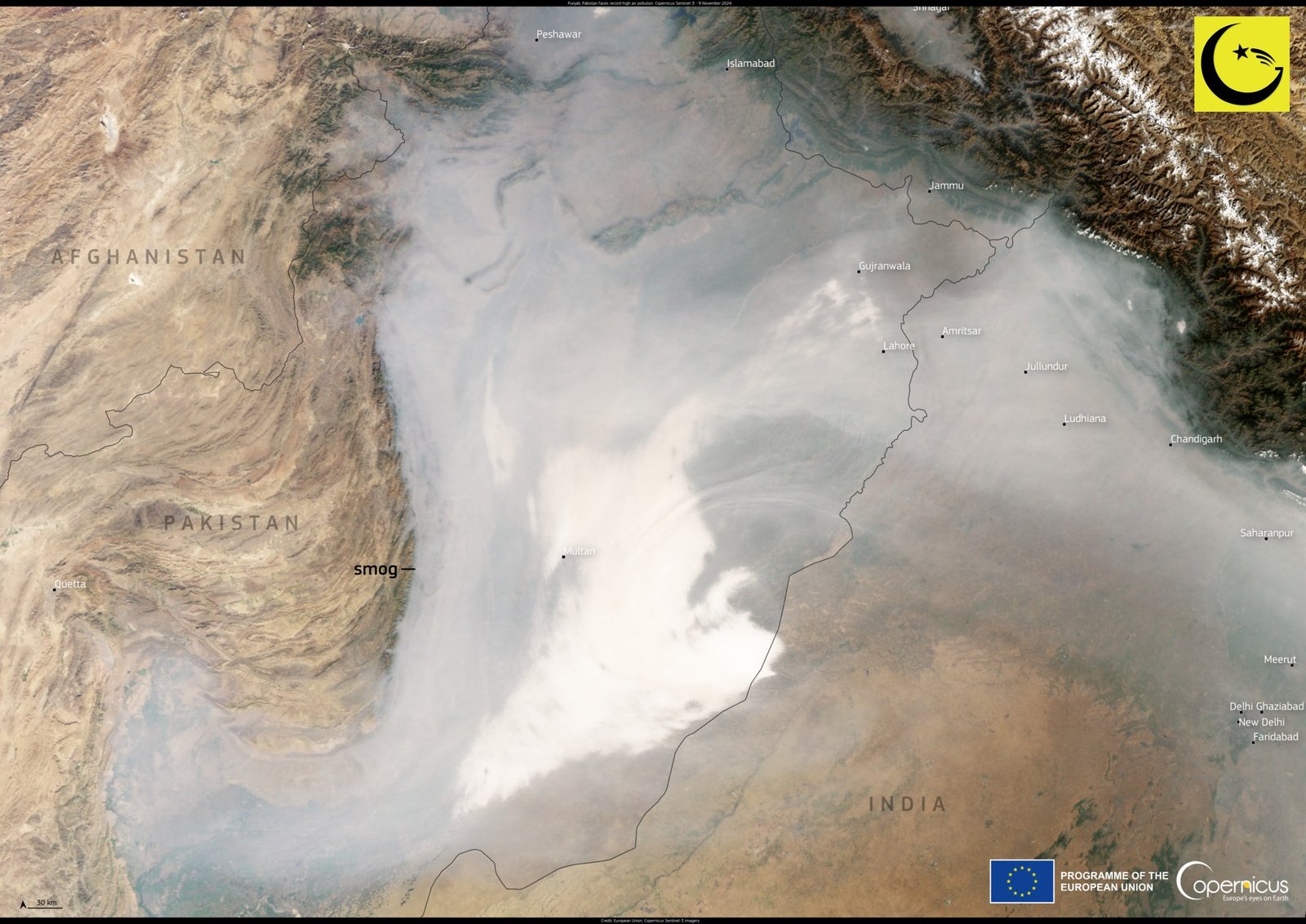
The economic case is stark. Malik put the cost of air pollution at 6.5 percent of Pakistan’s GDP, a figure that covers lost working days, hospital bills and shortened lives. The human cost falls hardest on the poor, who live closest to traffic and brick kilns, work outdoors and can least afford treatment or air purifiers. Smog season in Punjab has become an annual emergency, closing schools and filling hospitals every winter.
The minister acknowledged the support Pakistan already receives from the World Bank, the Asian Development Bank, UNICEF and Germany’s GIZ on environmental work, but said clean-air action would continue with or without outside help. He also reminded the conference that pollution control must protect the livelihoods of the very communities it affects, so that a kiln worker or a rickshaw driver is part of the solution rather than its casualty.
The timing is not accidental. The Asian Development Bank has launched an independent review of Pakistan’s National Clean Air Policy, and Malik used the conference period to call for a time-bound implementation plan and stronger coordination between the federal and provincial governments. A startup fund fits that picture: provincial governments regulate kilns, transport and industry, but the ideas for cleaner engines, cheaper sensors and better fuels often come from young companies that cannot raise a first round of money. Public seed funding, aimed carefully, is meant to close exactly that gap.
Part of a Wider Green Finance Push
The fund lands in a busy week for green finance. On 26 October, the Cabinet Committee on State-Owned Enterprises approved reviving the Clean Environment Fund Company, an environmental financing body that had been inactive for more than 11 years, under the Pakistan Environmental Protection Agency. Between the revived company and the new clean-air startup fund, the government is building two channels at once: one for larger environmental projects, and one small and fast enough for startup founders.
What happens next matters more than the announcement. The board approval, the fund’s rules, who can apply and how quickly the first money moves will decide whether this becomes a working instrument or another headline. On the minister’s own test, set out at the green skills event this week, progress should be judged by results actually delivered, not by the number of workshops held. By that measure, the fund has made a promising start, and its first investments will be the real story.
Sources
- Business Recorder: Pakistan announces $10 million clean-air startup fund (via Scoop)
- The News: Pakistan must shift from workshops to green skills, says Musadik Malik
- Photo: Record smog over Punjab seen from satellite (Photo: European Union, Copernicus Sentinel-3 imagery, via Wikimedia Commons)

Umar is an engineer by profession and a passionate writer by passion. He has a deep interest in sharing good news related to Pakistan and has been working hard to promote the positive image of his homeland. Umar has written numerous articles on various topics related to Pakistan, such as technology, sports, culture, and economy.