

Pakistan’s cutlery exports rose 17.78 percent to $10.28 million in the first two months of the 2026-27 fiscal year, according to Pakistan Bureau of Statistics figures reported this week, growing at more than double the rate of the country’s exports as a whole. The cutlery exports figure, up from $8.728 million in July and August last year, marks a strong start to the year for one of Pakistan’s oldest cottage industries, centred on the Punjab city of Wazirabad.
The PBS Numbers in Detail
The growth held up across both months. August shipments reached $5.214 million, up 17.86 percent from $4.424 million in August 2025, and 2.93 percent higher than July’s $5.066 million. That month-on-month rise matters because many other export categories weakened from July to August; cutlery was one of the lines that kept climbing.
Set against the wider trade picture, the numbers show a small sector outrunning the giants. Pakistan’s total exports in July and August rose 7.04 percent to $5.459 billion, so cutlery exports grew at roughly two and a half times the national pace. Imports, however, grew faster still, up 13.03 percent to $12.575 billion, and the two-month trade deficit widened to about $7.1 billion from roughly $6 billion a year earlier. Cutlery’s $10.28 million is far too small to close that gap, but it shows where some of the healthiest growth in Pakistani manufacturing currently sits.
The Wazirabad Workshops Behind the Cutlery Exports
Almost all of this trade flows from one city. Wazirabad, on the Grand Trunk Road between Gujrat and Gujranwala, is home to around 800 small cutlery units employing more than 20,500 people, according to government figures. It is a cottage industry in the truest sense: most units are tiny workshops, many inside residential buildings, producing knives, tableware and utensils through processes that remain largely hand-operated, from forging and grinding to polishing and finishing.
The craft has deep roots. Wazirabad’s metalworkers have been known for generations for knives, swords and daggers, and today the city’s hunting knives are almost entirely export-oriented, while its spoons, forks and kitchen knives sell across Pakistan and abroad. The main buyers of Pakistani cutlery are the United States, Germany, the United Kingdom, Saudi Arabia and other Middle Eastern markets, along with Afghanistan.
The wider cluster, counting swords, daggers and hunting knives alongside kitchen cutlery, is bigger than the PBS cutlery line alone suggests: industry associations put the Wazirabad cluster’s total exports at about $142 million in 2021-22, with roughly 95 percent of its swords and knives sold to the United States and Europe. That history cuts both ways. It proves the city can sell to the world’s most demanding buyers, and it shows how much room remains if tableware and kitchen lines can reach the same standard, since those are the products every household abroad buys repeatedly.
Where the Growth Fits, and the Ceiling Above It
Research by the Pakistan Business Council and the Engineering Development Board explains both the strength and the limit of the sector. The skill base is genuine, but machinery in many units is decades old, production is semi-automated at best, quality control and branding are thin, and small firms rely on informal finance. That is why a 17.78 percent rise is encouraging without yet being transformative: the demand is there, and the ceiling is set by equipment, certification and design rather than by craftsmanship.
It also explains the policy attention the sector keeps receiving. The Press Information Department has previously urged the industry to raise product quality to compete internationally, and an International Mail Office has opened in Wazirabad so manufacturers can send export consignments abroad directly instead of routing them through bigger cities. For a cluster of 800 workshops, small logistics wins like that can matter as much as trade deals. The export figures sit alongside other signs of business momentum tracked on this site, from the State Bank’s reserves outlook to Pakistan’s push for an early GCC trade deal, with more on our Pakistani startups and business success page.
If the July and August pace holds through the year, Wazirabad’s exporters will post one of their strongest years in recent memory. Sustaining it will depend on the unglamorous work the studies keep naming: newer machines, consistent quality and brands that buyers abroad can recognise. The craftsmen have done their part. The order books say the world wants what Wazirabad makes.
Sources
- Economic Outlook: Pakistan’s cutlery exports rise 17.78 percent (Pakistan Bureau of Statistics data)
- Press Information Department: cutlery industry urged to enhance quality of products
- Pakistan Business Council: Enhancing the Competitiveness of the Cutlery Sector of Pakistan
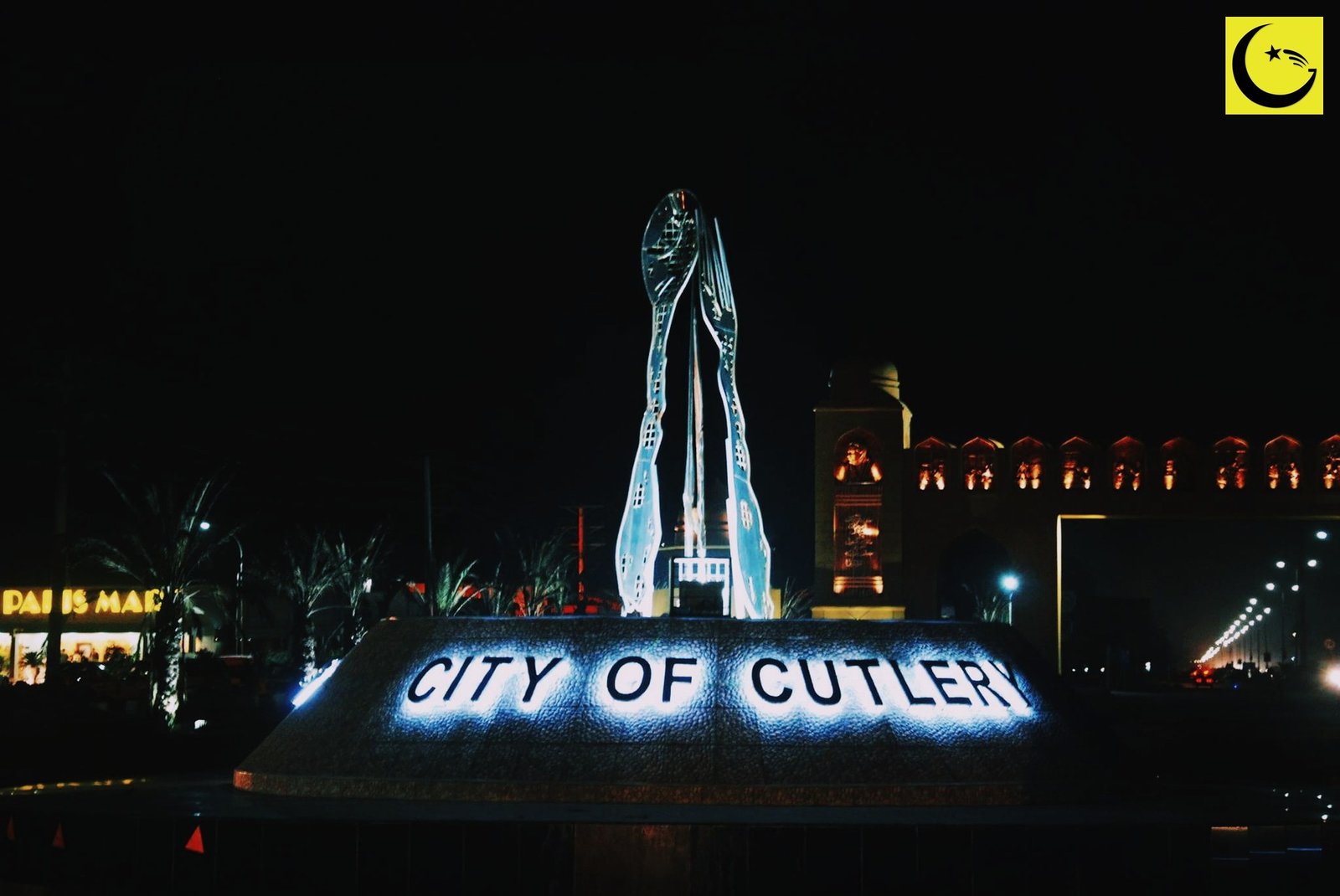
- Photo: The gateway to Wazirabad, the Punjab city whose workshops produce most of Pakistan’s cutlery (Photo: Manofsteelsupes via Wikimedia Commons, CC BY-SA 4.0)

Umar is an engineer by profession and a passionate writer by passion. He has a deep interest in sharing good news related to Pakistan and has been working hard to promote the positive image of his homeland. Umar has written numerous articles on various topics related to Pakistan, such as technology, sports, culture, and economy.