

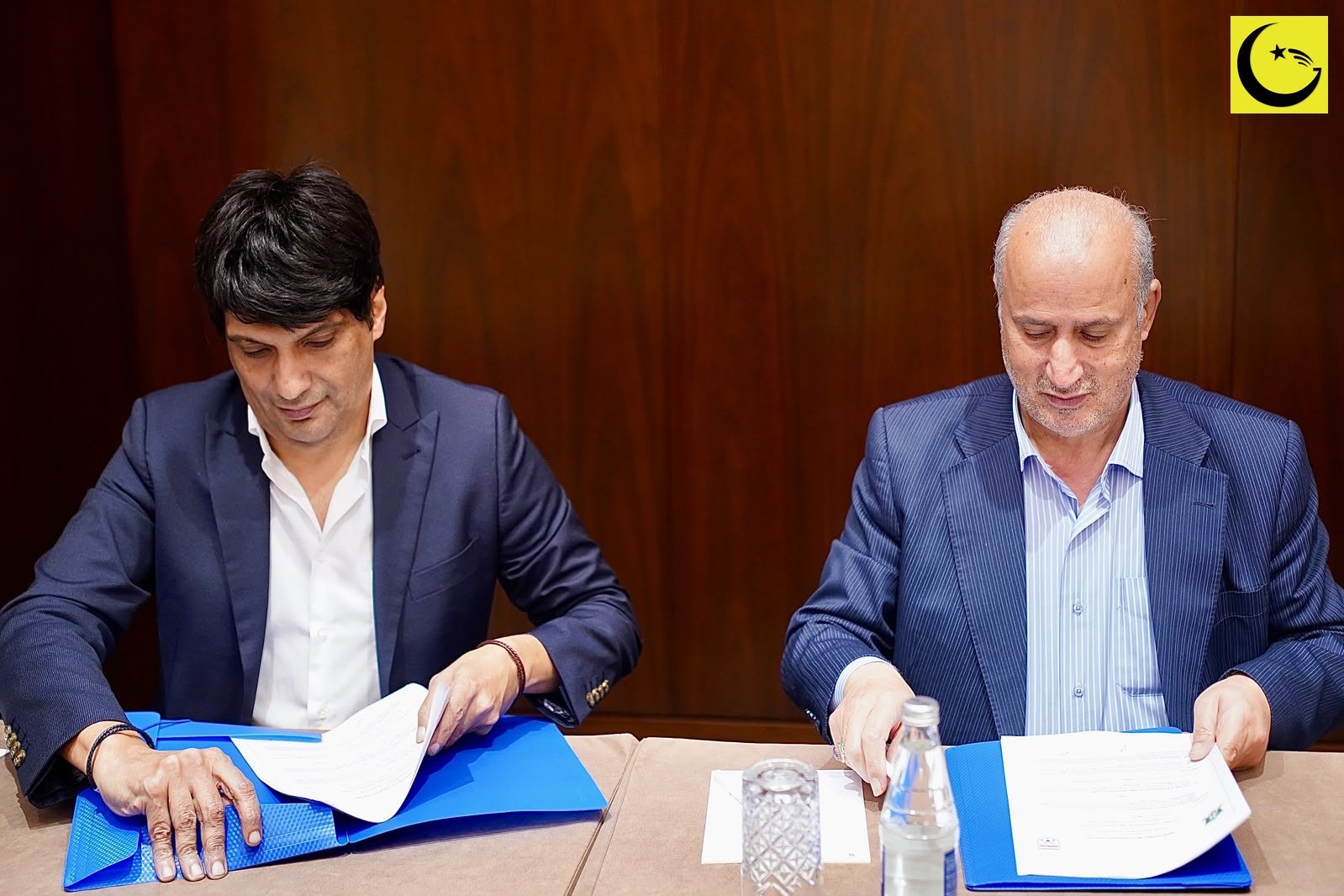
Pakistan Iran football cooperation took a formal step forward this month when the Pakistan Football Federation (PFF) and the Football Federation Islamic Republic of Iran (FFIRI) signed a memorandum of understanding in Baku, Azerbaijan. The agreement was signed on October 18, 2026, by PFF President Syed Mohsen Gilani and FFIRI President Mehdi Taj. The PFF announced the deal in a press release on October 29, 2026, describing it as a framework for joint work on youth football, futsal, coach education and national team competitions over a period of up to three years.
What the Pakistan Iran football cooperation agreement covers
Under the memorandum, the two federations intend to work together across a wide technical agenda. The PFF press release, published by FootballPakistan.com, lists the main areas as follows:
- Youth development, including talent identification, academies and youth competitions.
- Futsal development, including national team matches, training camps and help with domestic futsal leagues.
- Coach education, including places for Pakistani youth coaches on Iranian coaching courses and programmes.
- Friendly matches, joint training camps and invitational tournaments for youth national teams.
- Technical exchanges in sports science, sports medicine, physical preparation and refereeing.
- Grassroots football, women’s football and the development of football facilities.
The framework also opens the door to international friendly matches involving senior men’s and women’s teams, youth sides, Olympic teams and futsal teams from both countries. Specific activities, timetables and work programmes will be agreed between the federations as the partnership moves from paper to practice.
Why Iran is the partner Pakistan wanted for futsal
The futsal side of the deal explains much of its value. Iran is the dominant force in Asian futsal. The Asian Football Confederation records Iran as champions in 14 of the 18 editions of the AFC Futsal Asian Cup, and the only team never to finish outside the top three at the tournament. Iran defended the title again in February 2026, beating hosts Indonesia on penalties after a 5-5 draw in the final in Jakarta. In the FIFA futsal world ranking reported by the Asian Football Confederation, Iran sits in the world top five and clear at the top in Asia.
Pakistan, by contrast, is still building its futsal structures and development pathways. The memorandum therefore leans into that gap in a practical way: friendly matches and joint camps between the two countries’ futsal teams, coaching and refereeing courses, the possible deployment of Iranian futsal coaches and experts to Pakistan, and Iranian advice on organising and managing a national futsal league. For a young Pakistani futsal player, regular exposure to the best system in Asia is worth more than any single training course.
A partnership that is already working on the bench
In practical terms, Pakistan Iran football cooperation is not starting from zero. Pakistan’s men’s national futsal team is already coached by Iranian coach Ali Imani, and the women’s national futsal team is coached by Iranian coach Fatemeh Sharif Noghabi. The PFF release presents their presence as evidence of the technical links that already exist between the two football communities, and the memorandum is designed to turn those individual appointments into a structured, lasting partnership.
The timing also suits Pakistan’s wider football rebuilding. Youth football is showing genuine green shoots, from the historic first FIFA tournament win recorded by the Pakistan U15 football team against Tonga to structured senior preparations such as the Pakistan SAFF Championship training camp in Islamabad. Regular camps, courses and matches under the Iran agreement would give the players emerging from those programmes a clearer next step: better coaching at home, tougher opposition abroad, and a pathway that does not end at one tournament.
What happens next under the three year framework
Memoranda do not win matches on their own, and the PFF release is careful to describe a framework rather than a fixed calendar. The first visible signs to watch for will be concrete fixtures and courses: a youth friendly or joint camp, Pakistani coaches travelling to Iranian programmes, or Iranian futsal experts arriving to help shape a domestic league. Each of those steps is provided for in the text the two presidents signed in Baku.
There is also a straightforward human dimension. The release grounds the agreement in the longstanding friendship between the people of Pakistan and Iran, two neighbours who share a border, a region and a confederation. Football gives that friendship a practical, popular form, played by teenagers in academies and by national teams in front of crowds. Readers can follow more stories of this kind on our Pakistan sports good news hub.
If it is implemented steadily, Pakistan Iran football cooperation could raise technical standards where Pakistan needs it most: in the coaching of young players, in the organisation of futsal, and in regular international exposure for its teams. The signatures in Baku were the easy part. The camps, courses and matches that follow will decide what this partnership is really worth, and they are worth watching closely.
Sources
- FootballPakistan.com: MoU for football and futsal cooperation between Pakistan and Iran, PFF press release, October 29, 2026
- Asian Football Confederation: FIFA Futsal Ranking, IR Iran and Japan stay top
- Asian Football Confederation: AFC Futsal Asian Cup 2026 in numbers
- FIFA: Pakistan Football Federation association page
- Photo: Pakistan Football Federation, via FootballPakistan.com

Umar is an engineer by profession and a passionate writer by passion. He has a deep interest in sharing good news related to Pakistan and has been working hard to promote the positive image of his homeland. Umar has written numerous articles on various topics related to Pakistan, such as technology, sports, culture, and economy.