

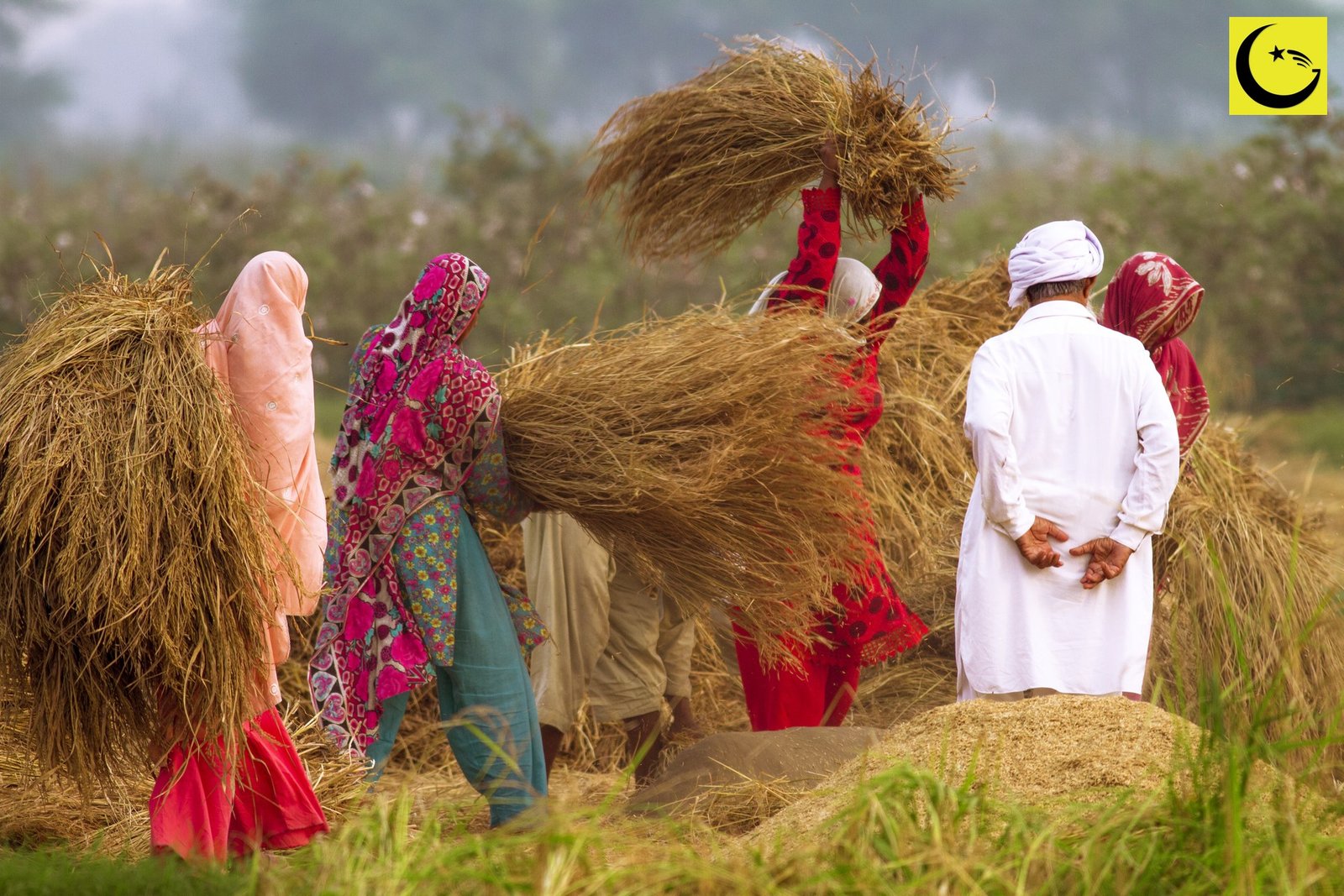
Pakistan grows far more rice than it eats, and the surplus feeds millions of people abroad, which is why the Pakistan top rice exporter story keeps returning in the world trade tables. By value, Pakistan was the fourth largest rice exporter in the world in 2025, shipping 2.417 billion dollars worth of rice and taking 7.2 percent of all rice exports worldwide, according to World’s Top Exports using International Trade Centre Trade Map data. Only India, Thailand and Vietnam sold more. A year earlier the position was even higher in the same family of data. In ITC Trade Map and UN Comtrade data, Pakistan ranked third in the world by value in 2024 with about 4.1 billion dollars of rice exports. Few farm products give Pakistan a seat this close to the top of a global table.
The 2025 table behind the Pakistan top rice exporter claim
The clearest snapshot comes from World’s Top Exports, Rice Exports by Country, which puts worldwide rice exports at 33.6 billion dollars in 2025. Its top five, who together supplied 71.1 percent of that value, were:
- 1. India: 12.0 billion dollars, 35.9 percent of world rice exports.
- 2. Thailand: 4.5 billion dollars, 13.4 percent.
- 3. Vietnam: 3.0 billion dollars, 8.9 percent.
- 4. Pakistan: 2.417 billion dollars, 7.2 percent.
- 5. United States: 1.9 billion dollars, 5.7 percent.
Pakistan also recorded the third highest net export surplus in rice in 2025 in the same report, about 2.4 billion dollars, because it imports very little rice compared with what it sells. That surplus is real foreign exchange earned by farmers, millers, transporters and exporters, mostly in Punjab and Sindh. Export earnings of this kind support the wider economy too, a theme we track in our coverage of the SBP Pakistan foreign exchange reserves outlook.
Third in 2024, and why the dataset must be named
The 2024 result needs careful wording, and this article names its dataset every time it states it. In ITC Trade Map and UN Comtrade data, as summarised by Commodity Origins in its rice export tables, Pakistan exported 4.1 billion dollars of rice in 2024, about 10 percent of world exports and 6.2 million tonnes, placing it third in the world by value, just ahead of Vietnam on the same rounded value. Other datasets tell a slightly different story: Vietnam Customs and USDA based counts would place Pakistan fourth in 2024 as well, because small differences in valuation, timing and how broken and husked rice are counted can swap two exporters whose totals are this close.
That is not a weakness in the story. It is how world trade statistics work, and honest reporting states the source beside the rank. What no dataset disputes is the company Pakistan keeps: India first by a wide margin, Thailand second, and then Pakistan and Vietnam contesting third and fourth, ahead of the United States, Cambodia, Myanmar and China. For a crop grown by small farmers across the Indus plain, that is elite company, and it is why the Pakistan top rice exporter position features on our Pakistan World Rankings and Records hub.
Basmati for value, non-basmati for volume
Pakistan sells two very different products under one name. Basmati is the premium half of the story in value terms: a long, slender, aromatic grain grown for centuries in the Kalar tract between the Ravi and Chenab rivers in Punjab, prized in Gulf kitchens, British curry houses and European supermarkets. India and Pakistan are the world’s only major basmati homelands, and Pakistan’s Super Basmati and 1121 varieties command high prices per tonne. Non-basmati rice, including IRRI-6 and other coarse varieties grown heavily in Sindh, is the volume half: affordable grain shipped in bulk to East Africa, China and Southeast Asia, where price matters most.
The split shows in the long export record kept by the Rice Exporters Association of Pakistan, a record any Pakistan top rice exporter account has to reckon with. In 2024-25 Pakistan exported about 5.82 million tonnes of rice worth 3.35 billion dollars, of which basmati was only about 809,000 tonnes but earned about 831 million dollars, an average of more than 1,027 dollars a tonne, roughly double the per tonne value of non-basmati. A year earlier, in the record 2023-24 season, total rice exports reached about 6.01 million tonnes and 3.93 billion dollars. Rice has earned Pakistan between roughly 1.6 and 3.9 billion dollars a year across the last decade in that record, making it one of the country’s most dependable export earners alongside textiles. Our recent report on Pakistan cutlery exports shows the same pattern in miniature: traditional products, sold well abroad, bringing steady dollars home.
Where Pakistani rice goes, and a December to remember
The markets are spread across three continents. Africa is the largest destination for non-basmati shipments, with Kenya a leading buyer. China takes large volumes of broken and coarse rice for processing. Afghanistan buys overland, the United Arab Emirates and Saudi Arabia anchor basmati demand in the Gulf, and the European Union and United Kingdom pay premium prices for certified basmati. Central Asia, led by Kazakhstan, has emerged as a newer growth market for basmati in recent seasons.
One month showed what the trade can do at full stretch. In December 2025, Pakistan exported about 489,000 tonnes of rice, up about 14 percent on November, driven by a surge of more than 50 percent in basmati shipments. That monthly total passed Vietnam’s roughly 387,000 tonnes for the same month, making Pakistan the world’s third largest rice exporter for that month behind India and Thailand, according to trade reporting of the December figures. A monthly rank is not an annual rank, and this article keeps the two separate, but the December performance proved the annual top four position rests on real shipping strength, not statistical luck. It was, in short, a Pakistan top rice exporter performance at its best.
An honest look at a tougher year
The same honesty applies to the latest fiscal year. Pakistan’s rice exports fell to about 2.29 billion dollars in FY2025-26, roughly 4.28 million tonnes, down about 31 to 32 percent from the previous year, as India returned fully to world markets, international prices eased and competition intensified. Basmati proved the resilient part, with earnings reported slightly higher at about 843 million dollars even as volumes dipped a little, while non-basmati earnings fell sharply. Read beside the calendar year tables above, the picture is consistent: 2025 still closed with Pakistan fourth in the world by value on ITC based data, but holding that place takes work on price, quality and market access every season.
Production gives Pakistan the base to fight back. The country harvested about 14.6 million tonnes of paddy in 2024, ninth in the world with 1.8 percent of global output, according to FAOSTAT figures summarised by Commodity Origins, and output has grown at more than 3 percent a year over the past decade in the same data. A country that grows that much rice, mills it well and sells both a world famous premium grain and an affordable bulk grain will stay in the top exporter conversation. The Pakistan top rice exporter ranking, fourth in 2025 and third in 2024 in ITC Trade Map and UN Comtrade data, is earned in flooded fields in Punjab and Sindh long before it appears in any table, and it remains one of the strongest world ranking results Pakistan holds.
Sources
- World’s Top Exports, Rice Exports by Country, 2025 values, ITC Trade Map based
- Commodity Origins, Rice: producers, exporters and prices, 2024 export tables and FAOSTAT production
- Rice Exporters Association of Pakistan, Export History 2015 to 2025
- Agri-Crop, Pakistan’s Rice Exports Rebound in December 2025
- WE News English, Pakistan rice exports FY2025-26 context and China trade
- Photo credit: Rice crop in Pakistan by Tariq Hameed Sulemani, via Wikimedia Commons (CC BY-SA 4.0)

Umar is an engineer by profession and a passionate writer by passion. He has a deep interest in sharing good news related to Pakistan and has been working hard to promote the positive image of his homeland. Umar has written numerous articles on various topics related to Pakistan, such as technology, sports, culture, and economy.