

Pakistan seed cotton production ranked fifth in the world in the Food and Agriculture Organization’s FAOSTAT figures for the 2021 crop, a position worth stating carefully because cotton rankings change depending on how the crop is counted. In the FAO’s seed cotton table, Pakistan harvested 4,096,106 tonnes in 2021, equal to 5.64 percent of world production, behind only China, India, the United States and Brazil. It is a ranking Pakistan has held for years, and one that explains why cotton still sits at the centre of the country’s farm economy and its textile exports.
The 2021 table: where Pakistan seed cotton production stands
The FAOSTAT seed cotton ranking for the 2021 crop, reproduced in Pakistan’s official Agricultural Statistics, reads as follows:
- 1. China: 17.366 million tonnes (23.90 percent of world output)
- 2. India: 17.204 million tonnes (23.68 percent)
- 3. United States: 11.247 million tonnes (15.48 percent)
- 4. Brazil: 5.712 million tonnes (7.86 percent)
- 5. Pakistan: 4.096 million tonnes (5.64 percent)
- 6. Uzbekistan: 3.373 million tonnes (4.64 percent)
- 7. Türkiye: 2.250 million tonnes (3.10 percent)
Two features stand out. First, the top two are in a league of their own: China and India together grew nearly half of the world’s seed cotton in 2021. Second, Pakistan’s fifth place is not a marginal statistical placing. At just over 4 million tonnes, Pakistan produced about 72 percent as much as fourth placed Brazil and about 21 percent more than sixth placed Uzbekistan, and it did so from a harvested area of 1.937 million hectares, the fourth largest cotton area in the world.
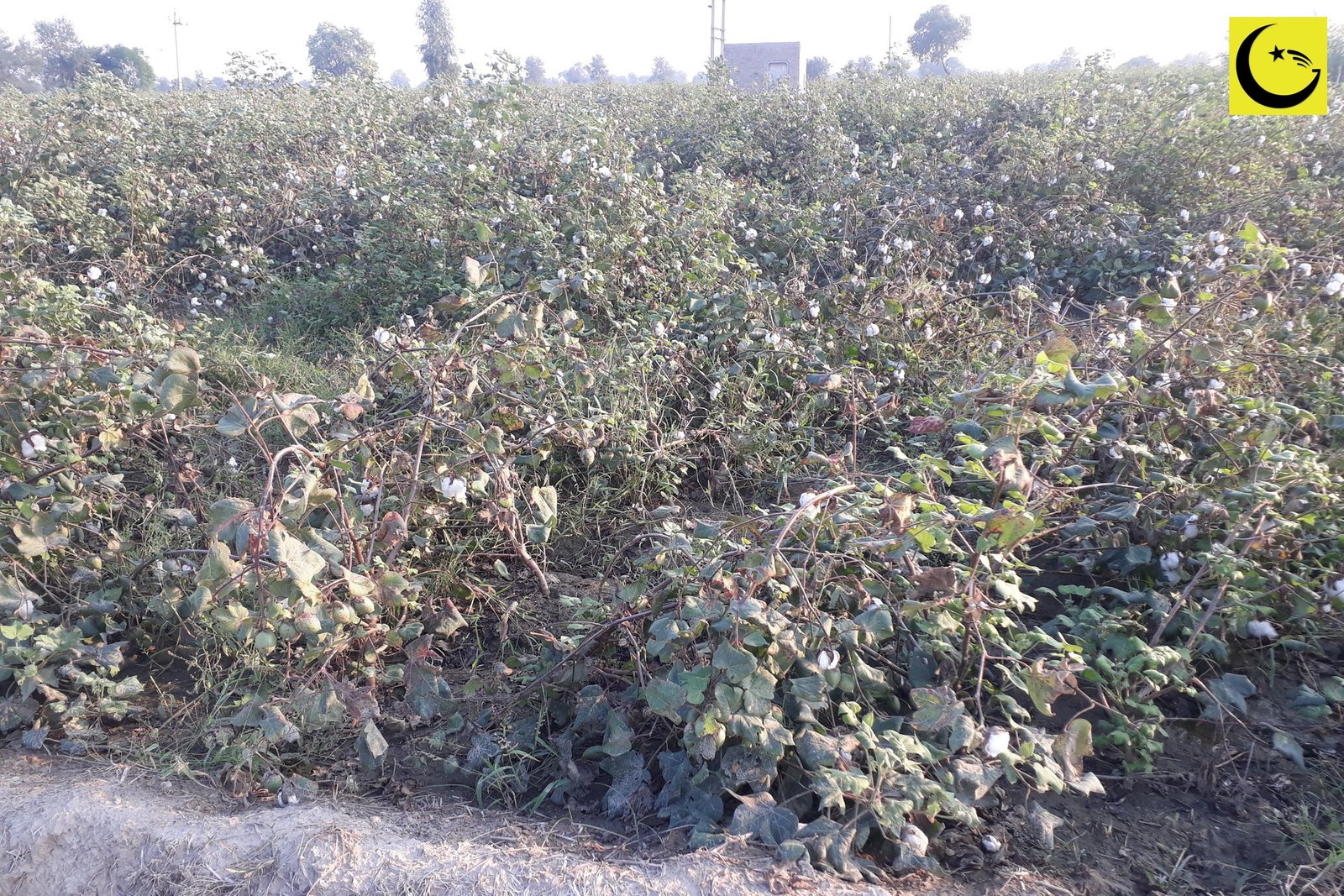
Photo: Mulkh Singh via Wikimedia Commons, CC BY 4.0
Seed cotton, lint and bales: why the rankings differ
Honest reporting on cotton requires an explanation most headlines skip. The FAO counts seed cotton, which is the raw harvested crop, cotton fibre still attached to its seed, weighed before ginning. The United States Department of Agriculture counts something different: lint, the clean fibre left after ginning, measured in bales of 480 pounds. Because ginning removes roughly two thirds of the weight, and because countries’ fibre quality and ginning out-turns differ, the two tables do not produce identical rankings. In the USDA’s lint based figures, Pakistan typically stands sixth in the world rather than fifth.
Pakistan’s own statistics add a third unit: the domestic bale of 170 kilograms, used by the Pakistan Cotton Ginners Association and the Pakistan Bureau of Statistics. On that measure, Pakistan’s 2021-22 crop was 8.329 million bales, up 17.9 percent from 7.064 million bales the year before. Whenever Good News Pakistan reports a cotton ranking, we name the dataset and the year, as we do here: fifth in FAO FAOSTAT seed cotton figures for the 2021 crop. The ranking is real, and so are its limits.
What happened after 2021: floods, then recovery
The years since the 2021 crop tested Pakistan’s cotton belt hard. The catastrophic floods of 2022 damaged standing crops across Sindh and southern Punjab, and FAOSTAT figures carried in the Agricultural Statistics of Pakistan 2023-24 show seed cotton output falling to 2.410 million tonnes in 2022. The recovery that followed was swift: production rebounded to 4.912 million tonnes in 2023, on a harvested area that grew back to 2.424 million hectares. In the same official table, Pakistan’s 2023 output still placed fifth among the listed producers, behind China (18.500 million tonnes), India (16.400 million), the United States (8.128 million) and Brazil (7.497 million).
The same table exposes Pakistan’s real weakness, and it is not total production. It is yield. In 2021 Pakistan harvested about 2,115 kilograms of seed cotton per hectare, against 5,735 kilograms in China and 4,171 kilograms in Brazil, a gap that left Pakistan ranked only around 23rd in the world for yield despite its top five production. Closing even part of that gap, through better seed, pest control and water management, would add more to farm incomes than any expansion of area, and it is where Pakistan’s agricultural researchers and seed companies are now focused. Growing more from the same land is also the instinct behind the vast irrigation network described in our Pakistan Facts series.
Where the crop is grown: the districts behind the tonnage
Pakistan’s cotton map is concentrated in two belts: southern Punjab and the cotton districts of Sindh. District level figures published by the Ministry of National Food Security and Research for 2022 show how concentrated production is. In Punjab, Bahawalnagar produced about 1.024 million bales, Bahawalpur 871,000 bales, Rahim Yar Khan 736,000, Lodhran 469,000 and Multan 354,900. In Sindh, Sanghar led with 594,000 bales, followed by Ghotki with 408,900 and Khairpur with 311,000. A handful of districts, in other words, account for a large share of the national crop, which is why a single flood season or pest outbreak in the belt can move the national ranking within a year, as happened in 2022.
Sindh’s fields are traditionally the more productive per acre, helped by longer sunshine hours and canal irrigation from Sukkur and Guddu barrages, while Punjab grows the larger total volume across more districts. Both belts depend on the same Indus irrigation network, and both face the same modern pressures: whitefly and pink bollworm attacks, heat stress during flowering, and competition for land from sugarcane and maize, which often promise farmers quicker returns.
Why cotton still anchors the farm economy
Cotton’s importance to Pakistan goes well beyond a ranking table. The crop contributes about 1.5 percent of national GDP and around 6.7 percent of value addition in agriculture, according to the International Cotton Advisory Committee’s country reporting, and it supplies the raw material for a textile and clothing industry that earns the largest share of Pakistan’s export income. Millions of farming families in Punjab and Sindh plant it, and the picking season employs large numbers of rural women. When cotton does well, ginning factories, spinning mills and garment exporters all feel it within months, as trade figures such as Pakistan’s rising cutlery exports show for another sector: production at home is what ultimately fills export orders abroad. The crop also pairs naturally with Pakistan’s other great farm ranking, covered in Pakistan Among the World’s Top Rice Exporters.
Pakistan seed cotton production, fifth in the world on the FAO’s 2021 measure, is therefore best understood as a foundation rather than a finish line. The tonnage and the global position are genuine achievements of the country’s farmers. The task for the coming seasons is to lift the yield per hectare toward the levels of Brazil and China, so that the same ranking is defended by productivity rather than by acreage alone. More of Pakistan’s world rankings are collected on our Pakistan World Rankings and Records page.
A crop with 7,000 years of local history
There is a final reason Pakistan’s place in world cotton feels natural rather than accidental. This region grew cotton before almost anywhere else on Earth. Archaeologists working at Mehrgarh in Balochistan, one of the earliest farming settlements in South Asia, have identified cotton fibres dating back some 7,000 years, among the oldest evidence of cotton use in the world. The Indus Valley civilisation later wove cotton cloth that was traded across the ancient world. A fifth place ranking in the FAO’s modern tables is, in that long view, simply the latest chapter of a very old local industry.
Sources
- Agricultural production statistics 2000 to 2021, Food and Agriculture Organization of the United Nations
- Agricultural Statistics of Pakistan 2023-24, Ministry of National Food Security and Research
- Cotton Policy Analysis, Agricultural Policy Institute, Government of Pakistan
- Pakistan country report, International Cotton Advisory Committee
- Photo: Mulkh Singh via Wikimedia Commons, CC BY 4.0

Umar is an engineer by profession and a passionate writer by passion. He has a deep interest in sharing good news related to Pakistan and has been working hard to promote the positive image of his homeland. Umar has written numerous articles on various topics related to Pakistan, such as technology, sports, culture, and economy.