

Pakistan is home to the largest irrigation system in the world. The Indus Basin irrigation system, a single connected network of rivers, dams, barrages and canals, delivers water to farms across the plains of Punjab and Sindh. It is the largest contiguous irrigation system anywhere on Earth, and it is the quiet machine behind most of the food Pakistan eats. This is a Pakistan Facts article: a timeless fact, checked against the sources named at the end, and still true today.
In this article:
One river, one network
Most big irrigation systems are collections of separate schemes. Pakistan’s is one system. The Indus River enters the plains from the northern mountains and is joined by five great tributaries, the Jhelum, Chenab, Ravi, Beas and Sutlej, whose combined channels give Punjab its name, the land of five rivers. Dams store the summer flows, barrages raise and divert the rivers, and a web of canals carries the water from field to field in one continuous command. Because every part connects to the same rivers, the Food and Agriculture Organization of the United Nations treats the Indus Basin as a single irrigation system, and by both area and canal length it is the largest irrigation system in the world.
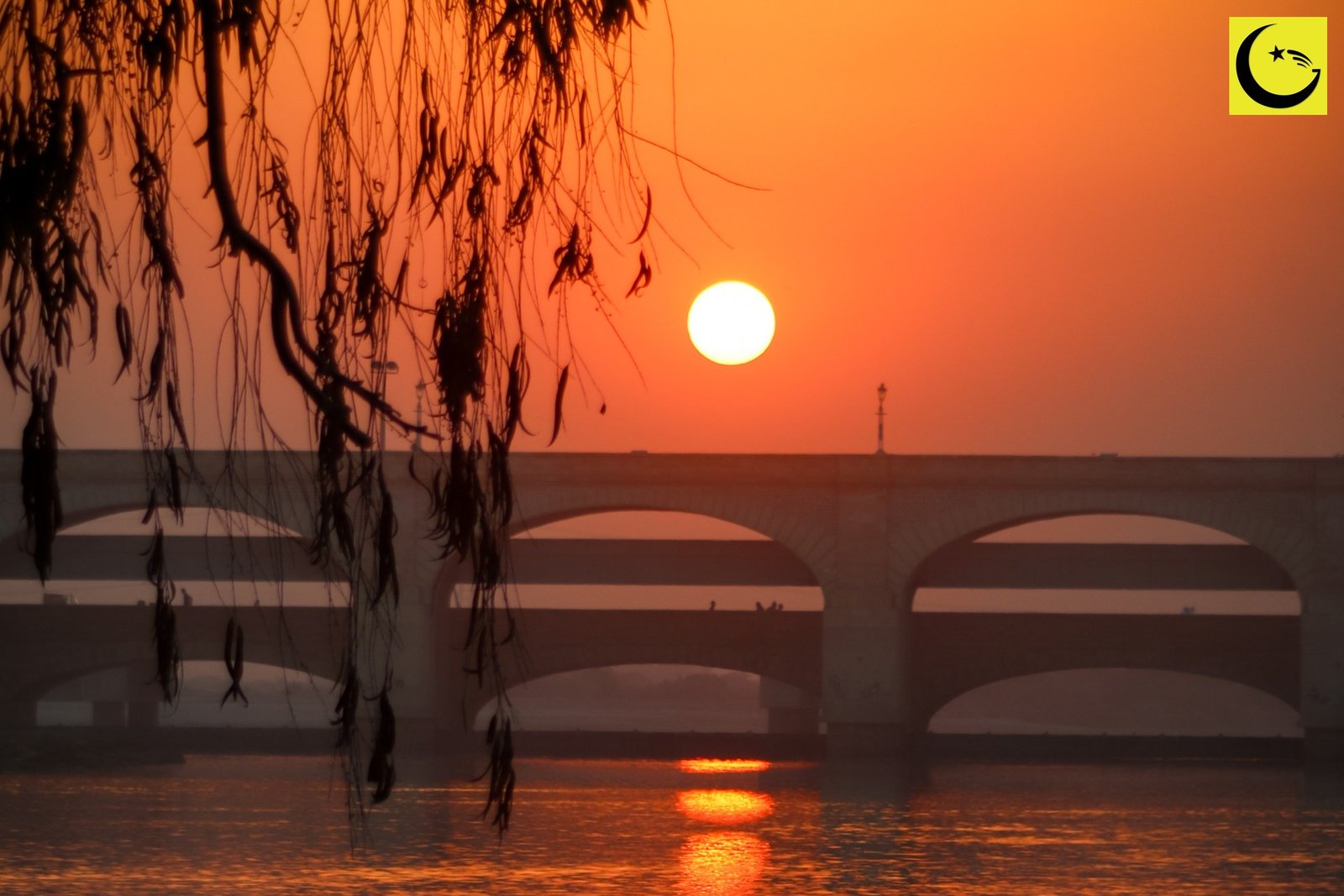
Photo: Ghulamrasoolshar via Wikimedia Commons, CC BY-SA 4.0
The system by the numbers
The FAO’s transboundary basin overview of the Indus describes a system commanding about 14.87 million hectares of farmland. Its main components are:
- 3 large storage reservoirs: Tarbela, Mangla and Chashma
- 23 barrages and headworks across the rivers
- 12 inter-river link canals, which move water from the western rivers to the eastern ones
- 45 canal commands, the administrative units that distribute water
- About 60,800 kilometres of main canals
- About 1.6 million kilometres of farm watercourses and field channels, enough to circle the Earth roughly forty times
For comparison, the entire canal network is longer than the road network of most countries, and the command area is larger than the whole of England. No other single irrigation system on the planet matches it, which is why the largest irrigation system in the world sits in Pakistan.
How the network grew
The system was built in layers over more than a century. British engineers began the great canal colonies of Punjab in the 1800s, with works such as the Upper Bari Doab Canal in 1859 turning dry plains into wheat and cotton land. Sukkur Barrage, completed in 1932 and pictured above, was the largest irrigation work of its kind in the world at the time, and it still feeds canals across Sindh. After independence, the Indus Waters Treaty of 1960 divided the basin’s rivers between Pakistan and India, and Pakistan answered with the Indus Basin Project: Mangla Dam, completed in 1967, and Tarbela Dam, completed in 1976, two of the largest earth-filled dams ever built, joined by link canals that replaced the waters of the eastern rivers. Each generation added another layer to the same connected whole.
Why it matters
Agriculture employs a large share of Pakistan’s workforce, and the overwhelming majority of its farmland is irrigated rather than rain-fed. The wheat in a roti, the rice exported around the world, the cotton behind the textile mills and the sugar in a cup of tea all begin as Indus water released through this network. The system also stores water against the dry months and the variable monsoon, which is why its reservoirs appear in national news every summer. Pakistan’s farm rankings, from rice exports to seed cotton production, rest on this foundation, as our report on Pakistan’s place among the world’s top rice exporters shows.
The network faces real pressures: ageing canals, waterlogging and salt in some soils, and growing competition for every cusec. Engineers are lining canals, farmers are adopting drip and sprinkler methods on suitable crops, and the reservoirs are being raised and maintained. But the fact itself is not in danger of expiring. The largest irrigation system in the world remains the Indus Basin system, and it remains the single most important piece of infrastructure in Pakistan’s daily life. Read more verified facts like this on our Amazing Facts About Pakistan page, and browse the country’s records on the Pakistan World Rankings and Records page.
Sources
- Transboundary River Basin Overview: Indus, Food and Agriculture Organization of the United Nations
- Indus River, Encyclopaedia Britannica
- Photo: Ghulamrasoolshar via Wikimedia Commons, CC BY-SA 4.0

Umar is an engineer by profession and a passionate writer by passion. He has a deep interest in sharing good news related to Pakistan and has been working hard to promote the positive image of his homeland. Umar has written numerous articles on various topics related to Pakistan, such as technology, sports, culture, and economy.