

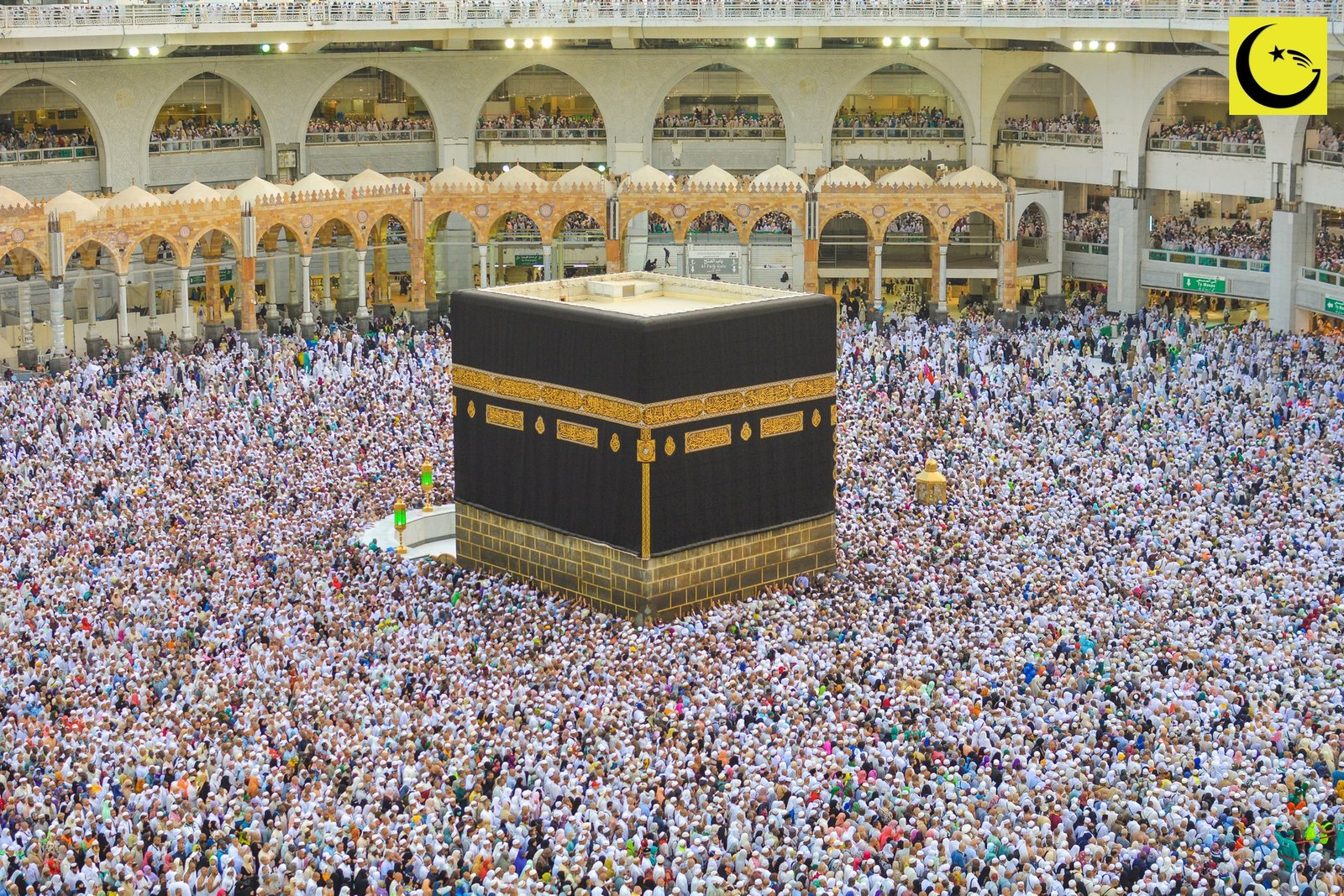
For a first-time pilgrim, the rites can look like a blur of Arabic words and unfamiliar places. They are simpler than they seem: Umrah has four essential acts, and this guide on how to perform Umrah step by step walks through each one in order, with the practical details a pilgrim flying from Pakistan actually needs, from booking your permit to the final haircut.
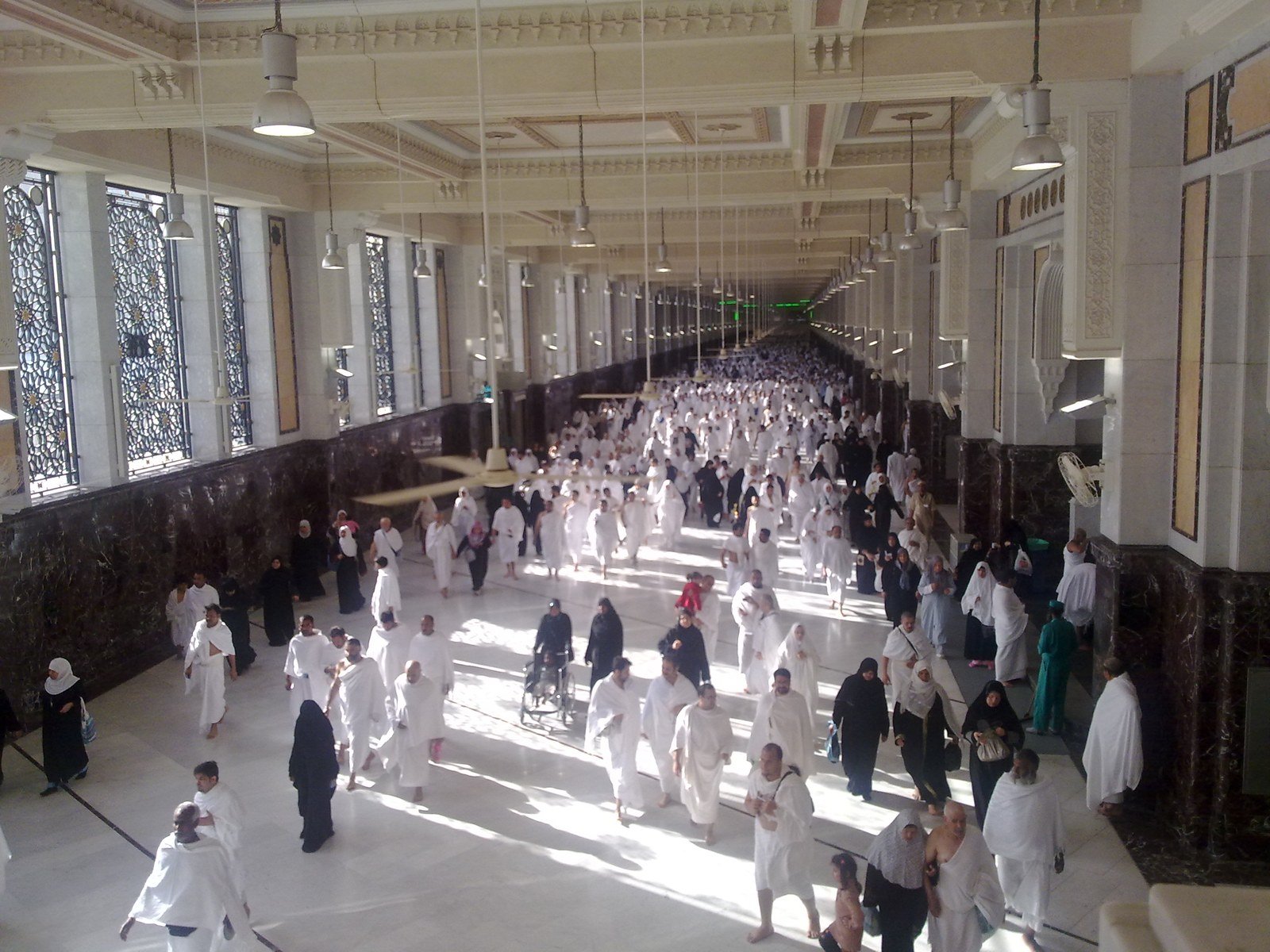
Photo: Aiman titi via Wikimedia Commons, CC BY-SA 3.0
Before you travel: visa, permit and preparation
Your Umrah begins at home. Pakistani pilgrims apply for the visa through a Ministry of Religious Affairs (MORA) attested operator, who books your Nusuk hotel and transport package first, because Saudi Arabia issues no Umrah visa without a confirmed booking. Once your visa is issued, download the official Nusuk app and register with your passport and visa details. Inside the app, book your Umrah permit for the day and time window you plan to perform the rites; the permit is free, and you will show its QR code at the entrance to Masjid al-Haram. Pack your ihram garments in your hand luggage, not your checked bag, for reasons the next step explains.
Step 1: Ihram and the intention at the miqat
Ihram is both a state and a set of garments. Men wear two unstitched white cloths; women wear their normal modest dress with a headscarf, keeping the face uncovered during the rites. Before crossing the miqat, the boundary point for your route, you bathe if possible, apply no perfume afterwards, dress in ihram, pray two rak’ahs, and make the intention for Umrah, then begin reciting the talbiyah: “Labbayk Allahumma labbayk”. Flights from Pakistan cross the miqat of Yalamlam in the air, and the crew normally announces it about 30 to 40 minutes before landing in Jeddah. That announcement is why your ihram travels in your hand luggage: most pilgrims change on the plane or at the airport before it. From this moment, the rules of ihram apply: no perfume, no cutting of hair or nails, no hunting, and no marital relations, until the Umrah is complete.
Step 2: Entering Masjid al-Haram and tawaf
Enter the Grand Mosque with your right foot, reciting the dua for entering a mosque, and keep your eyes lowered until you first see the Kaaba; that first sight is a moment many pilgrims remember for life, and a time when duas are especially cherished. Tawaf is seven circuits of the Kaaba, walked anti-clockwise, starting from the corner of the Black Stone (Hajr al-Aswad). Begin each circuit by facing the Black Stone and raising your hands towards it, saying “Bismillah, Allahu Akbar”; do not push through the crowd to kiss it, because pointing from a distance is sufficient and harming others is not part of the rite. Men uncover the right shoulder (idtiba) during tawaf and walk briskly with short steps (ramal) in the first three circuits, where space allows. Between the Yemeni Corner and the Black Stone, many recite “Rabbana atina fid-dunya hasanah”, and throughout the circuits you may make any dua in any language, including your own Urdu. Complete seven full circuits, ending at the Black Stone corner.
Step 3: Prayer at Maqam Ibrahim and Zamzam
After tawaf, pray two rak’ahs behind Maqam Ibrahim if space allows, or anywhere in the mosque if the area is crowded. Then drink Zamzam water, which is available from coolers and taps throughout the mosque and its courtyards; drink your fill, face the Kaaba, and make dua. Take your time here. There is no prize for speed, and the mosque rewards those who slow down.
Step 4: Sa’i between Safa and Marwah, the heart of how to perform Umrah step by step
Sa’i commemorates Hajar’s search for water for her son Ismail. Leave towards the hill of Safa, climb a little of its slope, face the Kaaba and make dua, then walk to Marwah; that is one length. Return from Marwah to Safa for the second, and continue until you complete seven lengths, ending at Marwah. Between the two green light markers, men walk briskly or jog lightly; women walk at a normal pace throughout. The full distance is roughly three and a half kilometres, on smooth, air-conditioned floors with Zamzam points and seating along the way. Wheelchair users can perform sa’i on the designated level, and wheelchairs and electric scooters are available inside the mosque complex.
Step 5: The haircut that completes your Umrah
After sa’i, men shave their heads or trim their hair evenly; shaving carries the greater reward mentioned in the Prophet’s dua. Women trim a fingertip’s length of hair, done privately among women. With the haircut, your Umrah is complete and the restrictions of ihram end. Barbershops line the streets around the Haram in Makkah, and your hotel can direct you to one; agree the small fee before you sit down.
Practical tips from experienced pilgrims
Choose your hour wisely: the mataf (the courtyard around the Kaaba) is calmest in the mid-morning, the late evening and the hours before Fajr outside Ramadan. Keep your permit, hotel card and some cash in a small waist pouch, and wear comfortable sandals that meet the ihram rules. If you are travelling in a group, fix a meeting point outside the mosque in case phones die or you get separated. And if anything about the rules of the rites is unclear, ask your group guide or a scholar you trust before you travel, not in the middle of the crowd.
Planning the rest of the journey matters as much as the rites. Our Umrah packages from Pakistan guide breaks down 2026 costs and safe booking, our free Umrah lucky draw reality check separates genuine schemes from scams, and our Nusuk Free Umrah Challenge guide explains the official app’s rewards in detail.
Sources
- Nusuk: official Umrah platform (Saudi Ministry of Hajj and Umrah)
- Saudi Ministry of Hajj and Umrah: Umrah permit application steps
- Photo: Adli Wahid via Wikimedia Commons, CC BY-SA 4.0
- Photo: Aiman titi via Wikimedia Commons, CC BY-SA 3.0

Umar is an engineer by profession and a passionate writer by passion. He has a deep interest in sharing good news related to Pakistan and has been working hard to promote the positive image of his homeland. Umar has written numerous articles on various topics related to Pakistan, such as technology, sports, culture, and economy.