

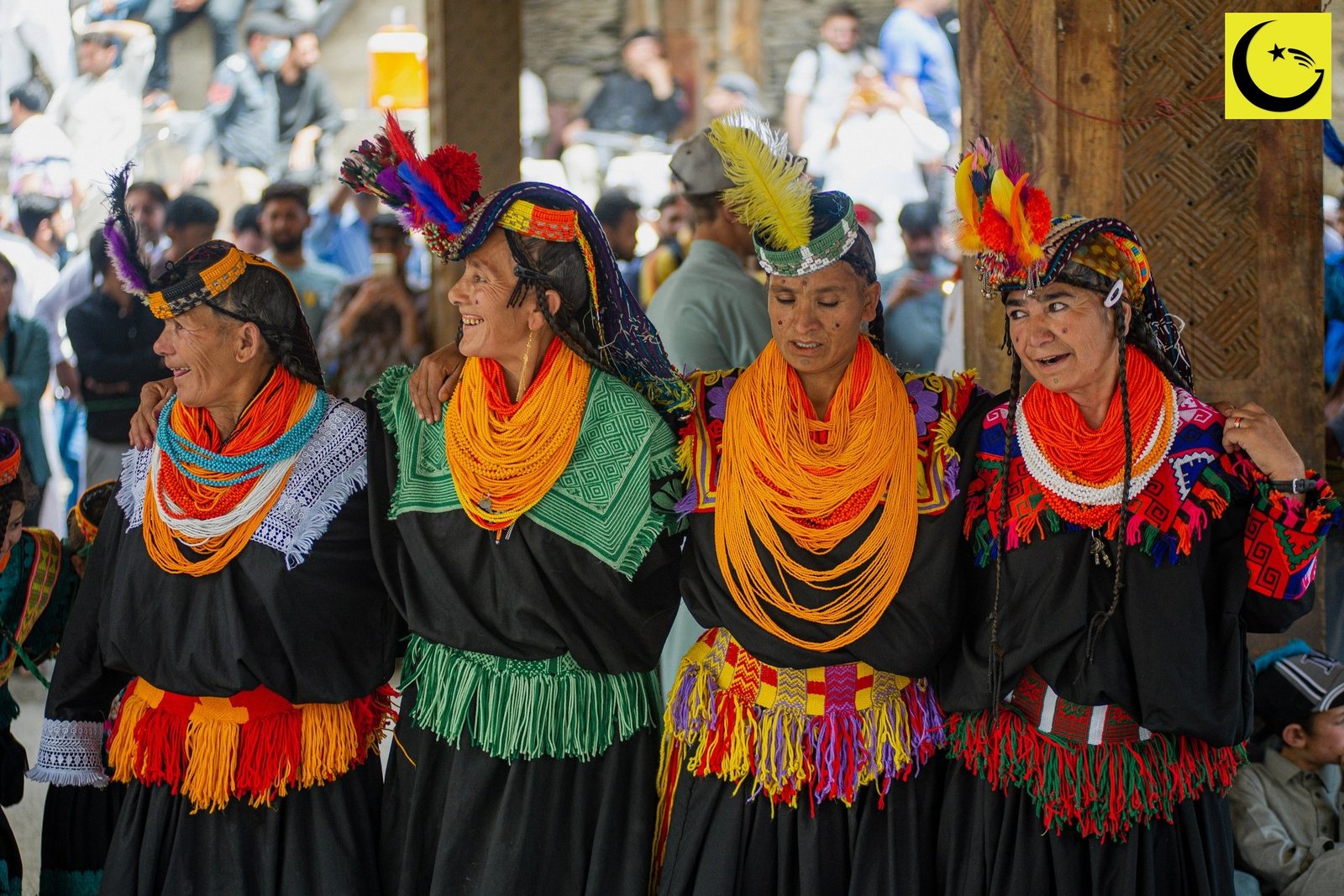
Pakistan has climbed to 104th place out of 147 countries in the World Happiness Report 2026, its best position in five years, with a life evaluation score of 4.868 out of 10. The annual report is published by the Wellbeing Research Centre at the University of Oxford, in partnership with Gallup and the UN Sustainable Development Solutions Network. Its rankings are built from Gallup World Poll surveys, in which people in each country rate their own lives on the Cantril ladder, a scale from 0 (the worst possible life) to 10 (the best possible life), averaged over three years, in this edition 2023 to 2025. Pakistan’s new position is five places better than its 109th place in 2025 and 17 places better than where it stood in 2022.
Pakistan’s Five-Year Climb in the World Happiness Report 2026
Five years ago, Pakistan sat at 121st place out of 146 countries, with a score of 4.516. The position jumped to 108th in 2023 and held at 108th in 2024, slipped by a single place to 109th in 2025, and then improved to 104th in the World Happiness Report 2026. Just as encouraging, Pakistan’s underlying score has risen every single year across the five editions, from 4.516 in 2022 to 4.868 in 2026. A rising score matters as much as the rank itself, because the number of ranked countries changes slightly from year to year as survey data becomes available in more places.
| Report year | Pakistan’s rank | Countries ranked | Score (out of 10) |
|---|---|---|---|
| 2022 | 121 | 146 | 4.516 |
| 2023 | 108 | 137 | 4.555 |
| 2024 | 108 | 143 | 4.657 |
| 2025 | 109 | 147 | 4.768 |
| 2026 | 104 | 147 | 4.868 |

Chart: Good News Pakistan, based on World Happiness Report data (Gallup World Poll).
The trend is one of steady, gradual improvement rather than a sudden leap. Pakistan has gained 17 places in four years, and its score has added more than a third of a point on the 0 to 10 ladder in the same period.
How Pakistan Compares With Its Neighbours
In South Asia, only Nepal sits above Pakistan in the 2026 table, at 99th place with a score of 5.147. Pakistan, at 104th, is comfortably ahead of India at 116th (4.536), Bangladesh at 127th (4.319) and Sri Lanka at 134th (4.013). India also improved this year, moving up from 118th in 2025, but it remains 12 places behind Pakistan. Afghanistan, at 147th with a score of 1.446, is last in the world table.
| Country | Rank 2026 | Score (out of 10) |
|---|---|---|
| Nepal | 99 | 5.147 |
| Pakistan | 104 | 4.868 |
| India | 116 | 4.536 |
| Bangladesh | 127 | 4.319 |
| Sri Lanka | 134 | 4.013 |
| Afghanistan | 147 | 1.446 |
The World’s Happiest Countries in 2026
Finland is the happiest country in the world for the ninth year in a row, with a score of 7.764. The Nordic countries again dominate the top of the table, and Costa Rica’s fourth place is the highest position ever achieved by a Latin American country.
| Rank | Country | Score (out of 10) |
|---|---|---|
| 1 | Finland | 7.764 |
| 2 | Iceland | 7.540 |
| 3 | Denmark | 7.539 |
| 4 | Costa Rica | 7.439 |
| 5 | Sweden | 7.255 |
| 6 | Norway | 7.242 |
| 7 | Netherlands | 7.223 |
| 8 | Israel | 7.187 |
| 9 | Luxembourg | 7.063 |
| 10 | Switzerland | 7.018 |
What the Happiness Score Measures
The ranking itself comes from the ladder question alone: how people rate their own lives. Researchers then use six factors to explain why scores differ so much between countries. The same factors are used in wider wellbeing research, such as the Legatum Prosperity Index, where Pakistan ranked 138th. In plain language, the six factors are:
GDP per capita
This is the average economic output per person in a country. Higher incomes generally mean better access to food, housing, healthcare, education and the other basics that make daily life easier.
Social support
Social support means having family, friends or a community to count on when trouble comes. It is one of the strongest explanations for higher life evaluations, and it reflects the value of Pakistan’s close family and community networks.
Healthy life expectancy
This counts the number of years a person can expect to live in good health. It reflects the quality of healthcare, nutrition and everyday living conditions.
Freedom to make life choices
This measures whether people feel free to choose what they do with their lives, from work and education to where they live. Feeling in control of your own future is closely tied to how people rate their lives.
Generosity
Generosity is based on charitable giving and helping others, adjusted for income. Pakistan has a strong culture of giving, from zakat to community support, and generosity is one of the areas where the country traditionally performs respectably.
Perceptions of corruption
This asks whether people believe corruption is widespread in government and business. Where trust in institutions is low, life evaluations tend to suffer, which is why honesty and accountability matter for happiness as well as for the economy.
The 2026 Theme: Social Media and Young People’s Happiness
Each edition of the report explores a special theme, and the World Happiness Report 2026 focuses on social media and digital life. Its findings are more balanced than the usual headlines suggest. In 85 of 136 countries, people under 25 are happier now than young people were about 20 years ago. The sharp falls in youth happiness are concentrated in wealthy English-speaking countries: in the United States, Canada, Australia and New Zealand, under-25 happiness has dropped by an average of 0.86 points over two decades. At the same time, the report finds a clear heavy-use effect: in 47 countries, students who spend more than seven hours a day on social media report much lower wellbeing than those who use it for less than one hour.
For Pakistan, with one of the world’s younger populations and fast-growing smartphone use, the lesson is practical. Digital connection itself is not the problem; the amount and the way it is used matter. Strong real-world social support, the factor where family and community ties carry the most weight, remains Pakistan’s natural advantage, and it is one of the foundations the data rewards year after year.
Pakistan in Other Global Rankings
Happiness is one of several global tables where Pakistan’s progress is being tracked closely. The country has also drawn attention in the digital economy, placing strongly in the latest global freelancing ranking, and Good News Pakistan has previously reported on how Pakistan became the 4th most popular freelancing country in the world. Together with the happiness climb, these tables sketch a country moving in the right direction, even if the journey is gradual.
Pakistan’s happiness story in 2026 is not a dramatic leap but something more durable: a score that has risen in every one of the last five editions and a ranking that has improved by 17 places since 2022. If incomes, health and trust keep improving, the climb can continue.
Sources
- World Happiness Report 2026, Wellbeing Research Centre, University of Oxford
- World Happiness Report 2026, Statistical Appendix (ranking of happiness, 2023 to 2025 averages)
- World Happiness Report 2025, Statistical Appendix
- World Happiness Report 2024, Statistical Appendix
- World Happiness Report 2023, Statistical Appendix
- World Happiness Report 2022, Statistical Appendix
- Gallup: World Happiness Report 2026, rankings and trends
- Photo: Jugni via Wikimedia Commons (CC BY-SA 3.0)

Umar is an engineer by profession and a passionate writer by passion. He has a deep interest in sharing good news related to Pakistan and has been working hard to promote the positive image of his homeland. Umar has written numerous articles on various topics related to Pakistan, such as technology, sports, culture, and economy.
Your place is valueble for me. Thanks!…