

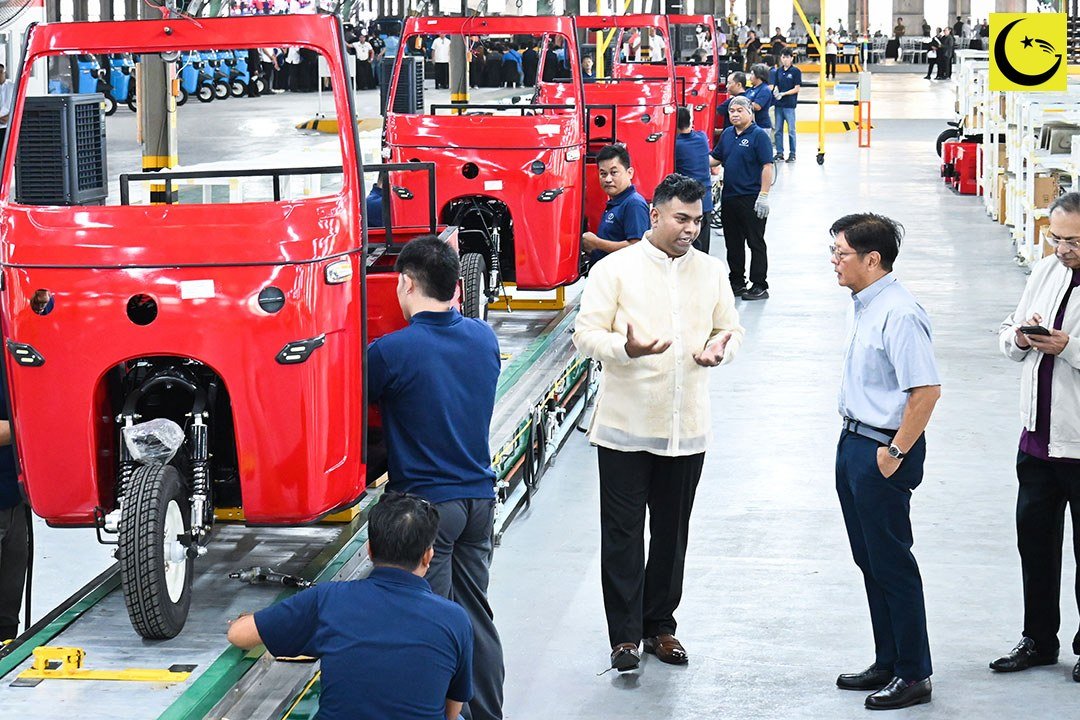
A Lahore vehicle maker has opened its first factory outside Pakistan. The Sazgar Philippines plant, in Biñan City, Laguna, has begun operations after an inauguration visit by Philippine President Ferdinand R. Marcos Jr, and it will build about 12,000 three-wheelers a year. Electric models make up about 60 percent of production from the start, and the plant will serve as Sazgar’s manufacturing hub for Southeast Asia.
- Site: Laguna International Industrial Park, Biñan City, Laguna
- Capacity: about 12,000 three-wheelers a year
- Opening mix: about 60 percent electric, 40 percent petrol models
- Owner: Sazgar Philippines Inc, a 60 percent Filipino-owned partnership
- Status: qualified under the Philippines’ Strategic Investment Priority Plan
A Presidential Tour of the Sazgar Philippines Plant
President Marcos toured the assembly lines on Thursday 29 October 2026, joined by Transport Secretary Vince Dizon and Sazgar Philippines President and CEO Muhammad Fahim. “Sazgar has been building vehicles in Pakistan for over three decades,” the President said during the visit. By choosing the Philippines for its first home outside Pakistan and its Southeast Asia hub, he added, the company “placed its confidence in our country”. He also congratulated Pakistan’s Ambassador to the Philippines, Dr Asima Rabbani, whose embassy helped the company enter the market and announced the opening in Manila.
Electric Models Lead the Opening Mix
The Sazgar Philippines plant starts with about 60 percent electric and 40 percent petrol three-wheelers, and the electric share is set to rise over time. The electric models run between 100 and 210 kilometres on a charge and fully recharge in about six to eight hours. For now, completely knocked down kits and parts arrive from Pakistan, with at least 25 percent of each vehicle’s value made locally at the start. President Marcos urged the company to go much further, asking it to source batteries, glass, seat foam, upholstery, rubber parts and lubricants from Filipino suppliers, and saying all parts could be made in the Philippines within about a year. BusinessMirror reported that the plant directly employs about 3,000 workers.
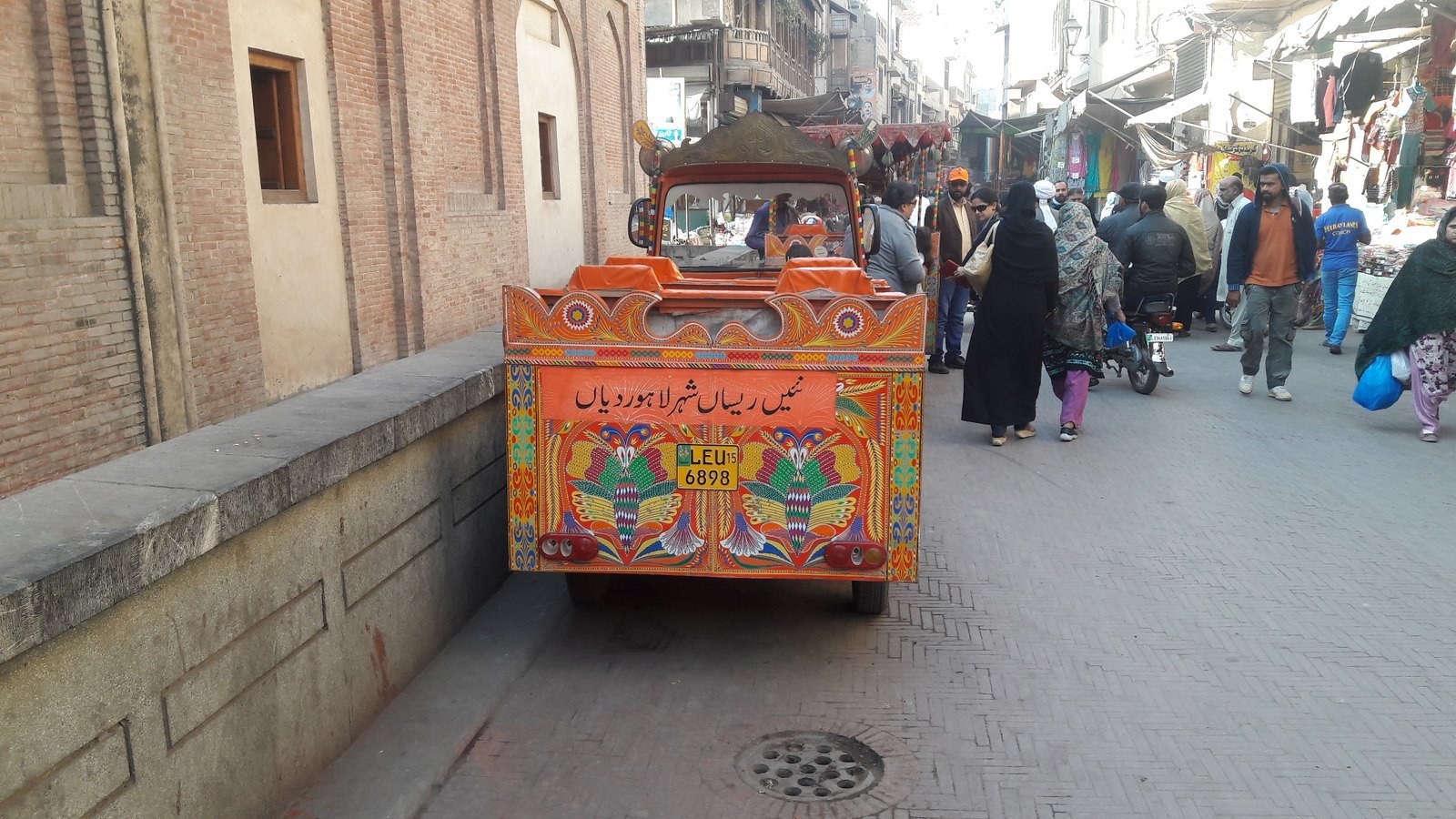
Photo: Tahir mq, via Wikimedia Commons
The plant stands in Barangay Mamplasan, inside the Laguna International Industrial Park, and it builds both passenger and commercial three-wheelers. For the Philippines, the product matters as much as the factory. President Marcos pointed out that the tricycle is how most Filipinos get home, and that an electric tricycle running 100 to 210 kilometres on a charge, comfortably more than the 90 to 120 kilometres a driver typically covers in a day, cuts fuel spending and raises the driver’s take-home pay.
What the Plant Means for Pakistan
Sazgar’s chief executive, Mian Asad Hameed, said the company was proud of the step. “We are proud to bring Sazgar to the Philippines, contributing to its industrial growth while strengthening Pakistan-Philippines friendship,” he said. At home, Sazgar has been building vehicles in Lahore since 1991 and holds roughly 30 percent of Pakistan’s rickshaw market, at around 3,350 units a month. It already exports three-wheelers and auto parts to more than 20 countries, from Japan and the UAE to Sri Lanka, Nigeria and Ethiopia, and Pakistan’s wider two and three-wheeler production rose 31.4 percent to 1.43 million units in the July to March period of the last fiscal year. A manufacturing plant abroad is the next step up from those exports, and it fits the direction of the Punjab PIVOT Plan for exports and jobs, the momentum behind Pakistan’s improved Global Innovation Index showing and new backing such as the World Bank Fund of Funds for startups. The Philippines, for its part, is pushing its whole fleet electric under its EVIDA law and jeepney modernisation programme, targeting 50 percent electric vehicles by 2040, while Pakistan’s own new energy vehicle policy aims for 30 percent of new vehicle sales to be electric by 2030.
Sources
- Global News Pakistan: Sazgar Expands to Philippines With New Assembly Plant in Laguna
- Office of the President of the Philippines: Speech at the Visit to Sazgar Philippines Inc Assembly Plant, 29 October 2026
- BusinessWorld: Marcos Urges EV Maker to Obtain More Parts From Local Companies, 29 October 2026
- BusinessMirror: PHL EV Transition Gains Momentum, 29 October 2026
- Philippine Information Agency: E-Trikes to Cut Fuel Costs, Boost Drivers’ Take-Home Pay, 29 October 2026
- Featured image: Three-wheeler bodies on the assembly line at the plant in Biñan, Laguna, during the presidential visit. Photo: Office of the President, via BusinessWorld
- In-body image: A decorated three-wheeler in a Lahore bazaar. Photo: Tahir mq, via Wikimedia Commons

Umar is an engineer by profession and a passionate writer by passion. He has a deep interest in sharing good news related to Pakistan and has been working hard to promote the positive image of his homeland. Umar has written numerous articles on various topics related to Pakistan, such as technology, sports, culture, and economy.