

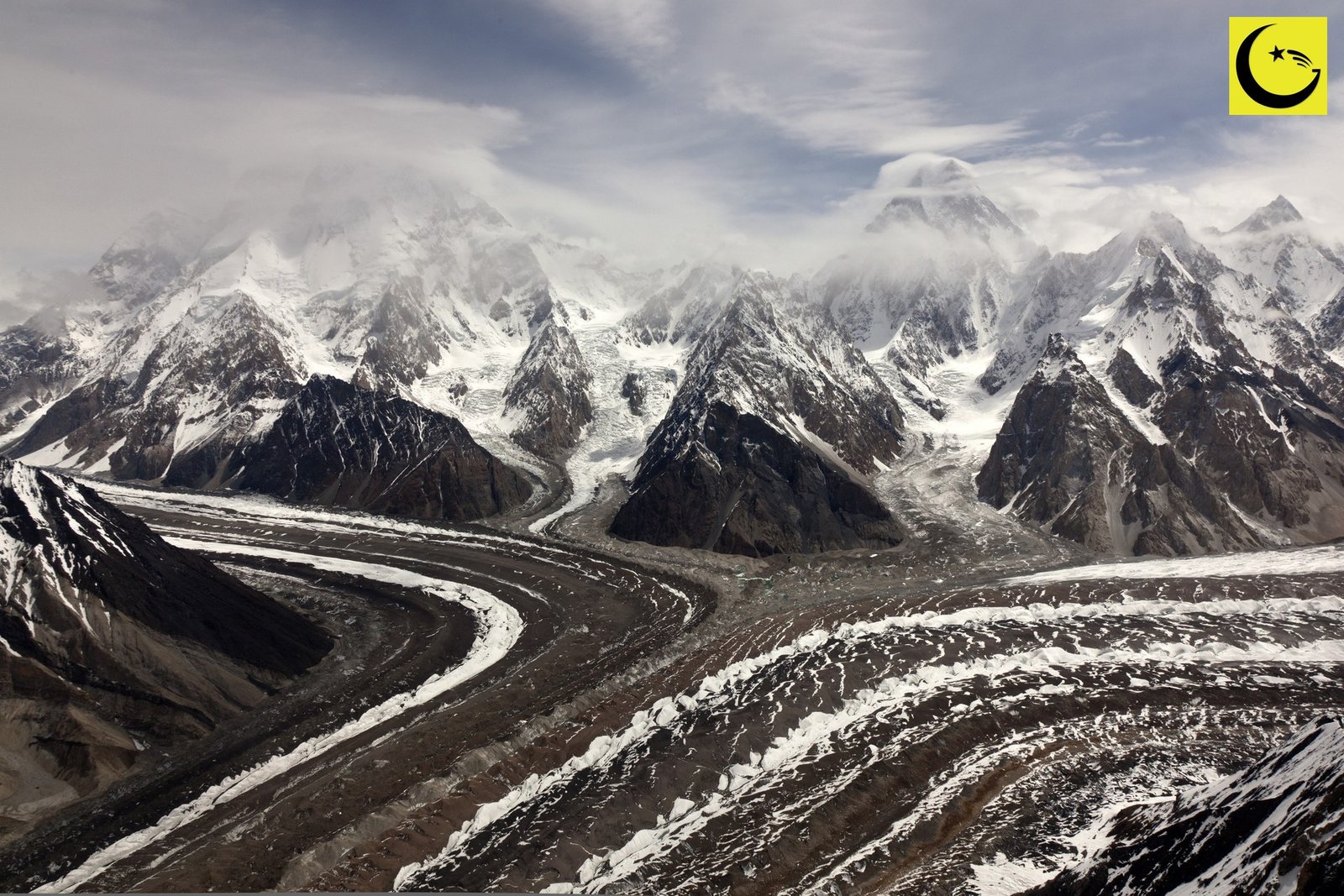
There are 14 mountains on Earth that rise higher than 8,000 metres. They are known as the eight-thousanders, and five of them stand in Pakistan or on its border with China. Only Nepal, with eight, holds more of them, and China holds just one. Four of Pakistan’s five crowd into a single range, the Karakoram, around the Baltoro Glacier, while the fifth, Nanga Parbat, stands alone at the western end of the Himalaya. It is the sixth entry in our Pakistan Facts series, and it is a still-true-today fact: the mountains are not moving, and neither is the count.
Contents
- The fourteen giants, split three ways
- Pakistan’s five: the full table
- Four giants around one glacier
- Nanga Parbat, the western anchor
- Why the map looks like this
- A proposed change that changes nothing yet
The Fourteen, Split Three Ways
The international mountaineering body, the UIAA, divides the fourteen eight-thousanders into eight in Nepal, five in Pakistan and one in China. Nepal’s eight include Everest, the highest ground on the planet, and China’s single entry is Shishapangma, which stands wholly inside Tibet. The list counts independent summits above 8,000 metres, not every high shoulder or subsidiary top, which is why the number has stayed at 14 for decades even though the great ranges hold many more ridges and bumps above that height. Pakistan’s share, five of the 14, means that more than a third of the highest mountains on Earth stand in, or on the edge of, one country, and all five of them lie within a single region of that country, Gilgit-Baltistan.
Pakistan’s Five Eight-Thousanders: The Full Table
Here are the five, with the heights and world rankings by which they are commonly listed. One wording matters: four of the five stand on Pakistan’s border with China, their summits shared between the two countries, and only Nanga Parbat stands wholly inside Pakistan.
| Peak | Height | World rank | Range | Where it stands |
|---|---|---|---|---|
| K2 | 8,611 m | 2nd | Karakoram | On the Pakistan-China border |
| Nanga Parbat | about 8,126 m | 9th | Himalaya | Wholly in Pakistan |
| Gasherbrum I | 8,080 m | 11th | Karakoram | On the Pakistan-China border |
| Broad Peak | 8,051 m | 12th | Karakoram | On the Pakistan-China border |
| Gasherbrum II | 8,035 m | 13th | Karakoram | On the Pakistan-China border |
The heights are the standard survey figures used by the UIAA and the mountaineering references; Nanga Parbat’s is often written as about 8,126 metres because published surveys differ by a metre or two. What no survey changes is the pattern in the table: four Karakoram giants ranked between 2nd and 13th in the world, and one Himalayan giant standing apart from all of them.
Four Giants Around One Glacier
The concentration in the Karakoram is the real marvel. K2, Gasherbrum I, Gasherbrum II and Broad Peak all rise around the Baltoro Glacier, a river of ice some 63 kilometres long and one of the longest glaciers outside the polar regions. At Concordia, the famous junction where the Baltoro meets the Godwin-Austen Glacier, a trekker stands in a natural amphitheatre within sight of four of the world’s 14 highest mountains at once, a viewpoint with no equal anywhere else on Earth. The Gasherbrums take their name from a phrase often translated as “shining wall”, for the way their faces catch the light. Our series opened with the greatest of the four, and the full story of the world’s second highest mountain is told in our first Pakistan Fact, on K2, so it is not repeated here. The point of this entry is the company K2 keeps: stand at Concordia and three more of the planet’s giants fill the same sky.
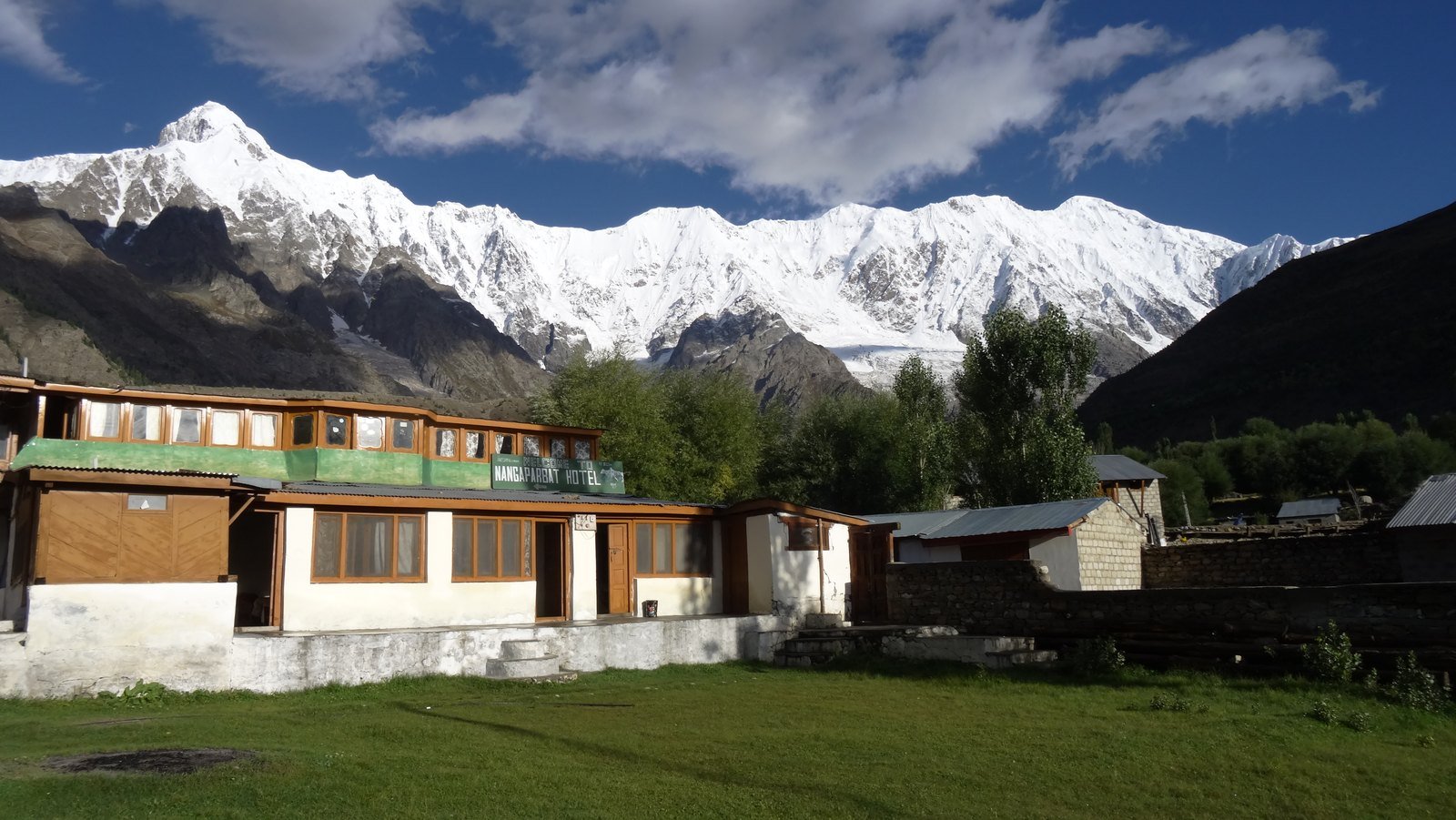
Photo: Jane Mohsin, via Wikimedia Commons
Nanga Parbat, the Western Anchor
The fifth giant keeps its distance. Nanga Parbat stands in the Diamer district of Gilgit-Baltistan, at the western end of the Himalaya, hundreds of kilometres from the Karakoram cluster, and it is the only one of Pakistan’s five that stands wholly inside the country. Its southern side, the Rupal Face, rises about 4,600 metres from base to summit and is often described as the largest mountain face on Earth. The mountain’s name comes from Sanskrit words for the naked mountain, a fair description of a peak that rises almost alone above the Indus gorge, and its climbing history is among the most dramatic in mountaineering. In the geography of the 14, it is the anchor at one end: the Himalaya runs from Nanga Parbat in the west all the way to Namcha Barwa in the east, and Pakistan holds its western pillar.
Why the Map Looks Like This
Two great ranges meet in Pakistan’s north. The Himalaya sweeps in an arc from the east, and the Karakoram, part of the same collision zone where the Indian tectonic plate drives into Asia, packs its giants closer together. That is why the two ranges divide Pakistan’s five between them, four to the Karakoram and one to the Himalaya, and why the Karakoram also holds the densest collection of very high peaks and some of the largest glaciers anywhere outside the poles. All of it sits inside Gilgit-Baltistan, a region of high valleys and rivers that feeds the Indus. The same mountains that hold five of the world’s 14 highest summits also hold the ice that waters the country below them.
A Proposed Change That Changes Nothing Yet
Readers may see reports that the list of eight-thousanders could grow. Nepal has proposed recognising six additional summits as eight-thousanders in their own right, a proposal reported in October 2026. It is a proposal only. The classic list of 14, the one the UIAA and the record books use, stands unchanged, and this article counts by it. If the extra summits are ever formally recognised, the arithmetic of this fact would need a fresh look; today, five of 14 is the honest figure, and it is remarkable enough. More entries in this series are gathered on the Amazing Facts About Pakistan page, from these mountains to the Indus Basin irrigation system, the largest of its kind in the world.
Sources
- UIAA (International Climbing and Mountaineering Federation): The 8000m Peaks
- Wikipedia: Eight-Thousander, the Fourteen Peaks Above 8,000 Metres
- Featured image: An aerial view of the Baltoro range in the Karakoram. Photo: Tariq Hameed Sulemani, via Wikimedia Commons
- In-body image: The Rupal face of Nanga Parbat. Photo: Jane Mohsin, via Wikimedia Commons

Umar Farooq is the founder and editor of Good News Pakistan. An engineer by profession and a writer by passion, he started the site in December 2022 to share good news from Pakistan, and has since written and edited more than 200 articles about its people, sports, science, business and world records. He believes the story of Pakistan is bigger than its headlines, and that good news, told honestly, is worth telling every day.