

Our Pakistan Facts series recently walked through Pakistan’s great canal network in detail and called the Indus Basin irrigation system the largest in the world. This follow-up, written for our World Ranking series, asks the question every big claim should face: largest compared with what? The honest answer has two halves. Country against country, China and India each irrigate far more land than Pakistan does. System against system, no other single connected irrigation network on Earth comes close to the Indus, and the famous rivals are not close behind it. They are a quarter of its size, or less. Here is the comparison, figure by figure, with every number tied to a named source.
The Country Totals: Where Pakistan Does Not Finish First
Start with the league table most people picture. China runs the biggest irrigation estate of any country on Earth. China’s Ministry of Water Resources counts the nation’s irrigated farmland at more than 1.09 billion mu, about 72.7 million hectares, the largest national total in the world, divided among 6,924 separate irrigation districts in every corner of the country.
India’s totals are in the same giant class. Its Directorate of Economics and Statistics puts the country’s net irrigated area at about 60.2 million hectares a year on average over 2020 to 2024. But look inside the number: wells supply about 37.8 million of those hectares and canals about 14.6 million, with tanks and other sources making up the rest. Against totals like these, Pakistan does not rank first, second or anywhere near the top, and this article will not pretend otherwise.
How the Indus Basin Irrigation System Compares, System by System
The picture flips when the unit changes from a country to a system. The FAO’s overview of the basin gives the Indus canal command as about 14.87 million hectares. Published estimates vary, as figures at this scale honestly do: peer reviewed studies put the command between about 14.3 and 15.1 million hectares depending on what is counted and in which year. Take even the cautious end of that range. Now line up the world’s other mega systems, one by one.
The Nile, Egypt. The strongest single river rival is the Nile valley and delta, a genuinely connected network fed by one river. FAO AQUASTAT data puts Egypt’s area equipped for irrigation at about 3.42 million hectares, with the delta alone accounting for about 2.27 million hectares. It is a mighty system, and it is still less than a quarter of the Indus command.
Gezira, Sudan. The Gezira Scheme, watered from the Sennar Dam since 1925, is often described as one of the largest irrigation schemes in the world under a single management. The World Bank puts its command at about 2.2 million feddans, roughly 900,000 hectares, shared by some 130,000 tenant farming families. The Indus command is more than sixteen times larger.
The Central Valley Project, California. The United States Bureau of Reclamation calls its Central Valley Project one of the largest water storage and conveyance systems in the world. It runs about 400 miles, stores water in 20 reservoirs and delivers irrigation water to about 3 million acres of farmland, roughly 1.2 million hectares, while serving more than 6 million Californians. The Indus command could hold about twelve of it.
India’s canals. India builds canals at heroic scale too: the Indira Gandhi Canal, at 649 kilometres, is among the longest on Earth. Yet India’s canal network is not one system. Its roughly 14.6 million canal irrigated hectares are divided among scores of separate projects in separate river basins, state by state, and canals carry barely a quarter of India’s irrigation, behind wells. No single Indian canal system approaches the Indus figure.
One Word Carries the Title: Contiguous
What the Indus has, and no rival matches at scale, is connection. Six rivers, the Indus itself and the Jhelum, Chenab, Ravi, Beas and Sutlej, are tied together by link canals that can move water from a river with a surplus to a river running short, behind three storage reservoirs and a chain of barrages, under a basin sharing arrangement settled in 1960. A release from Tarbela in the north can, in effect, be routed to fields in Sindh. Engineers can draw the whole command, from the mountains to the Arabian Sea, as one machine, because it works as one.
China’s roughly 72 million hectares, by contrast, are a census: thousands of districts across the Yangtze, Yellow, Pearl and other basins that share nothing but a ministry. India’s total is a patchwork of millions of private wells and state canal projects. Egypt’s Nile network is the one true peer in kind, a single river’s connected system, and it measures about a quarter of the size. That is why the careful claim, the one our Facts article made, is precise: not the most irrigation in any country, but the largest single contiguous irrigation system in the world, the Indus Basin irrigation system.
https://goodnews.com.pk/wp-content/uploads/2026/11/indus-basin-irrigation-system-vs-mega-systems-body.jpg
Photo: PSSP, via Wikimedia Commons
The People Each System Feeds
Area is only half the ranking. ICIMOD’s basin governance report counts about 268 million people living in the Indus basin as a whole, most of them in Pakistan. UNESCO’s assessment of the basin adds that more than 90 percent of Pakistan’s agricultural production depends on the Indus and its tributaries. Few systems anywhere carry so much of a large nation’s dinner table.
Egypt’s Nile network carries a nation too: the World Bank counts about 116.5 million Egyptians, some 95 percent of them living along the valley and delta on roughly 5 percent of the country’s land, and the Nile provides about 97 percent of Egypt’s renewable water. China’s irrigated districts underwrite the grain supply of 1.4 billion people, but as a national food system spread across a continent sized country, not as one network with one command population. California’s project serves about 6 million people directly. System for system, the Indus stands alone: the biggest connected command, feeding the biggest share of a big country.
What This Ranking Does and Does Not Claim
Rankings like this one live or die on definitions, so here is ours, in the open. A system means one connected network under one river family’s command. A country total means every scheme inside a border, connected or not. On the second measure, China and India win easily. On the first, the Indus wins by a distance no change of source disturbs: use 14.3 million hectares or 15.1 million, and every rival named here is still less than a quarter of it. Readers who want the full inventory behind the claim, the reservoirs, barrages, link canals and watercourses, will find it in our original Pakistan Facts article, and more contests like this one in our Pakistan World Rankings and Records collection. The command also grows the basmati behind Pakistan’s place among the world’s leading rice exporters, which is perhaps the tastiest proof that the system is not just big on paper.
Sources
- ICIMOD, Elevating River Basin Governance and Cooperation: Indus River Basin (2023)
- UNESCO, The Indus Basin: A Glacier-fed Lifeline
- Belt and Road News Network, China builds the world’s largest water infrastructure system, Ministry of Water Resources figures
- Directorate of Economics and Statistics, Government of India, net irrigated area by source, 2020 to 2024
- IFPRI, Impacts of Global Change on the Nile Basin Countries, FAO AQUASTAT irrigation data
- World Bank, The Gezira Irrigation Scheme in Sudan
- U.S. Bureau of Reclamation, About the Central Valley Project
- German Federal Statistical Office, Egypt country profile with World Bank population data (2024)
- Irrigation in India, Indira Gandhi Canal length
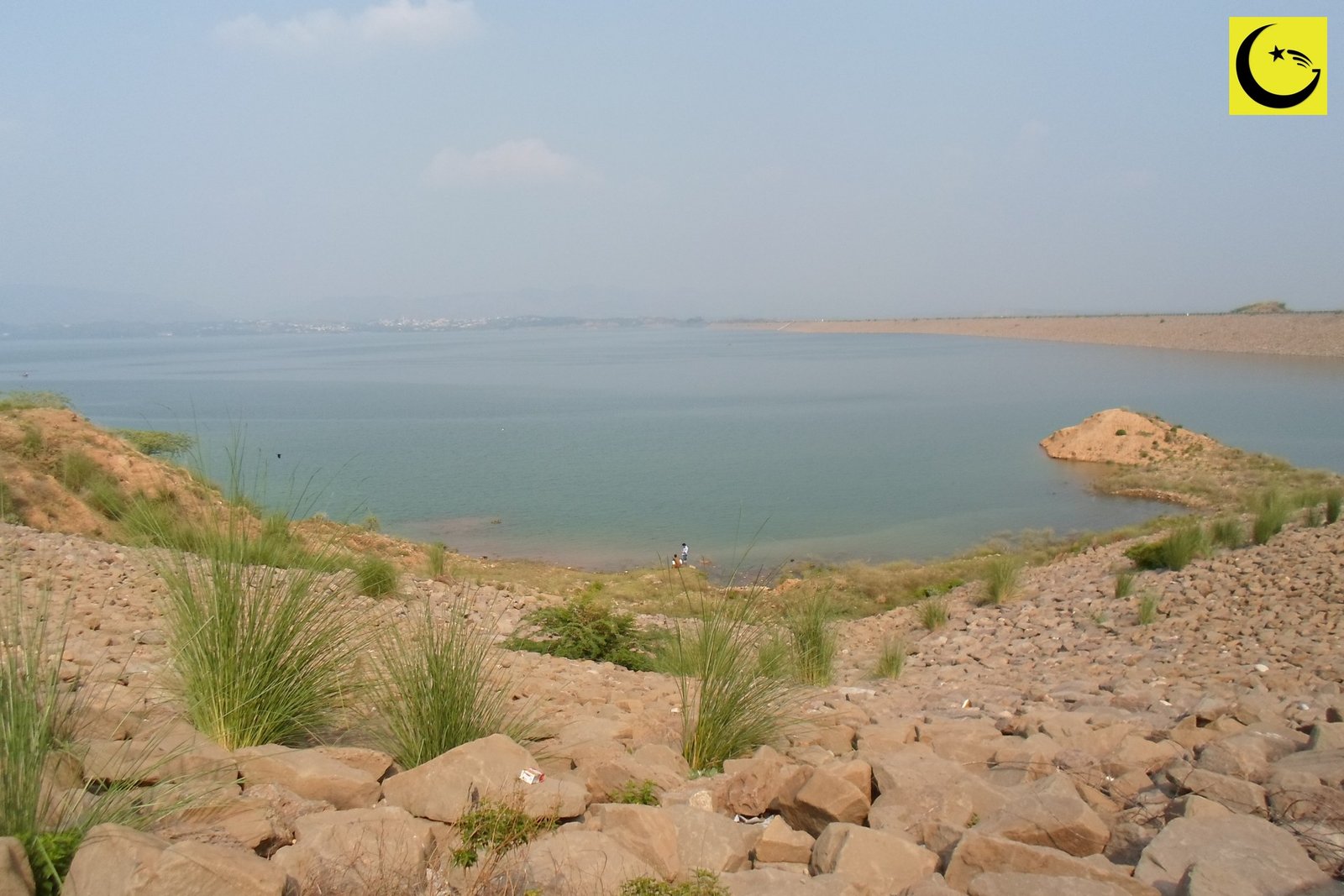
- Featured image: The Mangla reservoir on the Jhelum River. Photo: Saaeed, via Wikimedia Commons
- In-body image: A lined irrigation canal near Faisalabad, Punjab. Photo: PSSP, via Wikimedia Commons

Umar Farooq is the founder and editor of Good News Pakistan. An engineer by profession and a writer by passion, he started the site in December 2022 to share good news from Pakistan, and has since written and edited more than 200 articles about its people, sports, science, business and world records. He believes the story of Pakistan is bigger than its headlines, and that good news, told honestly, is worth telling every day.