

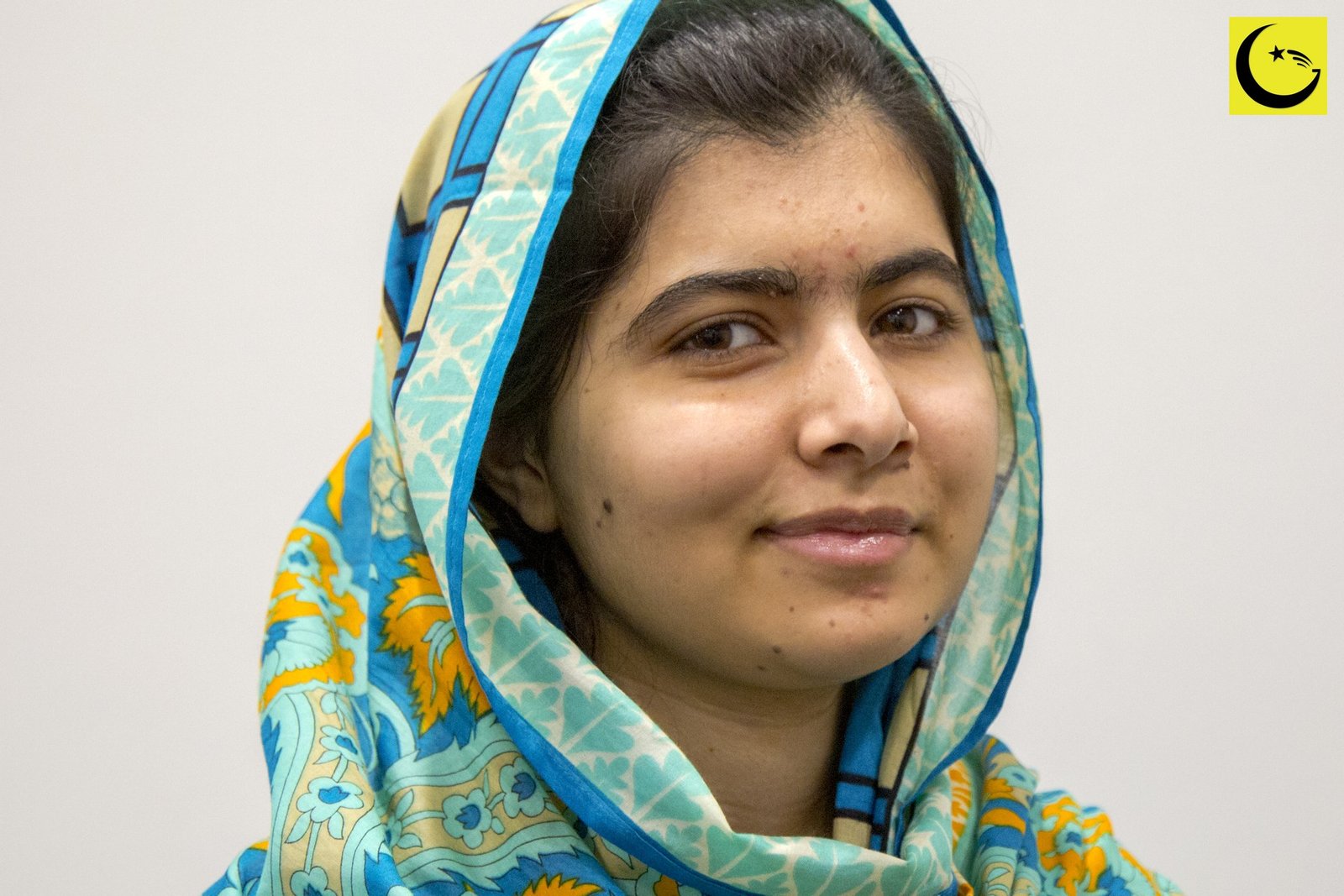
Before the medals and the records, there was an 11-year-old girl in Mingora keeping an anonymous diary. Malala Yousafzai began campaigning for girls’ education in Pakistan’s Swat Valley as a child, survived an assassination attempt at 15, and went on to co-found the Malala Fund, which today works for girls’ schooling in Pakistan and around the world. The Nobel Peace Prize she won at 17 is the part of her story everyone knows; this is the wider story around it.
- Born: 12 July 1997, in Mingora, Swat Valley, Khyber Pakhtunkhwa
- Age 11: wrote an anonymous BBC Urdu diary under the name Gul Makai, describing life under a ban on girls’ schooling
- Age 15: survived being shot by a gunman on her school bus on 9 October 2012
- Age 16: addressed the United Nations on her birthday in 2013
- Age 17: became the youngest Nobel Peace Prize laureate in history in 2014, sharing the prize with Kailash Satyarthi
- Since 2013: co-founder, with her father Ziauddin, of the Malala Fund
A Childhood in Swat
Malala grew up around education. Her father, Ziauddin Yousafzai, ran a school in Mingora and spoke publicly for girls’ right to learn, at a time when armed militants were taking over the Swat Valley and ordering girls’ schools to close. In early 2009, aged 11, she began writing a diary for BBC Urdu under the pen name Gul Makai, describing in plain detail what it felt like to hide her books and watch classmates drop out. When her identity became known, she campaigned openly, giving interviews and appearing in a documentary, and in 2011 she received Pakistan’s National Youth Peace Prize. The diary matters because it shows her voice came first: she was not discovered by fame, she was heard because she insisted on speaking.
The Attack That Did Not Silence Her
On 9 October 2012, a gunman boarded her school bus and shot her in the head. She was 15. She was treated first in Pakistan, then flown to Birmingham in the United Kingdom for specialist care, and she recovered. The attack, intended to silence a schoolgirl, instead carried her campaign to a global stage. On her 16th birthday, 12 July 2013, she addressed the United Nations in New York and told the delegates that the extremists had feared books and pens, and that one child, one teacher, one book and one pen can change the world. She and her family settled in Birmingham, and she completed her schooling there before studying at the University of Oxford, graduating in 2020.
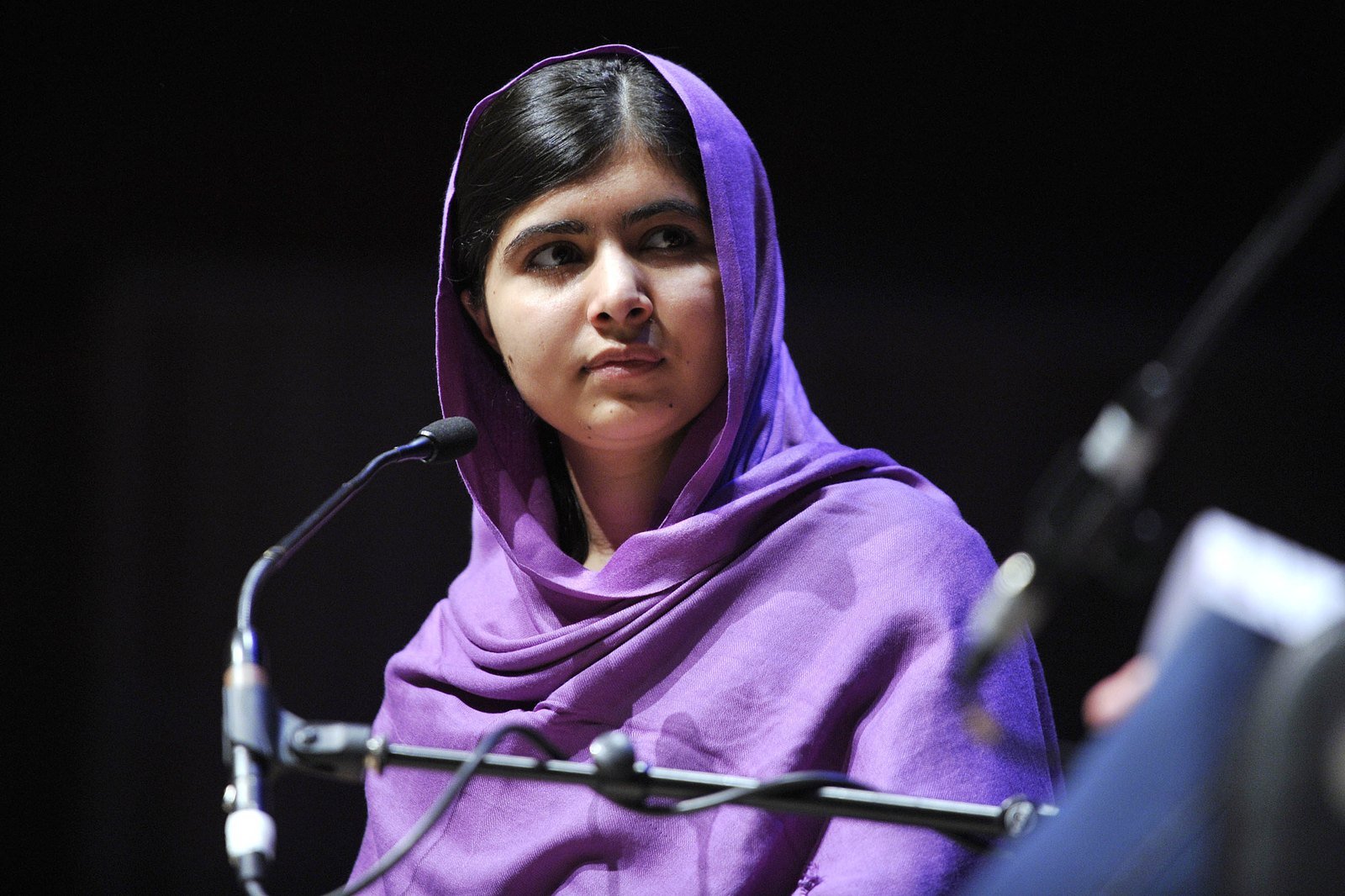
Photo: Southbank Centre, via Wikimedia Commons
The Nobel, One Chapter of Malala Yousafzai’s Story
In October 2014, the Norwegian Nobel Committee awarded the Peace Prize jointly to Malala Yousafzai and the Indian child rights campaigner Kailash Satyarthi, for their struggle against the suppression of children and young people and for the right of all children to education. At 17, she became the youngest Nobel laureate in any category, a record that still stands. We tell that record in full in our companion piece, Malala Yousafzai: Still the Youngest Nobel Laureate in History. Here it is enough to say the prize was a chapter, not the ending: she donated and directed her fame towards building something that would outlast the headlines.
The Work Continues
That something is the Malala Fund, founded in 2013 by Malala and her father. The fund supports local education advocates and programmes in countries where girls face the steepest barriers, including Pakistan, and campaigns for 12 years of free, safe, quality education for every girl. Its model is deliberately unglamorous: fund the people already working in their own communities, and press governments to do their part. Her memoir, I Am Malala, published in 2013, carried the Swat diary’s voice to readers around the world, and in 2017 the United Nations named her its youngest ever Messenger of Peace. In a series that celebrates Pakistani landmarks from K2 to the Edhi ambulance service, Malala’s place rests on something still growing: a girl from Swat who turned an attempt on her life into a permanent institution for other girls’ schooling.
Sources
- The Nobel Prize: Malala Yousafzai, Facts
- Malala Fund: Official Website
- Malala Fund: Malala’s Story
- Featured image: Malala Yousafzai, whose campaign for girls’ education began in Swat when she was 11. Photo: DFID, via Wikimedia Commons
- In-body image: Malala Yousafzai speaks at the Southbank Centre in London. Photo: Southbank Centre, via Wikimedia Commons

Umar Farooq is the founder and editor of Good News Pakistan. An engineer by profession and a writer by passion, he started the site in December 2022 to share good news from Pakistan, and has since written and edited more than 200 articles about its people, sports, science, business and world records. He believes the story of Pakistan is bigger than its headlines, and that good news, told honestly, is worth telling every day.