

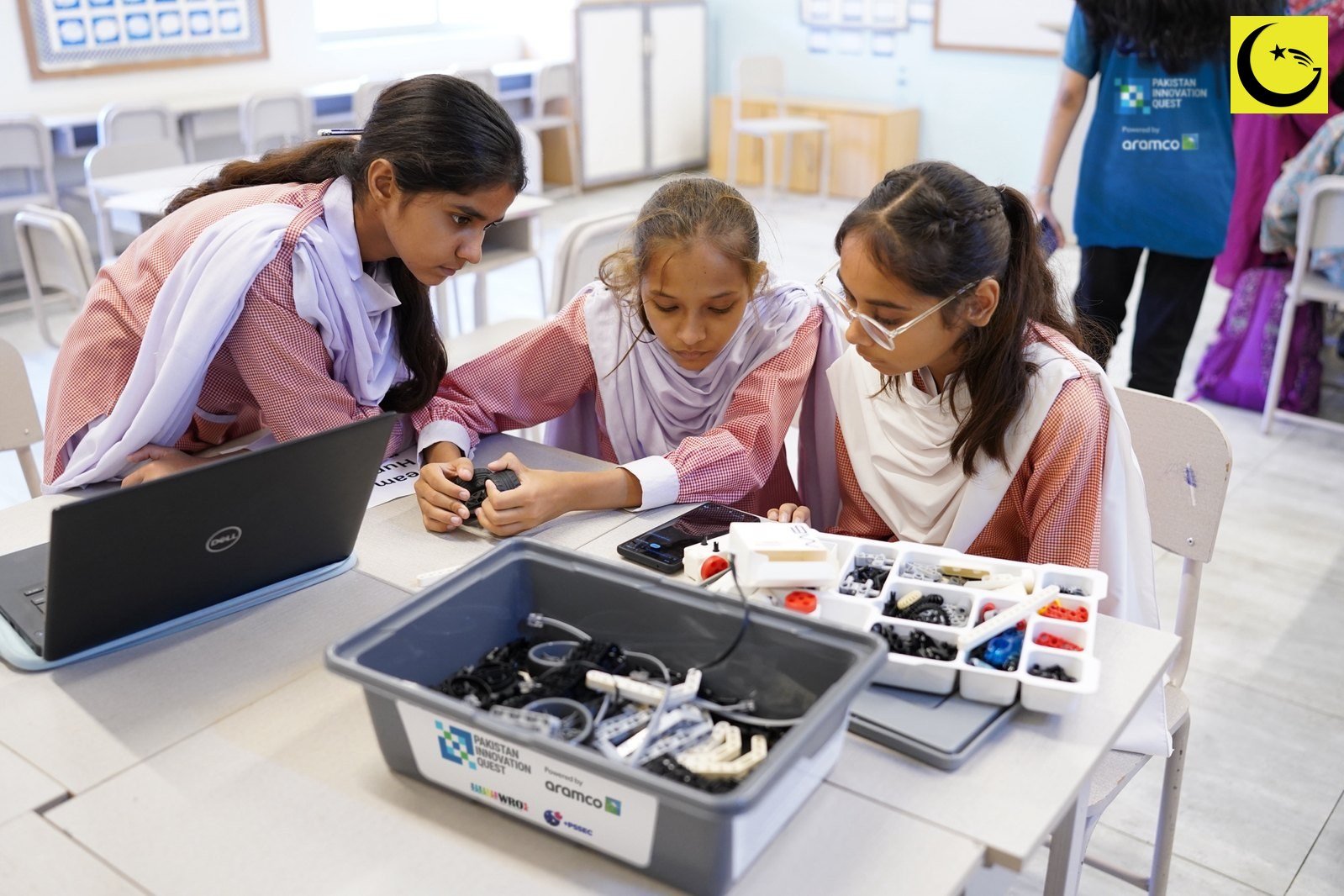
Free robotics training in Pakistan is being opened up to students who are usually shut out of it by cost, distance, gender or disability. The Pakistan Innovation Quest plans to train 10,000 learners and 300 teachers through more than 60 RoboStarter Sprints, six regional competitions and a National Showcase, and it has already put more than 6,000 learners and 518 teachers through its sessions in five cities.
- Run by: the Pi Space Science Education Centre (PSSEC), in partnership with the World Robot Olympiad Association, powered by Aramco
- Target: 10,000 learners and 300 teachers
- Format: more than 60 RoboStarter Sprints, six regional competitions and a National Showcase
- Trained so far: more than 6,000 learners and 518 teachers
- Cities reached so far: Karachi, Lahore, Hyderabad, Gujranwala and Kasur
- Network: around 60 institutions, with a target of more than 40 percent female participation
How the Free Robotics Training in Pakistan Programme Works
The centre of the programme is the RoboStarter Sprint, a hands-on session where students build and programme robots from kits rather than watching a demonstration. The sprints follow the World Robot Olympiad’s Future Innovators project cycle, so learners do not just assemble a machine: they identify a problem, design a solution and present it. That structure matters because it turns a one-day workshop into the first step of a pathway that runs through six regional competitions to a National Showcase, with the World Robot Olympiad beyond it.
Teachers are trained alongside students, and in larger numbers than first planned: 518 teachers have already been through the programme against a target of 300. That is deliberate. A single trained teacher goes back to a school and can run robotics sessions for class after class, long after the visiting team has left. Around 60 institutions have joined the network so far, across public and private schools, girls’ schools, low income communities and institutions supported by non-governmental organisations.
Reaching the Students Other Programmes Miss
Most fee-paying robotics academies cluster in wealthy urban neighbourhoods. The Innovation Quest was designed the other way round: Aramco’s support lets PSSEC deliver the training free in places where families could never pay for it, and the programme specifically recruits students excluded by gender and disability as well as by income and geography. Girls’ schools are a named part of the network, the target is for more than 40 percent of participants to be female, and deaf students in Karachi are among those already trained, a group almost never pictured in technology programmes.
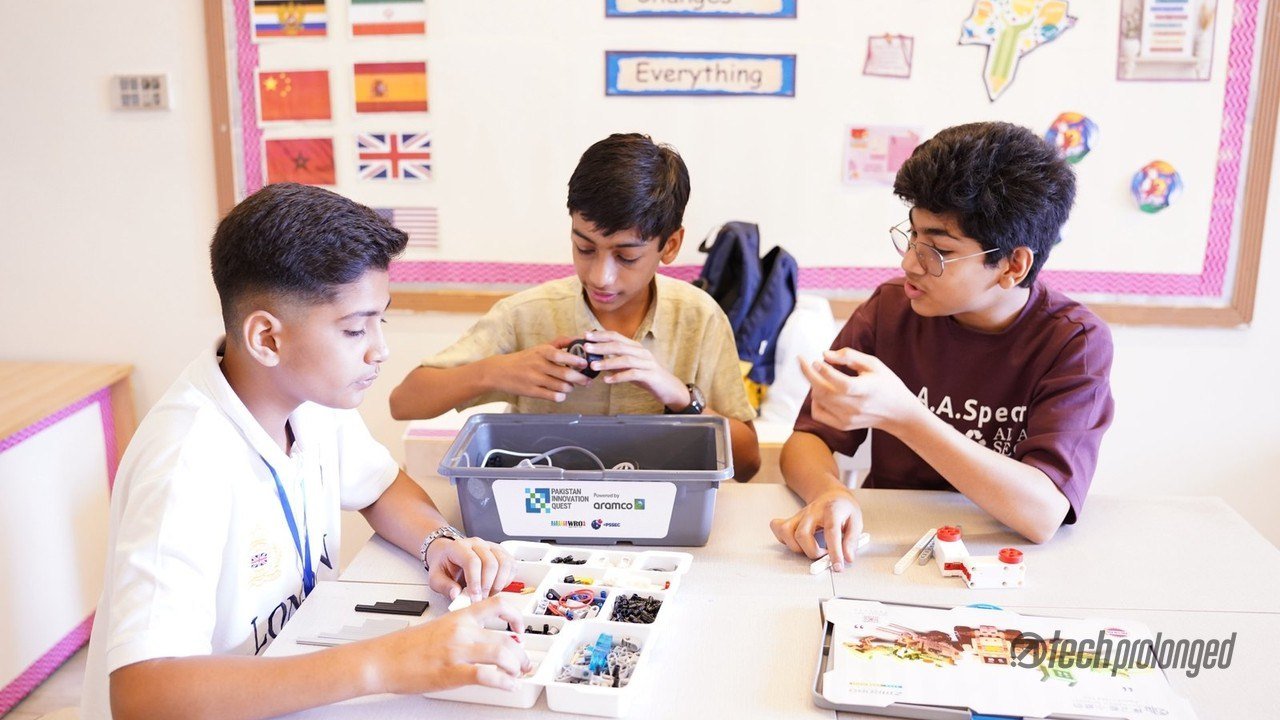
Photo: TechProlonged
The numbers suggest the model travels well. Starting from Karachi, sessions have run in Lahore, Hyderabad, Gujranwala and Kasur, mixing big-city schools with smaller communities. The same kit-based sprint format works in each setting, because the equipment arrives with the trainers and the follow-up sits with the school’s own teachers.
The pathway does not end at the sprint. Regional competitions will select teams for the National Showcase, and the strongest project teams feed into the World Robot Olympiad’s Future Innovators category, where Pakistani students work on the same problem-solving briefs as teams from more than 90 countries. Teacher training covers adapting the kits for mixed-ability classrooms, one reason deaf learners in Karachi could take part on equal terms: the build instructions are visual and the coding is block based. It is a model of free robotics training in Pakistan that treats access as the design brief, not as an afterthought, and its 40 percent female participation target is written into the programme’s goals rather than hoped for.
Part of a Wider Push for Digital Skills
The quest lands in the middle of a broader national effort to get technology into students’ hands. The PM Youth Chromebook Scheme is putting devices into schools, free Google Career Certificates for minority students in Punjab are opening a route into tech jobs, and Pakistan has just signed 11 education agreements with Chinese institutions covering skills and training. Devices and courses help, but the Innovation Quest adds the missing piece: young students building physical machines with their hands, years before they choose subjects or careers.
For parents and schools wondering how to join, the route is through PSSEC and its partner institutions as the sprint calendar expands towards the 10,000 learner target. If the programme holds its current pace, thousands more students, many of them girls and many from communities technology programmes rarely reach, will have built their first robot before the National Showcase.
Sources
- LHR Times: Aramco-Backed Robotics Push Aims to Reach 10,000 Pakistani Students, 4 November 2026
- TechProlonged: Free Robotics Training Reaches 6,000 Pakistani Students So Far, 4 November 2026
- Featured image: Schoolgirls work with a robotics kit and a laptop during a Pakistan Innovation Quest training session. Photo: Pakistan Innovation Quest, via TechProlonged
- In-body image: Students assemble robotics kits at a Pakistan Innovation Quest session. Photo: TechProlonged

Umar Farooq is the founder and editor of Good News Pakistan. An engineer by profession and a writer by passion, he started the site in December 2022 to share good news from Pakistan, and has since written and edited more than 200 articles about its people, sports, science, business and world records. He believes the story of Pakistan is bigger than its headlines, and that good news, told honestly, is worth telling every day.