

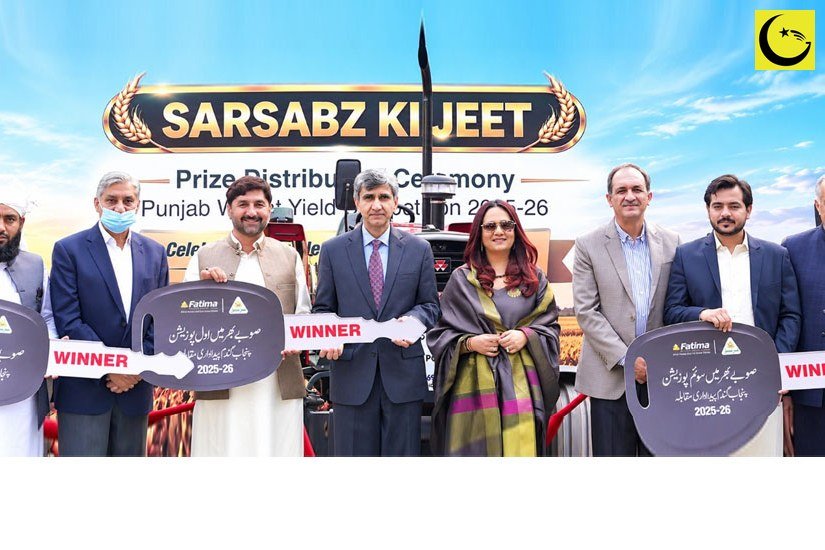
The Punjab wheat yield competition for 2025-26 has ended in a near clean sweep: farmers using Fatima Fertilizer’s Sarsabz fertilisers took all three provincial titles and 119 of the 120 district level positions, with winning yields of about 69 to 70 maunds per acre, close to double the indicative national average of about 33 maunds per acre. The results, announced by the Government of Punjab, were celebrated at the Sarsabz Ki Jeet prize distribution ceremony in Lahore.
- Provincial first: Sajjad Hussain of Muzaffargarh, 69 maunds and 39.4 kilograms per acre
- Provincial second: Shafiq Ahmed of Attock, 69 maunds and 39.1 kilograms per acre
- Provincial third: Muhammad Asghar of Rahim Yar Khan, 69 maunds and 24.1 kilograms per acre
- District sweep: 119 of 120 district positions, including first place in 39 of 40 districts
- Comparison: winning yields of 69 to 70 maunds per acre against an indicative national average of about 33
- Last year: the same group of farmers took all three provincial titles and 97 of 120 district positions
The Punjab Wheat Yield Competition Winners
The top of the table could hardly have been tighter. Sajjad Hussain from Muzaffargarh edged the provincial title with 69 maunds and 39.4 kilograms per acre, just ahead of Shafiq Ahmed from Attock at 69 maunds and 39.1 kilograms, with Muhammad Asghar of Rahim Yar Khan third at 69 maunds and 24.1 kilograms. Below them, Sarsabz users placed first in 39 of Punjab’s 40 districts. The winners were honoured at the Sarsabz Ki Jeet ceremony, where Federal Minister for National Food Security Rana Tanveer Hussain commended the farmers and linked higher per acre yields to food security, lower import dependence and possible wheat exports.
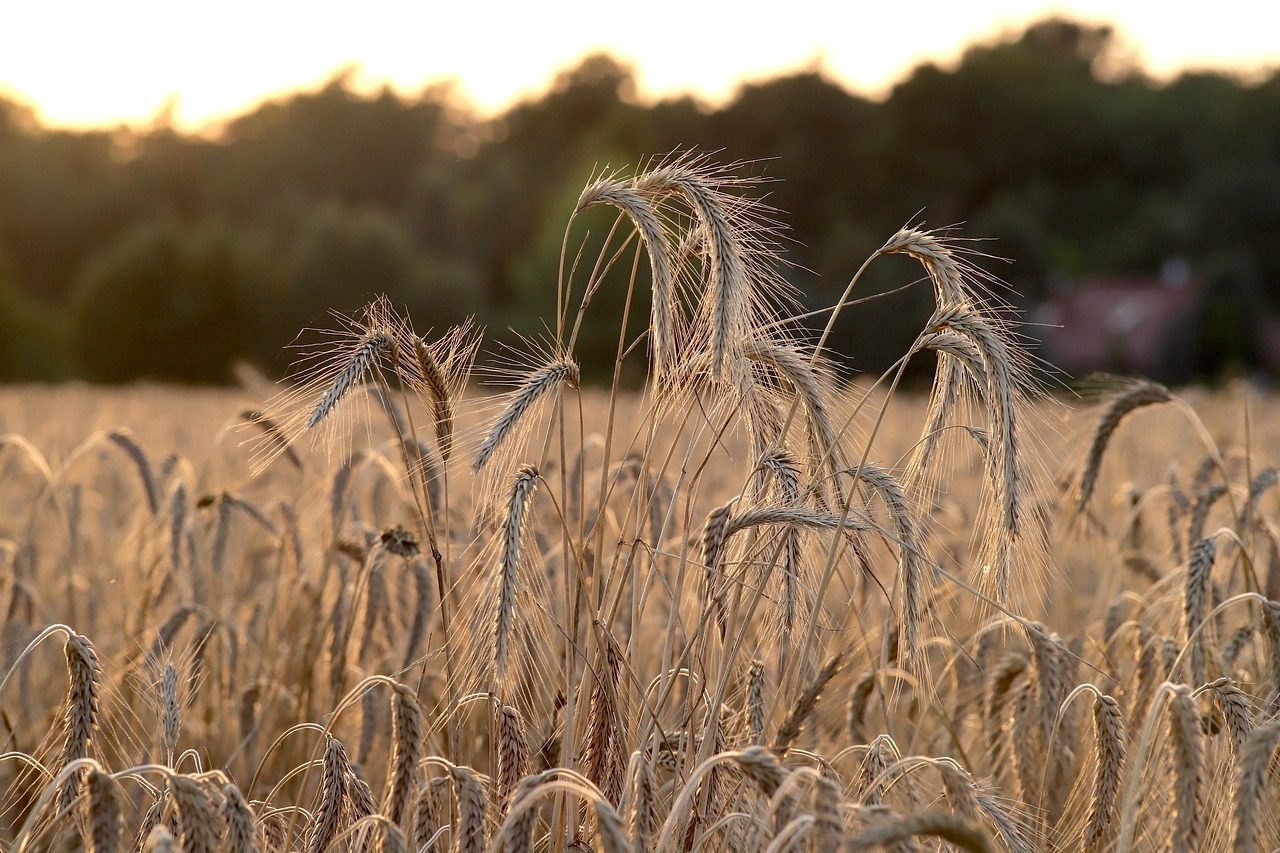
Photo: Khabr.pk
The competition, organised at district level across Punjab’s districts before the provincial final, is judged on verified harvests from entered fields rather than on estimates. The winning farmers were users of the Sarsabz programme built around Nitrophos and CAN fertilisers, paired with soil testing and agronomy advice through the season. That pairing is the heart of the company’s pitch: the same fertiliser produces different results depending on timing, placement and the crop’s actual nutrient gaps, and a sweep of first places in 39 of 40 districts suggests the advice network, not just the product, is doing much of the work.
Nearly Twice the Wheat From the Same Acre
The striking figure in the results is the gap. Pakistan’s wheat fields average roughly 33 maunds per acre on the indicative national figure used in the competition reports, so a verified competition yield of nearly 70 maunds shows what the same land can produce when seed, balanced fertiliser and agronomy line up. Fatima Fertilizer’s Director Marketing and Sales, Rabel Sadozai, credited balanced crop nutrition and agronomic guidance, pointing out that Sarsabz users improved on their own strong result from last year, when they won 97 of the 120 district positions. The results are the competition’s own, reported by the company and covered by several business outlets, and competition plots are intensively managed; nobody should expect the national average to double in a season. But the direction of the evidence matters for a country that has repeatedly had to import wheat.
Why Yield Gaps Are Pakistan’s Big Farming Story
Pakistan’s farmland sits on the world’s largest irrigation system, yet its yields trail what its water and sunshine should deliver, a gap visible across crops: the country ranks fifth in world seed cotton production on volume while still chasing yield per acre. Closing even part of the wheat gap would cut the import bill and steady flour prices, which is why how the Indus Basin stacks up against the world’s mega irrigation systems is ultimately a story about management as much as water.
The government has proposed a wheat support price of Rs 4,500 per maund under the National Wheat Policy, alongside plans to hold strategic reserves. Prices set the incentive; yields decide the harvest. Wheat is Pakistan’s staple food and Punjab grows the bulk of it, so even a few extra maunds per acre across the province’s millions of wheat acres would dwarf the import bills that follow a poor season, and in a genuinely surplus year higher yields free grain for regional markets instead of storage. On the evidence of this year’s competition, Punjab’s best farmers are showing how much headroom is left in the country’s most important food crop.
Sources
- BizTimesPk: Sarsabz Farmers Claim All Three Provincial Titles in Punjab’s Wheat Yield Competition 2025-26, 2 November 2026
- Pakistan Business News: Sarsabz Farmers Dominate Punjab Wheat Yield Competition With Provincial Sweep, 4 November 2026
- Featured image: Winners and officials pose with oversized winner keys at the Sarsabz Ki Jeet prize distribution ceremony in Lahore. Photo: BizTimesPk
- In-body image: A wheat field in Punjab. Photo: Khabr.pk

Umar Farooq is the founder and editor of Good News Pakistan. An engineer by profession and a writer by passion, he started the site in December 2022 to share good news from Pakistan, and has since written and edited more than 200 articles about its people, sports, science, business and world records. He believes the story of Pakistan is bigger than its headlines, and that good news, told honestly, is worth telling every day.