

The Pakistan IT exports record was rewritten in the year to June 2026: exports of telecommunications, computer and information services reached $4.6 billion in FY2025-26, the highest annual total in the country’s history, according to State Bank of Pakistan figures.
The total for July 2025 to June 2026 is about 21 percent higher than the $3.814 billion recorded in FY2024-25. It means technology is no longer a promising side story of the economy. It is now one of its biggest earners of foreign exchange, and the Pakistan IT exports record is becoming a habit the sector repeats almost every year.
How the Pakistan IT Exports Record Was Built, Month by Month
The shape of the year matters as much as the headline number. Pakistan’s monthly ICT exports had never crossed $400 million before this year. Then April 2026 set a new all-time monthly record of $423 million, May followed with $373 million, and June closed the year at $416 million, up 12 percent on May and about 23 percent higher than the $339 million earned in June 2025.
Three months above or near $400 million in a single quarter showed this was not a one-off spike. Exporters point to a mix of causes: a stable exchange rate that encouraged companies to bring earnings home through banking channels, State Bank relaxations that let exporters keep a larger share of their receipts in special foreign currency accounts, and years of steady demand for Pakistani software development, business process services and freelance talent from clients in North America, Europe and the Gulf.
R E A D M O R E
Sialkot: The World’s Surgical Instrument Capital
Almost Half of All Services Exports
The clearest sign of the sector’s weight is its share of the wider services economy. Pakistan’s total services exports reached about $10 billion in FY2025-26, up roughly 19 percent from about $8.4 billion a year earlier, and ICT alone accounts for about 46 percent of that total. Nearly one in every two services dollars Pakistan earns abroad now comes from technology.
The Pakistan Economic Survey 2025-26 had already counted about $3.4 billion of ICT exports in the first nine months of the year, July to March, alongside 34,420 IT and IT-enabled services companies registered with the Securities and Exchange Commission of Pakistan by March 2026. Behind the export figures sits a real industry: thousands of firms, hundreds of thousands of skilled workers, and a growing bench of product and services companies selling into competitive markets.
Inside the $4.6 Billion
Computer services do the heavy lifting inside the total. In the Economic Survey’s nine-month figures, computer services contributed about $2.94 billion of the $3.4 billion, with call centres and other information services making up the rest. That mix matters: software development and IT services tend to create skilled, well-paid jobs at home, while the clients and the payments sit abroad.
The sector is also routinely described as Pakistan’s largest services export industry, ahead of transport and travel. Its growth has been built over a decade in which successive governments kept a concessional tax regime for exporters, the State Bank eased the rules on retaining export earnings abroad, and a generation of engineers and self-taught developers in Karachi, Lahore and Islamabad learned to sell into the world’s richest markets. The freelance economy grew inside the same story: individual Pakistanis are among the most active sellers on global freelancing platforms, and their earnings flow through the same ICT export statistics.
Geography helps explain the durability of the growth. North America remains the biggest market for Pakistani software and services firms, Europe is second, and Gulf demand has grown quickly as Saudi Arabia and the Emirates digitise their own economies. Pakistani firms have responded by opening delivery and sales offices abroad while keeping their engineering teams at home, which means the high-value work, and the salaries that go with it, stay in Pakistan even when the client is in Texas or Dubai. Universities and private institutes add tens of thousands of computing graduates to the workforce each year, and the industry’s complaint is rarely a shortage of applicants; it is about how many arrive ready to work on live international projects from day one.
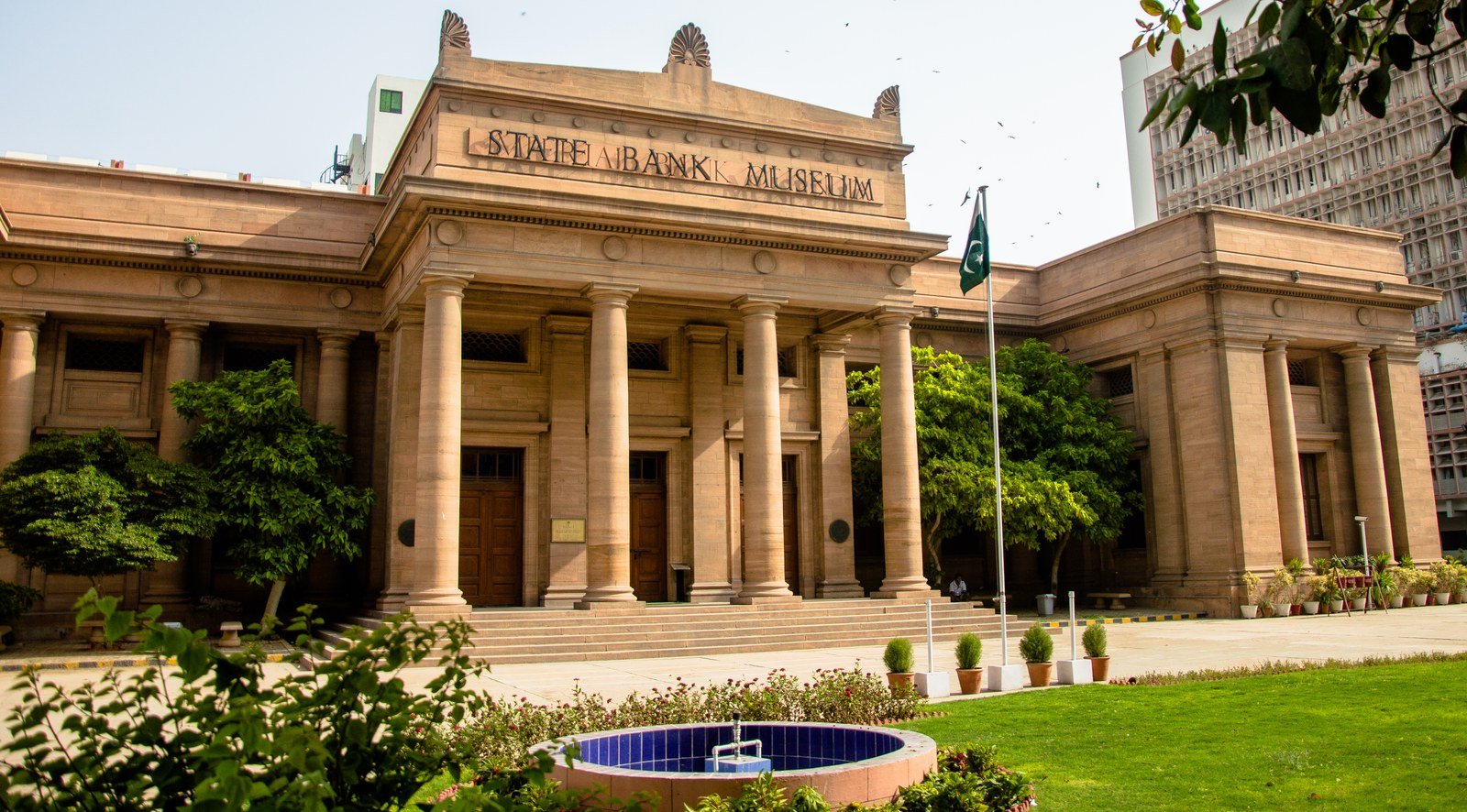
The historic State Bank of Pakistan building in Karachi, now the State Bank Museum
Photo: Asim Iftikhar Nagi, CC BY-SA 4.0, via Wikimedia Commons
The Target That Was Missed, and the One That Comes Next
Honesty requires the other half of the story. The government had set a $5 billion target for IT exports in FY2025-26, and the sector missed it by about $400 million. A record year and a missed target can both be true, and both are: demand is growing fast, but not quite as fast as official ambitions.
The next goal is larger still. Under the Uraan Pakistan programme, the stated target is $10 billion of IT exports by FY2029. Reaching it means sustaining growth of roughly 20 percent or more every year, which in turn depends on reliable internet, skilled graduates, easier payments for exporters and continued policy stability. One support already locked in is the preferential 0.25 percent final tax rate on IT export income, which has been extended through 2029, giving companies a predictable regime to plan against.
A note on freelancers, because the numbers are often muddled in headlines: earnings by Pakistani freelancers working for overseas clients are already counted inside these ICT export figures. Reported estimates of the freelancer share vary widely, so they should never be added on top of the $4.6 billion. Doing so counts the same dollars twice.
R E A D M O R E
PRSC-EO1: Pakistan’s First Home Made Earth Observation Satellite
Momentum Has Carried Into the New Year
The first month of FY2026-27 suggests the run is continuing. ICT exports in July 2026 came in at about $417 million, up around 18 percent on the same month a year earlier and close to the June record. Industry bodies such as P@SHA continue to argue that with the right support on payments, skills and connectivity, the $10 billion goal is ambitious but reachable.
The challenges are well known inside the industry. Companies say they need uninterrupted, high-quality internet to serve foreign clients, a deeper pipeline of job-ready graduates, and payment systems that let small firms and freelancers receive money from abroad without friction. Every monthly record this year was set against the same global demand for remote software and services talent that built the industry in the first place. What the FY2025-26 figures prove is that when those basics hold, Pakistani technology sells. The Pakistan IT exports record of $4.6 billion is the new floor the sector will be measured against.
Pakistan has form for turning a niche strength into a world-class export, as our look at Pakistan’s IT delegation taking its export goals to Oslo Innovation Week showed, and the country’s wider innovation standing is rising too, as the Global Innovation Index 2026 climb underlined. For more records like this one, visit our Pakistan World Rankings and Records page.
Sources
- TechJuice: Pakistan’s IT exports hit record $4.6 billion in FY26 but miss $5 billion target
- Economic Outlook: Pakistan IT exports surge to an all-time monthly high in June 2026
- TechJuice: Pakistan’s IT exports begin FY27 with 18 percent growth in July 2026
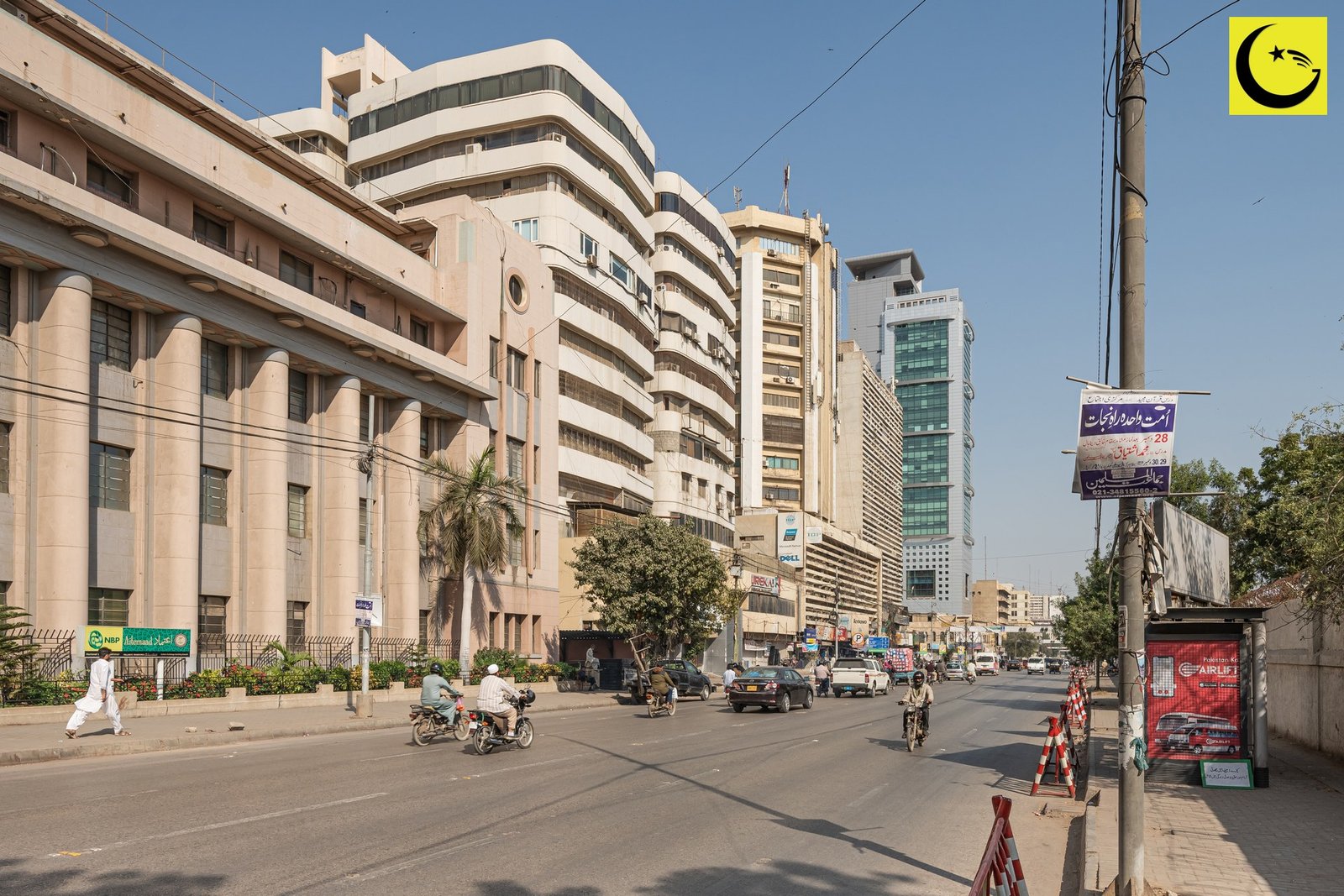
- Featured image: I. I. Chundrigar Road, Karachi’s financial district (A. Savin, Free Art License, via Wikimedia Commons)
- In-body image: The old State Bank of Pakistan building in Karachi, now the State Bank Museum (Asim Iftikhar Nagi, CC BY-SA 4.0, via Wikimedia Commons)

Umar Farooq is the founder and editor of Good News Pakistan. An engineer by profession and a writer by passion, he started the site in December 2022 to share good news from Pakistan, and has since written and edited more than 200 articles about its people, sports, science, business and world records. He believes the story of Pakistan is bigger than its headlines, and that good news, told honestly, is worth telling every day.