


Pakistan’s school students have turned the world’s newest science olympiad into a habit. The country’s Nuclear Science Olympiad medals tally now stands at seven across the first two editions it contested: four medals in Malaysia in 2025, three more in Jeddah in 2026, and, announced at the Jeddah closing ceremony, the hosting rights for the fourth edition in 2027. For a competition that did not exist three years ago, Pakistan has moved from newcomer to host nation without missing a podium.
The Nuclear Science Olympiad Medals of Jeddah 2026
The 3rd International Nuclear Science Olympiad (INSO-2026) ran from 2 to 8 August 2026 at King Abdulaziz University in Jeddah, Saudi Arabia, closing on 9 August. Backed by the International Atomic Energy Agency (IAEA), it brought together about 120 secondary school students from 19 countries, including China, Japan, Russia, Türkiye, Malaysia and Indonesia. Host nation Saudi Arabia topped the event. Pakistan’s team of four students, selected and trained by the Pakistan Institute of Engineering and Applied Sciences (PIEAS) under the Pakistan Atomic Energy Commission (PAEC), won three medals:
- Gold: Muhammad Ali, Government College University (GCU), Lahore
- Silver: Muhammad Usman, F.G. Sir Syed College, Rawalpindi
- Silver: Seerat Fatima Bhatti, Nixor College, Karachi
- Fourth team member: Syed Shuja Haider, of Sunder STEM School, Lahore
Ali’s gold was won in distinguished company: reports of the closing ceremony describe his podium flanked by Naoki Tosaki of Japan and Siqi Liu of China, with the medals inscribed for the 2026 Saudi Arabia edition. For Seerat Fatima Bhatti, the silver also carried a quieter distinction, a medal for a Karachi schoolgirl in a field where Pakistan’s science headlines are usually written by boys.
What the Olympiad Tests
The INSO is a young competition with a serious brief. It examines secondary school students on nuclear physics and the peaceful applications of nuclear technology: how reactors produce energy, how radiation is measured and kept safe, and how nuclear science is used in medicine, agriculture and industry. The IAEA supports the event because the agency’s wider mission depends on a world that understands nuclear science rather than fearing it, and the olympiad format, national selection rounds feeding an international final, is borrowed from the long-established olympiads in physics, chemistry and mathematics. Pakistan’s results suggest its school system has taken to the new subject quickly: in two editions, against fields of 19 countries that include science heavyweights such as China, Japan and Russia, no Pakistani team has yet come home without a gold medal.
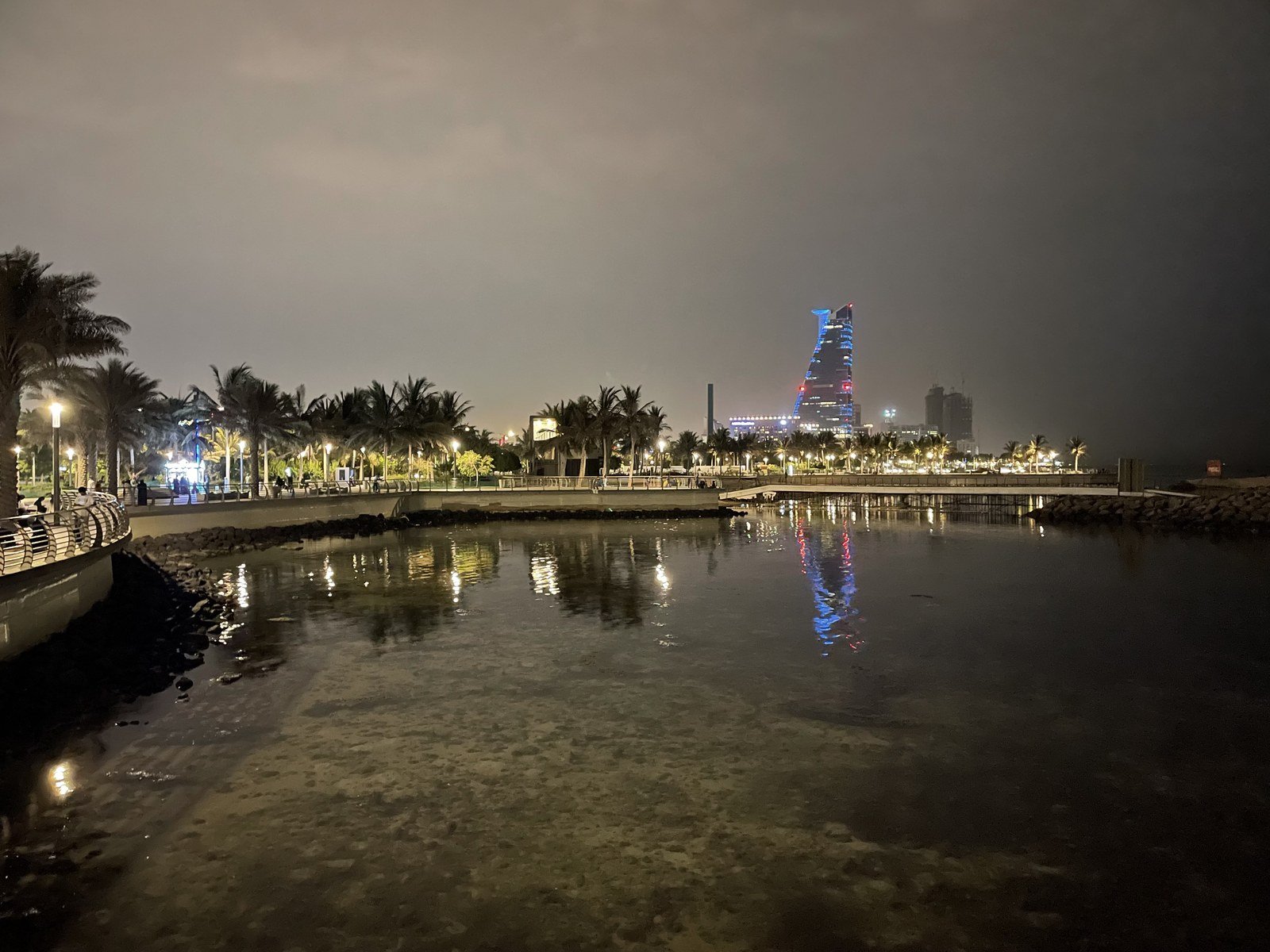
Photo: Joseph Azrak, via Wikimedia Commons
R E A D M O R E
Sialkot: The World’s Surgical Instrument Capital
The Malaysia Breakthrough of 2025
The Jeddah medals were a defence of a standard set a year earlier. At the 2nd International Nuclear Science Olympiad in Malaysia, held from 30 July to 5 August 2025 under the IAEA with 19 countries taking part, Pakistan won four medals, one of each colour and a second bronze besides:
- Gold: Muhammad Tayyab Bukhari, Beaconhouse School, Abbottabad
- Silver: Ammar Asad Warraich, Siddique Public School, Islamabad
- Bronze: Rawah Javed, Siddique Public School, Islamabad
- Bronze: Tatheer Aima Naqvi, Chenab College, Jhang
The 2025 field lined up against them included China, Japan, Singapore, Indonesia, Türkiye, Thailand, Sri Lanka, Saudi Arabia and Qatar alongside the Malaysian hosts. The 2025 team was mentored by Dr. Sajjad Tahir of PIEAS and Dr. Muhammad Maqsood of PAEC’s Directorate of Education. Read together, the two editions tell a story of breadth rather than one star: the seven medals were won by seven different students, from schools and colleges in Abbottabad, Islamabad, Jhang, Lahore, Rawalpindi and Karachi. That spread matters. It says the results come from a system that finds talent across the country, not from a single exceptional school.
How Pakistan Picks and Trains Its Team
The system has a name: PANSO, the Pakistan Nuclear Science Olympiad, a national competition created by PAEC to identify promising students and prepare them for the international event. Winners of the national round are taken in by PIEAS, Pakistan’s leading engineering university in nuclear and allied fields, for specialised training before they travel. It is the same philosophy that produces Pakistan’s other young world-beaters, from science olympiads to Emma Alam’s world memory and speed reading titles: find the talent early, coach it properly, and let it compete against the world rather than only against the neighbourhood. The INSO itself tests secondary school students on nuclear physics, energy, safety and the peaceful applications of nuclear technology, which is why the IAEA backs it: the agency wants a global generation literate in nuclear science, and Pakistan is now one of the countries supplying the teachers as well as the students.
R E A D M O R E
Malala Yousafzai: Still the Youngest Nobel Laureate in History
Hosting the World in 2027
The announcement that closed the Jeddah event may prove bigger than any medal: Pakistan will host the 4th International Nuclear Science Olympiad in 2027. The young competition’s hosting line runs from the Philippines, which staged the first edition in 2024, through Malaysia and Saudi Arabia, and now to Pakistan, where PAEC and PIEAS representatives received commemorative mementos at the closing ceremony. Hosting brings about 120 of the world’s best young science students to Pakistan, gives home students a front-row view of the standard required, and deepens the training pipeline that produced the 2025 and 2026 medals. PAEC has said the hosting role can widen the country’s exposure to nuclear science education, create more training opportunities for students beyond the small PANSO squads, and deepen collaboration with the institutions behind the olympiad. There is a practical prize too: a home edition lets far more Pakistani students, teachers and parents watch an international final at close quarters than any travelling team ever could, which is how a niche competition becomes a national aspiration. It caps a remarkable run for Pakistani science on the world stage, in a period that has also seen the country launch its own Earth observation satellites and climb university rankings. Seven medals in two years, from seven students in six cities, and the world coming to Pakistan next: the Nuclear Science Olympiad has become one of the clearest proofs that the country’s scientific future is being built in its classrooms.
Pakistan’s INSO Scoreboard
- 2025, Malaysia (2nd INSO): one gold, one silver, two bronze, four medals
- 2026, Jeddah (3rd INSO): one gold, two silver, three medals
- Total: seven Nuclear Science Olympiad medals, won by seven different students from six cities
- 2027: Pakistan hosts the 4th International Nuclear Science Olympiad
Sources
- Lead Pakistan: Pakistan Wins Three Medals at International Nuclear Science Olympiad, August 2026
- WE News English: Pakistani Students Win Gold and Silver Medals at International Nuclear Science Olympiad in Saudi Arabia
- The Pakistan Times: Pakistan Wins Three Medals at International Nuclear Science Olympiad in Jeddah
- APP report of INSO 2025 in Malaysia, via The Free Library, August 2025
- TechJuice: Pakistani Students at the Nuclear Science Olympiad 2025
- Featured image: The glowing core of a research reactor, the science at the heart of the Olympiad. Photo: Gaunper, via Wikimedia Commons (CC BY-SA 4.0)
- In-body image: Jeddah’s Corniche at night, in the city that hosted INSO 2026. Photo: Joseph Azrak, via Wikimedia Commons (CC BY-SA 4.0)

Umar Farooq is the founder and editor of Good News Pakistan. An engineer by profession and a writer by passion, he started the site in December 2022 to share good news from Pakistan, and has since written and edited more than 200 articles about its people, sports, science, business and world records. He believes the story of Pakistan is bigger than its headlines, and that good news, told honestly, is worth telling every day.