

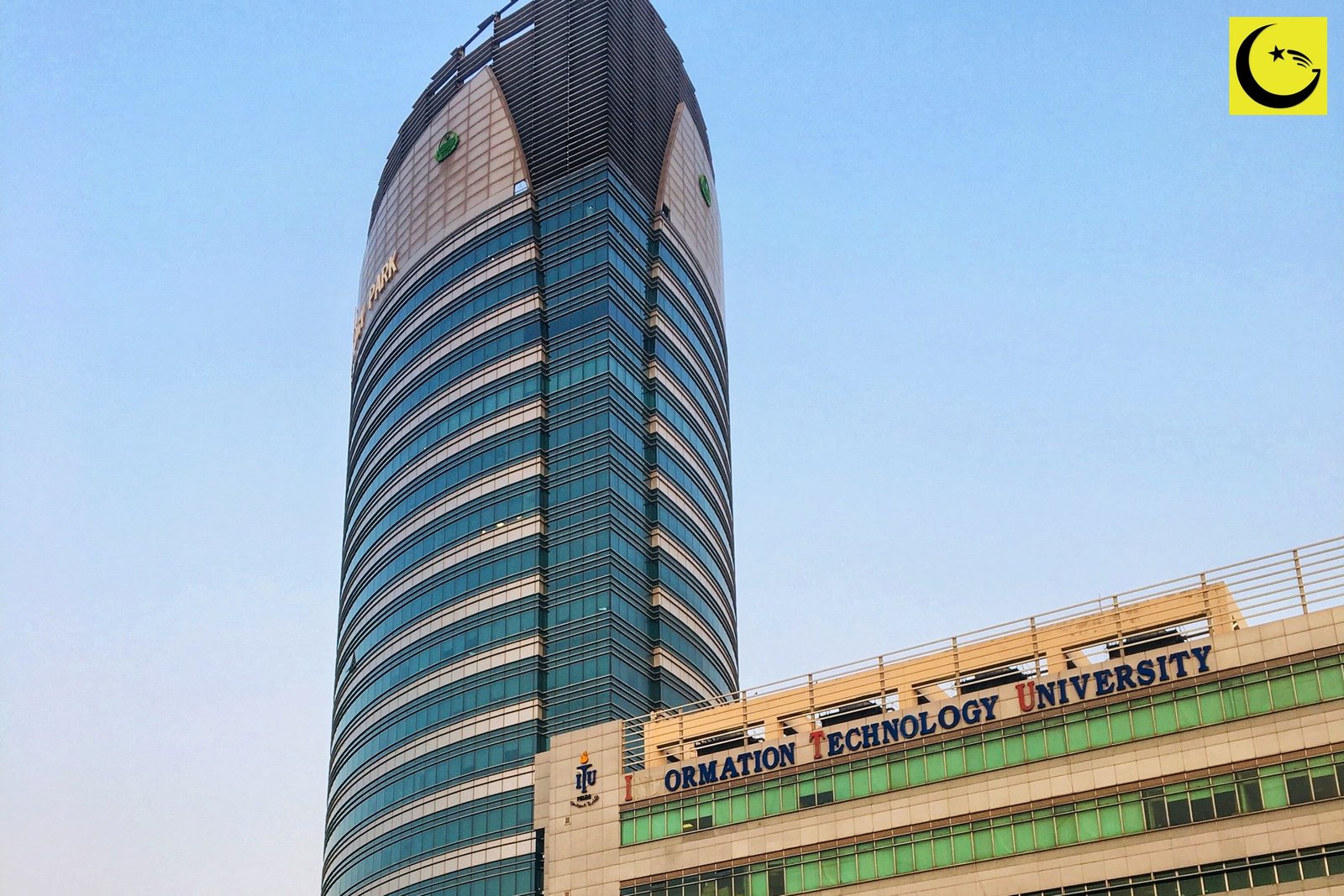
Every working day, thousands of software engineers in Lahore walk into a 17-storey tower on Ferozepur Road that carries the name of a schoolgirl from a village near Faisalabad. The Arfa Karim legacy is not a statue or a plaque. It is the country’s largest information and communications technology park, renamed for her the day after she died at sixteen, and it begins with a nine-year-old who persuaded her father to buy a computer and then did something no child anywhere had done at her age.
A Village Girl and a Computer
Arfa Abdul Karim Randhawa was born on 2 February 1995 in Ram Diwali, a village in Faisalabad District, into a Punjabi family of modest means. Fascinated by a computer she had seen, she talked her father into buying one, and was soon taking lessons at an APTECH training centre. In 2004, at the age of nine, after about four months of preparation by most accounts, she passed the Microsoft Certified Professional examination. She was widely recognised at the time as the youngest person ever to hold the qualification, and her name was submitted to the Guinness Book of World Records. A village schoolgirl had become, almost overnight, the face of what Pakistani talent could do. It was the beginning of the Arfa Karim legacy, although nobody used those words yet.
The Record, Told Straight
Honesty is part of her story, so the record deserves its exact shape. Arfa was recognised as the youngest Microsoft Certified Professional from 2004, and she kept that distinction until 2008, when younger children began to pass the same examination. She was never the holder for all time, and no careful telling should present her as the current record holder today. In 2014, the qualification’s youngest holder was Ayan Qureshi, a British Pakistani boy from Coventry who passed at five years and seven months; he belongs in this story as the 2014 holder, not as her direct successor, because others came between them. None of this shrinks what she did. Records in technology are made to fall. What she did at nine, from Ram Diwali, in 2004, when almost nobody in Pakistan had a computer at home, remains the remarkable thing.

Photo: Shahzaib Damn Cruze, via Wikimedia Commons
R E A D M O R E
COMSATS University Islamabad Ranked Joint 77th in the World for Interdisciplinary Science
The Bill Gates Invitation
Fame followed quickly, and it reached the very top of the industry she had entered. At the age of ten, Arfa was invited by Bill Gates to visit Microsoft’s headquarters in Redmond, in the United States, where she met him in person. A senior Microsoft executive, S. Somasegar, wrote about the visit on his blog, and interviews from the trip record a child who was nobody’s mascot: she asked pointed questions, including why so few women worked at Microsoft. In November 2006 she attended the TechEd developers conference in Barcelona as Microsoft’s invited guest, the only Pakistani among more than 5,000 developers. At home, the honours stacked up while she was still a child: the Fatima Jinnah Gold Medal, presented by Prime Minister Shaukat Aziz on 2 August 2005; the Salaam Pakistan Youth Award; and in 2005 the President’s Award for Pride of Performance, making her the youngest recipient of one of the country’s highest civil honours. By January 2010 she was a brand ambassador for PTCL’s EVO broadband service, a teenager fronting the country’s internet future.
The Illness and the Farewell
She was studying for her A-levels at Lahore Grammar School’s Paragon City campus when, on 22 December 2011, an epileptic seizure led to a cardiac arrest that damaged her brain. She was admitted to the Combined Military Hospital in Lahore in critical condition, on a ventilator. As the news spread, Bill Gates contacted her parents, set up a panel of international doctors who advised her local team by teleconference, and offered to bear the cost of her treatment; her doctors judged her too fragile to move. There were brief signs of improvement on 13 January 2012, but Arfa Karim died the next day, 14 January 2012, aged sixteen. Her funeral was attended by the Chief Minister of Punjab, Shahbaz Sharif, and she was buried in her ancestral village of Ram Diwali, where she had been born less than seventeen years earlier.
R E A D M O R E
Emma Alam: The World Memory Champion With Two Guinness World Records
The Arfa Karim Legacy in Stone and Code
The day after her death, on 15 January 2012, the Punjab government renamed the Lahore Technology Park, then newly built on Ferozepur Road, as the Arfa Software Technology Park. The 17-storey tower remains the country’s largest ICT park and its first built to international standards, home to hundreds of technology companies and to a permanent secretariat of the Arfa Karim Foundation, established by her parents in July 2012 to support education for underprivileged students. For the students the foundation helps, the Arfa Karim legacy is practical rather than ceremonial: books, fees and a reason to believe a classroom can change a life. There is a straight line from her story to the Pakistan that followed: a technology sector that now employs hundreds of thousands, freelancers who have made the country the fourth most popular freelancing country in the world, and universities climbing global tables, with Quaid-i-Azam University leading Pakistan in the QS rankings. Every girl in a Pakistani classroom who is told that computers are not for her is, in a sense, arguing with Arfa Karim’s memory, and losing. She held a world record for four years. She has held the country’s imagination for far longer, and the tower on Ferozepur Road lights up with her name every night.
Sources
- Wikipedia: Arfa Karim, biography, awards and the Arfa Software Technology Park
- Dawn: Arfa Karim passes away in Lahore, 14 January 2012; Arfa loses fight against epilepsy, 15 January 2012
- The News: Software Technology Park name changed to Arfa Software Technology Park, 16 January 2012
- Pakistan Observer, via The Free Library: Arfa Karim a torch-bearer for new generation
- Featured image: The Arfa Software Technology Park tower in Lahore, seen from the Information Technology University side. Photo: Jugni, via Wikimedia Commons (CC BY-SA 4.0)
- In-body image: The Arfa Software Technology Park tower at sunset, seen from Ferozepur Road. Photo: Shahzaib Damn Cruze, via Wikimedia Commons (CC BY-SA 4.0)

Umar Farooq is the founder and editor of Good News Pakistan. An engineer by profession and a writer by passion, he started the site in December 2022 to share good news from Pakistan, and has since written and edited more than 200 articles about its people, sports, science, business and world records. He believes the story of Pakistan is bigger than its headlines, and that good news, told honestly, is worth telling every day.