

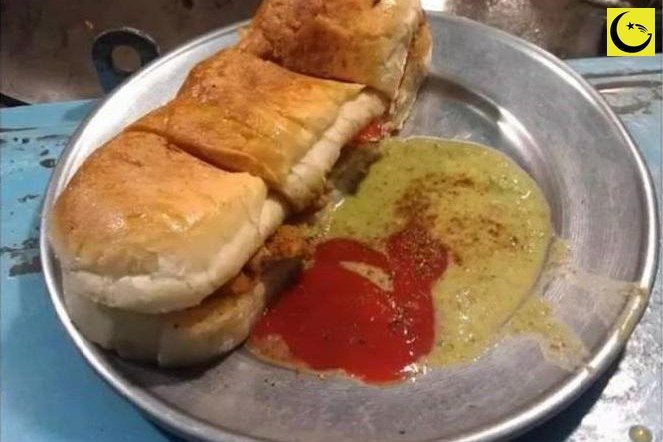
Pakistani street food won a place on one of the world’s most-read travel lists in August 2022, when CNN Travel included two of the country’s best-loved street classics, the bun kebab and the falooda, in its guide to the 50 best street foods in Asia. For a food culture built on roadside stalls, sizzling griddles and sweet shops that stay open late into the night, it was recognition on a global stage.
One thing needs saying clearly at the start: CNN’s list is arranged alphabetically, not ranked from best to worst, so neither dish carries a position number and neither was placed above the other. Their honour is simpler and bigger than any number. Out of the thousands of street dishes served across the largest continent on earth, CNN’s writers picked two from Pakistan’s streets to stand among Asia’s fifty must-try classics.
What CNN said about Pakistani street food
The list, titled “50 of the best street foods in Asia”, was published by CNN Travel on 24 August 2022, in partnership with Turkish Airlines, and gathered fifty much-loved street foods and drinks from across the region. CNN was open about the scale of the task, writing that the list is “far from exhaustive” and is just a small sampling of the region’s food traditions. The Middle East and Central Asia were left out altogether, on the grounds that they deserve lists of their own, which makes the inclusion of Pakistan’s two entries, from the part of Asia the list did cover, all the more notable.
Of the bun kebab, CNN asked how anyone could go wrong with a kebab patty between two seared buns, calling them “delectable Pakistani burgers” that are easy to find at roadside stalls all over Karachi and Lahore. The entry noted that the patty is often made of potato and lentil, with chicken, mutton, beef and chickpea versions also common. Of the falooda, CNN wrote that it is “as delicious as it is photogenic”, a milk-based drink that keeps you cool through Pakistan’s scorching summers, built like an ice cream sundae from kulfa, milk, condensed milk, jelly cubes, noodles and basil seeds, often turned a bright rosy pink with rose syrup.
R E A D M O R E
Conde Nast Traveller Named Pakistan the Best Holiday Destination for 2020
The bun kebab: Karachi’s own burger
Long before global burger chains arrived in Pakistan, Karachi had a burger of its own. The bun kebab is believed to have taken shape in the city in the 1950s, and its most famous home is still Burns Road, the food street where stalls fry patties on wide iron griddles from afternoon until late at night. At its heart is the shami kebab, a soft, spiced patty of minced meat ground with lentils, or in the everyday version a potato and lentil patty, slipped into a soft round bun with chutneys, sliced onion and sometimes a fried egg. The version with egg is so much a part of street life that it has its own name, anda shami.
Part of the bun kebab’s charm is how little it asks of anyone. It is cheap, filling, made to order in about a minute and eaten standing at the stall or carried away wrapped in paper. The buns are toasted on the same griddle as the patties, the chutneys are usually a sharp green one and a sweet tamarind one, and a dusting of chaat masala finishes the job. Lahore has its own take, frying the bun in butter until it crisps, a richer version locals call a bun plaster. CNN’s description of stalls “all over Karachi and Lahore” is simply the truth: in both cities, the bun kebab is less a dish than a daily habit.
The stalls themselves follow a rhythm every Karachi regular knows. The griddle is loaded in the lunch hour for office workers and students, quietens in the afternoon, then fills again from evening until late, when whole families stop on the way home. Vendors work astonishingly fast, toasting buns, frying patties and spooning chutney in a single practised motion, and the price has stayed within everyone’s reach, which is why the bun kebab is often the first street food a visitor is handed. It asks for no cutlery, no table and no occasion: it is the city’s handshake in the form of a burger.
Falooda: the dessert that travelled from Persia
If the bun kebab is Pakistan’s street food at its most humble, falooda is its most splendid. Its ancestor is faloodeh, the Persian frozen dessert of noodles in rose syrup, and the dish travelled into the subcontinent in the Mughal era, growing richer as it came. In Pakistan it is served as a tall glass of rose milk layered with thin vermicelli noodles, basil seeds that swell into soft pearls, cubes of coloured jelly and a generous scoop of kulfa, the dense traditional ice cream, sometimes with crushed ice and a drizzle of red rose syrup over the top.
Every ingredient earns its place. The basil seeds and ice cool the body through a Karachi or Lahore summer, the rose milk and kulfa make it a dessert in a glass, and the vermicelli and jelly give it the playful texture that makes people photograph it before they drink it, just as CNN noticed. Falooda counters in Lahore’s old city and on Karachi’s food streets do their busiest trade on summer evenings, and the dessert is a fixture of wedding menus and late-night sweet shop runs alike. It is also endlessly adaptable: mango falooda in season, chocolate versions for children, and kulfa falooda served with the ice cream firm and sliced on top.
A richer cousin, rabri falooda, folds in rabri, the thickened sweet milk of the subcontinent’s sweet shops, turning the glass into something close to a meal. However it is made, falooda is eaten with a spoon as much as it is drunk, worked through layer by layer, which is part of its ceremony. Few desserts anywhere carry so much history in a single glass: a Persian idea, refined in royal kitchens, and now served for a few hundred rupees on the busiest streets of Pakistan.
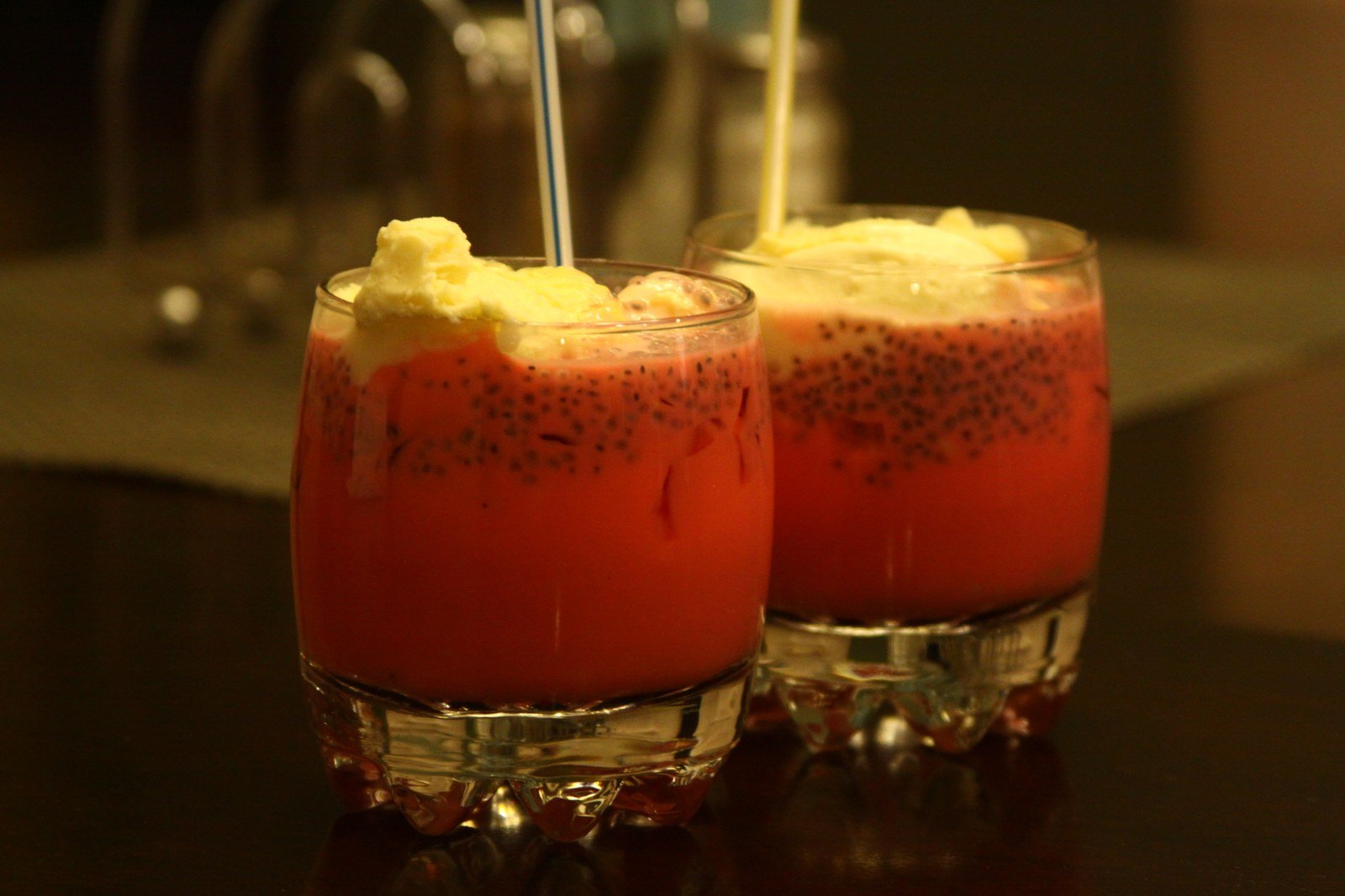
Two glasses of rose falooda, the rose milk pink with syrup, the basil seeds visible through the glass and kulfa ice cream on top.
Photo: Namitakhaire, Wikimedia Commons
Why the CNN listing matters for Pakistani street food
A place on a CNN Travel list is read by millions of travellers deciding where to go and what to eat when they get there. Pakistan’s food is increasingly part of how the country presents itself abroad: Pakistani companies now take the country’s food products to the world’s biggest food fairs, as our report on Pakistan’s exhibitors at SIAL Paris shows, and food sits at the centre of the travel events Pakistan hosts, from the Pakistan Travel Mart in Karachi to the tourism festival in Islamabad.
Yet the dishes CNN chose are not banquet dishes or restaurant signatures. They are a one-minute burger from a roadside griddle and a sweet drink sold by the glass, which is precisely the point. Pakistani street food earned its place on Asia’s list at street level, where the country’s cooking is at its most generous and its most inventive. The bun kebab and the falooda have been feeding Karachi and Lahore for generations; in August 2022, CNN told the rest of the world where to find them.
R E A D M O R E
Record-breaking Month for Tourism in KPK with Over 890,000 Visitors!
Sources
- CNN lists the 50 best street foods in Asia: Prestige Online
- CNN reveals 50 best street foods in Asia: Slurrp
- Bun kebab: Wikipedia
- Falooda: Wikipedia
- Featured photo: Bun kebabs served on a steel plate with chutneys, by LunaticFringe97, Wikimedia Commons, CC BY-SA 4.0
- Body photo: Two glasses of rose falooda, by Namitakhaire, Wikimedia Commons, CC BY-SA 4.0

Umar Farooq is the founder and editor of Good News Pakistan. An engineer by profession and a writer by passion, he started the site in December 2022 to share good news from Pakistan, and has since written and edited more than 200 articles about its people, sports, science, business and world records. He believes the story of Pakistan is bigger than its headlines, and that good news, told honestly, is worth telling every day.