


Pakistan remittances climbed to $3.89 billion in October 2026, the State Bank of Pakistan announced on Tuesday 10 November, as overseas Pakistanis kept sending money home at a record pace. The monthly inflow rose 13.8 percent compared with October last year and 8.5 percent compared with September, making it the highest monthly figure so far this fiscal year. The new numbers extend the story Good News Pakistan reported in mid-October, when Pakistan Remittances Hit $10.9bn in Q1 FY27, Up 14% described a first quarter that had already broken records of its own.
The October Numbers in Full
The State Bank’s monthly release shows a flow of money that is not just large but still accelerating. October’s $3.89 billion compares with $3.42 billion in October 2025 and about $3.59 billion in September 2026. For the first four months of fiscal year 2026-27, Pakistan remittances totalled $14.77 billion, up 14 percent from $12.96 billion in the same period a year earlier.
- October 2026 inflows: $3.89 billion, the highest month of FY27 so far
- Year-on-year growth in October: 13.8 percent
- Month-on-month growth against September: 8.5 percent
- July to October FY27 inflows: $14.77 billion, up 14 percent
- Largest single source in October: Saudi Arabia, at $981.6 million
Almost the Entire Trade Gap, Covered
The figure that puts the achievement in perspective is the trade deficit. Pakistan’s merchandise trade deficit for July to October widened by 16 percent to about $14.6 billion, and remittances almost matched it dollar for dollar. In simple terms, the money workers abroad sent home in four months was nearly enough to pay the country’s entire import bill gap for the same period. The pattern is not new: in August, Good News Pakistan reported how Pakistan Remittances Hit $7.29 Billion in Two Months, Covering the Whole Trade Gap, and the four-month data shows the same support still holding as the year moves on.
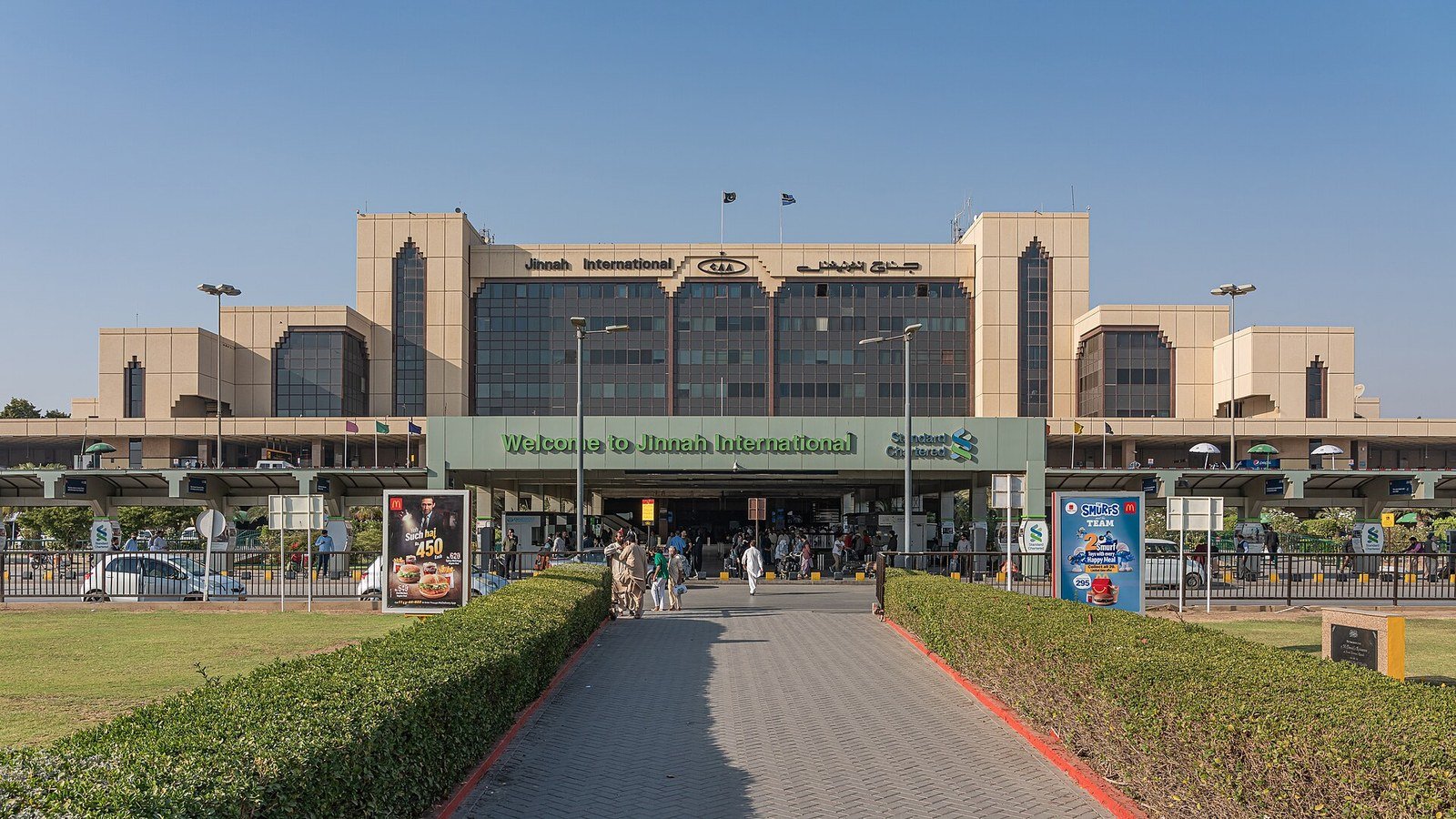
Jinnah International Airport in Karachi, one of the main gateways for the overseas Pakistanis whose money sent home reached $3.89 billion in October.
Photo: A.Savin, Free Art License, via Wikimedia Commons
Where the Money Comes From
Saudi Arabia remained the largest source of inflows in October, contributing $981.6 million, and together Saudi Arabia and the United Arab Emirates accounted for about 45.5 percent of all money received. The month’s corridor detail shows where the growth came from: inflows from Saudi Arabia rose sharply from $803.7 million in September, while the United Arab Emirates sent $813.5 million, up from $757.5 million the month before. The United Kingdom contributed $499.7 million and the United States $326.8 million, keeping both among the leading corridors. The Gulf region is home to the largest share of Pakistan’s overseas workforce, in construction, transport, services and trade, and its dominance of the corridor map is long established. The central bank has spent years steering senders toward formal banking channels and digital accounts, so that more of this money arrives through the official system, where it supports the country’s foreign exchange reserves as well as individual families.
R E A D M O R E
Saudi and Pakistani Investors Launch Private Equity Fund With 75% for Pakistan
Central Bank Raises Its Forecast to $45 Billion
The State Bank was confident enough in the trend to raise its expectations. It has lifted its forecast for full-year FY27 remittances to $45 billion, from an earlier estimate of $44 billion, after concluding that the first quarter’s resilience was not a one-off. Governor Jameel Ahmed, speaking after the recent monetary policy announcement, said inflows had remained resilient and were expected to exceed earlier projections. The optimism rests on a strong base: the fiscal year just ended, FY2025-26, set a new annual record for remittances, and the current year is running ahead of it. Policy has played its part too. The Pakistan Remittance Initiative, run by the State Bank with the finance ministry and financial institutions since 2009, has steadily reduced the cost of sending money through banks and exchange companies and encouraged formal transfers, drawing flows away from informal channels and into the banking system, where every dollar is counted and available to the economy.
Why Pakistan Remittances Matter Beyond the Numbers
Behind every monthly total are millions of individual decisions: wages saved in Riyadh, Dubai, London and Houston, and sent home for school fees, medical bills, weddings, house repairs and small family businesses. Economists follow the aggregate because few other inflows arrive so steadily, with no debt attached and no conditions imposed. Pakistan remittances now stand close to the size of the trade deficit itself, which is why analysts describe them as one of the economy’s most reliable supports, cushioning the rupee and the reserves at the same time. Remittances are also not the only inflow setting records this year: the country’s technology sector recently posted its own landmark, as Pakistan IT Exports Record: $4.6 Billion in FY2025-26 as June Hits $416 Million reported. If the current pace holds through the winter, the State Bank’s $45 billion forecast, ambitious when first made, may end the year looking conservative.
Sources
- State Bank of Pakistan, workers’ remittances data for October 2026 and July to October FY27
- Bloom Pakistan: Overseas Pakistanis Send $3.89 Billion Home in October
- Khabr.pk: Remittances Rise 14% to $14.8bn in First Four Months of FY27
- Featured image: The State Bank of Pakistan Banking Services Corporation building in Karachi (MariyamAftab, CC BY-SA 4.0, via Wikimedia Commons)
- In-body image: Jinnah International Airport, Karachi (A.Savin, Free Art License, via Wikimedia Commons)

Umar Farooq is the founder and editor of Good News Pakistan. An engineer by profession and a writer by passion, he started the site in December 2022 to share good news from Pakistan, and has since written and edited more than 200 articles about its people, sports, science, business and world records. He believes the story of Pakistan is bigger than its headlines, and that good news, told honestly, is worth telling every day.