

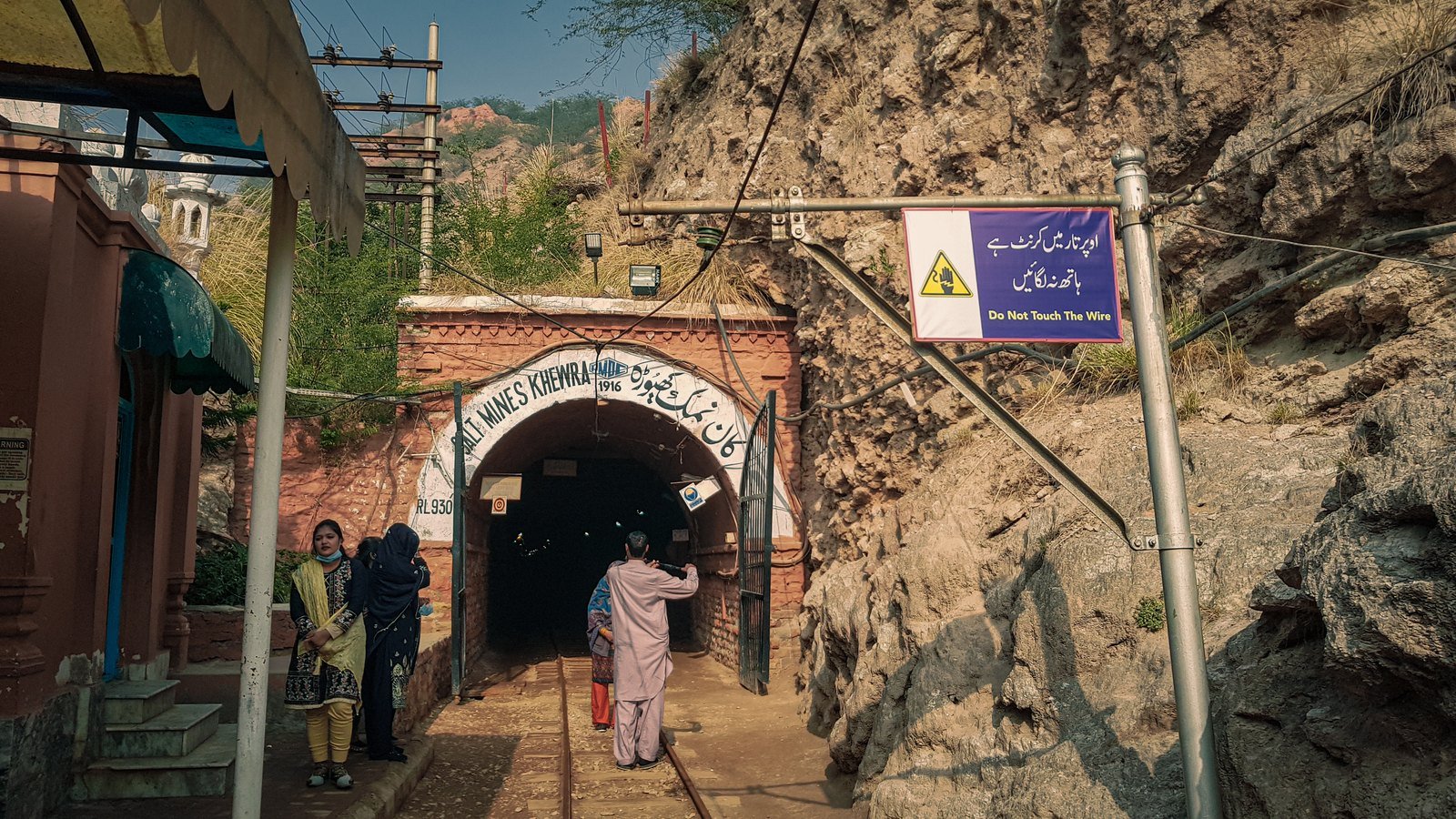
The Khewra Salt Mine in Jhelum District is Pakistan’s largest and oldest salt mine, a working mine and one of the country’s most visited underground attractions. Punjab Tourism describes it as the world’s second largest salt mine, and its tunnels produce the pink rock salt sold around the world as Himalayan pink salt, in the hundreds of thousands of tonnes a year at about 99 percent purity.
Where the Khewra Salt Mine Sits and Who Runs It
The mine lies near the town of Khewra in the Salt Range of Punjab, roughly 160 kilometres south of Islamabad, where a thick seam of rock salt runs through the hills. It is operated by the Pakistan Mineral Development Corporation, the state body that manages Pakistan’s major mineral projects. Mining here works through a network of tunnels and chambers cut into the salt seam, leaving pillars of salt standing to hold up the roof, a method that has created the vast hollow spaces visitors now walk through.
Khewra is the largest mine in a Salt Range system that also includes mines at Warcha and Kalabagh, but none matches its scale, its history or its visitor facilities. The salt itself is famously pure, and the pink colour that made it a global kitchen product comes from trace minerals in the seam, the same seam that supplies table salt, industrial salt and the carved lamps and tiles sold in shops across Pakistan.
R E A D M O R E
K2: The Second Highest Mountain in the World Stands in Pakistan
The World’s Second Largest Claim, Stated Carefully
Punjab Tourism describes Khewra as the second largest salt mine in the world, and that is how the ranking should always be stated: as the description given by the province’s own tourism authority. The mine most commonly named as larger is the Goderich salt mine in Ontario, Canada, operated by Sifton, which runs far beneath Lake Huron. Rankings of mines depend on what is being measured, reserves, output or excavated space, so the honest version of Khewra’s claim is the attributed one, and it is impressive enough: by any measure, this is one of the largest salt mines on Earth.
Two numbers often quoted for Khewra should also be handled with care. Published estimates of its remaining salt reserves vary enormously, from tens of millions to hundreds of millions of tonnes, and reported annual output figures vary too, so this article prints neither as a single fact. What is consistent across sources is the scale: output in the hundreds of thousands of tonnes a year, at about 99 percent purity, from a seam that has been worked for centuries and is nowhere near exhausted.
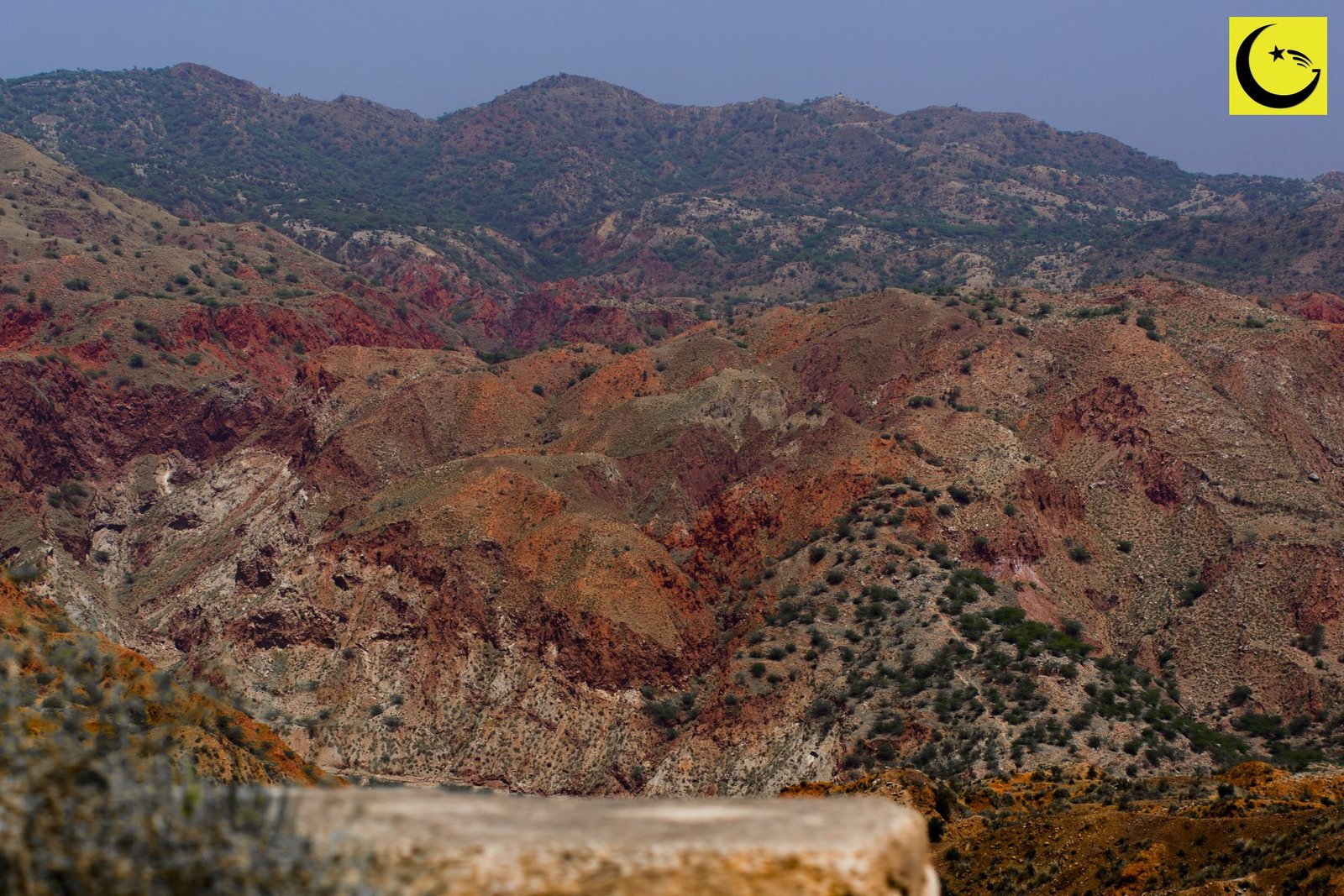
The entrance to the Khewra Salt Mine in the Salt Range, where visitors enter tunnels that run for kilometres through the rock salt.
Photo: Mohammad.Waris.khan, CC BY-SA 4.0, via Wikimedia Commons
A Mosque, a Bridge and an Assembly Hall Made of Salt
What makes Khewra famous beyond the mining industry is what has been built inside it. Miners and visitors over the years have carved a small mosque from salt bricks inside the mine, built a salt bridge over an underground brine pond, and hollowed out a large assembly hall chamber. Salt replicas of famous landmarks, including the Great Wall of China and Lahore’s Badshahi Mosque, stand along the visitor route, lit from behind so the salt glows orange, pink and white.
A small electric train carries visitors from the entrance into the main chambers, and the mine receives large numbers of tourists, students and geology groups every year. It sits naturally alongside the mountain tourism covered in record tourism months in Khyber Pakhtunkhwa and events such as the Pakistan Tourism Sports and Family Festival: a reminder that some of Pakistan’s most remarkable visitor sites are underground.
The Alexander Legend, and the Recorded History
Local tradition tells a famous story about the salt’s discovery: that the horses of Alexander the Great’s army, resting in the area in 326 BC during his campaign in the Punjab, were seen licking the rocks, revealing the salt. It is a good story and it is told at the mine to this day, but it should be labelled for what it is, a legend. There is no contemporary record of the discovery, and salt from the Salt Range was known and traded in the region long before and long after Alexander passed through.
The recorded history is solid enough without the legend. Salt mining in the range is documented through the Mughal period and was developed on an industrial scale under British administration in the nineteenth century, when the main tunnel at Khewra was cut. That makes Khewra Pakistan’s oldest major working salt mine, with a recorded mining history stretching back centuries and an industrial history of well over a hundred years.
R E A D M O R E
Pakistan Among the World’s Top Rice Exporters, Fourth in 2025
From a Punjab Hillside to Kitchens Worldwide
The mine’s modern fame rests on pink salt. In the last two decades, Himalayan pink salt from Khewra has become a premium product in supermarkets from London to Los Angeles, sold as gourmet cooking salt, bath salt and carved lamps. Most of the raw salt still leaves in bulk and is packaged abroad, a long-standing debate in Pakistan about capturing more of the value at home, but the source is never in doubt: the pink seam in the Salt Range, and above all the great mine at Khewra.
Largest and oldest in Pakistan, described by Punjab Tourism as the second largest in the world, and still producing in the hundreds of thousands of tonnes a year, the Khewra Salt Mine is one of those rare sites that is at once an industry, a museum and a natural wonder. Few working mines anywhere welcome visitors into a mosque built from their own product. Together with the peaks listed in Five of the World’s 14 Highest Mountains Stand in Pakistan, it shows how much of the country’s natural record book is written in its northern and Salt Range geology.
Sources
- Punjab Tourism, Khewra Salt Mine visitor information
- Pakistan Mineral Development Corporation
- Encyclopaedia Britannica, Salt Range
- Featured photo: Inside the Khewra Salt Mine (Shahzaib Damn Cruze, CC BY-SA 4.0, via Wikimedia Commons)
- Body photo: The entrance and hills of the Khewra Salt Mine (Mohammad.Waris.khan, CC BY-SA 4.0, via Wikimedia Commons)

Umar Farooq is the founder and editor of Good News Pakistan. An engineer by profession and a writer by passion, he started the site in December 2022 to share good news from Pakistan, and has since written and edited more than 200 articles about its people, sports, science, business and world records. He believes the story of Pakistan is bigger than its headlines, and that good news, told honestly, is worth telling every day.