

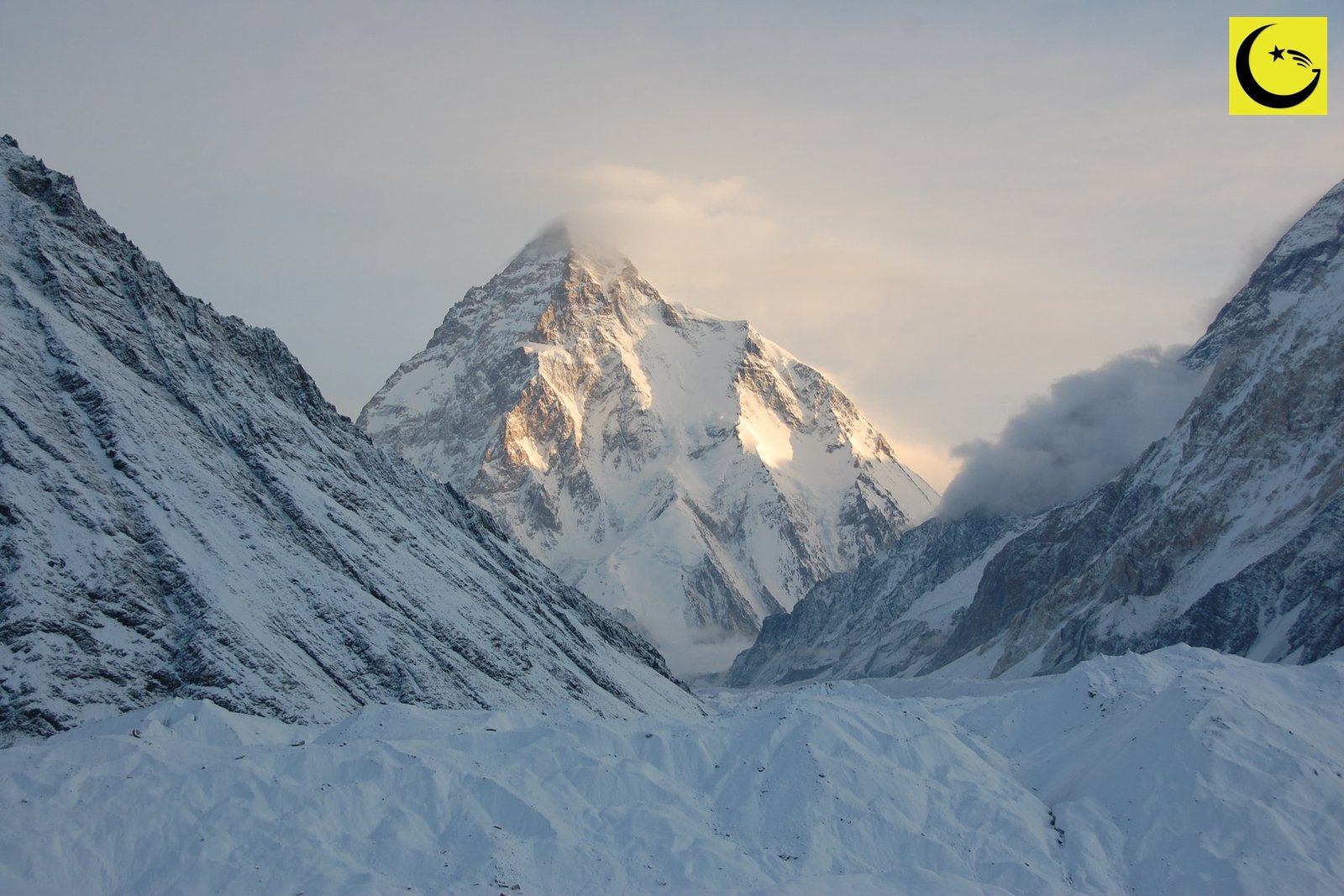
The eight-thousanders in Pakistan are five of the fourteen highest mountains on Earth: K2, Nanga Parbat, Gasherbrum I, Broad Peak and Gasherbrum II, all standing in Pakistan or on its border with China. No other country holds five of the world’s 8,000-metre peaks in such a compact area, and this article sets out the full table, peak by peak. It expands our earlier Pakistan Facts article on K2, K2: The Second Highest Mountain in the World Stands in Pakistan, which introduced the story one peak at a time.
The Full Table of Eight-Thousanders in Pakistan
Mountaineers count fourteen peaks on Earth above 8,000 metres, all of them in the Himalaya and Karakoram ranges of Asia. Pakistan’s five, using the standard surveyed heights, are:
- K2: 8,611 metres, the second highest mountain in the world, on the border with China in the Karakoram.
- Nanga Parbat: 8,126 metres, the ninth highest in the world, in the western Himalaya.
- Gasherbrum I: 8,080 metres, the eleventh highest in the world, in the Karakoram on the border with China.
- Broad Peak: 8,051 metres, the twelfth highest in the world, in the Karakoram on the border with China.
- Gasherbrum II: 8,035 metres, the thirteenth highest in the world, in the Karakoram on the border with China.
Our Pakistan Facts companion piece, Five of the World’s 14 Highest Mountains Stand in Pakistan, tells the story of the five as a set. This World Ranking article is the reference version: the heights, the world rankings and the geography in one place.
R E A D M O R E
Shehroze Kashif: The Youngest Pakistani to Climb All 14 Eight-Thousanders
Four Peaks Around One Glacier System
Four of the five eight-thousanders in Pakistan stand in the Karakoram, the great range of glaciated peaks in Gilgit-Baltistan. K2, Gasherbrum I, Gasherbrum II and Broad Peak all rise around the Baltoro Glacier and the amphitheatre of ice and rock known as Concordia, where the Baltoro and Godwin-Austen glaciers meet. Concordia is often described as one of the finest mountain viewpoints on Earth, because from a single campsite a climber can see four 8,000-metre peaks at once. Nowhere else on the planet offers that.
The Karakoram four are also linked by climbing history. Broad Peak was first climbed in 1957 by an Austrian team including Hermann Buhl. Gasherbrum II followed in 1956, Gasherbrum I (also called Hidden Peak) in 1958, and K2, the hardest of them all, in 1954 by an Italian expedition. The Gasherbrum group takes its name from the Balti words for a shining wall, and on a clear evening the name explains itself.
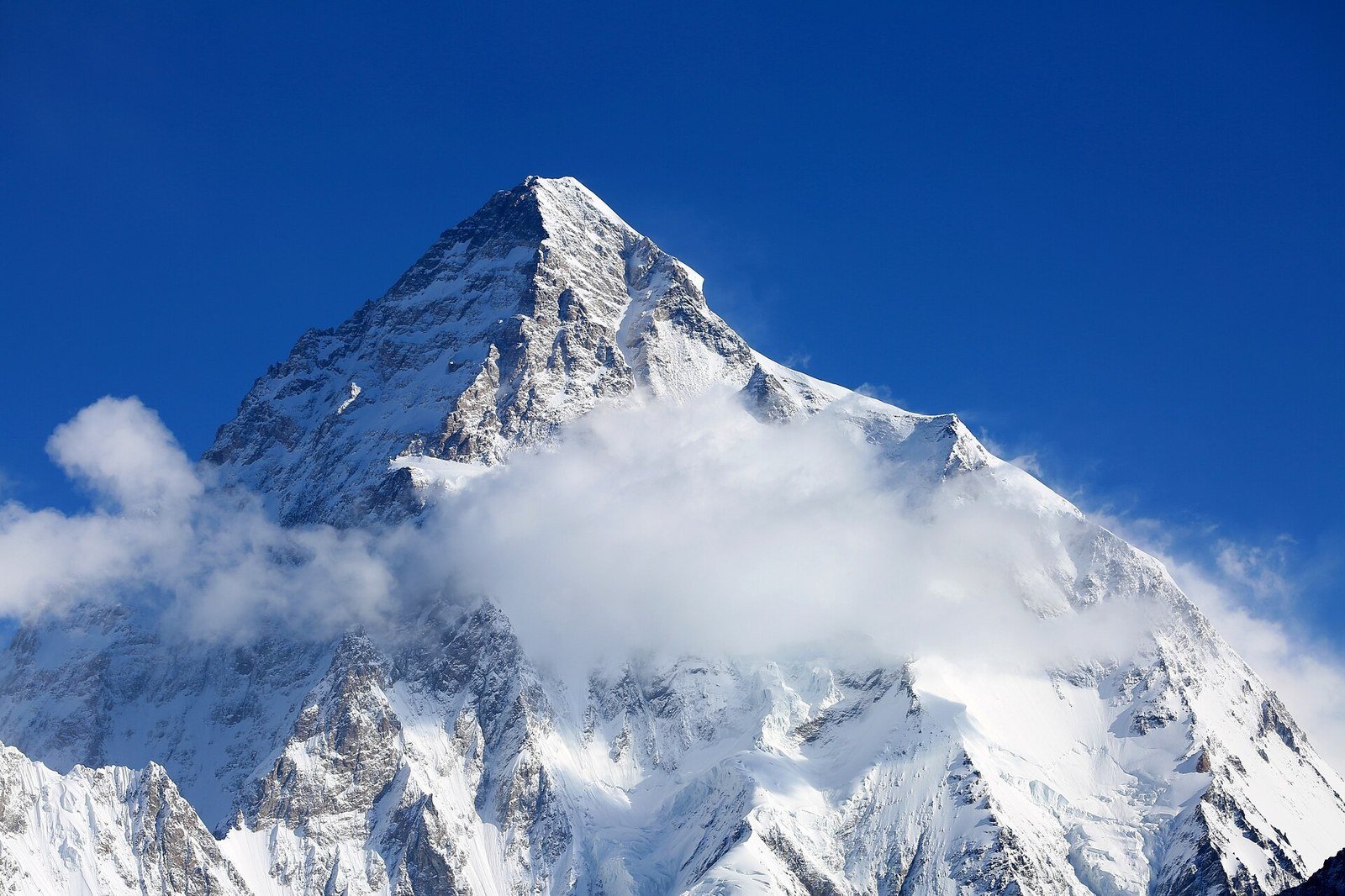
K2 (8,611 metres), the world’s second highest mountain, seen from the Baltoro side.
Photo: Molly Tolzmann, CC BY-SA 2.0, via Wikimedia Commons
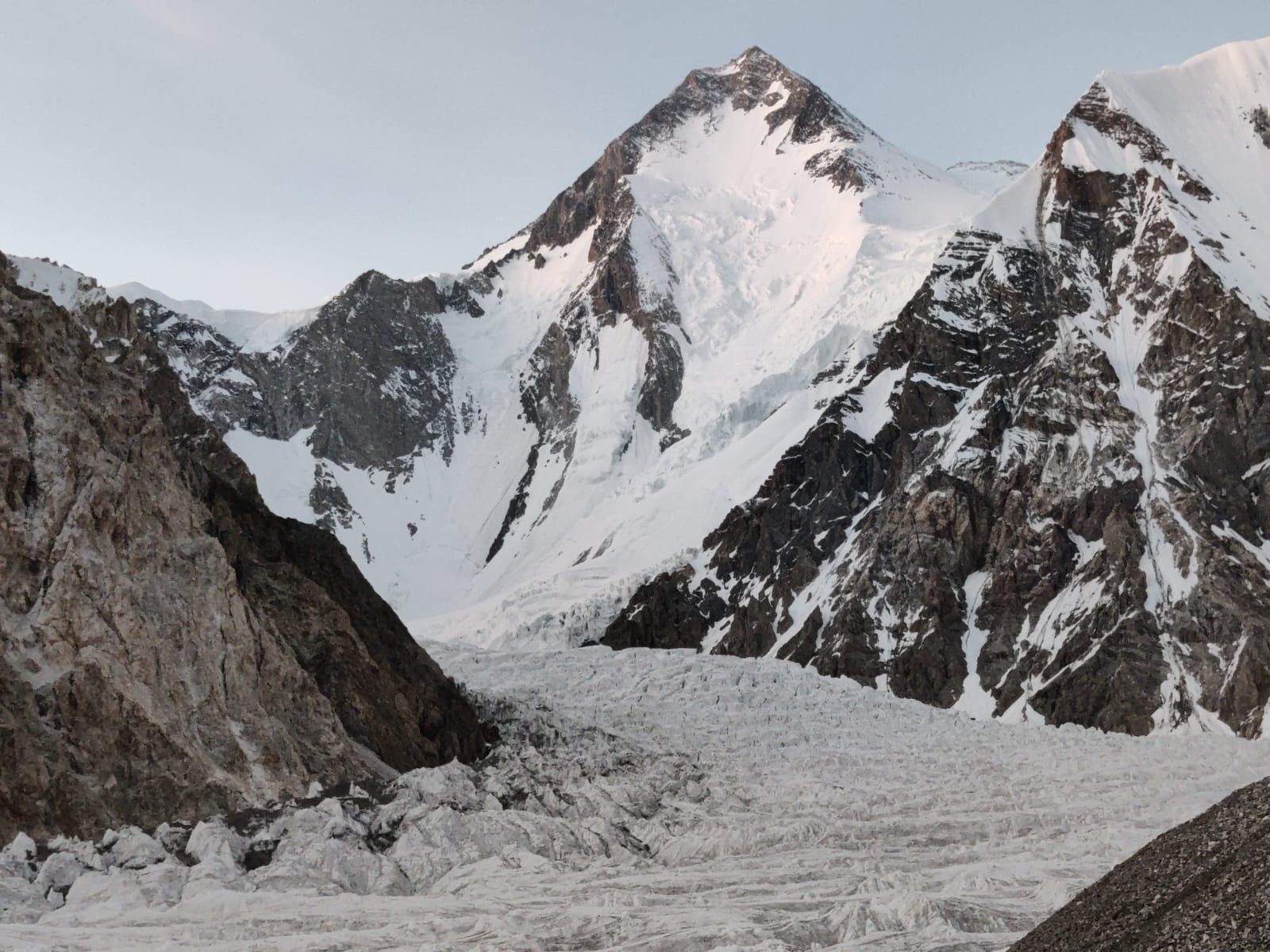
Gasherbrum I (8,080 metres), also called Hidden Peak, above the Gasherbrum Glacier.
Photo: MustafaAldahabi, CC BY-SA 4.0, via Wikimedia Commons
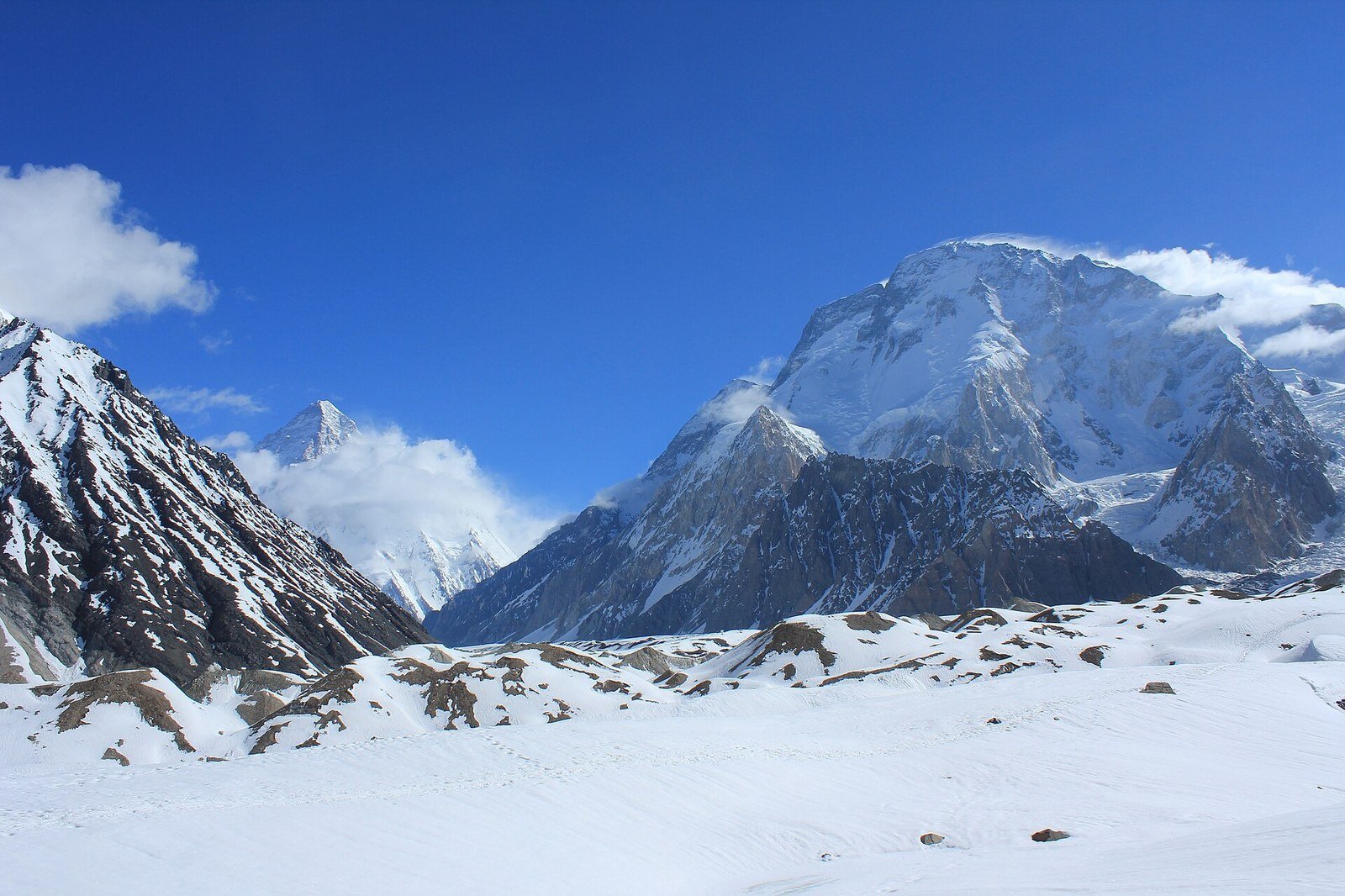
Broad Peak (8,051 metres) fills the right of the frame, with K2’s pyramid in the distance on the left.
Photo: Sallahuddin shah, CC BY-SA 4.0, via Wikimedia Commons
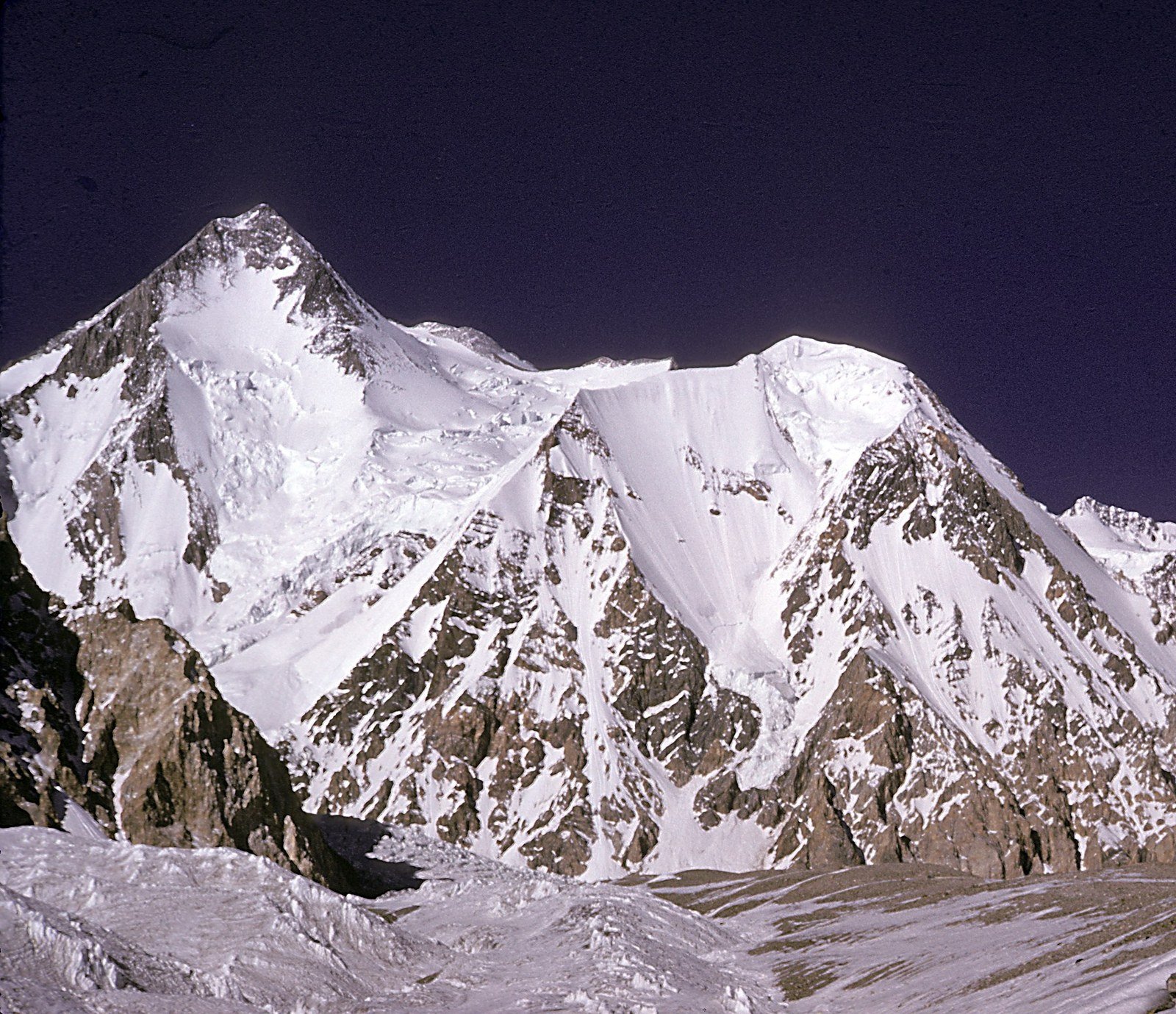
Gasherbrum II (8,035 metres, right) beside Gasherbrum I (left), the two Gasherbrum eight-thousanders.
Photo: OLderman, CC BY-SA 3.0, via Wikimedia Commons
Nanga Parbat, the Lone Himalayan Giant
Nanga Parbat is the exception in the list. It stands alone in the western Himalaya, far from the Karakoram group, rising above the Indus valley near the western end of the Himalayan chain. At 8,126 metres it is the ninth highest mountain in the world, and its Rupal Face, around 4,600 metres from base to summit, is among the largest mountain faces on Earth.
Its history is the most dramatic of the five. Early German expeditions in the 1930s suffered terrible losses on the mountain, which earned it a fearsome reputation in Europe, while for the people of Diamer and Astore it is a familiar presence above the valleys. Hermann Buhl’s solo first ascent in 1953, completed without oxygen and finishing with a night standing on a small ledge high on the mountain, remains one of the most famous climbs ever made.
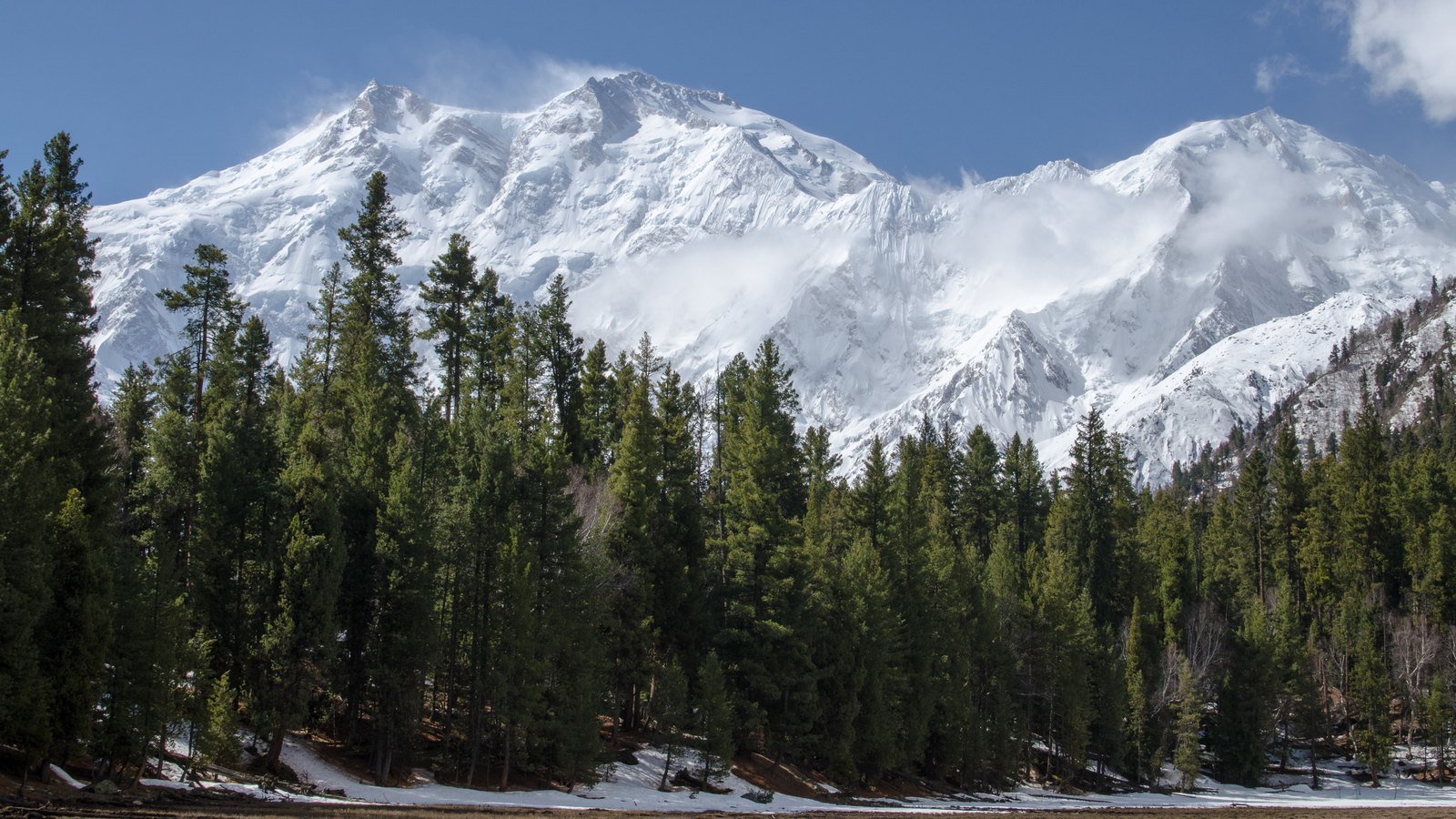
Nanga Parbat, 8,126 metres, stands alone in the western Himalaya, the only one of Pakistan’s five 8,000-metre peaks outside the Karakoram.
Photo: Aasim85, CC BY-SA 3.0, via Wikimedia Commons
Why Five in One Country Is So Rare
Nepal holds more famous names, including Everest, but the concentration in Pakistan is remarkable: five of the fourteen, within one country’s borders and boundary ranges, four of them visible from a single glacier junction. The peaks anchor an entire mountain economy of porters, guides, cooks and lodge owners across Gilgit-Baltistan, and a growing trekking industry that brings visitors to Concordia and the Baltoro every summer, part of the wider tourism picture we cover in Pakistan’s tourism festivals and events.
Every summer, thousands of trekkers walk the Baltoro simply to stand at Concordia and look at them, and the trek is regularly rated among the great mountain journeys of the world. They also anchor a climbing record book. Pakistani climbers have stood on all five home peaks and on the nine in Nepal and Tibet, and the youngest person to complete all fourteen eight-thousanders is a Pakistani, a story told in the Read More link above. For visiting climbers, the five remain rites of passage: K2 for its difficulty, Nanga Parbat for its scale and history, and the Gasherbrums and Broad Peak as the classic Karakoram apprenticeship.
The Five at a Glance
Second, ninth, eleventh, twelfth and thirteenth: the eight-thousanders in Pakistan sit high in the world list, and together they make the country one of the essential addresses in world mountaineering. K2 may take the headlines, but the full table is the real story, five of the fourteen highest mountains on Earth in Pakistan or on its border with China, waiting above the glaciers of the Karakoram and the western Himalaya.
Sources
- Encyclopaedia Britannica, K2 and Karakoram peak heights
- The Alpine Journal, Karakoram climbing history
- The Himalayan Database, expedition records
- Featured photo: Maria Ly, CC BY 2.0, via Wikimedia Commons
- Body photo: Aasim85, CC BY-SA 3.0, via Wikimedia Commons
- Photo: K2 (Molly Tolzmann, CC BY-SA 2.0, via Wikimedia Commons)
- Photo: Gasherbrum I (MustafaAldahabi, CC BY-SA 4.0, via Wikimedia Commons)
- Photo: Broad Peak (Sallahuddin shah, CC BY-SA 4.0, via Wikimedia Commons)
- Photo: Gasherbrum II (OLderman, CC BY-SA 3.0, via Wikimedia Commons)

Umar Farooq is the founder and editor of Good News Pakistan. An engineer by profession and a writer by passion, he started the site in December 2022 to share good news from Pakistan, and has since written and edited more than 200 articles about its people, sports, science, business and world records. He believes the story of Pakistan is bigger than its headlines, and that good news, told honestly, is worth telling every day.