

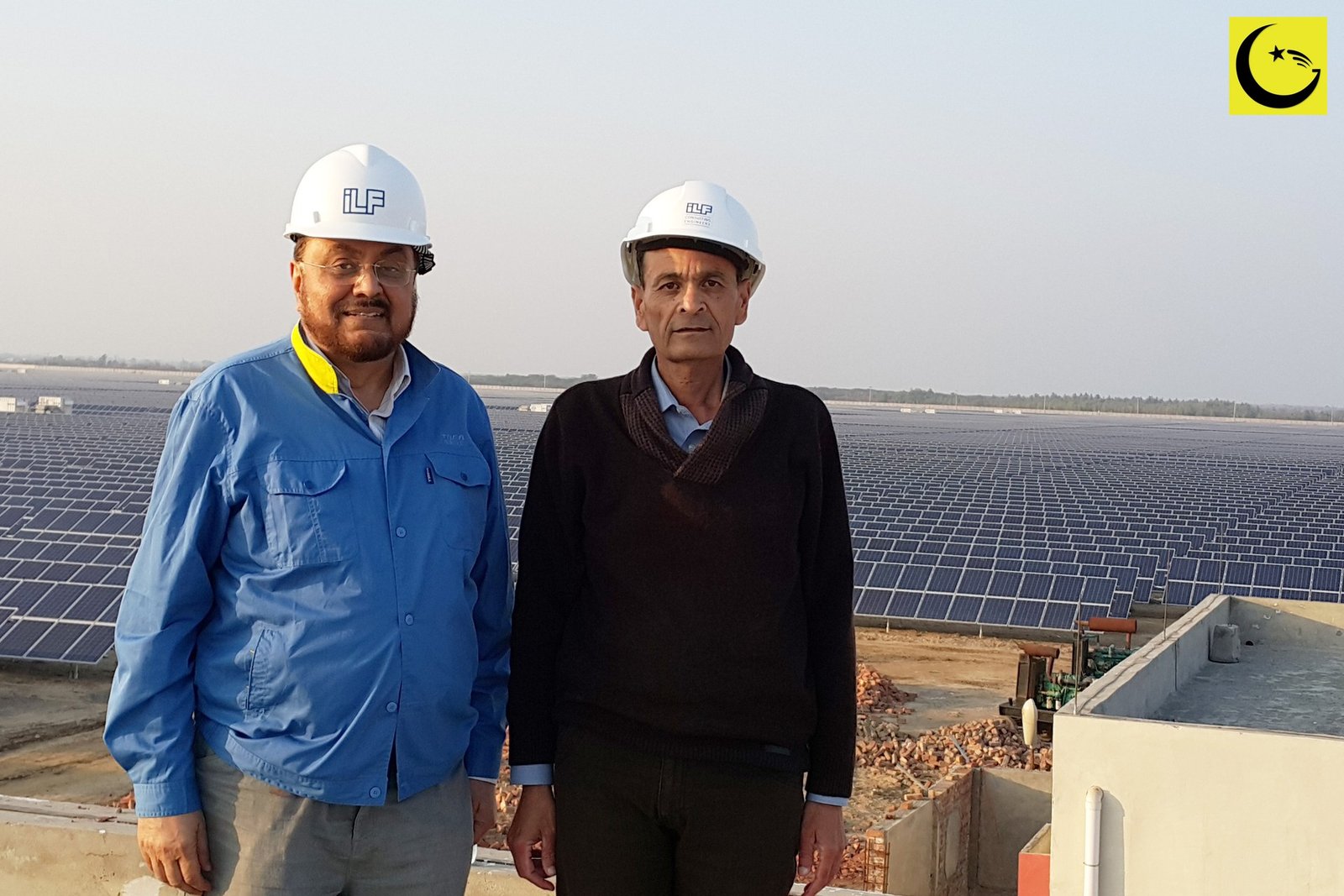
Pakistan rooftop solar took centre stage at the COP31 climate summit in Antalya this week, where Prime Minister Shehbaz Sharif said Pakistan has added nearly 22 gigawatts of rooftop solar capacity in just two years, and put the country’s clean-energy financing need at about $188 billion by 2035. The prime minister described the growth as a quiet revolution by ordinary citizens seeking affordable power and a cleaner, more predictable future. Readers should note that the 22 gigawatt figure is the prime minister’s own statement, made in his COP31 address; it has not been independently verified, and this article attributes it to him throughout.
What the Prime Minister Told COP31
Shehbaz Sharif was addressing a high-level dialogue on clean energy transition, titled 35 by 35: Powering the Future, held on the sidelines of the 31st United Nations Climate Change Conference in Antalya, Türkiye. He said Pakistan fully supports the 35 by 35 Global Electrification Pledge, under which countries aim to raise electricity’s share of total final energy consumption to around 35 percent by 2035. On the money, he broke the $188 billion need into two parts: about $138 billion for low-carbon electricity generation by 2035, and another $50 billion to replace coal-based power with solar energy. He argued that the goal could only be achieved if finance flows at the speed of ambition, through concessional capital and the transfer of affordable technology.
- Rooftop solar added in two years: nearly 22 gigawatts, according to the prime minister
- Clean-energy financing need by 2035: about $188 billion, on the prime minister’s figures
- Of that: $138 billion for low-carbon generation, $50 billion to replace coal with solar
- Venue: clean energy dialogue at COP31, Antalya, Türkiye
Why Pakistan Rooftop Solar Grew So Fast
Whatever the exact total, the direction of travel is not in doubt. Through years of high grid electricity prices and unreliable supply, households, shops, farms and factories across Pakistan turned to panels on their own roofs, often paired with batteries and net metering arrangements that let them sell surplus power back to the grid. It is a grassroots pattern rather than a single government programme: thousands of individual buying decisions, made street by street, which is why the prime minister framed it as a revolution by ordinary citizens. The same search for cheaper, cleaner running costs is visible in transport, where electric buses and bikes are spreading, a shift Good News Pakistan has followed in stories such as the clean-air funding announced in Pakistan Announces $10 Million Clean-Air Startup Fund to Fight Smog.
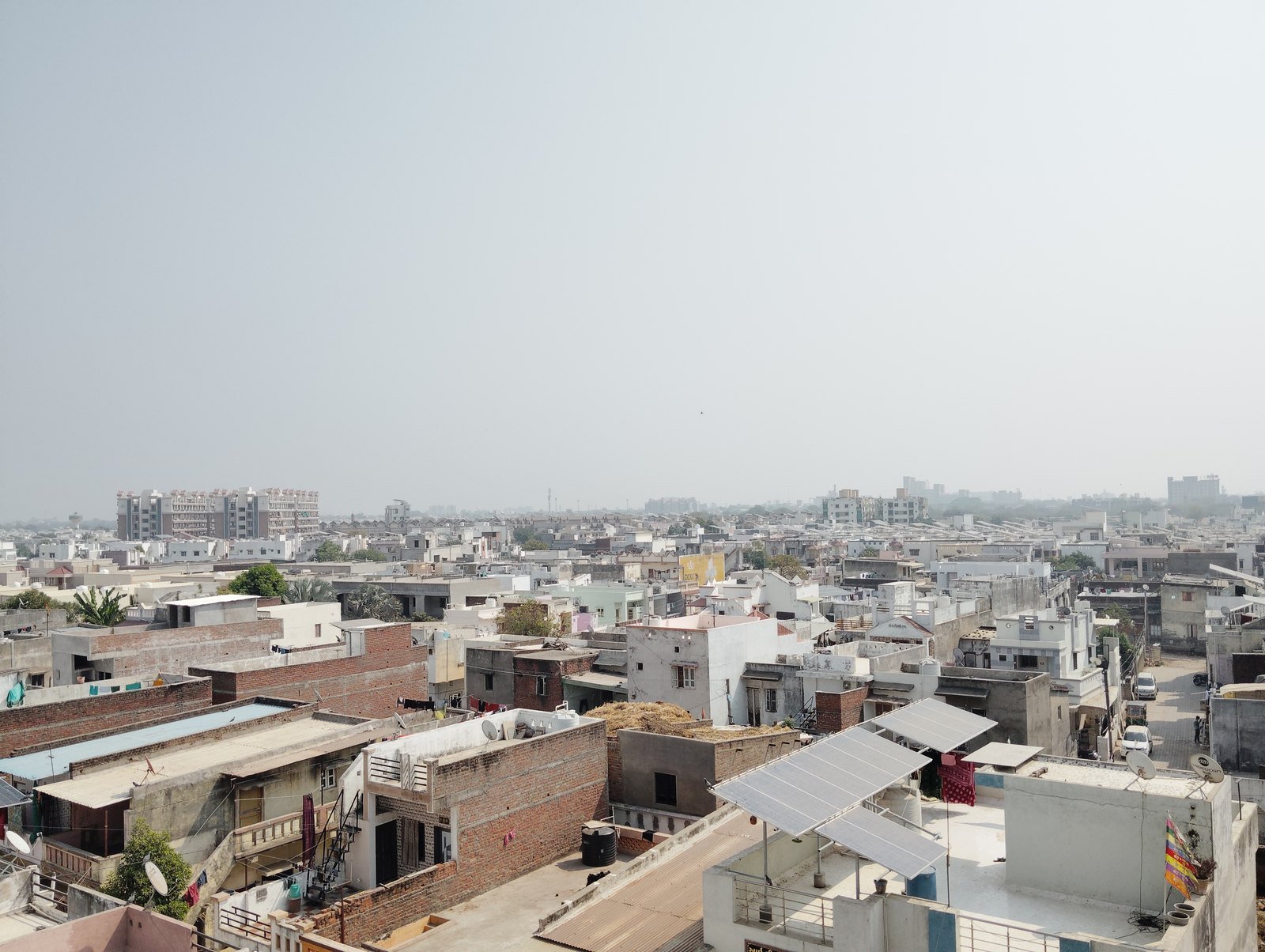
Rooftop solar panels on homes. The prime minister told COP31 that households and businesses have driven nearly 22 gigawatts of rooftop additions in two years, his own figure.
Photo: Nizil Shah, CC BY-SA 4.0, via Wikimedia Commons
The Financing Gap Behind the Panels
The $188 billion figure is an appeal as much as a statistic. Pakistan is among the countries most exposed to climate damage, from floods to extreme heat, while contributing a small share of global emissions, and its government argues that concessional finance, meaning low-cost loans and grants rather than commercial borrowing, is the only realistic way to fund a transition of this size. Channelling international climate money into Pakistan is already an active effort, as Karandaaz Pakistan Secures Green Climate Fund Accreditation to Channel Global Climate Finance reported. The prime minister also pointed to clean energy’s growing share of the national mix and to targets such as raising the share of electric vehicles among new vehicle sales by 2030.
R E A D M O R E
Pakistan Receives 179 Electric Buses From China at Karachi Port
What to Watch Next
Three things will show whether the COP31 pitch lands. First, whether concessional finance actually arrives at the scale requested, since pledges at climate summits have a long history of arriving slowly. Second, whether the grid, its transmission lines and its payment systems can absorb millions of rooftop systems without the financial strain that falling grid sales can cause distribution companies. Third, whether an independent count of installed rooftop capacity is published, so the prime minister’s 22 gigawatt figure can be tested against meter and import data. Pakistan’s climate stakes are visible at home as well, from the mangrove forests described in Indus Delta Mangroves: The Largest Arid Climate Mangrove Forest in the World to the flood plains of the Indus. For now, Pakistan rooftop solar has given the country something it rarely takes to a climate summit: a growth story told by its own citizens’ rooftops, and a price tag for finishing the job.
Sources
- Dawn: PM Shehbaz highlights Pakistan’s solar revolution by ordinary citizens at COP31
- Profit by Pakistan Today: Pakistan needs $188bn for clean energy transition by 2035, PM tells COP31
- Featured image: The 100MW solar power plant at Bahawalpur, Pakistan (Janejenkins, CC BY-SA 4.0, via Wikimedia Commons)
- In-body image: Rooftop solar panels on homes (Nizil Shah, CC BY-SA 4.0, via Wikimedia Commons)

Umar Farooq is the founder and editor of Good News Pakistan. An engineer by profession and a writer by passion, he started the site in December 2022 to share good news from Pakistan, and has since written and edited more than 200 articles about its people, sports, science, business and world records. He believes the story of Pakistan is bigger than its headlines, and that good news, told honestly, is worth telling every day.