

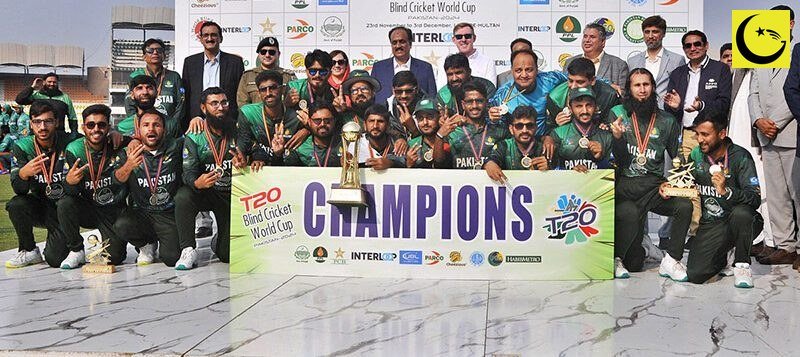
Pakistan won the Blind T20 World Cup for the first time on 3 December 2024, beating Bangladesh by 10 wickets in the final in Multan. Bangladesh made 139 for 7, and Pakistan chased the target down in just 11 overs without losing a wicket, openers Nisar Ali (72 not out off 31 balls) and Mohammad Safdar (47 not out) finishing the job together.
The Multan Final, Over by Over in Short
Bangladesh batted first and built their total around Arif Hussain, who made 54. Pakistan’s bowlers kept the rest of the order quiet enough to hold the score to 139 for 7, a target that looked competitive in a final but left little margin for error against a strong home batting side.
The chase removed all doubt early. Nisar Ali attacked from the start, reaching 72 not out from only 31 balls, while Mohammad Safdar’s unbeaten 47 kept the rate high at the other end. Pakistan reached 140 in 11 overs, nine overs to spare, with all ten wickets standing. Finals are rarely this one-sided, and a 10-wicket win with that much time left is as complete a performance as a tournament decider can produce.
R E A D M O R E
Pakistan Hockey World Cup Titles: The Four Wins of 1971, 1978, 1982 and 1994
A First Blind T20 World Cup Title, Won at the Fourth Edition
One point matters for the record books, and it is often stated wrongly. The 2024 tournament was the fourth edition of the Blind T20 World Cup, not the first. The tournament began in 2012 in Bengaluru, returned in 2017, and was held again in 2022. What Pakistan won in Multan was their first title at the fourth attempt, which is a different and better story: a team that kept coming back finally finished the job at home.
The first three editions all ended the same way, with India lifting the trophy. India beat Pakistan in the very first final in 2012, and their dominance set the standard the rest of the blind cricket world had to chase. Pakistan’s 2024 win therefore broke a twelve-year pattern, and did it in a final against a Bangladesh side that had itself grown into one of the strongest teams in the format. The photograph below shows Pakistan’s blind cricketers celebrating a national T20 trophy win on home soil, part of the deep domestic structure that carried the national side to the 2024 world title.
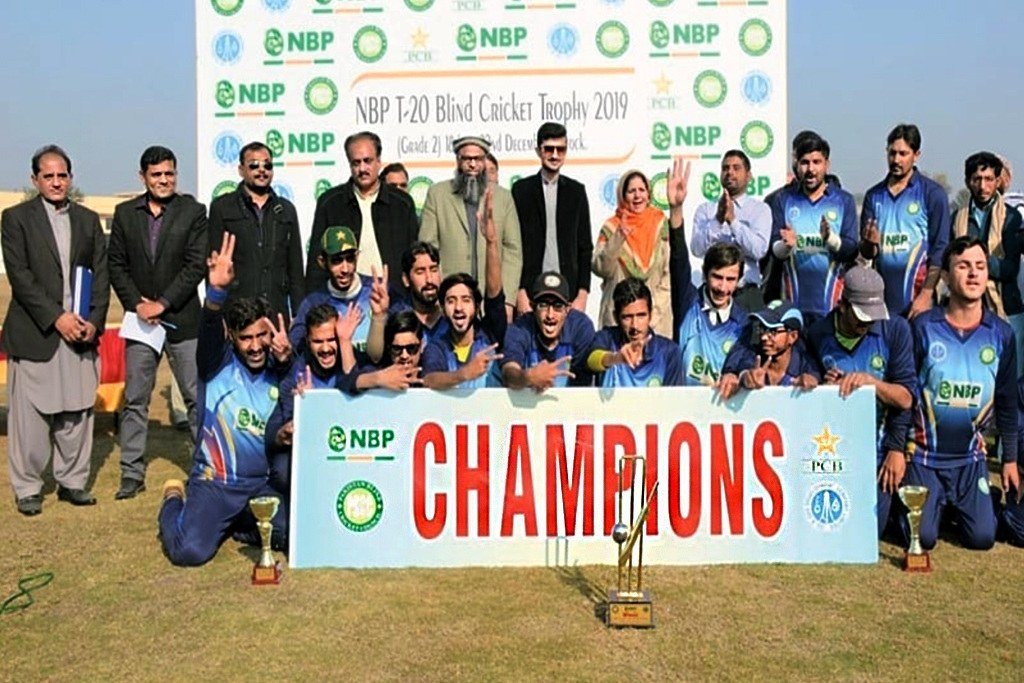
Pakistan’s blind cricketers celebrate the NBP T20 Blind Cricket Trophy win in 2019, one of the national tournaments that feed the national side.
Photo: Khilari
How Blind Cricket Works
Blind cricket is played with a ball that makes a sound as it moves, so players locate it by hearing. Teams mix players across sight categories, from fully blind players to partially sighted players, with rules that keep the balance fair: fully blind batters, for example, are protected by provisions that recognise how they pick up the ball. Bowling is underarm, the ball must bounce at set points, and fielders call and clap to coordinate. It is fast, skilful cricket, and at international level the standards of fitness and shot-making are high, as Nisar Ali’s 31-ball 72 in a world final shows.
The sport is governed internationally through the World Blind Cricket Council, and Pakistan’s programme is run by the Pakistan Blind Cricket Council, which organises domestic competitions and the national team. World Cup finals between South Asian teams draw strong crowds and television interest, and Multan’s final was another step in that growth.
Where This Win Sits in Pakistan’s Trophy Story
Pakistan’s sporting history is full of world titles in team games, from the hockey era recalled in Pakistan’s Over-40s World Cup win in cricket’s veterans game to the senior cricket titles that define so many memories. The Multan win adds a new line to that list, and a distinctive one: a world title won by athletes whose achievements have too often been reported as a footnote.
Individual excellence drove it. A 72 not out in 31 balls in any world final, in any form of cricket, is an elite innings, and it belongs in the same conversation as the record chases and fast hundreds we regularly cover, such as Babar Azam’s fastest to 5,000 ODI runs milestone. Records like the fastest recorded ball, covered in Shoaib Akhtar’s 161.3 km/h delivery, show how much Pakistanis value the record book. The blind team’s entry in it was earned the hard way, at the fourth attempt.
The final also underlined the depth Bangladesh have built in blind cricket, reaching a world final and posting a competitive total through Arif Hussain’s half-century. A tournament in which the final is contested by two South Asian sides, neither of them the three-time champions, is a sign of how far the game has spread since 2012.
What Comes Next for the Champions
A first title changes what a programme can ask for: better facilities, more domestic fixtures, and support for the next group of players coming through the Pakistan Blind Cricket Council’s competitions. The 2024 final also set a benchmark for hosting, with a home crowd in Multan watching a home win. Pakistan are no longer the team chasing the trophy. They are the champions the next edition’s finalists will have to beat.
Sources
- Pakistan Blind Cricket Council
- Dawn, sports reporting on the 2024 Blind T20 World Cup final
- Geo Super, coverage of the Multan final
- Featured photo: Pakistan’s blind cricket team with the T20 Blind Cricket World Cup trophy in Multan, December 2024 (APP)
- Body photo: Pakistan blind cricketers celebrate the NBP T20 Blind Cricket Trophy win in 2019 (Khilari)

Umar Farooq is the founder and editor of Good News Pakistan. An engineer by profession and a writer by passion, he started the site in December 2022 to share good news from Pakistan, and has since written and edited more than 200 articles about its people, sports, science, business and world records. He believes the story of Pakistan is bigger than its headlines, and that good news, told honestly, is worth telling every day.