

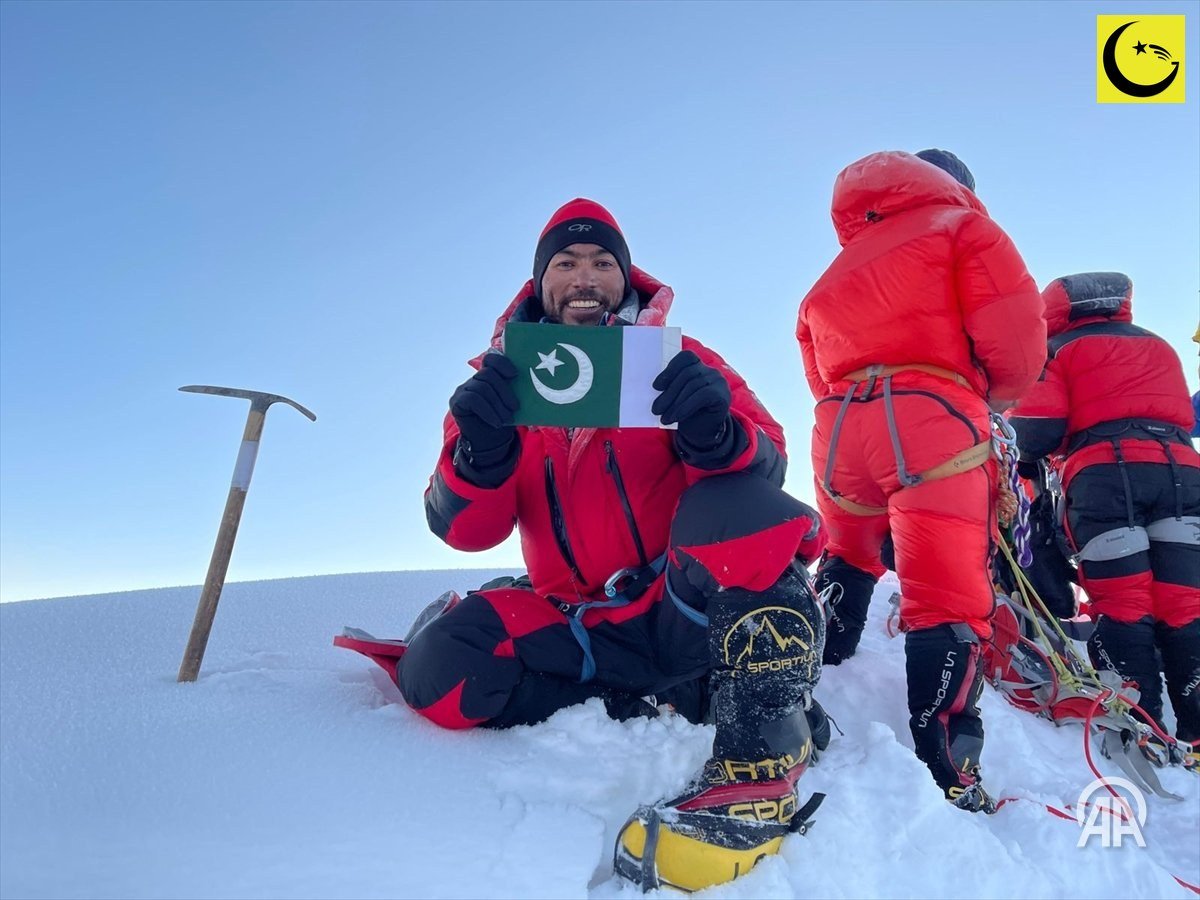
Sirbaz Khan is the first Pakistani to climb all 14 of the world’s eight-thousanders without bottled oxygen, completing the full set on 18 May 2025 when he reached the summit of Kangchenjunga (8,586 metres), the world’s third highest mountain, at about 5:00 AM Nepal time. The Hunza climber had first completed all 14 peaks in October 2024, but two of those ascents, Annapurna and Kangchenjunga, had used supplemental oxygen, so he went back and re-climbed both without it, Annapurna in April 2025 and Kangchenjunga a month later. He now stands among roughly 70 climbers in history who have summited all 14 eight-thousanders, and among fewer than 25 who have done so entirely without supplemental oxygen.
Two milestones, not one: the Sirbaz Khan story in full
The two achievements are often merged in headlines, but they are separate milestones, and the distinction is the heart of this story. In October 2024, Sirbaz Khan summited Shishapangma (8,027 metres) in Tibet, the last of the 14 peaks on his list, and became the first Pakistani ever to stand on all 14 eight-thousanders. He finished that first set alongside Shehroze Kashif, who completed his own 14 on the same mountain days later and became the second Pakistani to do it. It was a landmark for Pakistan, a country that is home to five of the 14 peaks but had never produced a climber who had finished the whole set.
Yet by the strictest standard in mountaineering, the job was not done. On two of the 14, Annapurna in 2021 and Kangchenjunga in 2022, he had used bottled oxygen on the upper mountain. Most of the climbing world counts a summit either way, but the no-oxygen standard is the purest form of the sport, and it was the standard he had set for himself when he announced his project, known as Mission 14, after his first eight-thousander in 2017. As he explained on returning to Annapurna in the spring of 2025: “Even though I had summited all 14 peaks in the world, there was still something missing. When I first announced my project after summiting Nanga Parbat in 2017, my aim was simple: 14 summits without using oxygen, and that is why I returned.”
READ MORE
Eight-Thousanders in Pakistan: The Full Table of the Country’s Five 8,000-Metre Peaks
The final push: Annapurna again, then Kangchenjunga
The closing campaign ran across a single spring season in Nepal. In April 2025 he re-climbed Annapurna I (8,091 metres), the world’s tenth highest peak and one of its most dangerous, this time without supplemental oxygen. That left one summit. On Kangchenjunga, climbing in pure alpine style with minimal equipment and no oxygen support, he reached the top on the morning of 18 May 2025, his second ascent of the mountain and the one that completed the set under the no-oxygen standard.
The Alpine Club of Pakistan, the national body for mountaineering, confirmed the record the same day. Its secretary, Karrar Haidri, said: “With this summit, Sirbaz Khan becomes the first Pakistani to climb all 14 highest peaks without oxygen. Only a few people in history have achieved this feat.” His expedition organiser, Imagine Nepal, congratulated him publicly on summiting Kangchenjunga without supplemental oxygen, and Pakistani and international coverage of the climb was consistent on the central facts: all 14 peaks, no bottled oxygen on any of them, and a first for Pakistan.

The south face of Annapurna I, which he first climbed in 2021 and re-climbed without oxygen in April 2025.
Photo: Josep M. Gracia, CC BY-SA 4.0, via Wikimedia Commons
From a K2 base camp kitchen to the highest summits
The route to the record began about as far from elite sport as it is possible to start. Sirbaz Khan was born on 3 December 1986 in Aliabad, in the Hunza Valley of Gilgit-Baltistan, where his father worked as a carpenter. He was still at school, in the ninth grade, when he first went to the mountains as an assistant cook at K2 base camp. Like many climbers from Pakistan’s northern valleys, he worked his way up through the expedition economy, as a kitchen boy and then as a high-altitude porter carrying loads for foreign teams, learning the craft on the mountains he would later climb for himself.
His break came in 2016, when the Nepalese climber Mingma Sherpa sponsored him on an attempt on K2. The attempt failed, but the apprenticeship held. In October 2017 he summited Nanga Parbat (8,126 metres), becoming the first climber to stand on that mountain in the autumn season, and it was then that he announced Mission 14: his plan to climb all 14 eight-thousanders, without oxygen, and to dedicate the project to Pakistan’s high-altitude climbing community, including his mentor, the late Muhammad Ali Sadpara. Eight years later, on Kangchenjunga, the mission was completed exactly as announced.
READ MORE
Shehroze Kashif: The Youngest Pakistani to Climb All 14 Eight-Thousanders
The 14 peaks, in the order he climbed them
The full list shows how steadily the record was built, season by season, across Pakistan, Nepal and Tibet. Five of the 14 stand in Pakistan or on its border, and our reference guide to the eight-thousanders in Pakistan sets out those home peaks in full.
- Nanga Parbat, 8,126 metres, Pakistan, October 2017, the first autumn ascent of the mountain
- K2, 8,611 metres, Pakistan, July 2018, and again in July 2022
- Lhotse, 8,516 metres, Nepal, May 2019, the first Pakistani ascent, without oxygen
- Broad Peak, 8,051 metres, Pakistan, July 2019, without oxygen
- Manaslu, 8,163 metres, Nepal, September 2019, the first Pakistani ascent
- Annapurna I, 8,091 metres, Nepal, April 2021, the first Pakistani ascent with Muhammad Abdul Joshi, re-climbed without oxygen in April 2025
- Mount Everest, 8,848 metres, Nepal, May 2021, and again in May 2024 without supplemental oxygen
- Gasherbrum II, 8,035 metres, Pakistan, July 2021
- Dhaulagiri, 8,167 metres, Nepal, October 2021, the first Pakistani ascent
- Kangchenjunga, 8,586 metres, Nepal, May 2022, re-climbed without oxygen on 18 May 2025
- Makalu, 8,485 metres, Nepal, May 2022
- Gasherbrum I, 8,080 metres, Pakistan, August 2022
- Cho Oyu, 8,188 metres, Tibet, October 2023
- Shishapangma, 8,027 metres, Tibet, October 2024, completing the first full set
Why the no-oxygen standard matters
Above 8,000 metres, climbers enter what mountaineers call the death zone, where the air holds roughly a third of the oxygen available at sea level and the human body steadily deteriorates, however fit the climber. Bottled oxygen does not remove the danger, but it lowers the effective altitude by thousands of metres, restoring strength, warmth and clear thinking on summit day. Climbing without it is a different undertaking: every step near the top is taken on a body that is, in effect, slowly starving of air, and the margin for bad weather, delays or a single mistake shrinks sharply.
That is why the numbers around this record are so small. Around 70 climbers in all of mountaineering history have stood on all 14 eight-thousanders. Fewer than 25 of them have done it without supplemental oxygen on every peak. Sirbaz Khan is the first Pakistani in either group, and his name now sits on both lists, which is the measure of what was achieved between Nanga Parbat in 2017 and Kangchenjunga in 2025.
Honours, and what the record means for Pakistan
The state recognised the climb before the record was even complete. He received the Pride of Pakistan award in 2022 and the Presidential Pride of Performance Award in 2023, along with the Nazir Sabir Mountaineering Award, named for Pakistan’s first Everest summiteer. For a climber who began as a base camp cook, the honours mark how completely the story has turned: the porter who once carried other climbers’ loads to K2 base camp has become the most complete high-altitude climber Pakistan has produced.
His stated aim throughout Mission 14 was to put Pakistan’s own climbers, porters and mountain communities at the centre of a sport that has often treated them as support staff for foreign expeditions. With all 14 summits climbed twice over in effect, once for the set and once for the standard, Sirbaz Khan has given the next generation of Hunza, Shimshal and Baltistan climbers a Pakistani benchmark to aim at, set by one of their own.
Sources
- The News International: Sirbaz summits 14 highest peaks without supplemental oxygen (19 May 2025)
- The Express Tribune: Mountaineer Sirbaz achieves unique feat (19 May 2025)
- Imagine Nepal: Summit on Kanchenjunga, expedition report including Sirbaz Khan
- Geo Super: report carrying Sirbaz Khan’s account of returning to complete the no-oxygen set
- ExplorersWeb: Kangchenjunga, an interview with Sirbaz Khan
- Wikipedia: Sirbaz Khan, biography and expedition record
- Featured image: Sirbaz Khan on the summit of Kangchenjunga, 18 May 2025 (Photo: Anadolu Agency)
- Photo: Josep M. Gracia, CC BY-SA 4.0, via Wikimedia Commons (Annapurna I south face, in-body image)

Umar Farooq is the founder and editor of Good News Pakistan. An engineer by profession and a writer by passion, he started the site in December 2022 to share good news from Pakistan, and has since written and edited more than 200 articles about its people, sports, science, business and world records. He believes the story of Pakistan is bigger than its headlines, and that good news, told honestly, is worth telling every day.