

Pakistan Turkmenistan trade is set for a fresh push after the Federation of Pakistan Chambers of Commerce and Industry (FPCCI) and the Turkmenistan Chamber of Commerce agreed in Islamabad on Monday, 16 November 2026, to strengthen bilateral trade and economic relations through business cooperation, investment partnerships and regular exchanges of business delegations. FPCCI President Atif Ikram Sheikh and Turkmenistan Chamber of Commerce Chairman Gurdov Mergen Meretdurdyevich reached the understanding at a meeting at FPCCI House, focused on new avenues of trade, investment and institutional collaboration between the business communities of the two countries.
What the Two Chambers Agreed at FPCCI House
Both sides agreed to deepen cooperation between the FPCCI and the Turkmenistan Chamber of Commerce, with particular emphasis on stronger institutional linkages, easier business-to-business contacts and joint investment initiatives. Atif Ikram Sheikh said Pakistan and Turkmenistan needed concrete and coordinated measures to turn their existing economic potential into tangible trade and investment opportunities. He proposed joint investment forums and memorandums of understanding between business organisations of the two countries, to give long-term cooperation a structured framework.
The FPCCI president stressed that regular exchanges of business delegations could strengthen institutional cooperation and help entrepreneurs identify viable opportunities, and he urged both business communities to move forward with joint ventures and investment projects. Sharing market information, trade statistics and business intelligence could help identify new areas of mutual interest, he added, assuring the visiting delegation that the FPCCI would take comprehensive measures to connect Turkmenistan’s business community with Pakistani entrepreneurs and facilitate direct contacts. The meeting was also attended by FPCCI Vice President Tariq Jadoon and Chairman Capital Office Karim Aziz Malik. Sheikh, who leads Pakistan’s apex chamber, was recently recognised abroad as well, as Atif Ikram Sheikh Wins Asia-Pacific Young Entrepreneur Award 2026 reported.
For his part, Gurdov Mergen Meretdurdyevich expressed his commitment to strengthening commercial and economic relations with Pakistan at every level. He said the Turkmenistan Chamber of Commerce was keen to develop closer ties with the Pakistani business community and to promote practical cooperation between entrepreneurs, investors and trade organisations. He added that the two countries should use their longstanding historical and friendly relations to increase bilateral trade, investment and business-to-business cooperation, noting that several initiatives had recently been undertaken to promote relations and that the business community could play a significant role in taking these ties to new heights.
Pakistan Turkmenistan Trade: The Sectors in Focus
Atif Ikram Sheikh highlighted significant potential for expanding bilateral economic cooperation in five established sectors, and pointed to a second set of emerging areas where partnerships could grow:
- Energy and renewable energy
- Textiles
- Agriculture
- Pharmaceuticals
- Emerging areas: information technology, digital services, halal food and healthcare
The list matches the natural strengths of both economies. Turkmenistan is an energy-rich country and a producer of cotton and textiles, while Pakistan brings a large textile industry, an established pharmaceuticals sector, agricultural produce and a growing technology workforce. Sheikh observed that stronger engagement between private-sector institutions could provide fresh momentum to bilateral economic relations and help businesses from both countries benefit from their respective market strengths. Both sides expressed confidence that closer institutional engagement, joint business forums, investment exchanges and sector-specific partnerships would help unlock the untapped potential of the relationship.
READ MORE
Mari Energies Reports Copper Gold Discovery at East Siah Diq in Chagai, 50 Kilometres From Reko Diq
Energy and Connectivity Give the Relationship Its Backbone
The chamber-level push sits on top of a much larger energy story. Speaking at the Turkmenistan embassy in Islamabad earlier this month, on 6 November 2026, Ambassador Atadjan Movlamov described energy cooperation as a key pillar of bilateral relations, highlighting the Turkmenistan-Afghanistan-Pakistan-India (TAPI) gas pipeline and the Turkmenistan-Afghanistan-Pakistan (TAP) electricity transmission project. The TAPI pipeline is designed to carry natural gas from Turkmenistan’s Galkynysh gas field, which holds estimated reserves of approximately 27 trillion cubic metres, to markets in South Asia, and construction of its Serhetabat-Herat section began in September 2024. The TAP project envisages supplying electricity through Afghanistan to Pakistan, with a potential capacity of up to 3,000 megawatts.
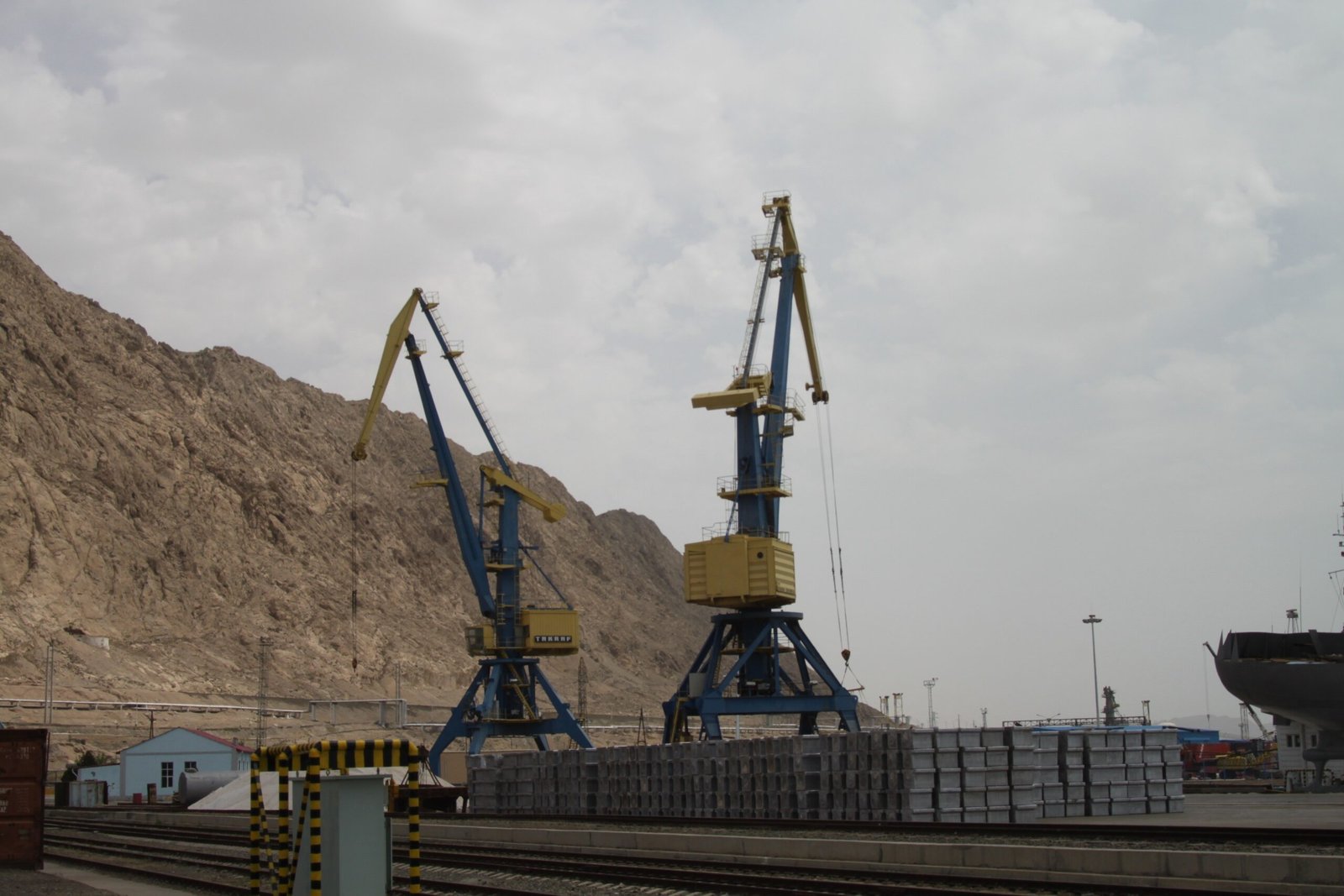
Cranes at Turkmenbashi International Seaport in Turkmenistan, the country’s Caspian gateway for trade and regional connectivity.
Photo: Juris Paiders, CC BY 2.0, via Wikimedia Commons
For Pakistan, projects of that scale promise more diversified energy supplies and stronger energy security for its industrial, commercial and domestic sectors, while for Turkmenistan they open access to South Asian markets and more varied export routes. Ambassador Movlamov has said Pakistan is an important partner in that strategy, and that cooperation in energy, railway networks, transport infrastructure and telecommunications could create new opportunities for trade, investment and economic integration between the two countries. It is that connectivity agenda, linking Turkmen energy and ports such as Turkmenbashi with Pakistani markets and ports, that gives Pakistan Turkmenistan trade a much larger frame to grow inside.
What Happens Next
The understanding reached on Monday is a business-community agreement, not a trade deal, and its value will be measured by what follows: the joint investment forums and memorandums of understanding proposed by the FPCCI, the delegation exchanges both sides endorsed, and the sector partnerships in energy, textiles, agriculture, pharmaceuticals and the emerging fields. Both chambers have now publicly committed to that follow-through, and the recent run of high-level contact between the two countries suggests the political door is open. If the forums are held and the delegations start travelling, Pakistan Turkmenistan trade could begin to reflect the friendly relations the two countries have long described, with private businesses, rather than governments alone, doing more of the work.
Sources
- APP via Tez Khabar: Pakistan, Turkmenistan agree to expand bilateral trade, investment, economic cooperation
- Sun News HD: Atif Ikram Sheikh and Gurdov Mergen Meretdurdyevich agree to expand Pakistan-Turkmenistan trade
- Sub News English: Turkmenistan seeks stronger ties with Pakistan through energy and regional connectivity projects (TAPI and TAP background, 6 November 2026)
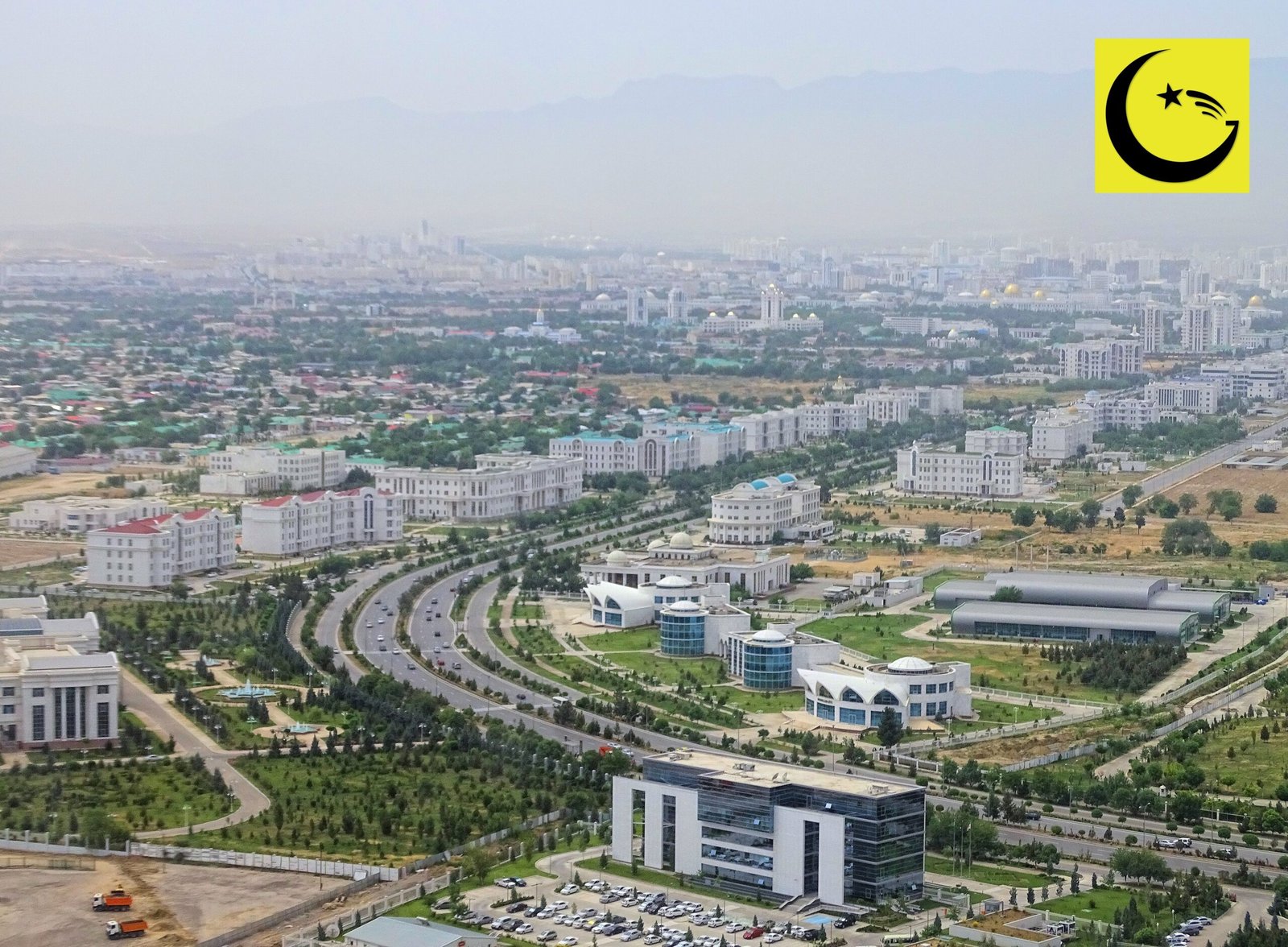
- Featured image: Ashgabat, Turkmenistan, panorama over Neutrality Road (Bjørn Christian Tørrissen, CC BY-SA 4.0, via Wikimedia Commons)
- In-body image: Turkmenbashi International Seaport, Turkmenistan (Juris Paiders, CC BY 2.0, via Wikimedia Commons)

Umar Farooq is the founder and editor of Good News Pakistan. An engineer by profession and a writer by passion, he started the site in December 2022 to share good news from Pakistan, and has since written and edited more than 200 articles about its people, sports, science, business and world records. He believes the story of Pakistan is bigger than its headlines, and that good news, told honestly, is worth telling every day.