

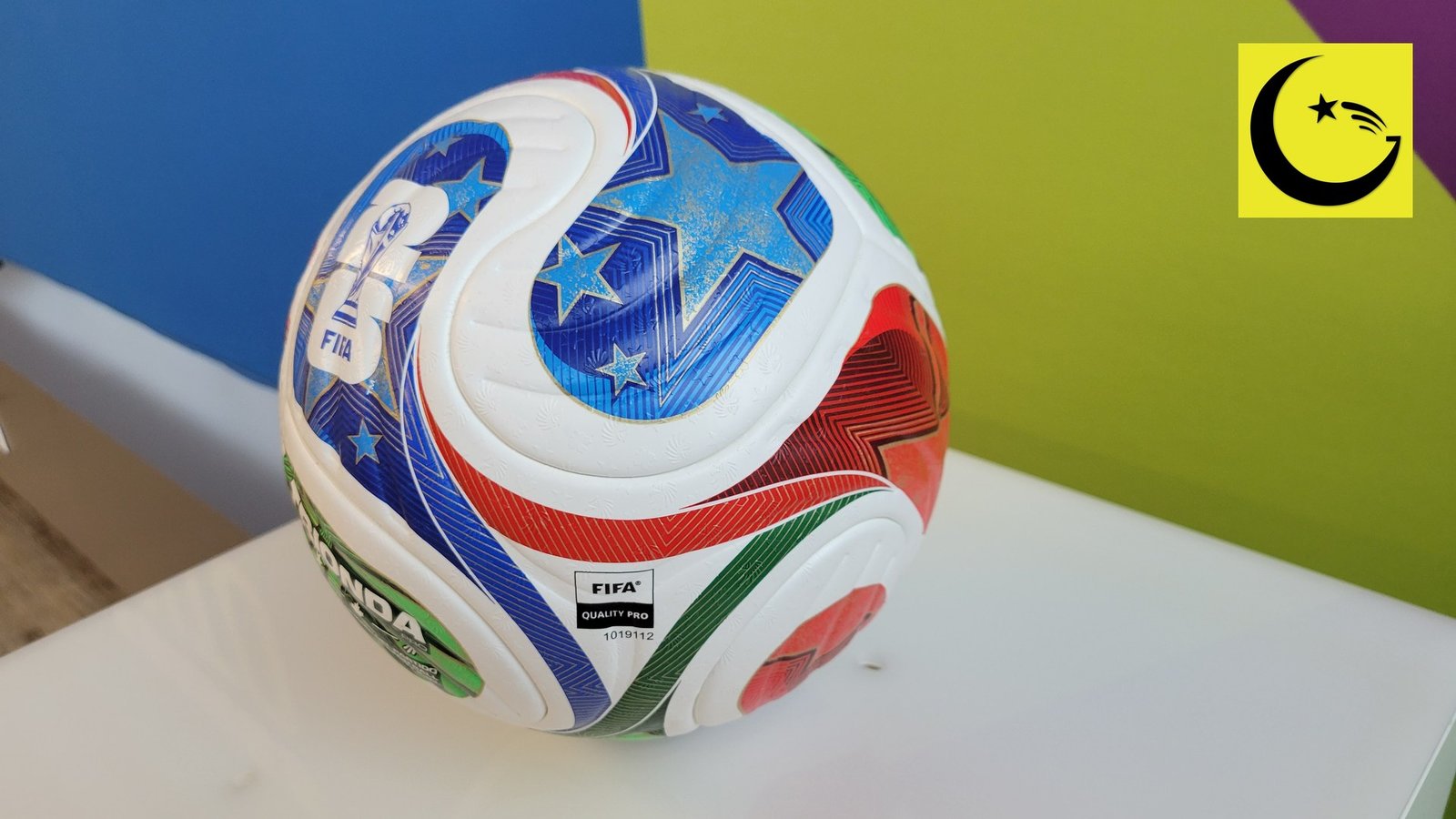
Sialkot footballs account for an estimated 60 to 70 percent of all the hand-stitched footballs produced in the world, according to research published by the LUMS Centre for Entrepreneurship at the Lahore University of Management Sciences in 2026. One industrial city in northeastern Punjab quietly supplies the majority of a product used in playgrounds, academies and professional leagues on every continent.
How Sialkot Footballs Built a Global Cluster
The industry was not created by a government plan or a single foreign investor. Its roots go back to the late colonial period, when a British military presence in the region created local demand for sports equipment and craftsmen who already worked leather began repairing, and then making, footballs. Knowledge spread the way it still does in Sialkot: one person trained the next, one exporter’s buyer opened a door for another, and over generations the city built a dense cluster of manufacturers, subcontractors, material suppliers, exporters and skilled stitchers, all working close to each other and all feeding the same global markets.
That shared ecosystem is the real advantage. Around 98 percent of what Sialkot produces is sold internationally, so the city has spent generations meeting the delivery schedules, quality standards and compliance systems of the world’s biggest sports brands. Industry figures put the city’s annual football output at more than 40 million balls.
- Share of the world’s hand-stitched footballs made in Sialkot: an estimated 60 to 70 percent (LUMS Centre for Entrepreneurship, 2026)
- Annual football output: more than 40 million balls
- Share of production exported: about 98 percent
- Official World Cup match balls supplied from Sialkot: every tournament since 1982
Four World Cups in a Row for Forward Sports
The sharpest proof of the city’s standing sits at the very top of the game. Pakistan has never qualified for a FIFA World Cup final tournament, yet Sialkot balls have been at the centre of the tournament since 1982. Forward Sports, the city’s most advanced manufacturer, has made the official World Cup match ball for four tournaments in a row: the Brazuca in 2014, the Telstar 18 in 2018, the Al Rihla in 2022 and the Trionda in 2026. The Trionda is no simple stitched ball: it carries a 500Hz motion sensor chip inside one of its four panels, sending real time data to the video review systems that support offside decisions. FIFA certified match balls must pass strict tests for weight, circumference, pressure retention and water absorption, and Sialkot makers have cleared those tests at four straight World Cups.

Sialkot’s Clock Tower at Iqbal Square, floodlit at night, the landmark of the city that stitches most of the world’s hand-stitched footballs.
Photo: Sheryking, CC BY-SA 4.0, via Wikimedia Commons
READ MORE
The 1992 Cricket World Cup: The Night Pakistan’s Cornered Tigers Ruled Melbourne
Hand-Stitching Is Changing, Not Standing Still
The honest part of this fact is that hand-stitching itself is shrinking. Five or six years ago, hand-stitched balls made up 80 to 90 percent of Sialkot’s output; today that share is roughly 20 percent, with machine-stitched and thermo-bonded balls now dominant. The economics are plain: one worker produces about five hand-stitched balls a day, against about 70 machine-stitched ones. The modern World Cup balls reflect the same shift, because the 2022 Al Rihla was thermo-bonded rather than hand-stitched. What survives is the premium end of the craft, where makers argue, with some justification, that a well hand-stitched ball still offers a quality that leagues and serious players pay for, and firms are retraining stitchers and testing hybrid methods that keep part of that hand finish. The 60 to 70 percent figure in this fact is about hand-stitched balls specifically, and it should never be stretched into a claim about all footballs.
Why the World Keeps Coming Back
Brands such as Adidas, Nike and Puma have sourced from Sialkot for decades, and the LUMS research is clear that price alone does not explain it. The city pairs craft knowledge handed down through families with technical credibility earned at the highest level of the sport. Forward Sports cut its delivery turnaround from 90 days to 15 through investment in automation and modern machinery, a speed that rival production hubs struggle to match. Challenges remain, from imported materials and energy costs to the fact that almost everything leaves under a foreign label, but the position itself is remarkable: a single Pakistani city holds the majority of the world’s hand-stitched football production, and its best firm makes the ball for the biggest sporting event on Earth. For a country still waiting for its first World Cup appearance as a team, Sialkot footballs have already played in every final for more than forty years.
Sources
- LUMS Centre for Entrepreneurship, Lahore University of Management Sciences: Stitching the World’s Game, Inside Sialkot’s Football Industry (2026)
- SMEDA, Small and Medium Enterprises Development Authority: Cluster Profile, Sports Goods, Sialkot
- Trade Development Authority of Pakistan: Market Research Report, Sports Goods Exports of Pakistan
- Featured image: The Adidas Trionda, the 2026 FIFA World Cup match ball made in Sialkot (Photo: OhanaUnited, CC BY-SA 4.0, via Wikimedia Commons)
- In-body image: The Clock Tower at Iqbal Square in Sialkot, floodlit at night (Photo: Sheryking, CC BY-SA 4.0, via Wikimedia Commons)

Umar Farooq is the founder and editor of Good News Pakistan. An engineer by profession and a writer by passion, he started the site in December 2022 to share good news from Pakistan, and has since written and edited more than 200 articles about its people, sports, science, business and world records. He believes the story of Pakistan is bigger than its headlines, and that good news, told honestly, is worth telling every day.