

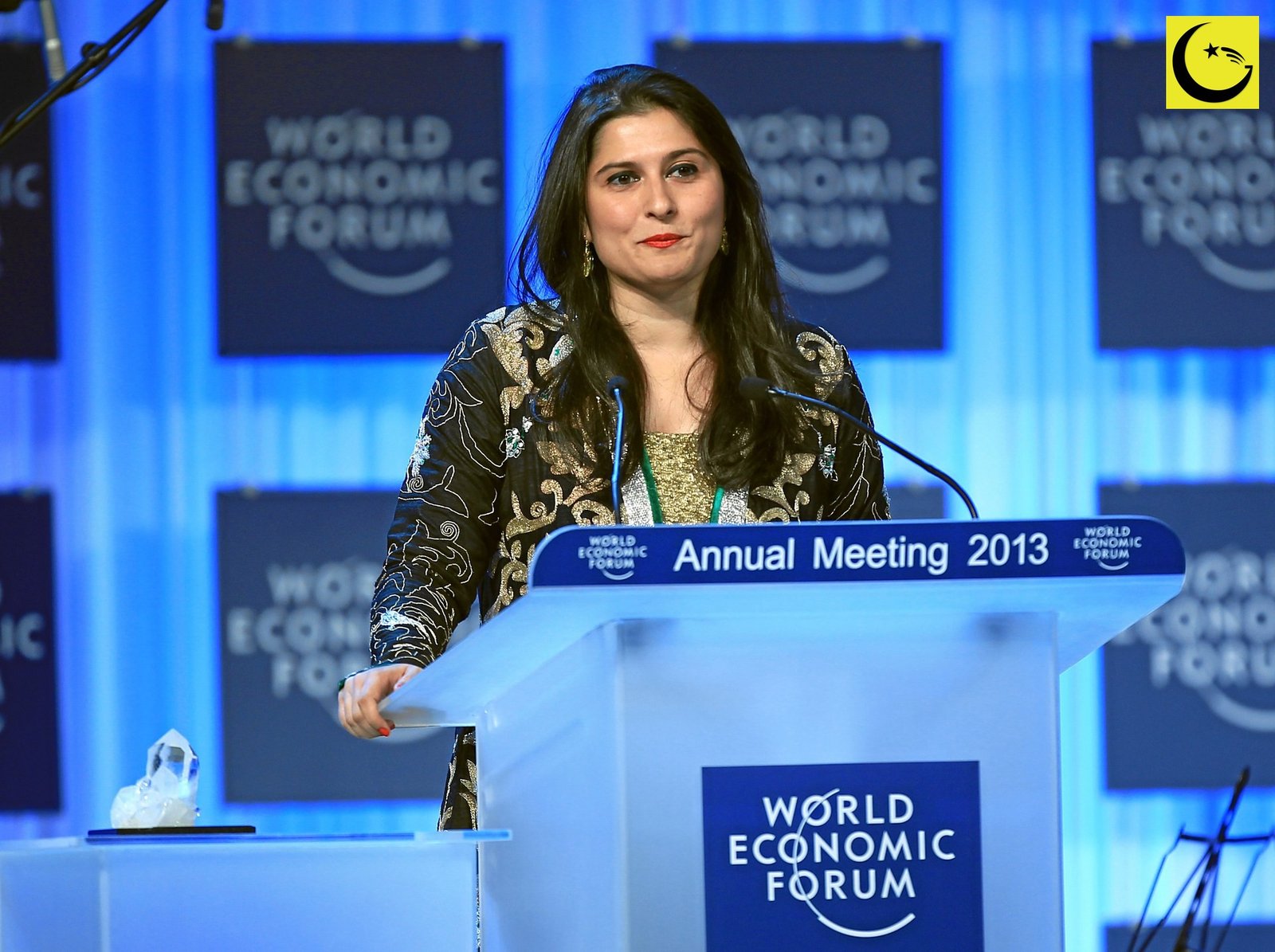
The Sharmeen Obaid-Chinoy Oscar story is a story of two nights, four years apart. On 26 February 2012, her documentary Saving Face won Best Documentary, Short Subject at the 84th Academy Awards in Los Angeles, making her the first Pakistani ever to win an Academy Award. On 28 February 2016, she did it again: A Girl in the River: The Price of Forgiveness won the same award at the 88th Academy Awards, making her the first Pakistani to hold two Oscars, and the first woman film director in history to win two Academy Awards by the age of 37. No Pakistani filmmaker has won one since, so the record she built still belongs to her alone.
A Karachi journalist who started asking questions at 17
Obaid-Chinoy was born on 12 November 1978 in Karachi, and she was a reporter before she was anything else. By her own account, she asked so many questions about the world that her mother suggested she put them in writing, and by the age of 17 she was doing investigative reporting for a local English-language newspaper. She went on to Smith College in the United States, graduating in 2002 with a bachelor’s degree in Economics and Government, and then took two master’s degrees at Stanford University, in Communication and in International Policy Studies.
She returned to Pakistan in 2002 and launched her film career the same year with Terror’s Children, a documentary about Afghan refugee children in Karachi, made for The New York Times. A long association with the PBS series Frontline World followed, with reports filed from Pakistan and Afghanistan. In 2007 she helped found the Citizens Archive of Pakistan, which preserves the country’s cultural heritage, and her film Children of the Taliban, shown internationally as Pakistan’s Taliban Generation, won an International Emmy Award. The pattern of her career was already set: take a subject Pakistan found hard to look at, and film it until the world had to look too.
The first Sharmeen Obaid-Chinoy Oscar: Saving Face
Saving Face, co-directed with the American filmmaker Daniel Junge, follows two acid attack survivors, Zakia and Rukhsana, as they seek justice, and the work of Dr Mohammad Jawad, a Pakistani-born plastic surgeon based in London who travels home to rebuild the faces of survivors. When the film won at the 84th Academy Awards, Obaid-Chinoy became one of only 11 female directors in history to win an Oscar for a non-fiction film, as well as the first Pakistani winner of any Academy Award.
The honour at home came within weeks. On 23 March 2012, the President of Pakistan conferred the Hilal-i-Imtiaz, the country’s second highest civilian award, on her for bringing honour to Pakistan as a filmmaker. The same year, Time magazine named her one of the 100 most influential people in the world. Pakistan had had film industries, film stars and film legends before, but it had never had an Oscar, and the first one arrived carried by a documentary about the country’s most vulnerable women.
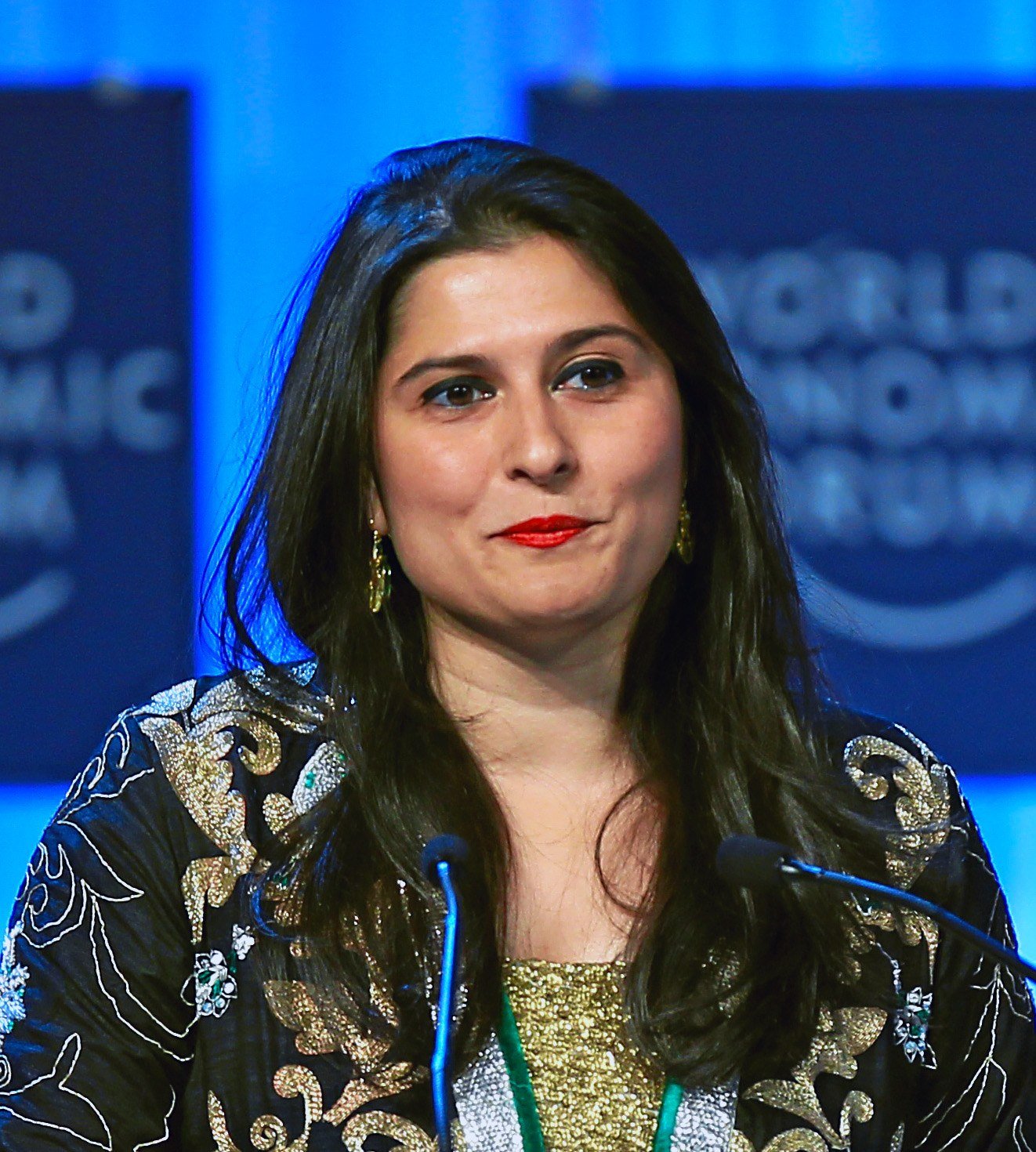
Sharmeen Obaid-Chinoy addresses the World Economic Forum’s Annual Meeting in Davos in January 2013, where she received the Crystal Award.
Photo: Sebastian Derungs, World Economic Forum, CC BY-SA 2.0, via Wikimedia Commons
READ MORE
Pakistanis in The Muslim 500 2027: Shehbaz Sharif and Asim Munir Share the Top Spot
A Girl in the River: the Oscar that changed a law
Her second Oscar film is built around Saba, a 19-year-old from Punjab who was beaten and thrown into a river by her father and uncle for marrying a man she loved, and who survived. Under the law as it then stood, so-called honour crimes could be forgiven by the victim’s family, letting the attackers walk free, and the film follows the pressure placed on Saba to grant that forgiveness. Days before the ceremony, on 22 February 2016, the film was screened at the Prime Minister’s Secretariat in Islamabad, and Prime Minister Nawaz Sharif pledged in person to plug the legal loophole that let perpetrators escape.
Six days later, on 28 February 2016, A Girl in the River won Best Documentary, Short Subject at the 88th Academy Awards. Accepting the award, she told the audience: “This week the Pakistani prime minister has said that he will change the law on honour killing after watching this film. That is the power of film.” In October 2016, parliament passed the law that closed the forgiveness loophole in honour killing cases, making punishment mandatory. The win was also the first Academy Award for her own Karachi-based company, SOC Films, the production house she founded to tell Pakistani stories from inside Pakistan.
Emmys, firsts and a shelf that kept growing
The Oscars sit at the top of a much larger shelf. Her Wikipedia biography counts seven Emmy Awards in total, including International Emmy wins for Pakistan’s Taliban Generation and for Saving Face itself; older profiles often say six, because the honours kept arriving after they were written. She was the first non-American to win the Livingston Award for Young Journalists, received the Knight International Journalism Award in 2017, and in January 2017 became the first artist ever invited to co-chair the World Economic Forum’s annual meeting in Davos, the stage shown in the photographs with this article, where she had received the Forum’s Crystal Award four years earlier.
READ MORE
Sirbaz Khan: first Pakistani to climb all 14 eight-thousanders without oxygen
Building an industry at home: SOC Films and 3 Bahadur
For younger Pakistani filmmakers, the Sharmeen Obaid-Chinoy Oscar wins are the proof that a camera in Karachi can reach the biggest stage in world cinema, and she has spent the years since building the ladder behind her. Through SOC Films she directed Song of Lahore (2015), which carried the classical musicians of Lahore to a premiere at the Tribeca Film Festival, and 3 Bahadur (2015), Pakistan’s first computer-animated feature-length film, which became the country’s highest grossing animated movie of its time. Her animated short Sitara: Let Girls Dream followed in 2019, and in 2022 her Patakha Pictures launched Pakistan Stories, an initiative supporting ten women documentary filmmakers across the country.
Hollywood comes calling
The world that first noticed her in 2012 now hires her at its biggest franchises. In 2022 she directed two episodes of Ms. Marvel for Disney+, her first work in narrative series television and a first for a Pakistani director inside a Marvel production. In April 2023, at the Star Wars Celebration in London, Lucasfilm announced that she would direct a new Star Wars film, with Daisy Ridley returning as Rey. The project has since moved off Disney’s release calendar, but the announcement alone marked the distance she had travelled: the reporter who started by writing questions to a Karachi newspaper had been handed the most famous film universe on Earth. Her documentary Diane von Fürstenberg: Woman in Charge, co-directed with Trish Dalton, reached audiences on Hulu in 2024.
Two Academy Awards, a law changed, a generation of filmmakers behind her: the Sharmeen Obaid-Chinoy Oscar record is not only a personal trophy count, it is the high-water mark of Pakistani cinema so far. More of the country’s records, rankings and world standings are collected on our Pakistan World Rankings and Records page.
Sources
- Wikipedia: Sharmeen Obaid-Chinoy
- SHOOTonline: Sharmeen Obaid-Chinoy Extends Storytelling Reach With “Ms. Marvel”
- Featured image: Photo: World Economic Forum, CC BY-SA 2.0, via Wikimedia Commons
- In-body image: Photo: Sebastian Derungs, World Economic Forum, CC BY-SA 2.0, via Wikimedia Commons

Umar Farooq is the founder and editor of Good News Pakistan. An engineer by profession and a writer by passion, he started the site in December 2022 to share good news from Pakistan, and has since written and edited more than 200 articles about its people, sports, science, business and world records. He believes the story of Pakistan is bigger than its headlines, and that good news, told honestly, is worth telling every day.