

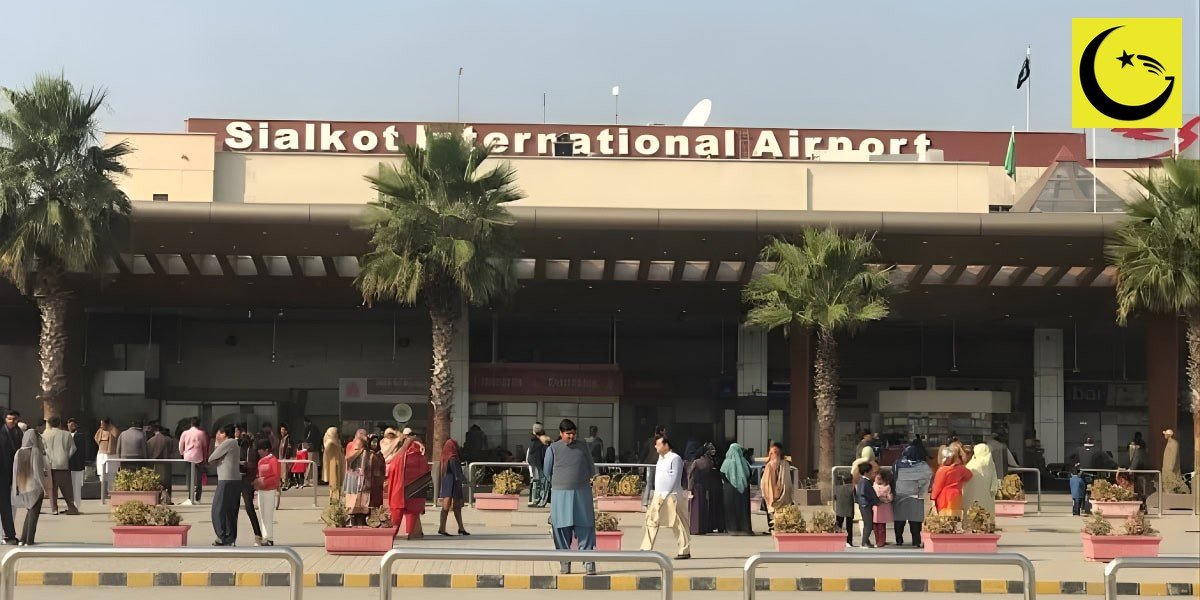
Sialkot exports earn Pakistan more than $2.5 billion a year, and almost everything the city produces is sold abroad: about 99 percent of its output is exported. Yet the most remarkable part of the story is not what Sialkot sells. When the infrastructure the city needed did not exist, its business community built it themselves: a dry port in 1985, an international airport in 2007, and an airline of their own in 2020.
Sialkot Exports in Numbers
- Annual export earnings: more than $2.5 billion, which the Sialkot Chamber of Commerce and Industry describes as about a tenth of Pakistan’s total exports
- Share of the city’s production that is exported: about 99 percent
- Businesses in the Sialkot Chamber of Commerce and Industry: more than 16,000 members
- Main export families: sports goods, surgical instruments, leather products, gloves of all sorts, textiles and sportswear, martial arts uniforms, musical instruments, cutlery, and military and police uniform badges
- Buyers: brands and importers in more than 100 countries
Few cities anywhere run an economy like this: a single mid-sized city in Punjab, built on thousands of small and medium workshops, selling almost its entire output to the rest of the world.
Far Beyond Footballs: What the Workshops Make
Beyond the famous footballs, Sialkot exports rest on a wide base of workshops. Pakistan’s sports goods exports reached $424.3 million in FY2025-26, according to the Pakistan Bureau of Statistics, and Sialkot is the centre of that industry. Gloves alone earned $59.6 million, from boxing and mixed martial arts gloves to goalkeeper gloves, and other sports goods brought in a further $108.1 million: cricket and hockey equipment, protective gear, sportswear and martial arts uniforms. Footballs remain the single biggest sports line at $256.7 million, one industry among several in a much wider cluster.
Leather is the second great family: leather garments, motorcycle gloves, fashion gloves and work gloves, cut and stitched in the same streets, with the country’s leather garment exporters’ association based in the city. Around them sits a long tail that the chamber itself lists: textile garments, musical instruments, cutlery and kitchenware, and the badges and accessories worn on military and police uniforms around the world.
READ MORE
Sialkot Surgical Instruments: How One City Supplies the World’s Hospitals
Surgical Instruments: a World Lead, in Brief
The Trade Development Authority of Pakistan describes Sialkot as the largest producer of surgical, dental and veterinary instruments in the world, and Pakistan’s Foreign Ministry puts it this way: nearly a quarter of the world’s hand-held surgical instruments are made in this one city. Exports of these instruments brought in $447.5 million in FY2025-26, with the United States, Germany and the United Kingdom as the biggest buyers. The full story of the instrument workshops is told in the article linked above; here it is enough to note that the world’s hospitals are one more market that a single Pakistani city supplies at world scale.
First, a Dry Port of Their Own
The self-built infrastructure began with customs. Sialkot’s exporters once had to clear their goods in Karachi, hundreds of kilometres away, so in 1984 fifty-two of them formed the Sialkot Dry Port Trust, each putting in a personal, non-returnable contribution. The port at Sambrial began operating in 1985 and was formally inaugurated in 1986: the first dry port in Asia set up in the private sector. More than forty years on, it still clears export and import cargo around the clock for the industries of Sialkot, Gujranwala, Wazirabad, Daska and Gujrat, and carries it under customs bond to the seaports and airports of Karachi, Lahore and Islamabad. The trust runs its own fleet of more than 100 customs-bonded vehicles to do the carrying.
Then, an Airport the City Built Itself
The bigger prize was an airport. Approval came in February 2001 for the business community to build one on a build, own and operate basis, and Sialkot International Airport Limited was formed under the chamber in 2005. The first aircraft landed on the new runway on 26 March 2005; the airport became operational on 30 November 2007 and was formally inaugurated on 11 December 2007. The cost, about Rs 2.6 billion, was raised by the exporters themselves. Spread over 1,050 acres near Sambrial, its 3,600 metre runway was at the time the longest in Pakistan, built to handle fully loaded Boeing 747s, with Category II lighting and an instrument landing system, and an apron that can park ten wide-bodied aircraft at a time. It remains Pakistan’s first privately owned public airport.
READ MORE
Pakistan Facts: Sialkot Stitches Most of the World’s Hand-Stitched Footballs
And Then, Their Own Airline
The airport’s success led the chamber to the next step: an airline. Conceived by the Sialkot Chamber of Commerce and Industry in 2015 and backed by around 200 of the city’s industrialists and exporters, AirSial was inaugurated on 9 December 2020 and made its first flight on 25 December 2020, from the airport the same community had built. It began with three Airbus A320s. By September 2026 its fleet had grown to 12 Airbus A320 aircraft, reported as the second-largest fleet of any Pakistani airline, serving 16 destinations: Karachi, Lahore, Islamabad, Peshawar and Quetta at home, and Jeddah, Madinah and Dammam in Saudi Arabia, Muscat in Oman, and Dubai and Abu Dhabi in the Emirates, with Airbus A320neo aircraft on order. The airline is licensed for scheduled passenger and cargo services in both domestic and international markets, and for an export city, that cargo licence matters as much as its passenger seats.
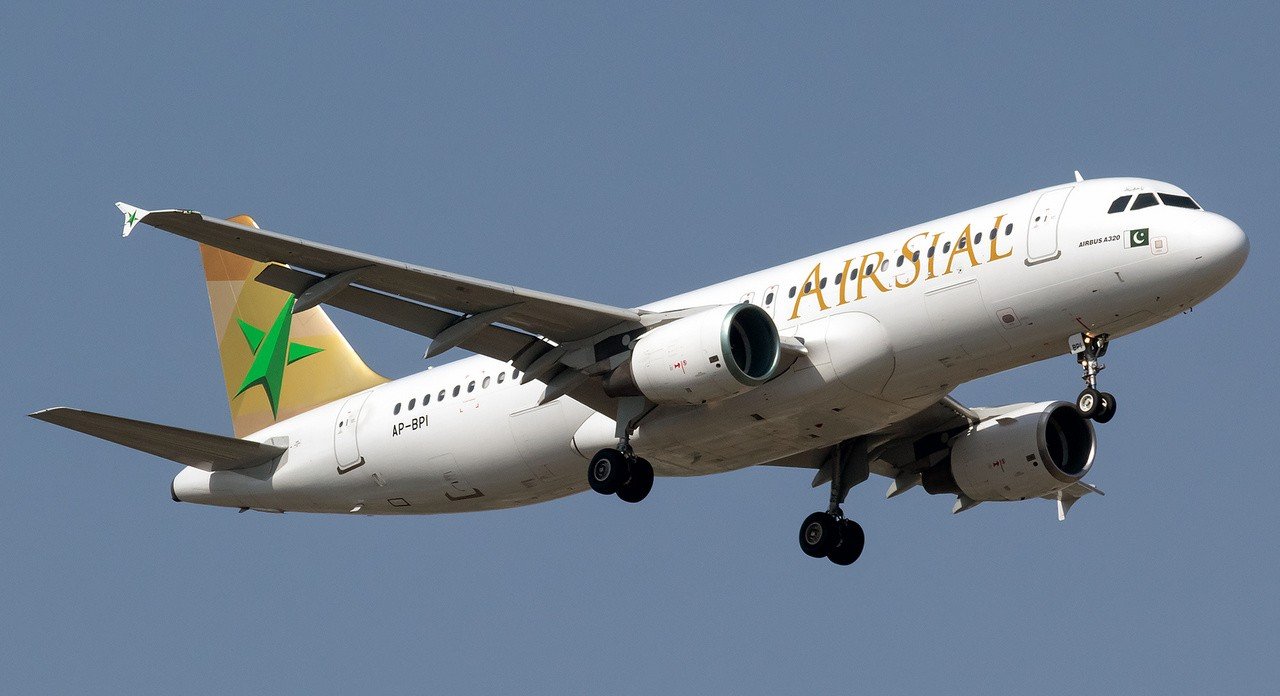
An AirSial Airbus A320 on approach. The airline is owned by the same Sialkot business community that built the airport it flies from.
Photo: Adeel Shafiq via OneSpotter
The Sialkot Model
Read in sequence, the dates tell the story: 1985, 2007, 2020. Each time Sialkot’s traders hit a bottleneck, the chamber’s members pooled their own money and built the missing piece of infrastructure: a dry port, then an airport, then an airline. That habit, as much as any single product, is why Sialkot exports hold world positions across so many industries at once, and why this one city keeps appearing in Pakistan’s world ranking stories.
Sources
- Sialkot Chamber of Commerce and Industry: city profile, export sectors and membership
- Islamabad Chamber of Commerce and Industry: Sialkot exporters on the city’s $2.5 billion exports and 10 percent share
- Pakistan Bureau of Statistics sports goods figures for FY2025-26, as reported by APP
- DailyLife.pk: Pakistan’s exports in FY2025-26, PBS data
- INP-WealthPk: government plans to upgrade the Sialkot surgical instruments sector
- Sialkot Dry Port Trust: the trust’s own history, founded 1984, operating since 1985
- Sialkot Dry Port Trust: customs clearance services at Sambrial today
- APP, November 2007: Sialkot airport becomes operational, Rs 2.6 billion private sector project
- Pakistan Business Review: Sialkot Airport, a role model for the private sector
- Wikipedia: AirSial, fleet and destinations
- Trips.pk, September 2026: AirSial becomes Pakistan’s second-largest airline with 12 aircraft
- Featured image: Travellers outside the terminal of Sialkot International Airport. Photo: TechJuice
- In-body image: An AirSial Airbus A320, registration AP-BPI, on approach in June 2026. Photo: Adeel Shafiq via OneSpotter

Umar Farooq is the founder and editor of Good News Pakistan. An engineer by profession and a writer by passion, he started the site in December 2022 to share good news from Pakistan, and has since written and edited more than 200 articles about its people, sports, science, business and world records. He believes the story of Pakistan is bigger than its headlines, and that good news, told honestly, is worth telling every day.