

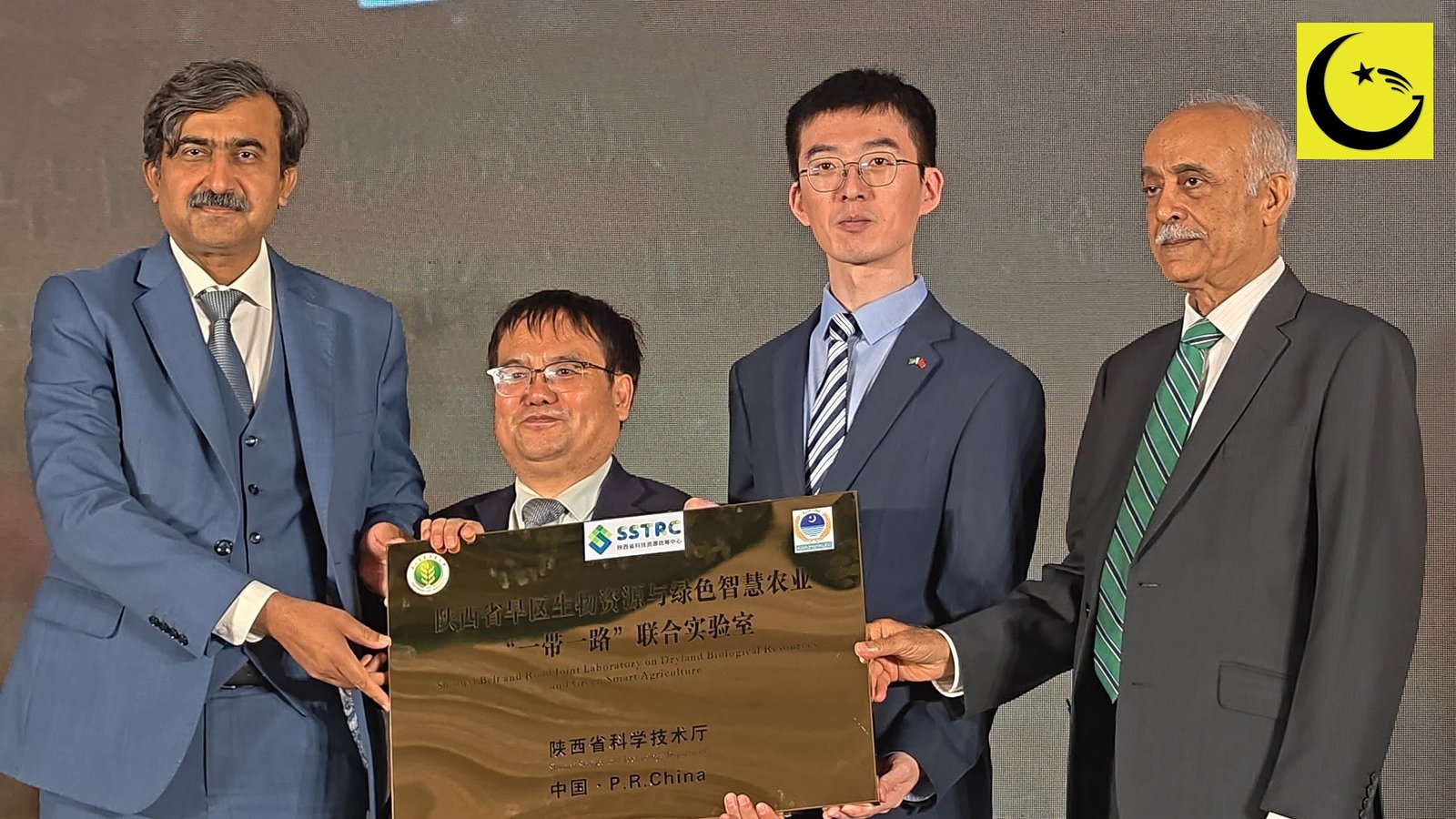
China Pakistan agriculture research gained two new platforms on 14 November 2026, when the Shaanxi Belt and Road Joint Laboratory on Dryland Biological Resources and Green Smart Agriculture and the Pakistan branch of the Shaanxi International Technology Transfer and Innovation Cooperation Centre were jointly launched at the 2026 Punjab Innovation and Technology Expo, known as the PINTECH Expo, in Lahore. The initiative is led by Professor Zhang Lixin of Northwest A&F University in China, it opens collaboration with more than 10 Pakistani universities, and the Higher Education Commission of Pakistan has signed a letter of intent with the Shaanxi centre to establish a joint research fund.
Two Platforms Launched at the PINTECH Expo
The launch took place on the opening day of the PINTECH Expo, the Punjab Innovation and Technology Expo organised by the Punjab Higher Education Commission and held in Lahore on 14 and 15 November 2026, in the year that marks 75 years of diplomatic relations between Pakistan and China. Officials from both countries unveiled the laboratory plaque on stage, giving the partnership a public start in front of the universities, researchers and students gathered for the expo.
The two platforms do different jobs. The joint laboratory is the research engine: a shared facility for work on dryland biological resources and green smart agriculture, the science of growing more with less water on dry land. The technology transfer centre branch is the bridge to practice, set up to move proven research results, equipment and know-how from laboratories in Shaanxi and Pakistan into farms, companies and classrooms across Pakistan.
The Universities Behind the China Pakistan Agriculture Push
More than 10 Pakistani universities are involved in the collaboration. The partners named at the launch include the University of Agriculture Faisalabad, the University of Sargodha, PMAS-Arid Agriculture University Rawalpindi, the University of Veterinary and Animal Sciences Lahore, the University of Engineering and Technology Lahore and the Islamia University of Bahawalpur. The cooperation on the table covers the establishment of joint laboratories and agricultural demonstration bases, along with talent development programmes for researchers and students.
The same day brought a further agreement at the expo. Fatima Jinnah Women University signed a letter of intent with Northwest A&F University for a five-year cooperation framework covering dryland farming, soil and water conservation, crop stress biology, plant biotechnology, food science and environmental protection. The two universities also plan joint work in artificial intelligence, remote sensing and smart agriculture, jointly supervised graduate research and field trials, with a stated aim of strengthening women’s participation in science and agricultural technology.
READ MORE
Punjab Farmers Sweep Wheat Yield Competition at Nearly Double the National Average
A Joint Research Fund and Four Books for Farmers
Alongside the launch, the Shaanxi International Technology Transfer and Innovation Cooperation Centre and Pakistan’s Higher Education Commission signed a letter of intent to establish a joint research fund. A shared fund matters because it gives researchers on both sides a single channel to finance joint projects, rather than leaving each university to find its own money for shared work.
Four agricultural technical publications were also announced for distribution in Pakistan. Published by Shaanxi Science and Technology Press and Northwest A&F University Press, the books cover sesame cultivation, apple cultivation, layer chicken farming and the production of bio-healthy agricultural products, with editions available in English, Urdu, Chinese and Russian. Practical guides in Urdu put the partnership’s knowledge within reach of the farmers and field staff who need it most.
What the Joint Laboratory Will Research
Professor Zhang Lixin, the laboratory’s director, has set out six research areas for the joint platform: germplasm resources and intelligent breeding, smart crop selection, agricultural data platforms, intelligent farming and livestock production, precision farmland management, and artificial intelligence assisted decision making for sustainable crop production. The early results are already concrete. Researchers have collected more than 120 crop germplasm samples from dry regions including Pakistan, begun a standardised germplasm resource bank, and screened 11 new stress resistant varieties and germplasms suited to South and Central Asia, covering wheat, rapeseed, sesame, vegetables and forage crops.
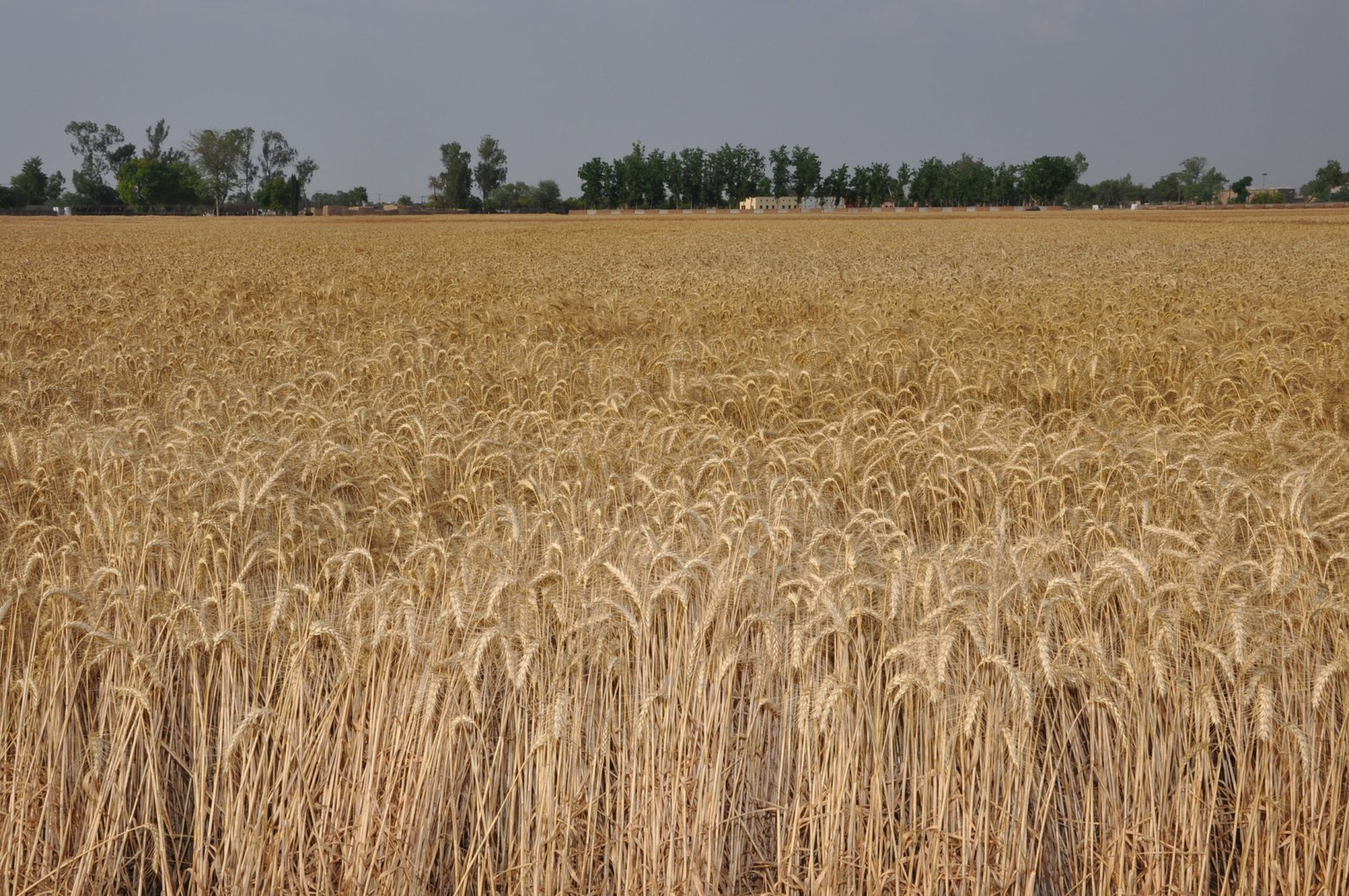
A ripe Akbar-19 wheat seed production plot at the Wheat Research Institute in Faisalabad, Punjab.
Photo: CGIAR
The green technology side of the programme includes integrated water and fertiliser systems with decision support, smart orchard production systems, an artificial intelligence model for agricultural equipment, and methods for straw biodegradation and organic fertiliser preparation. These technologies are now being adapted to local conditions and demonstrated in partner countries including Pakistan. Hafiz Saad Bin Mustafa, a principal scientist at the Ayub Agricultural Research Institute in Faisalabad, has pointed to three priorities for Pakistan: the transfer of advanced equipment such as precision seed planters, harvesting machines and germplasm processing equipment, along with agricultural processing and training for researchers.
READ MORE
China-Pakistan Information Corridor Launched in Islamabad Under CPEC 2.0
Training the Next Generation of Researchers
People move with the science. More than 10 postgraduate students from Pakistan and other partner countries have been recruited to study in the laboratory, two doctoral students from PMAS-Arid Agriculture University Rawalpindi have joined it for six-month collaborative research projects, and five Chinese postgraduate students have undertaken field internships and needs assessments in Pakistan. Two papers have already been published in international journals with the joint laboratory as the primary affiliation, and training programmes in smart agriculture and bio-health technologies for dry regions are being developed for young researchers, combining classroom teaching with field practice and site visits.
Why Dryland Research Matters for Pakistan
The fit between the two partners is natural. The semi-arid climate of northwest China closely resembles conditions on Pakistan’s rainfed Pothohar Plateau and in its dry farming zones, where crops depend on scarce and unpredictable water. Research that helps farmers in Shaanxi save water, protect soil and breed hardier crops speaks directly to the challenges of Pakistani dryland farming, from variety selection to precision management of every drop.
For China Pakistan agriculture, the launch brings a joint laboratory, a technology transfer branch, a research fund agreed with the Higher Education Commission and more than 10 universities at the table, turning years of goodwill between Pakistani and Chinese agricultural scientists into standing institutions. The test now is delivery: demonstration bases planted, students trained and technologies proven on Pakistani fields.
Sources
- China Economic Net: New China-Pakistan Platforms to Boost Agricultural Research and Innovation
- Associated Press of Pakistan via Tez Khabar: New China-Pakistan platforms to boost agricultural research, innovation
- Independent News Pakistan: Chinese, Pakistani universities launch joint lab to advance smart agriculture
- Independent News Pakistan: FJWU, China’s NWAFU sign cooperation agreement for agricultural research
- Featured image: Officials hold the plaque of the Shaanxi Belt and Road Joint Laboratory at its launch in Lahore on 14 November 2026 (Photo: NWAFU via China Economic Net)
- In-body image: A ripe Akbar-19 wheat seed production plot at the Wheat Research Institute, Faisalabad (Photo: CGIAR)

Umar Farooq is the founder and editor of Good News Pakistan. An engineer by profession and a writer by passion, he started the site in December 2022 to share good news from Pakistan, and has since written and edited more than 200 articles about its people, sports, science, business and world records. He believes the story of Pakistan is bigger than its headlines, and that good news, told honestly, is worth telling every day.