

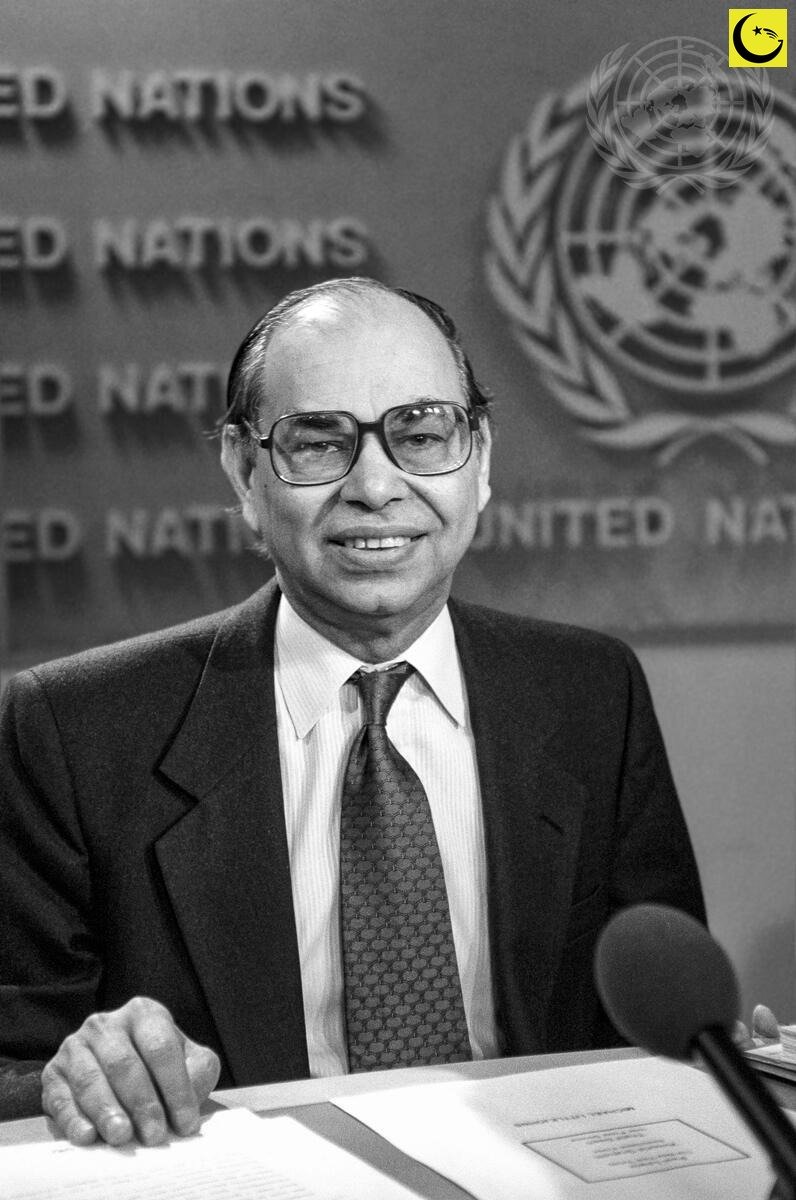
The Human Development Index, the United Nations measure that ranks countries by health, education and standard of living rather than income alone, was created under Pakistani economist Mahbub ul Haq and first presented in 1990. Haq led the team at the United Nations Development Programme (UNDP) that produced the first Human Development Report, working closely with Amartya Sen, and the index at its heart asked a simple question: are people’s lives actually getting better? More than three decades on, the reports still appear almost every year, and his measure remains the world’s standard yardstick of progress.
The Economist Who Put People Before GNP
Mahbub ul Haq was born in Jammu in 1934, and his family moved to the new state of Pakistan at Partition in 1947. He was educated in Lahore, at Government College and the University of the Punjab, before scholarships took him to Cambridge and then to Yale, where he took his PhD. Back home he rose to become chief economist of the Planning Commission in the 1960s, and he later served Pakistan as finance minister, in 1985 to 1986 and again in the caretaker government of 1988.
Through all of it ran one conviction, repeated across his speeches and his books: a country is not developing if its people’s lives are not improving, however fast its gross national product grows. Growth figures, he argued, could climb while schools stayed empty and clinics stayed shut. Development had to be measured by people’s lives rather than by GNP alone, and in New York he finally built the measure that did exactly that.
How the Human Development Index Works
In 1989 Haq joined UNDP in New York as special adviser to its administrator, William Draper, and set about producing a new kind of report. The first Human Development Report appeared in 1990, and it opened with the claim that still defines the whole project: people are the wealth of nations. Sen, his friend from Cambridge days, worked closely with him on the report team, alongside scholars from several countries.
The index itself combines three dimensions of an ordinary life. Health is measured by life expectancy at birth. Knowledge is measured by the years of schooling a child can expect and the years adults have on average completed. A decent standard of living is measured by gross national income per capita. Blended into a single score between 0 and 1, the Human Development Index lets any country be compared with any other on the things its residents feel every day.
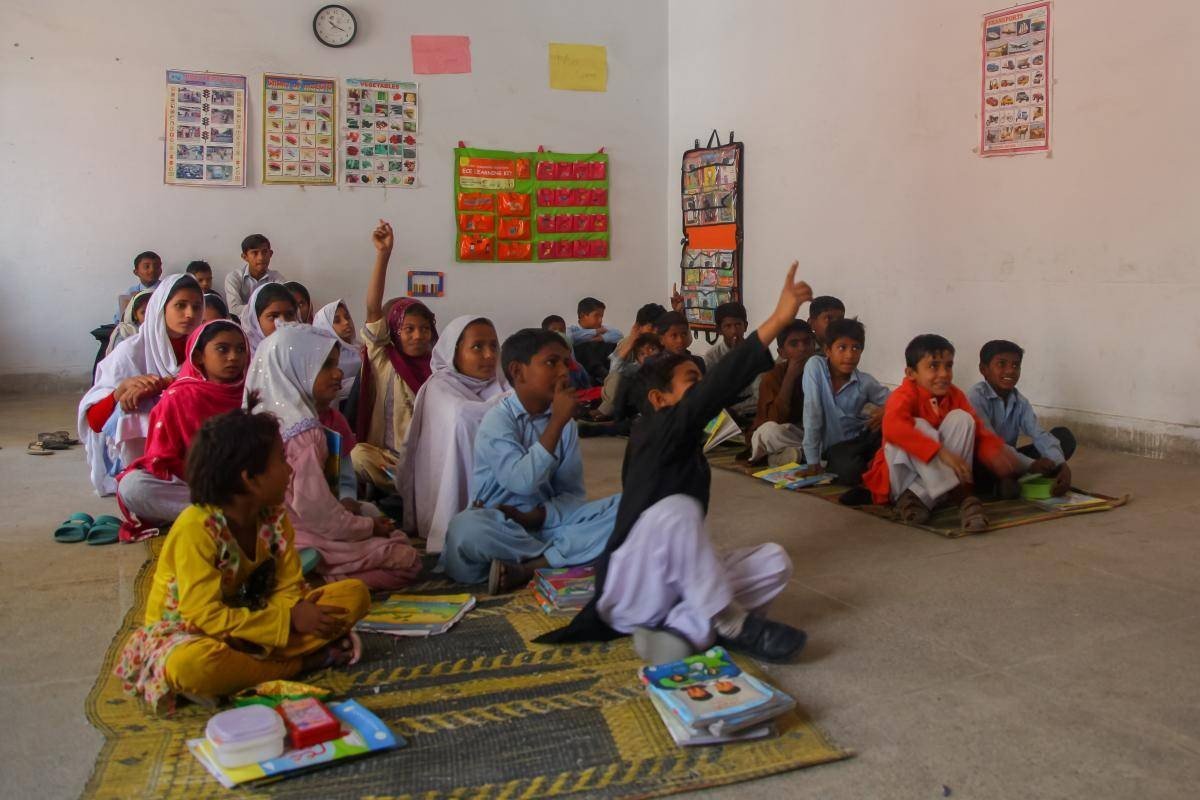
Children raise their hands during a lesson at a school in Pakistan.
Photo: Global Partnership for Education
READ MORE
Abdus Salam Nobel Prize: How a Boy from Jhang Became Pakistan’s First Nobel Laureate
A Pakistani Idea the Whole World Adopted
The reports kept coming, almost every year since 1990, each one ranking countries and pressing governments to answer for their schools, hospitals and incomes rather than their output figures alone. Haq returned to Pakistan in 1996 and founded the Human Development Centre in Islamabad, which was renamed the Mahbub ul Haq Human Development Centre after his death in 1998. UNDP still honours him through the Mahbub ul Haq Award for outstanding contribution to human development, and the lecture series named for Haq and Sen still runs.
Still True Today: The Index in 2025
This series keeps two kinds of facts apart, and this one is Still True Today: the index launched in 1990 is still the world’s headline measure of development. The latest edition is the Human Development Report 2025, released on 6 May 2025, and the 2026 report is still in preparation, so the 2025 figures, drawn from 2023 data, are the current official ones. They cover 193 countries and territories.
Pakistan’s own line in that table is plain context, included here without spin: on 2023 data, Pakistan stands 168th of 193, with an HDI score of 0.544, in the low human development category. UNDP itself warns readers not to compare ranks across different editions, because the underlying data and methods are revised, so no rise or fall is claimed here. The proud point stands on its own: the yardstick itself is Pakistani, and it now challenges every country, Pakistan included, to do better by its people.
Why This Fact Deserves Its Place
Every year, when the new rankings are published, headlines around the world repeat an argument first made by an economist from Lahore: that progress means longer lives, educated children and decent incomes, shared widely. The Human Development Index did not just add one more statistic to the world’s tables. It changed what the tables were for, and it did so under a Pakistani’s leadership, with his name still attached to the idea more than 35 years later.
Sources
- UNDP Human Development Reports: Inaugural Mahbub ul Haq and Amartya Sen Lecture
- UNDP Human Development Reports: Foreword for the 25th Anniversary of the Human Development Report
- UN Photo: Mahbub Ul-Haq at the United Nations, New York, 8 April 1993 (UN7560079)
- Global Partnership for Education, KIX: Improving the use of the School Improvement Framework in Pakistan
- Wikipedia: Mahbub ul Haq
- Featured photo: Mahbub ul Haq at the United Nations in New York, 8 April 1993 (Photo: UN Photo/Michos Tzovaras)
- Classroom photo: Children during a lesson at a school in Pakistan (Photo: Global Partnership for Education)

Umar Farooq is the founder and editor of Good News Pakistan. An engineer by profession and a writer by passion, he started the site in December 2022 to share good news from Pakistan, and has since written and edited more than 200 articles about its people, sports, science, business and world records. He believes the story of Pakistan is bigger than its headlines, and that good news, told honestly, is worth telling every day.