

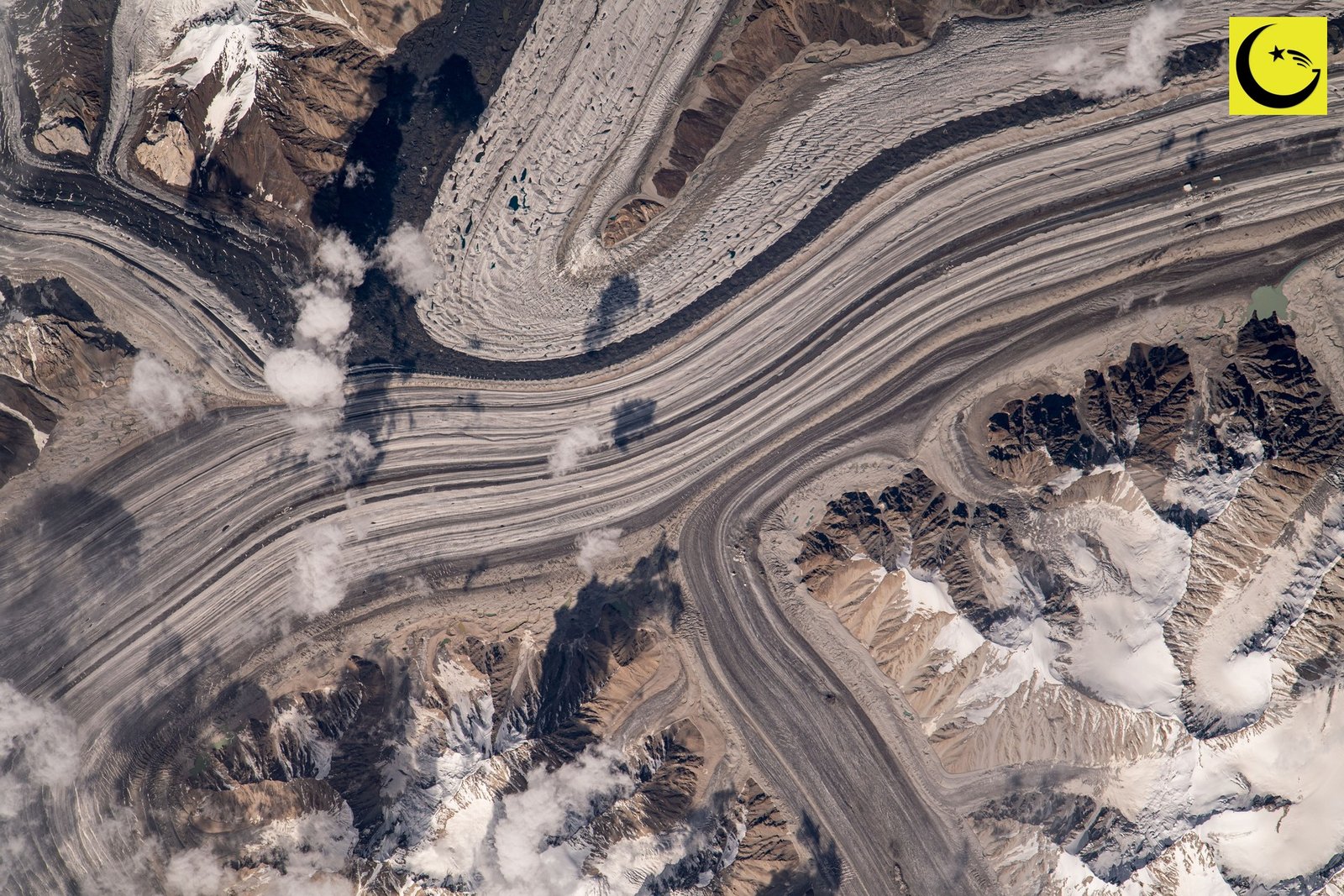
High in the far north of Pakistan, the Karakoram glaciers form one of the greatest ice fields on Earth outside the polar regions. The Karakoram range, which runs through Gilgit-Baltistan, is the most heavily glaciated mountain range on the planet away from the poles, and according to the Pakistan Tourism Portal it holds four of the seven longest non-polar glaciers in the world. These are not small patches of ice clinging to a summit. They are rivers of ice tens of kilometres long, flowing slowly between some of the highest mountains ever measured, and they have been doing so for thousands of years.
A Range of Ice Between Giants
The Karakoram stretches for about 500 kilometres along Pakistan’s northern edge, and it is the second highest mountain range on Earth. Its valleys are filled with ice to a degree no other non-polar range can match. Big glaciers gather especially in the central and eastern Karakoram, where the Central Karakoram National Park, one of the largest protected areas in Pakistan, guards the heart of the ice country. Smaller glaciers feed into the great ones from side valleys, so the whole range works like a frozen river system, with tributaries of ice joining trunk glaciers that run for distances most people associate with a road journey, not a walk on ice.
Four Karakoram glaciers of Record Size
The longest of them all is the Siachen Glacier, in the eastern Karakoram in Gilgit-Baltistan. It runs for about 76 km, which makes it the longest glacier in the Karakoram and the second longest non-polar glacier in the world, behind only the Fedchenko Glacier in Tajikistan. The Siachen is closed to the public, so almost nobody gets to walk on the range’s longest river of ice.
Next comes the Biafo Glacier, at about 63 to 67 km long depending on the measurement used. Near its upper end the Biafo meets the Hispar Glacier at a high pass, and together the two form one continuous highway of ice of about 100 km, among the longest glacier systems anywhere outside the polar regions. Trekkers who cross between them pass the wide white basin of Snow Lake, one of the great remote journeys of the Karakoram.
The Baltoro Glacier runs for about 63 km, and the Batura Glacier, which slides down towards the Hunza valley, runs for about 57 km. Between them, these four giants, Siachen, Biafo, Baltoro and Batura, give one Pakistani mountain range four of the seven longest non-polar glaciers on the planet, a concentration of great ice rivers found nowhere else on Earth.
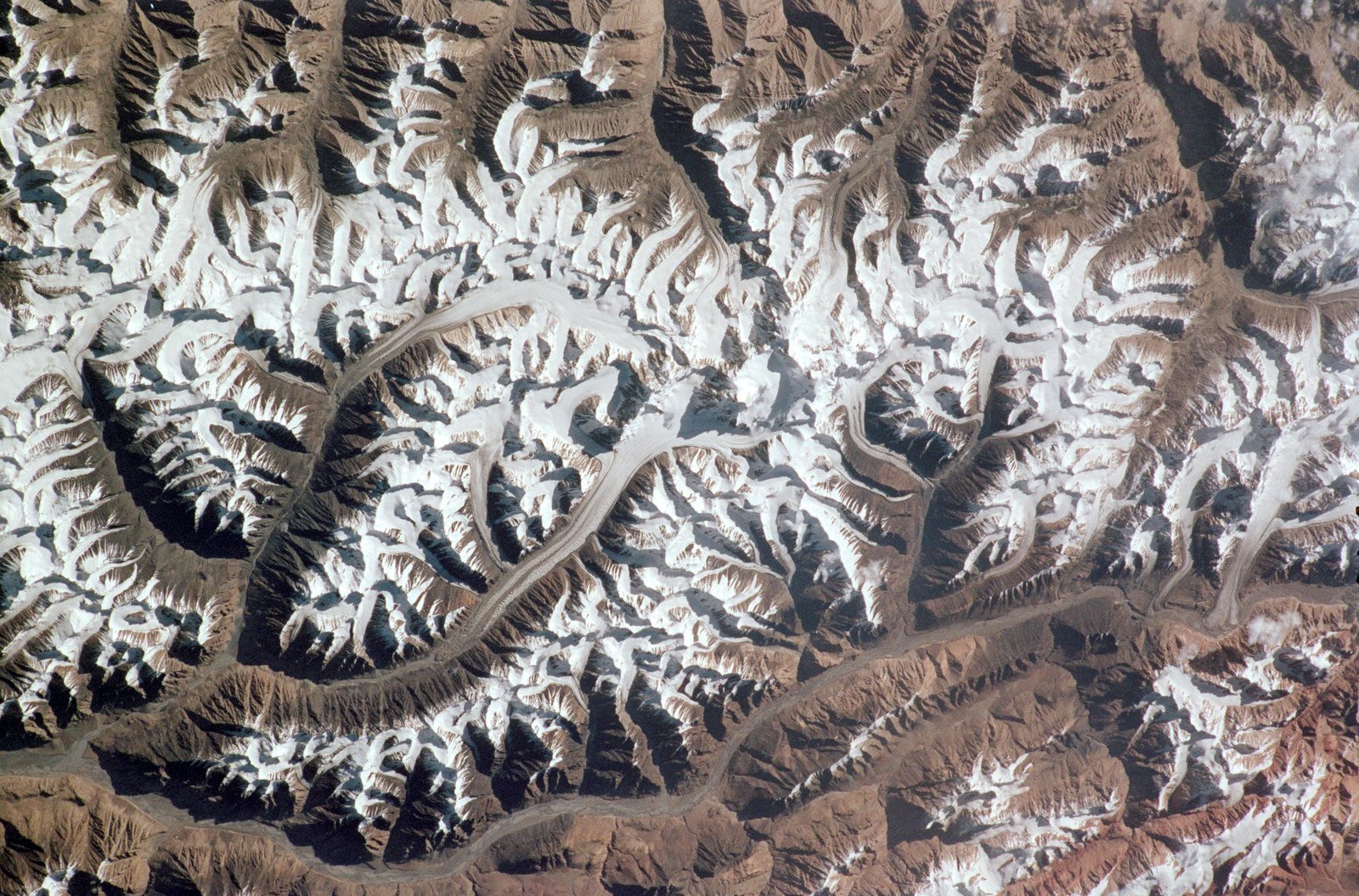
Glacier tongues winding through Karakoram valleys, photographed from the Space Shuttle Discovery during the STS-121 mission in July 2006.
Photo: NASA
READ MORE
Eight-Thousanders in Pakistan: The Full Table of the Country’s Five 8,000-Metre Peaks
Baltoro: The Trek to Concordia and K2
Of all these glaciers, the Baltoro is the one the world walks on. At about 63 km, it is not the longest of the range, and it has never needed to be. Its fame comes from where it leads. Trekkers set out from the village of Askole and walk up the glacier for days, passing camps such as Urdukas, until the ice opens out at Concordia, the junction where the Baltoro meets the Godwin-Austen Glacier. Concordia is ringed by giants, among them Broad Peak and Gasherbrum IV, and just beyond it stand the base camps of K2, the second highest mountain in the world. For climbers and trekkers alike, the Baltoro is the front door to the highest neighbourhood on Earth.
Why the Ice Matters Far Beyond the Mountains
This ice is not only scenery. Every summer, meltwater from the Karakoram glaciers pours into the rivers of the upper Indus basin, feeding the Shigar, Shyok and Hunza rivers on their way to the Indus itself. That water irrigates farms, fills reservoirs and turns turbines far downstream, in a country where most agriculture depends on river flow. The same range is crossed by the Karakoram Highway, the highest paved international road in the world, which threads through glacier fed valleys on its way up to the Khunjerab Pass. Scientists watch this ice closely, because what happens to it decides how much water Pakistan can count on in the decades ahead.
Still True Today
This series keeps two kinds of facts apart, and this one is Still True Today. The Karakoram glaciers still stand among the longest non-polar glaciers on Earth, measured and mapped by international inventories such as the Randolph Glacier Inventory, and the big four still hold their places at the top of the list. Pakistan is often introduced to the world through its highest peaks, and rightly so. But the peaks are only half the story. Beneath them run the longest rivers of ice outside the polar world, quiet, slow and immense, and they belong to the Karakoram.
Sources
- Central Karakoram National Park: Baltoro, Biafo and Hispar glaciers
- Pakistan Tourism Portal: Siachen Glacier
- Mountainity: Glacier lengths from the Randolph Glacier Inventory
- Encyclopaedia Britannica: Karakoram Range
- Featured photo: Glaciers carving their way through the Karakoram range, photographed from the International Space Station on 15 August 2023 (Photo: NASA)
- Body photo: Glacier tongues winding through Karakoram valleys, photographed from the Space Shuttle Discovery in July 2006 (Photo: NASA)

Umar Farooq is the founder and editor of Good News Pakistan. An engineer by profession and a writer by passion, he started the site in December 2022 to share good news from Pakistan, and has since written and edited more than 200 articles about its people, sports, science, business and world records. He believes the story of Pakistan is bigger than its headlines, and that good news, told honestly, is worth telling every day.