

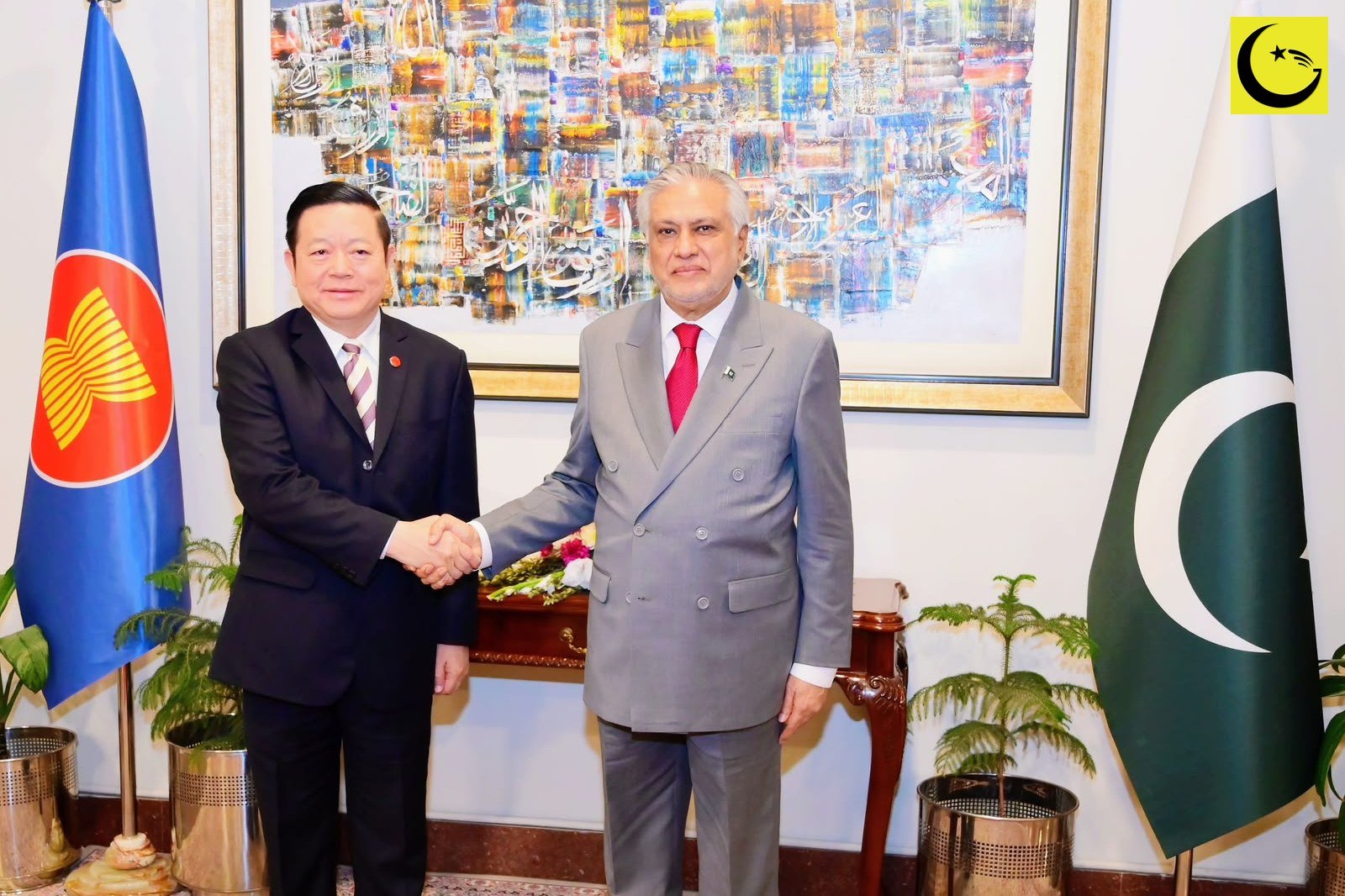
The ASEAN Pakistan trade relationship took a clear step forward this week, as ASEAN Secretary-General Dr Kao Kim Hourn held delegation level talks in Islamabad during a working visit to Pakistan from 18 to 20 November 2026 and agreed with Pakistan to deepen cooperation in trade, investment, connectivity and the digital economy. The visit is the first high level visit from the ASEAN Secretariat in more than two decades, and two way merchandise trade between Pakistan and the Southeast Asian bloc already stood at about $10.29 billion in 2025.
A first visit in more than two decades
Dr Kao Kim Hourn came to Pakistan at the invitation of Deputy Prime Minister and Foreign Minister Senator Mohammad Ishaq Dar, according to the Foreign Office curtain raiser issued ahead of the visit (PR No. 336/2026, dated 18 November 2026). The Foreign Office described the trip as the first high level visit to Pakistan from the ASEAN Secretariat in over two decades. During the visit, the Secretary-General was also received by Prime Minister Shehbaz Sharif, who told him that Pakistan could serve as a gateway for ASEAN to the wider region.
The relationship itself is not new. Pakistan has been an ASEAN Sectoral Dialogue Partner since 1993, which makes it the bloc’s oldest partner of that kind, and it has been a member of the ASEAN Regional Forum since 2004. What has changed is the pace: both sides say they now want to give the partnership greater practical substance, with more engagement among businesses, universities and research institutions.
Talks that ran long, and covered a lot of ground
The delegation level talks at the Ministry of Foreign Affairs on Thursday ran 45 minutes over schedule because of the depth of the discussions, APP reported. The two sides reviewed progress under the Sectoral Dialogue Partnership, including the Practical Cooperation Areas framework for 2024 to 2028, which covers trade and investment promotion, private sector development, science, technology and innovation, cultural exchanges, human resource development and smart cities.
At the joint press stakeout, both sides said they were aligned on translating potential into reality. They agreed to foster closer links between their chambers of commerce, to encourage more exchanges of business delegations, and to connect universities and research institutions, particularly in artificial intelligence and digital skills. They also agreed to work together on non-traditional security challenges, including climate change, food insecurity, energy supply disruptions and cyber threats, alongside renewable energy, sustainable agriculture and tourism. Dr Kao Kim Hourn encouraged Pakistan to make greater use of ASEAN’s centres and institutions for capacity building.
READ MORE
Pakistan and Turkmenistan Agree to Expand Bilateral Trade and Investment
ASEAN Pakistan trade stands at $10.29 billion, with room to grow
Dr Kao Kim Hourn told the stakeout that Pakistan and ASEAN together represent a market of nearly 950 million people, with a combined economy exceeding $4.6 trillion in 2025. Two way merchandise trade stood at approximately $10.29 billion in 2025, and he said there was substantial scope to boost two way investment and to improve air and port to port connectivity. Calling ASEAN the world’s third largest trading bloc, he invited Pakistan to tap into its fast growing digital economy, which reached $305 billion last year and is projected to grow to $2 trillion.
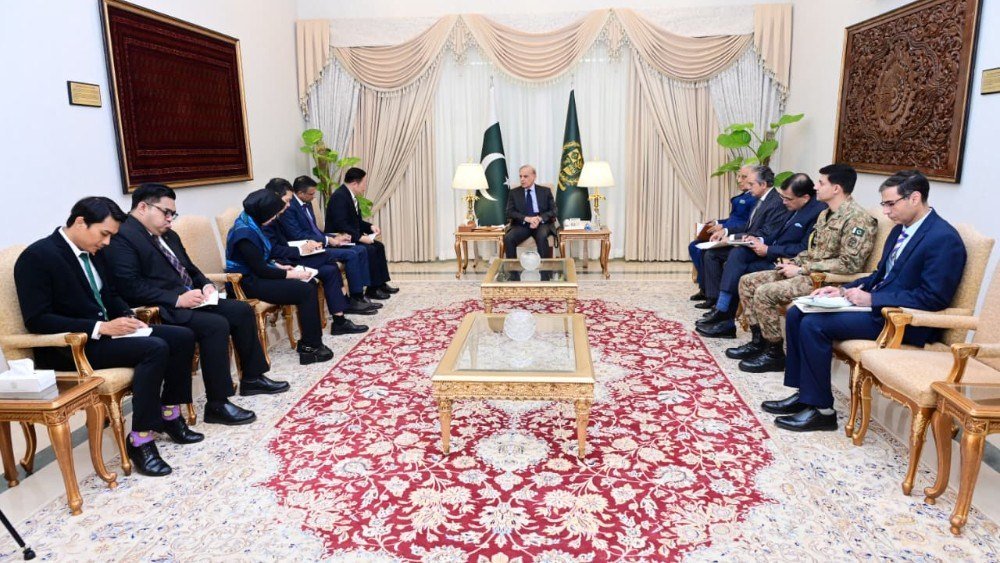
Prime Minister Shehbaz Sharif receives ASEAN Secretary-General Dr Kao Kim Hourn and his delegation in Islamabad during the working visit.
Photo: Pakistan TV
The current ASEAN Pakistan trade pattern is concentrated on a handful of partners and products. Malaysia, Indonesia, Thailand, Singapore and Vietnam are Pakistan’s major trading partners in the bloc. Pakistan sells textiles and garments, rice, leather products, surgical instruments, sports goods, fruits, seafood and pharmaceutical products into ASEAN markets, while it buys palm oil, machinery, electrical equipment, chemicals, rubber products, electronics and industrial raw materials from the bloc. Trade with Malaysia runs under the Pakistan and Malaysia Closer Economic Partnership Agreement, in force since 2008, and trade with Indonesia has grown under preferential arrangements that have helped Pakistani kinnow, textiles and pharmaceuticals. Pakistan buys considerably more from ASEAN than it sells, which is exactly why better market access and stronger business links matter so much to Islamabad.
An old partnership with a bigger ambition
Pakistan has long hoped to be elevated from Sectoral Dialogue Partner to Full Dialogue Partner of ASEAN, a status that would open broader political and economic channels with the bloc. At the stakeout, the Deputy Prime Minister expressed the hope that this visit would advance that bid in due course. Dr Kao Kim Hourn said he took note of the request and appreciated Pakistan’s commitment to deeper engagement, and Arab News Pakistan reported that he confirmed it is under consideration in line with ASEAN’s established procedures. Coverage also noted ASEAN’s standing moratorium on new dialogue partnerships, so no quick decision is expected. Both sides pointed to a milestone ahead: the 35th anniversary of the sectoral dialogue partnership falls in 2028, a shared deadline to show tangible progress.
READ MORE
Pakistan Goods Exports Hit a Record $11.34 Billion in First Four Months of FY27
What closer ties could mean for Pakistani exporters
For exporters, the practical promise of ASEAN Pakistan trade lies in the details agreed this week: more business delegation exchanges, closer chamber to chamber links, better air and shipping connectivity, and cooperation on digital integration and trade facilitation. Each lowers the cost of reaching buyers in Kuala Lumpur, Jakarta, Bangkok, Singapore and Ho Chi Minh City. The sectors named in the talks read like a list of Pakistani strengths waiting for bigger Southeast Asian demand: the halal industry, where Pakistan has natural credibility; information technology and digital skills; solar and renewable energy, where the Secretary-General cited Pakistan’s deployment experience; sustainable agriculture and food products; surgical instruments and sports goods; and tourism and education exchanges.
None of this will transform the trade balance overnight, and both sides talked about potential rather than signed deals. But a first visit in more than twenty years, talks that overran because there was so much to discuss, and a shared framework running to 2028 add up to something Pakistan’s exporters have not had from ASEAN for a long time: momentum, with named next steps and a partnership anniversary to aim at.
Sources
- Ministry of Foreign Affairs, Pakistan, curtain raiser PR No. 336/2026 on the working visit, as reported by Centreline
- APP, via Tez Khabar: Pakistan and ASEAN agree to deepen multi-sector cooperation
- APP, via Tez Khabar: Pakistan and ASEAN vow to deepen cooperation in trade, connectivity and regional security
- Dawn: Dar and ASEAN Secretary-General agree to enhance cooperation on non-traditional security challenges
- Arab News Pakistan: Southeast Asian bloc weighs Pakistan’s partnership bid, Secretary-General says
- Pakistan TV: Pakistan can be ASEAN’s gateway to the wider region, PM tells bloc’s chief
- UrduPoint: Pakistan eyes greater trade with ASEAN to unlock new economic opportunities (background on trade composition)
- Featured photo: ASEAN Secretary-General Dr Kao Kim Hourn shakes hands with Deputy Prime Minister and Foreign Minister Ishaq Dar at the Ministry of Foreign Affairs, Islamabad (Photo: Ministry of Foreign Affairs, Pakistan)
- Body photo: Prime Minister Shehbaz Sharif receives the ASEAN delegation led by Dr Kao Kim Hourn in Islamabad (Photo: Pakistan TV)

Umar Farooq is the founder and editor of Good News Pakistan. An engineer by profession and a writer by passion, he started the site in December 2022 to share good news from Pakistan, and has since written and edited more than 200 articles about its people, sports, science, business and world records. He believes the story of Pakistan is bigger than its headlines, and that good news, told honestly, is worth telling every day.