

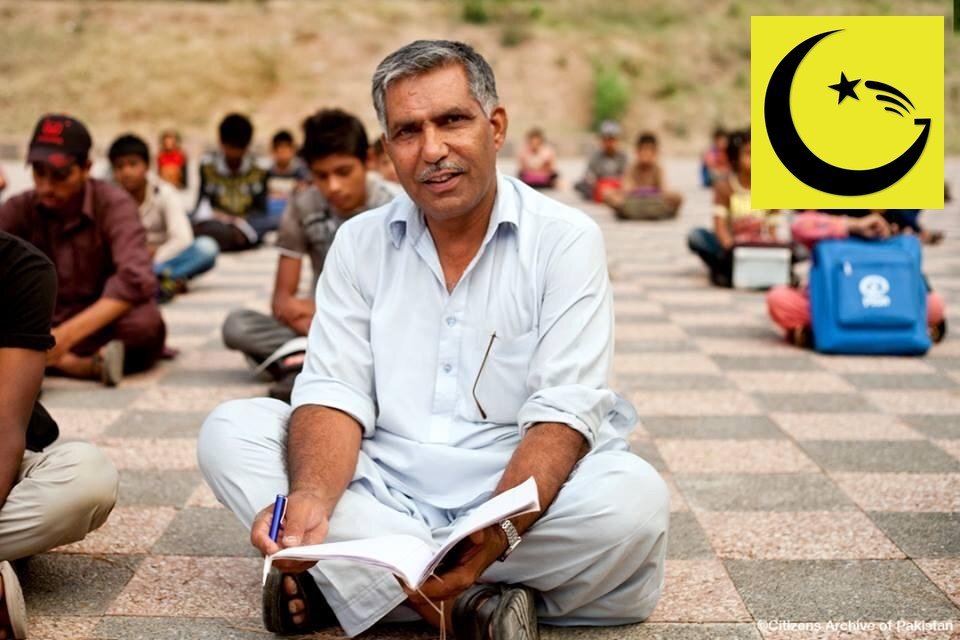
In a park in Islamabad’s F-6 sector, there is a school with no walls, no fees and no bell, only a teacher calling children in from the paths. Master Ayub, a firefighter by profession, has run this open air school for the poorest children of the capital since 1986, teaching them for free under the trees after his shifts. Forty years on, the school he began with four children now enrols more than 250 students, and although he has retired from the fire service, he still lives close to the park and watches over the school he built with nothing but his salary, his bicycle and his afternoons.
Master Ayub and the Four Children of 1986
Muhammad Ayub came to Islamabad in 1986 from Mandi Bahauddin, an agricultural town in Punjab, to join the capital’s fire brigade. The park in F-6 where he settled his school sits in one of the most expensive neighbourhoods in Pakistan, a short walk from houses worth more than a million dollars. It also sits beside slums where poor families, many of them Christian families from the nearby France Colony, could not dream of paying school fees for their children.
Ayub gathered four of those children and began teaching them in the open air. Word travelled the way it does among poor parents, and more children came. The early years were not easy: wealthy neighbours looked at the gathering in their park with suspicion, and officials watched him before they understood him. The suspicion slowly gave way to acceptance, and then to something close to civic pride, as the little school under the trees became a fixture of the sector and its first pupils began passing real examinations.
A School Day Under the Trees
For most of those forty years, Ayub’s day had two halves. The first belonged to the fire and rescue service, dangerous work that included extinguishing fires and defusing bombs. When duty ended, he cycled to the park and taught until sunset, running classes roughly from the first grade to the tenth, preparing his students for the same board examinations that children in proper schools sit. He paid for the books, pencils and stationery himself, out of a firefighter’s salary, and no child has ever been charged a single rupee.
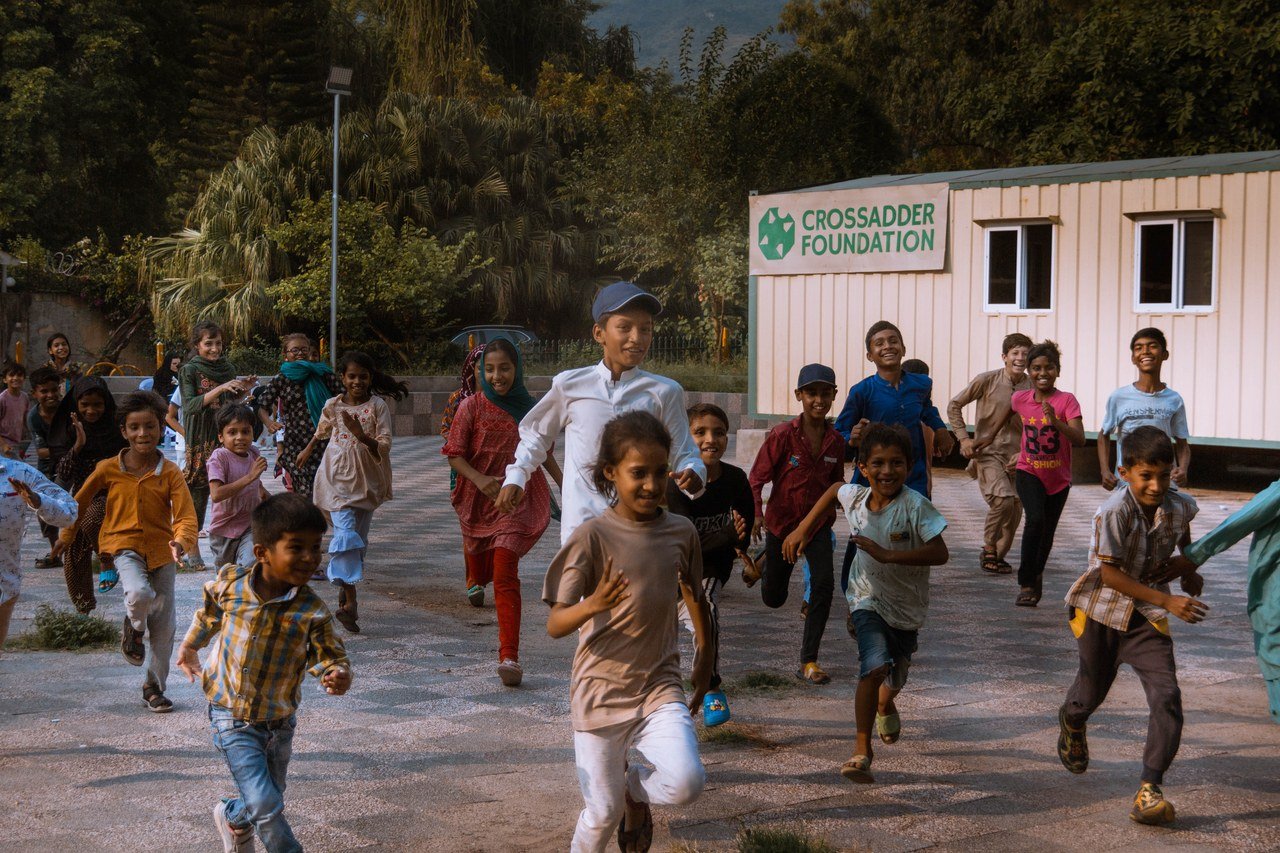
Break time at the park school: students race across the paved ground in front of the Smart Street School container classroom.
Photo: Crossadder Foundation, via KidsRights
The results walked out of the park and into working life. Former pupils passed government examinations and found jobs, and some came back to the park as volunteer teachers themselves. One of them, Farhat Abbas, was nine years old and collecting firewood when Ayub found him. “I was rescued from the darkness of illiteracy by an angel in the shape of Master Ayub,” he told AFP years later. Ayub’s own ambition was always stated just as plainly: “I want to leave a facility behind after my death where these children continue to get the light of education.”
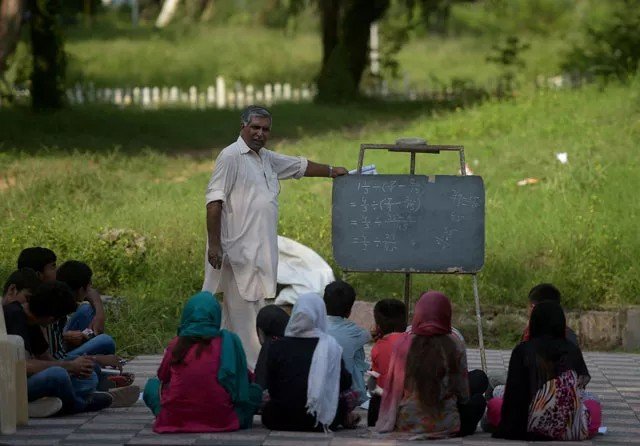
Master Ayub teaches a mathematics lesson at his makeshift school in a park in Islamabad.
Photo: Aamir Qureshi / AFP
Honours That Arrived Late
Recognition took decades to catch up with the work. The Ministry of Education gave him an award in 2012, a quarter of a century after he started. A presidential Pride of Performance followed in 2015. In 2018, Queen Elizabeth II named him the 54th Commonwealth Point of Light, an honour for exceptional voluntary service, recognising how he had improved the education and life chances of young people in Islamabad. The Capital Development Authority, his own employer, later promoted him within the fire service from fire control supervisor to fire instructor, and directed its officials to arrange shelter, lighting and drinking water for his students at the park.
Ayub has never presented himself as a man waiting for applause, and those who have interviewed him over the years record the same answer in different words: the children needed help, he was there, and so he taught them. In a country where millions of children remain out of school, his park became a standing answer to the argument that nothing can be done without money, buildings or permission.
The Park School Today
Ayub is now retired from the fire brigade and lives with his wife near the park, close enough to keep an eye on the institution he founded. The school still runs, still free, with more than 250 underprivileged students enrolled. It is managed by the Crossadder Foundation and taught by volunteer teachers, many of them drawn from the same community of former students and young Islamabadis who first gathered around him, with local donations keeping it supplied.
In 2022, the foundation added a small but significant upgrade: a portable container classroom, the Smart Street School, set up on the site with the Capital Development Authority’s permission, so that lessons no longer have to scatter when the rain comes or the summer sun is at its worst. Most of the children still come from France Colony and the surrounding slums, from the same streets Ayub began walking in 1986.
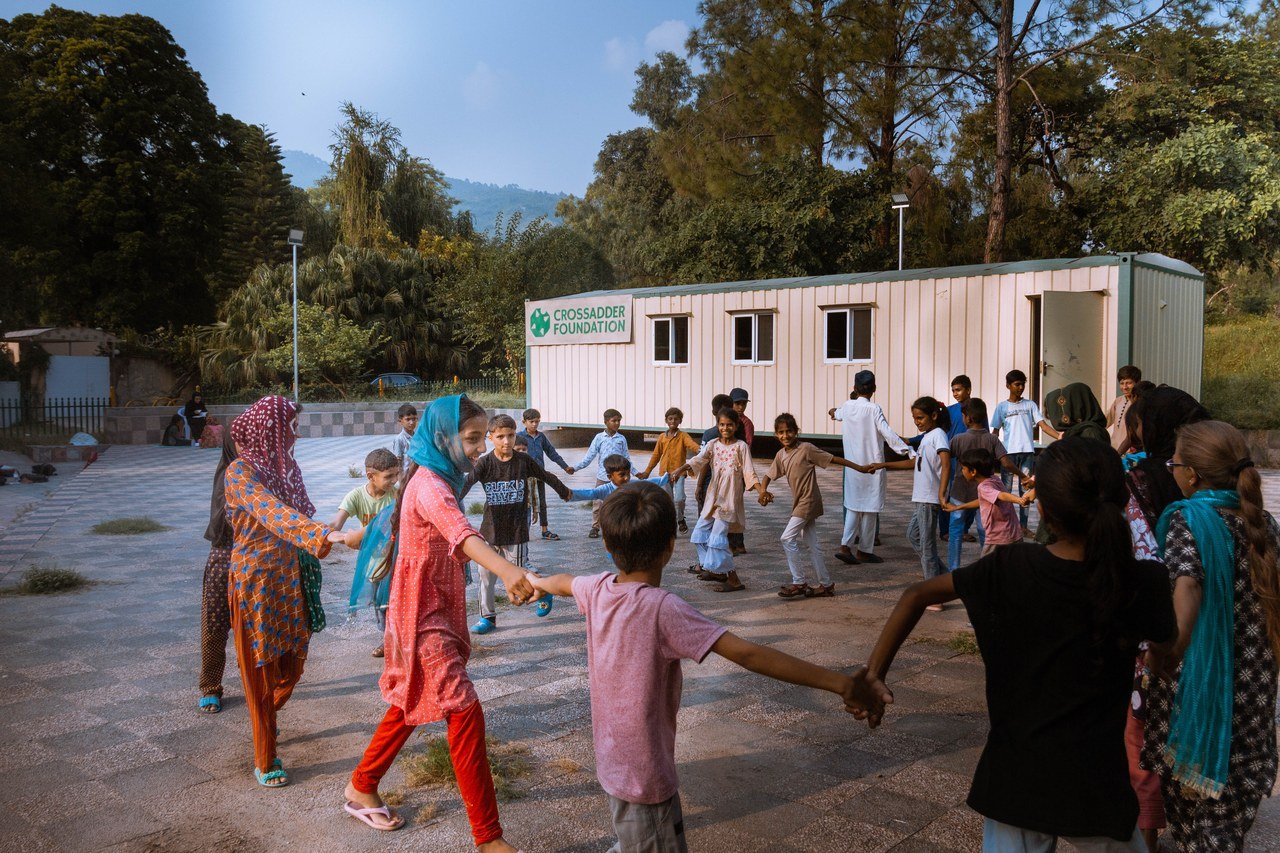
Students hold hands in a circle in front of the Smart Street School, the refurbished container classroom the Crossadder Foundation added to the park school in 2022.
Photo: Crossadder Foundation, via KidsRights
Forty years, thousands of children, one park. Master Ayub’s school is proof that a public service career and a life’s mission can be the same thing, and that the mission can outlast the career. The firefighter has retired. The teacher, Islamabad will tell you, has not.
Sources
- Dawn (AFP), Master Ayub, a beacon of hope for the poor
- The Express Tribune (AFP), Outdoor school offers hope to Islamabad’s poor
- Commonwealth Points of Light, Her Majesty The Queen awards Master Ayub
- Their World, Lessons in the park offer hope to poor children of Islamabad
- NewsGuru, Master Ayub educates Islamabad’s underprivileged children
- Featured photo: Arzish Azam, CC BY-SA 4.0, via Wikimedia Commons
- Body photo: Aamir Qureshi / AFP
- Extra body photo: Photo: Crossadder Foundation, via KidsRights
- Extra body photo: Photo: Crossadder Foundation, via KidsRights

Umar Farooq is the founder and editor of Good News Pakistan. An engineer by profession and a writer by passion, he started the site in December 2022 to share good news from Pakistan, and has since written and edited more than 200 articles about its people, sports, science, business and world records. He believes the story of Pakistan is bigger than its headlines, and that good news, told honestly, is worth telling every day.