

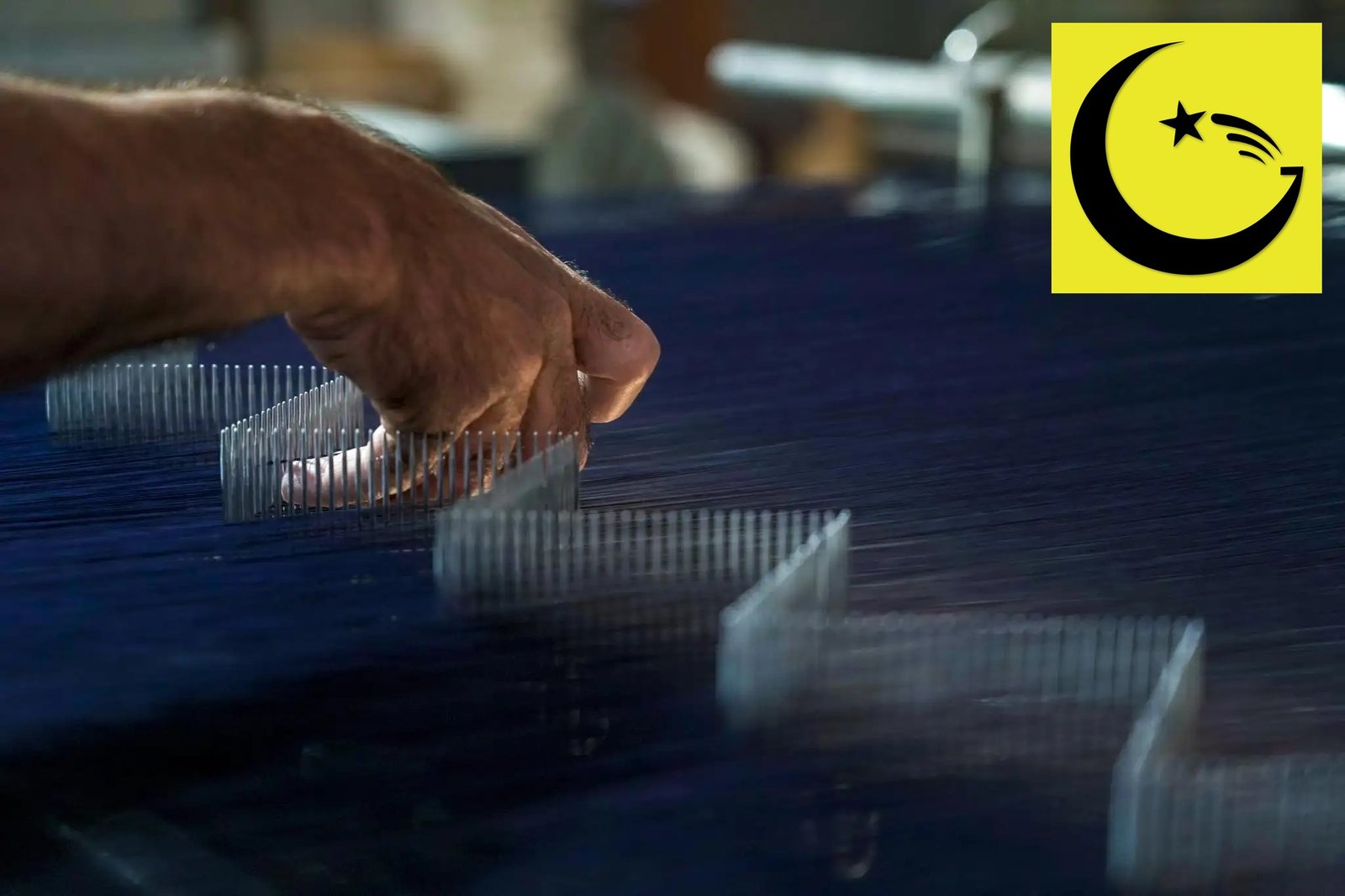
Pakistan denim mills exported about $508.9 million worth of denim fabric in 2024, and the looms behind that figure run around the clock in Karachi and Lahore. Their cloth does not stay home for long. It is rolled, packed and shipped to garment hubs across Asia, Africa and Europe, where it is cut and stitched into the jeans stacked on high street shelves from New York to Berlin. Behind a surprising share of those pairs sits a story that began beside an indigo dyeing line in Pakistan.
The growth has been steep. Figures from the Pakistan Bureau of Statistics show denim fabric exports jumping from 62 million square metres in 2022-23 to 97 million square metres in 2023-24, a rise of more than half in a single year. About 40 major mills anchor the trade, among them industry names known on every continent, such as Soorty Enterprises, Artistic Fabric Mills and Artistic Milliners. Together, by industry estimates, Pakistan denim mills produce more than 50 million square metres of finished denim fabric every month, a scale that keeps the country woven into the world’s jeans supply chain whatever the season.
Pakistan Denim Mills at Full Stretch
The secret of the big mills is that almost nothing is outsourced. A bale of cotton can enter one gate of a Karachi mill and leave by another as finished, dyed and softened denim, because spinning, rope dyeing, weaving and finishing all sit under one roof. On the weaving floor, thousands of indigo warp threads run through the looms under the hands of technicians who can hear a fault before they see it. That vertical integration is what lets the mills promise global brands tight deadlines and consistent quality, roll after roll, order after order.
It also means the skills stay in Pakistan. Dye masters judge the shade of indigo by eye as much as by instrument, weavers and finishers pass their craft to new recruits, and engineers keep European and Japanese machinery running at full pace in the industrial estates of Karachi and Lahore. Every metre of fabric exported carries that layered know-how with it, and every order that comes back is a vote of confidence in the people who made it.
READ MORE
Pakistan Ranks Fifth in World Seed Cotton Production in FAO Figures for the 2021 Crop
Where the Cloth Goes Next
Most Pakistani denim is bought by the countries that stitch the world’s jeans. Bangladesh is the biggest buyer, taking about 48 million square metres in 2023-24, followed by Türkiye, Egypt, Sri Lanka and Italy. In the garment districts of Dhaka, Istanbul and Cairo, cutters lay Pakistani cloth across their tables and turn it into five pocket jeans for brands their customers know by heart. The fabric is Pakistan’s; only the final stitching happens abroad, and a growing share of that stitching is coming home to Pakistani sewing floors as well.
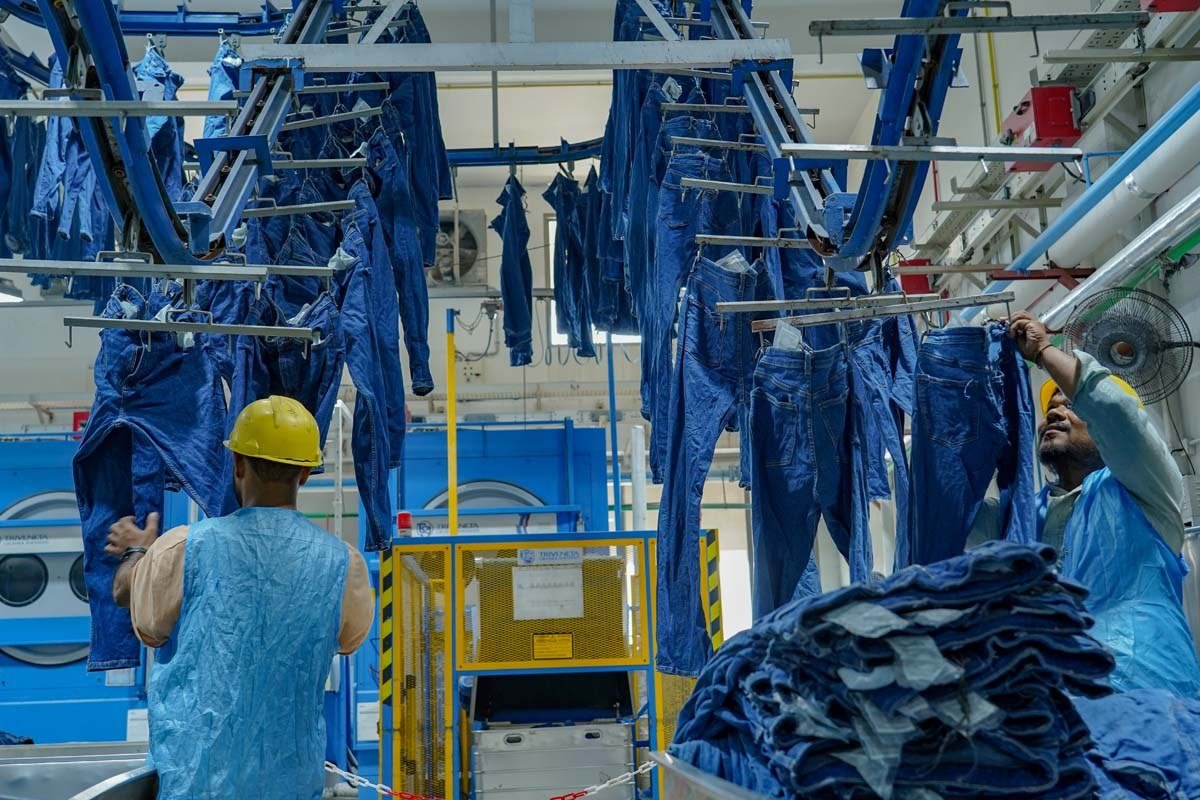
Finished jeans move through the laundry at a Soorty Enterprises plant in Karachi, part of the growing share of garment work now done inside Pakistan.
Photo: Soorty Enterprises
UN Comtrade data puts Pakistan’s share of world denim fabric exports at about 22 percent in 2024, a supporting figure that shows how much of this global trade flows through the mills of Karachi and Lahore. It is a share built quietly, order by order and season by season, rather than announced with fanfare.
The names on the order books explain why consistency matters so much. Pakistani mills weave for global high street brands whose jeans sell in dozens of countries at once, and a single contract can mean millions of metres in exactly the same shade, wash after wash. Meeting that standard has pushed the mills to invest in testing laboratories, computer controlled dyeing and finishing lines that can repeat a finish precisely, whether the order is bound for a warehouse in Europe or a store chain in North America. Reliability, as much as price, is what keeps the buyers coming back.
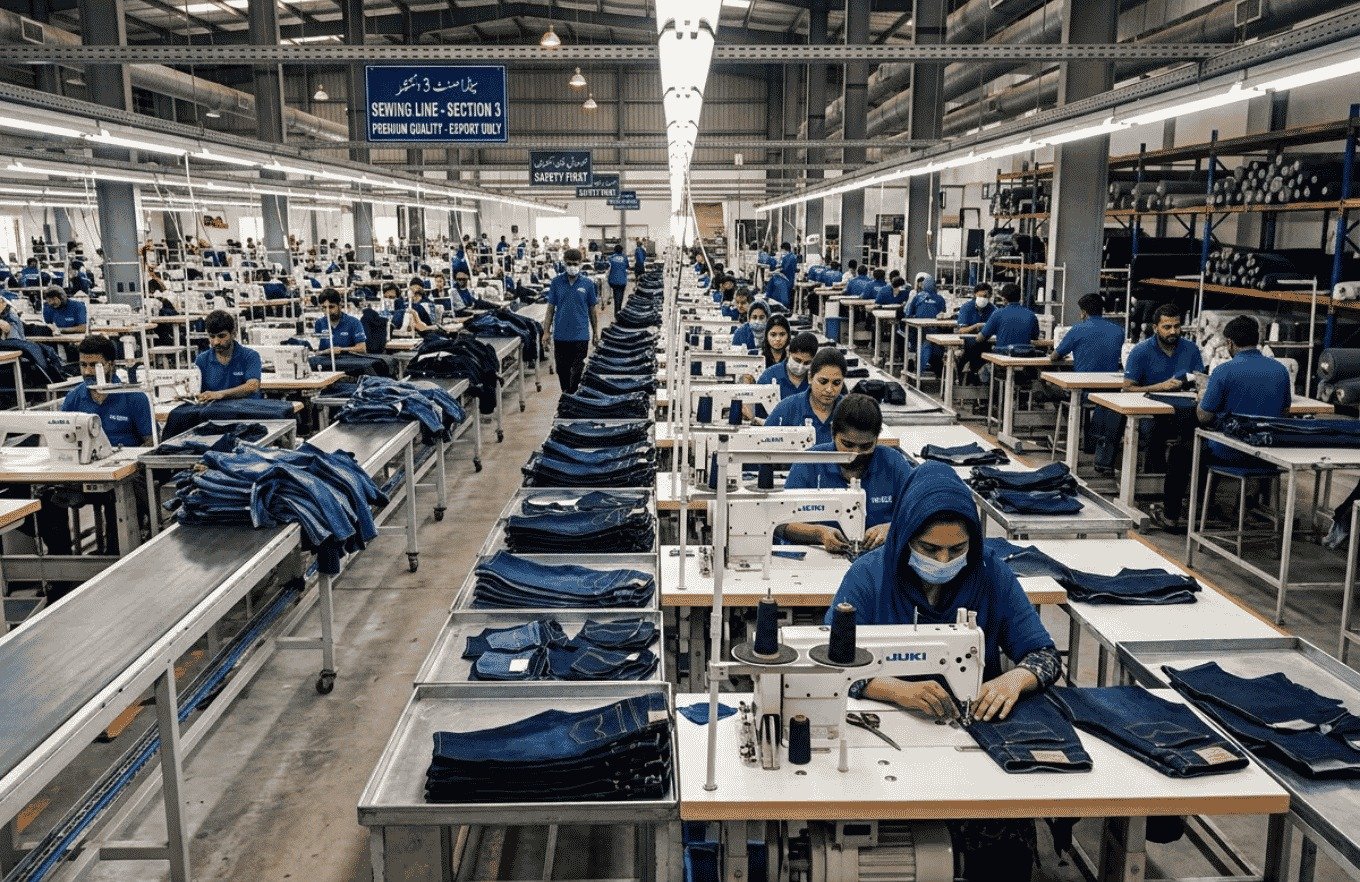
On sewing floors in Pakistan, workers turn locally woven denim fabric into finished jeans for export orders.
Photo: Samad Group
From Workwear Blue to Designer Finishes
Denim began as tough workwear cloth, but the fabric leaving Pakistan today is a different animal. The mills have built a name for stretch denim that moves with the wearer, recycled denim spun from shredded old garments, and laser finished cloth that gives designers a worn-in look without the old water hungry washing processes. Soorty runs denim to denim recycling under its Second Life programme, feeding yesterday’s jeans back into tomorrow’s fabric, while rival mills compete on organic cotton, low impact dyes and cleaner finishing. Each step moves Pakistani fabric further from the basic commodity shelf and closer to the premium rails of the world’s fashion stores.
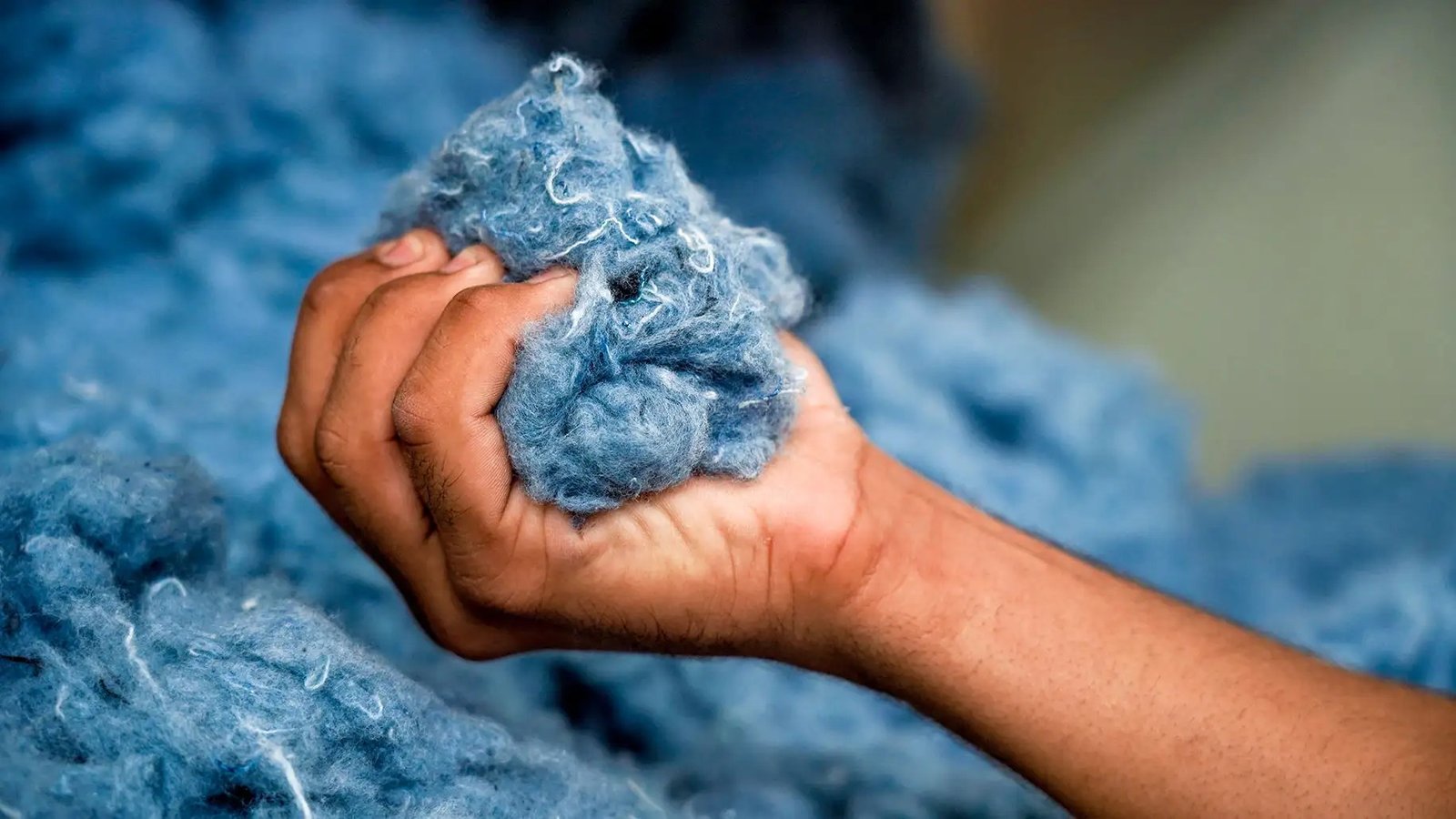
Yesterday’s jeans, shredded back to fibre: a handful of recycled denim at Soorty Enterprises, ready to be spun into new fabric under the mill’s Second Life programme.
Photo: Soorty Enterprises
READ MORE
Punjab Launches Rs1.995 Trillion PIVOT Plan to Boost Exports and Create 162,000 Jobs
Why Denim Matters to Pakistan
Textiles are the backbone of Pakistan’s exports, and denim shows that backbone at its strongest: a product where Pakistan grows the raw material, adds layer upon layer of skill, and sells the world a finished fabric it cannot easily source anywhere else. Pakistan denim mills employ armies of spinners, dyers, weavers, finishers and stitchers, and their order books translate directly into wages in Karachi and Lahore homes. As long as the world keeps wearing jeans, and it shows no sign of stopping, the indigo threads running through Pakistan’s looms will keep tying this country’s craft to wardrobes on every continent.
Sources
- UN Comtrade Database, Pakistan denim fabric exports (HS 5209.42), 2024
- Pakistan Bureau of Statistics, denim fabric export figures, 2022-23 and 2023-24
- World Bank World Integrated Trade Solution (WITS), Pakistan denim trade data
- Soorty Enterprises, mill photography and the Second Life recycling programme
- Featured photo: Soorty Enterprises
- Body photo: Samad Group, via Samad Group
- Extra body photo: Photo: Soorty Enterprises
- Extra body photo: Photo: Soorty Enterprises

Umar Farooq is the founder and editor of Good News Pakistan. An engineer by profession and a writer by passion, he started the site in December 2022 to share good news from Pakistan, and has since written and edited more than 200 articles about its people, sports, science, business and world records. He believes the story of Pakistan is bigger than its headlines, and that good news, told honestly, is worth telling every day.