

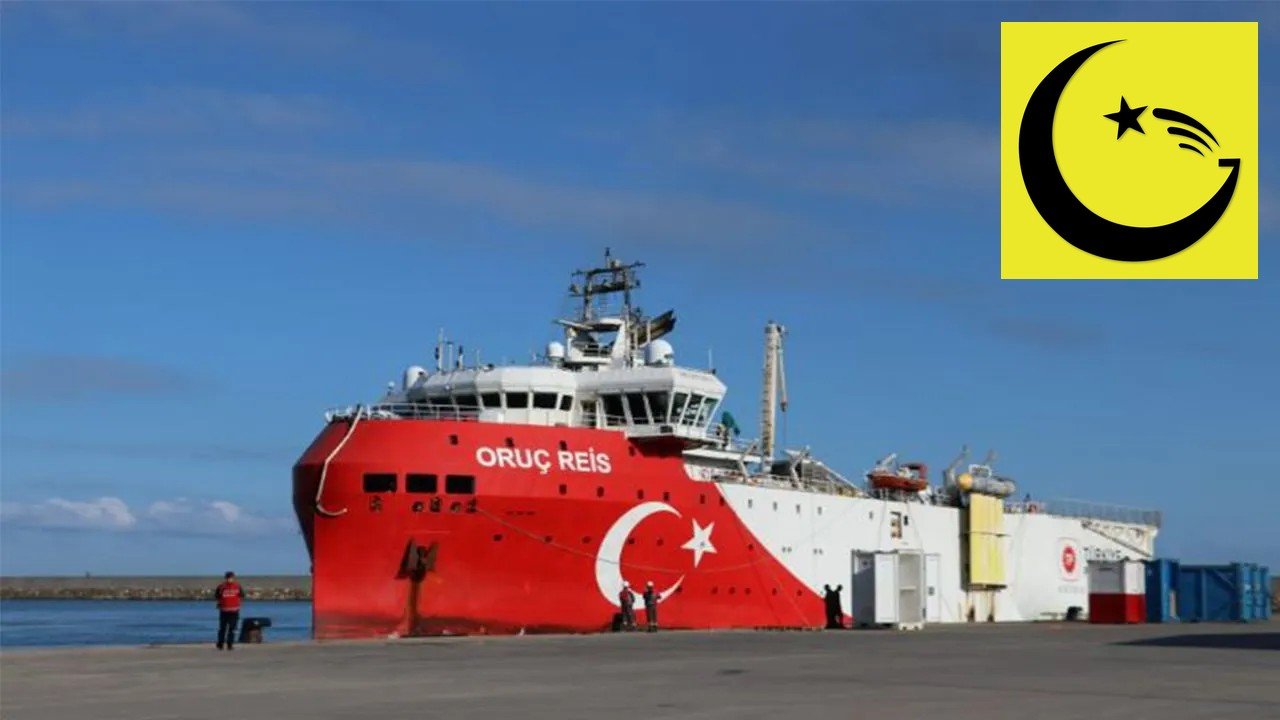
Pakistan’s offshore oil and gas exploration is back after nearly 20 years. Turkiye’s seismic research vessel Oruc Reis has docked at Karachi Port, where it was formally welcomed on Friday 20 November 2026 by Turkish Energy Minister Alparslan Bayraktar, Deputy Prime Minister and Foreign Minister Ishaq Dar and Petroleum Minister Ali Pervaiz Malik. The arrival launches a five to six month survey campaign in Pakistan’s Indus and Makran basins, the first offshore exploration work in the country’s waters in almost two decades.
A Ceremony That Reopened a Closed Frontier
The welcome ceremony at Karachi Port was more than a photo opportunity. Speaking at the event, Ishaq Dar said the mission brings Turkish scientific expertise together with Pakistani national energy firms to map the geological structures beneath Pakistan’s seabed. He added that Prime Minister Shehbaz Sharif has directed federal ministries to fast track coordination on strategic maritime and energy projects, while upholding strict environmental and maritime safety standards.
During the ceremony, Pakistani and Turkish agencies also signed three memorandums of understanding to expand long term cooperation in offshore exploration, minerals and renewable energy. Dar called for Pakistani geologists and engineers to work closely with their Turkish counterparts, and proposed joint academic research in marine geoscience and offshore engineering, so that the skills built during the campaign stay in Pakistan after the vessel sails home.
The foreign minister also linked the mission to the wider relationship between the two countries, noting that PM Sharif and Turkish President Recep Tayyip Erdogan recently agreed during a meeting in Antalya to accelerate cooperation across trade, investment, defence, energy and connectivity.
What the Survey Will Do
Oruc Reis is a purpose built seismic research vessel, 87 metres long and 23 metres wide, built in Turkiye in 2017 and operated by the state owned Turkish Petroleum Corporation, TPAO. It left the port of Tasucu in Mersin on 30 October and completed a 19 day voyage to Karachi. Pakistan is its second intercontinental assignment, after a nine month programme off Somalia where it collected 3D seismic data across 4,464 square kilometres in three offshore blocks.
The Pakistan campaign has two phases. First, under the Marjan 3D Seismic Project, the vessel will collect three dimensional seismic data across about 670 square kilometres of the Eastern Offshore Indus-C block, off Karachi. That phase is expected to take around 50 days. Oruc Reis will then return to Karachi Port to prepare for its second assignment, the Makran 2D Seismic Project, acquiring two dimensional data along about 2,353 kilometres of survey lines in the Makran blocks, a phase expected to take about 25 days.
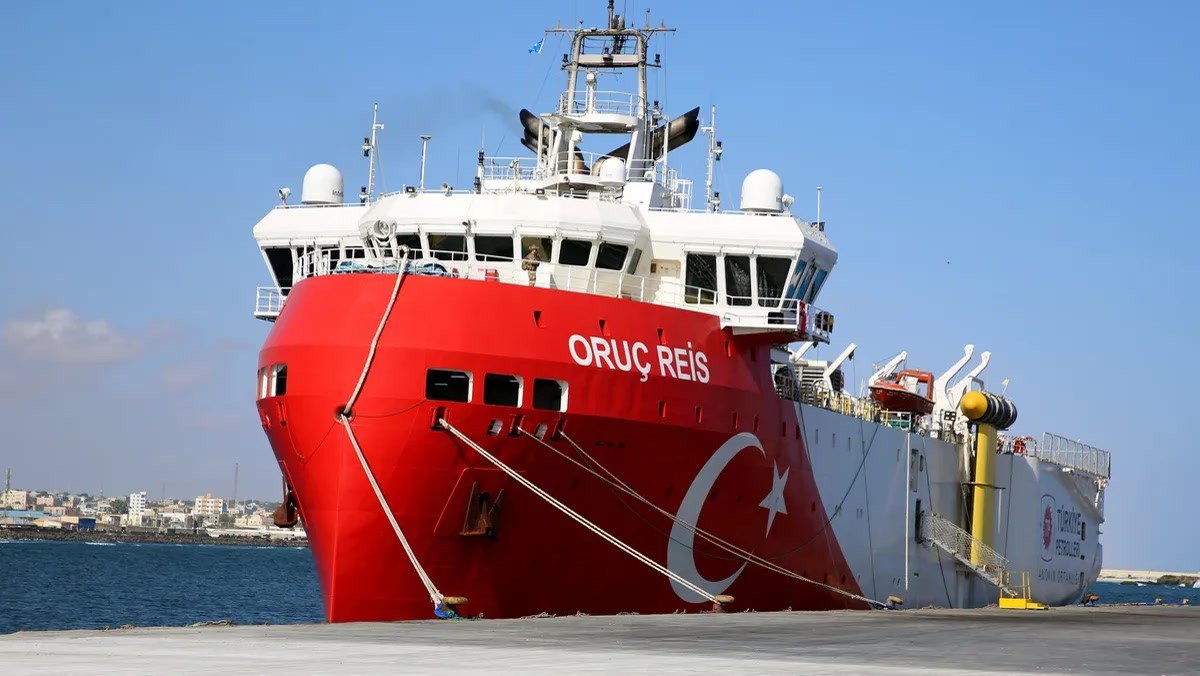
The bow of Oruc Reis, with the Turkish crescent and star on its red hull and the Turkiye Petrolleri markings along its side.
Photo: Istanbul Post
The Blocks Behind the Offshore Oil and Gas Exploration Campaign
The survey is the sharp end of Pakistan’s recent offshore bidding round, in which 23 offshore exploration blocks covering about 53,500 square kilometres were awarded with around $80 million in initial exploration commitments. The Indus-C block, where the work begins, is operated by Turkish Petroleum Overseas Company, TPOC, with a 25 percent interest. Pakistan Petroleum Limited holds the largest share at 35 percent, and Oil and Gas Development Company Limited and Mari Energies hold the remaining shares, alongside Government Holdings Private Limited.
For an offshore oil and gas exploration programme that had been dormant for nearly 20 years, the bidding round and the vessel’s arrival together mark a genuine restart: acreage awarded, partners committed, and now a survey ship in the water collecting the data on which every later decision depends.
READ MORE
Pakistan Power Generation Rises 9 Percent to 10,744 GWh in October 2026
What Seismic Data Can and Cannot Prove
It is worth being precise about what happens next. A seismic survey fires sound waves into the seabed and records their echoes to build pictures of the rock formations below. It maps structures that might hold oil and gas, and it tells drillers where a well has the best chance. It does not, by itself, prove that commercially recoverable reserves exist. As Dar put it at the ceremony: “A seismic survey cannot guarantee a commercial discovery, but no discovery can be made without seismic and exploration.”
Bayraktar said the data collected in the Indus and Makran basins will be used to choose the locations for drilling operations that Turkiye aims to begin in 2027, with the first drilling targeted by the fourth quarter of that year. Only those wells will show whether Pakistan’s offshore frontier holds the resources its planners hope for.
Why It Matters for Pakistan
Pakistan imports most of the oil and gas it burns, and every cargo bought abroad is paid for in scarce foreign exchange. A domestic offshore find, even years away, would change that arithmetic, which is why the restart of offshore oil and gas exploration carries weight far beyond one ship. At the ceremony, Dar said Pakistan’s natural resources, including minerals, hydrocarbons and gemstones, are conservatively estimated to be worth between $8 trillion and $10 trillion, and described the vessel’s arrival as the start of a new chapter of scientific exploration and strategic cooperation between Pakistan and Turkiye.
For now, the chapter opens with sound waves and survey lines. Oruc Reis will spend the coming months tracing the seabed off Karachi and along the Makran coast, and the maps it brings back will decide where Pakistan drills next.
Sources
- Pakistan TV: Pakistan welcomes Turkish seismic vessel to revive offshore oil and gas exploration
- Dawn: Pakistan, Turkiye kick off offshore oil, gas exploration
- Express Tribune: Turkiye says it is starting offshore hydrocarbon exploration in Pakistan, plans drilling next year
- OE Digital: Turkiye Set for Offshore Seismic Surveys in Pakistan Ahead of 2027 Drilling
- europesays: Turkish Research Vessel Oruc Reis Arrives in Karachi as Pakistan Revives Offshore Oil and Gas Exploration
- Featured photo: 7deniz
- Body photo: Istanbul Post

Umar Farooq is the founder and editor of Good News Pakistan. An engineer by profession and a writer by passion, he started the site in December 2022 to share good news from Pakistan, and has since written and edited more than 200 articles about its people, sports, science, business and world records. He believes the story of Pakistan is bigger than its headlines, and that good news, told honestly, is worth telling every day.