

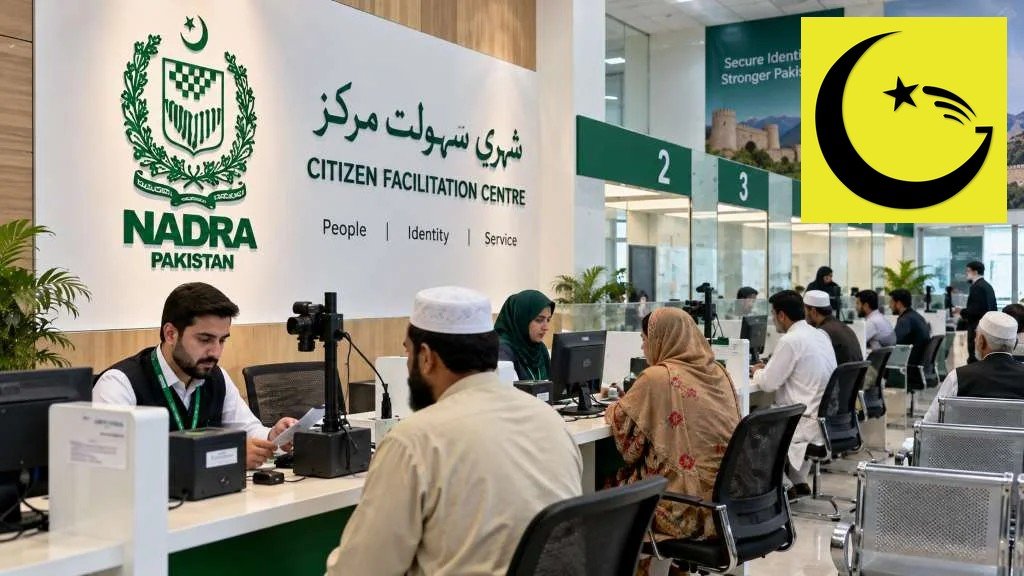
Pakistan has climbed 17 places to rank 119th among 194 countries in the UN E-Government Development Index 2026, the country’s best result since the United Nations began comparing how well governments serve their citizens online. The results, published in the UN E-Government Survey 2026 and announced on 19 November, put Pakistan on a rising line across three editions: 150th in 2022, 136th in 2024 and 119th today, a gain of 31 places in four years.
Pakistan’s overall score rose by 23 percent, from 0.5096 in 2024 to 0.6264 in 2026, while the world average score rose by less than 5 percent. The United Nations named Pakistan among the largest gainers in Southern Asia, and the country has moved up from the index’s Middle group in 2022 into its High group.
What the UN E-Government Development Index actually measures
The index is the UN’s main benchmark for digital government, published every two years by the UN Department of Economic and Social Affairs. In plain words, it grades each country on three things and averages the scores. The first is online services: how much of your business with the government, from identity documents to licences and certificates, can actually be done on a website or an app. The second is telecommunication infrastructure: the mobile networks, internet connections and cables that carry those services to people. The third is human capital: the education and skills that let citizens use the services confidently.
South Korea tops the 2026 ranking, followed by Denmark and Singapore, and the world average score stands at 0.6675. Pakistan is still below that average, which is why the direction of travel matters more than the position itself: few countries climbed as fast.
Three scores that carried the climb
The detailed scores, released with the survey and reported by APP, show where the jump came from:
- Online services rose 20 percent to 0.8422, the second highest score in Southern Asia and firmly in the index’s very high range. This is the part of the ranking that counts the services a citizen can genuinely complete online.
- Telecommunication infrastructure rose 39 percent to 0.6590, building on a 52 percent rise in the previous edition, as mobile and broadband connectivity kept spreading across the country.
- Online participation scored 0.9655, the highest in Southern Asia. This measures how far citizens can take part in government online, through consultations, feedback channels and access to public information.
- Human capital rose 8 percent to 0.3778, and remains the weakest of the three parts by a wide margin. It is the honest gap in an otherwise strong report: Pakistan’s digital rails are improving faster than the schooling and skills that help everyone use them.
A new law sits behind the numbers
The UN survey itself points to one reason for the improvement. Its regional analysis links Pakistan’s progress to the Digital Nation Pakistan Act, 2025, which gave the country’s digital transformation a formal legal framework for the first time. The Act created the Pakistan Digital Authority, a body charged with coordinating digital work across federal and provincial governments and delivering a National Digital Masterplan, so that a service built in one province works the same way in another.
That kind of groundwork is precisely what the UN E-Government Development Index rewards over time: shared systems, common standards and services designed once and used everywhere, rather than every department building its own separate portal.
What this means at the counter and on the phone
Rankings can feel distant, but this one is about ordinary encounters between a citizen and the state. Identity is the service almost every Pakistani meets first, and it shows the change in miniature. NADRA has been replacing the single crowded office with a network of modern service halls and phone based services: in October 2026 it opened 43 Citizen Facilitation Centres across 11 districts of Khyber Pakhtunkhwa, and through its Pak ID mobile app, citizens can now start identity applications and update details such as their photograph and address from home, work that once meant a full day in a queue.
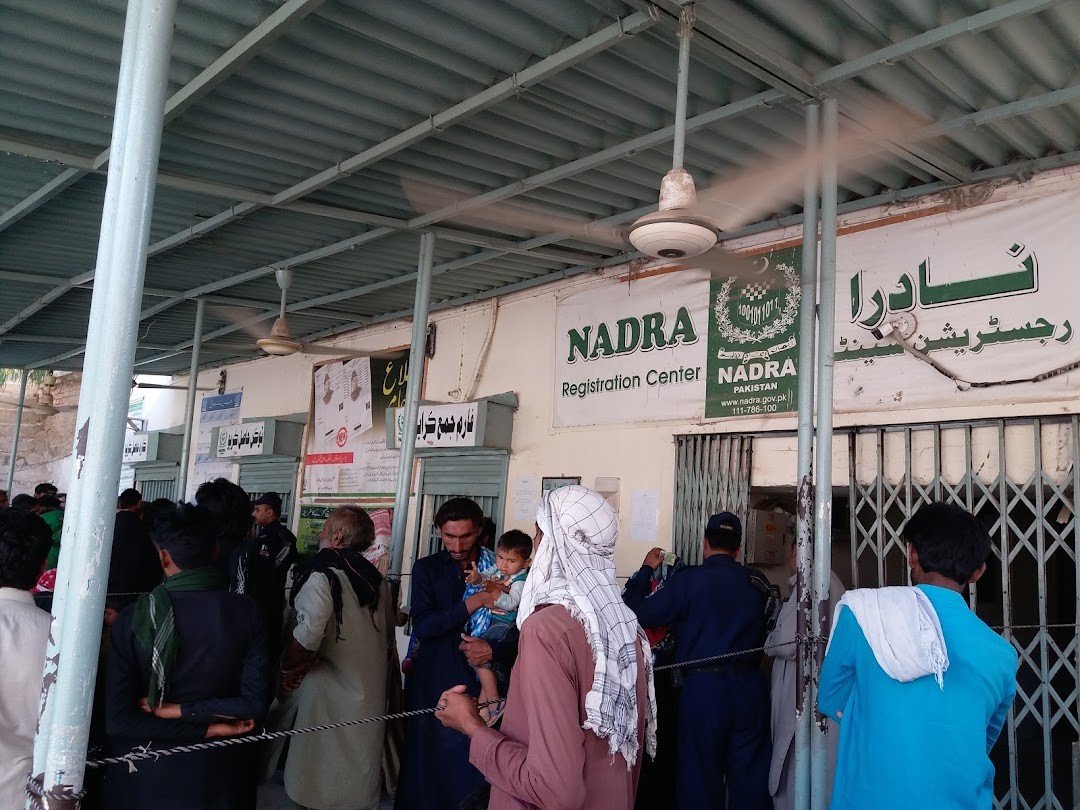
The queue is the way millions meet the state: citizens wait at the NADRA Registration Centre in Mehar, Sindh, the experience Pakistan’s digital services are working to shorten.
Photo: Google Maps contributor (NADRA Registration Centre, Mehar)
Every service that moves from that queue to a phone screen is a small part of the score the UN has just recorded, multiplied by millions of citizens.
A milestone, not the finish line
Federal Minister for Information Technology and Telecommunication Shaza Fatima Khawaja said: “Pakistan has risen 31 places in two editions of the UN’s benchmark for digital government. That is the result of sustained work across federal and provincial institutions to put public services online and to bring connectivity to more of our people.”
Dr Sohail Munir, Chairperson of the Pakistan Digital Authority, said the task now is to build on the result with “shared digital public infrastructure, interoperable systems and services that work the same way for a citizen in any province”. The government says the next phase of the Digital Nation agenda will push digital services, connectivity and digital skills into every part of the country, which is also where the index says the hardest work lies, in the human capital score.
For now, the direction is unmistakable: in four years, Pakistan has gone from the lower half of the world’s digital government table to one of its fastest climbers in the UN E-Government Development Index.
Sources
- APP via TezKhabar, Pakistan rises 17 places in UN e-government ranking 2026
- United Nations, E-Government Survey 2026 press release
- UN E-Government Knowledgebase and Analytics Platform (EGDI country data)
- CW Pakistan, Pakistan rises 17 places in the UN e-government index to rank 119
- ABC News Pakistan, NADRA establishes 43 citizen facilitation centres across 11 KP districts
- Featured photo: NADRA via ABC News Pakistan (citizens served at a NADRA Citizen Facilitation Centre)
- In-body photo: Google Maps contributor (citizens queue at the NADRA Registration Centre in Mehar, Sindh)

Umar Farooq is the founder and editor of Good News Pakistan. An engineer by profession and a writer by passion, he started the site in December 2022 to share good news from Pakistan, and has since written and edited more than 200 articles about its people, sports, science, business and world records. He believes the story of Pakistan is bigger than its headlines, and that good news, told honestly, is worth telling every day.